Hidden Lake Gardens Conservatory (Michigan State University)
Tipton, Michigan

Entry updated on October 5, 2026
- Year
- 1968
- Architect
- Michigan State University architects
- Style
- Modern glasshouse complex: two domes and a temperate house
- Dimensions
- Over 8,000 sq ft (≈700 m²) under glass; 40 ft (≈12 m) tropical dome
- Status
- Open to the public
Built in 1968 through the generosity of Ray Herrick and designed by Michigan State University architects, the conservatory of Hidden Lake Gardens, the university's botanical garden and arboretum in the Irish Hills, holds more than 8,000 square feet (about 700 m²) of gardens under glass. It comprises a 40-foot tropical dome with coffee, banana, palm and cocoa trees, an arid dome devoted to cacti and aloes, and a temperate house for seasonal displays.
Affiliate links — booking through Verrière helps fund our research, at no extra cost to you.
History
1 min
In 1926, on his retirement, the Adrian businessman Harry Fee bought some 200 acres around Hidden Lake in the Irish Hills of south-east Michigan. He first meant to farm them, but the land proved unsuitable; he turned to nursery stock and then, rather than compete with local nurseries during the Great Depression, planted trees and shrubs to compose picturesque scenes, a series of pictures in the landscape. In 1945 he gave Hidden Lake Gardens to Michigan State University, together with an endowment that still supports land purchases, building projects and educational programmes.
The university built a visitor centre in 1965 and then, in 1968, the conservatory, made possible by the generosity of Ray Herrick and designed by MSU's own architects to display plants from around the world. The university archives hold photographs from 1969 showing the arid dome and the other parts of the new complex.
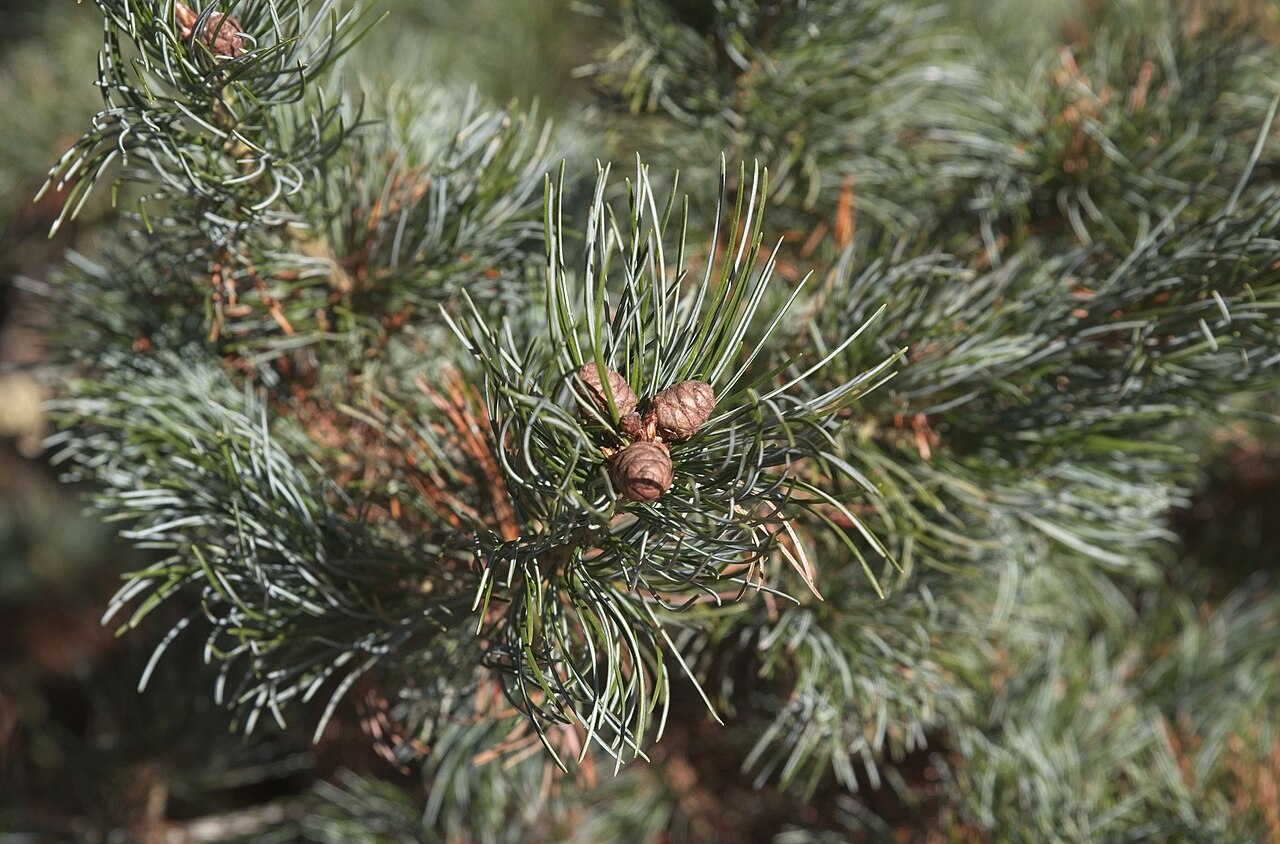
The outdoor collections grew in the following decades: about 600 dwarf conifers donated by Justin Harper in 1980, then the hosta hillside, dedicated in 1995 to Ralph H. (Herb) and Dorothy Benedict. Inside the conservatory, the central brick square of the temperate house was renovated in 2025 to make it safer and more attractive.
Architecture and engineering
1 min
The conservatory brings together three glazed spaces totalling more than 8,000 square feet, about 700 m², of gardens under glass: the tropical dome, the arid dome and the temperate house. The tallest, the tropical dome, rises to 40 feet, a little over 12 m, enough for palms and bananas to grow freely. The arid dome holds all of the garden's dry-climate plants, while the temperate house is arranged around a central brick-paved square, rebuilt in 2025.
The complex was designed by Michigan State University architects and stands about a hundred metres from the 1965 visitor centre. The sources consulted describe neither the supporting structure of the domes nor the exact type of glazing; they agree, however, on the purpose of the whole, which is to show, under three distinct climates, plants of ornamental or economic value gathered from every part of the world.
Plant collections
1 min
The tropical dome presents rainforest plants with an emphasis on useful species: coffee, banana, palms, cocoa and citrus. The arid dome gathers desert plants, cacti, aloes and other succulents. The temperate house is the setting for seasonal displays, featuring among others begonias and bougainvillea.
For the conservatory as a whole, Wikipedia also lists bird-of-paradise, orchids, gardenia and hibiscus. The garden itself describes the tropical dome as the home of foliage and economic plants, which explains why coffee, banana and cocoa share the space there with purely decorative species.
Visiting
1 min
Hidden Lake Gardens covers 755 acres at Tipton in the Irish Hills and welcomes nearly 45,000 visitors a year. The conservatory, close to the visitor centre, is the sheltered stage of a visit and is especially welcome during the Michigan winter.
In the warmer months the visit extends to the Hosta Hillside, with more than 700 cultivars in shade along the lake shore, the dwarf conifer collection spread over 5 acres, and the bonsai collection, one of the largest in the Midwest, of which about twenty trees aged 40 to 100 years are displayed from May to October. Six miles of marked trails cross the rest of the property.
42.03° N, 84.11° W
Greenhouses nearby
More greenhouses — United States
Do you have a good photo of this greenhouse? Suggest it for this page →