Lena Meijer Tropical Conservatory
Grand Rapids, Michigan

Sources checked September 2026
- Year
- 1995
- Architect
- Cox, Medendorp and Olson
- Style
- Modern glasshouse on a galvanised steel frame
- Dimensions
- ≈1,400 m² across five levels
- Status
- Open to the public
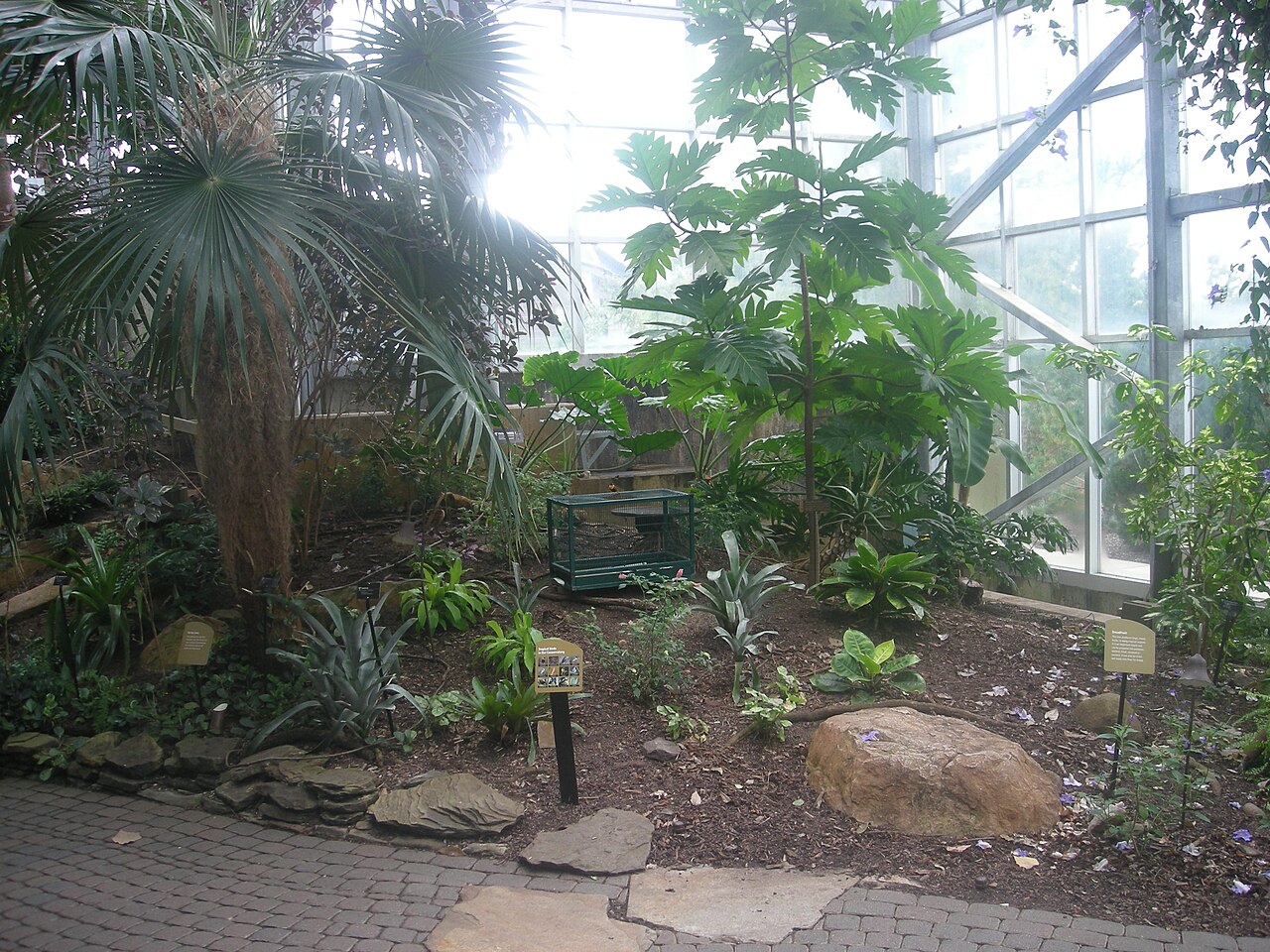
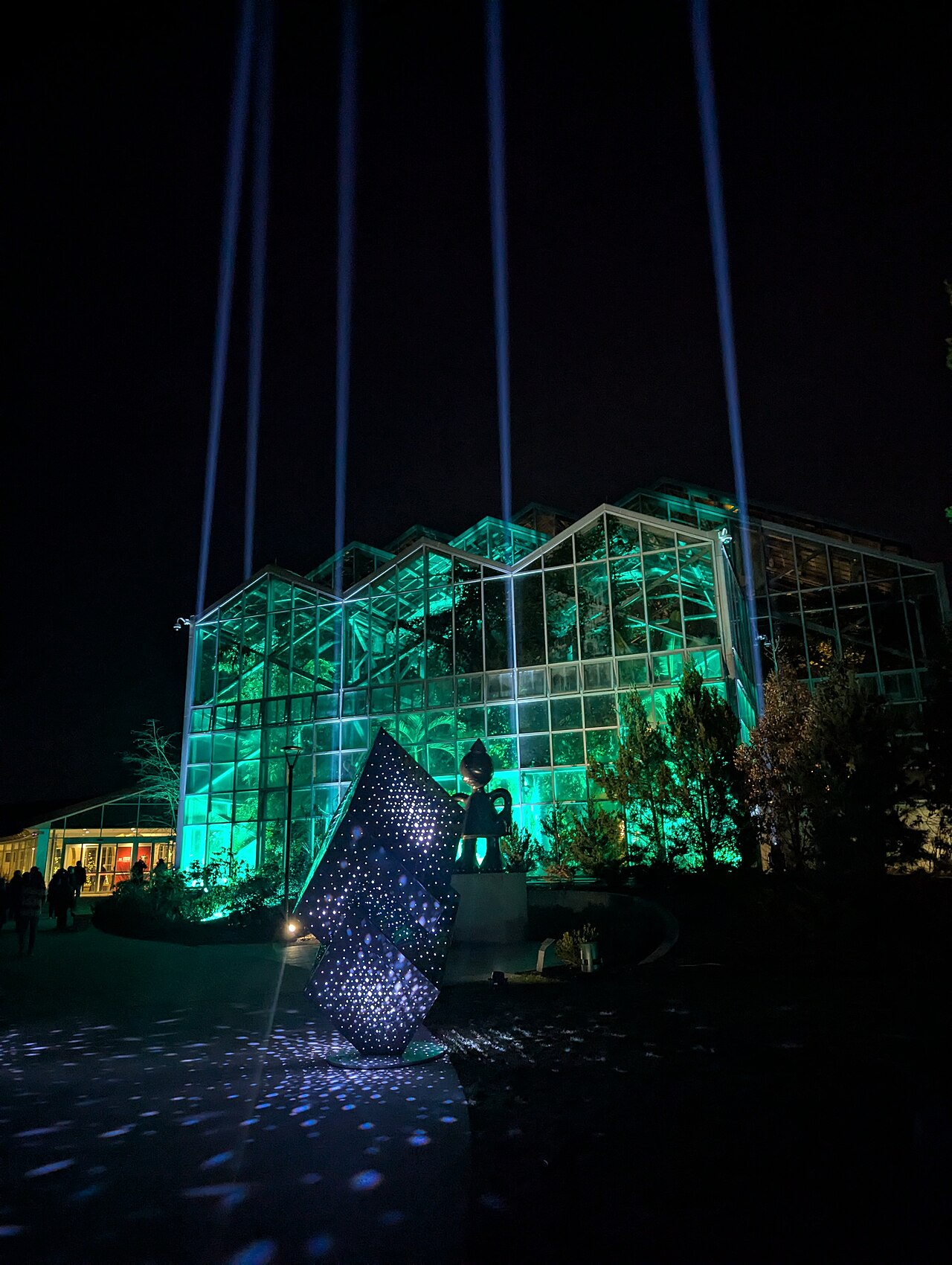
Opened in 1995 along with the whole of Frederik Meijer Gardens & Sculpture Park, this five-level tropical conservatory was designed by the firm Cox, Medendorp and Olson, with contributions from landscape architect Stephen Rosselet and artist Philip diGiacomo. It displays Pacific coconut palms, Indian banyans, orchids from Central and South America, and Asian bamboos and bananas. The site also includes a carnivorous plant house and an arid room for cacti. It is the setting for the garden's annual butterfly exhibition.
Affiliate links — booking through Verrière helps fund our research, at no extra cost to you.
History
The conservatory grew out of a botanical garden project launched in the early 1980s by the West Michigan Horticultural Society. In 1986 members of the society approached Frederik Meijer, founder of the Meijer supermarket chain, to ask for land, and in January 1991 Meijer, Inc. donated 70.7 acres (28.6 hectares) in Grand Rapids Township, east of the city.
The tropical conservatory was designed by the architects Cox, Medendorp and Olson, working with garden designer Stephen Rosselet and artist Philip diGiacomo. It opened with the rest of the site at the grand opening of April 20, 1995, attended by former President Gerald Ford, Governor John Engler, Senator Carl Levin and Frederik Meijer. At the time it was billed as the largest conservatory in Michigan, and the institution still describes it as the largest of its kind in the state.
In 2002 the institution was renamed Frederik Meijer Gardens & Sculpture Park in honour of Frederik and Lena Meijer, whose name the conservatory bears. The site now covers 158 acres (about 64 hectares), and each spring the conservatory hosts one of the largest temporary butterfly exhibitions in the United States.
Architecture and engineering
The conservatory rises the equivalent of five storeys and covers about 15,000 square feet (1,400 m²). Its height allows the planting to be layered, from understorey plants up to the crowns of the palms.
From the outset it was fitted with an automated system that continuously adjusts airflow, ventilation and temperature in response to outside conditions, keeping the atmosphere warm and humid year-round. Waterfalls and winding streams shape the route, and all paths are wheelchair-accessible.
The tropical house is one of a group of indoor gardens that also includes a carnivorous plant house, an arid house for cacti and desert vegetation, and a Victorian-themed area.
Plant collections
The collection brings together tropical plants from around the world: coconut palms from the Pacific, fig trees from India, orchids from Central and South America, and Asian bamboos and bananas. Featured specimens include the Bismarck palm from Madagascar, orange jessamine (Murraya paniculata), cacao, breadfruit, sapodilla and pandans with leaves up to 20 feet (about 6 metres) long. The Leonard and Dora Rosenzweig Orchid Wall showcases a collection of some 3,500 orchids.
A few captive-bred birds fly free under the glass, among them the northern red bishop, the red-cheeked cordon-bleu, the Chinese painted quail and the canary.
Every March and April, the Fred & Dorothy Fichter Butterflies Are Blooming exhibition fills the house with thousands of tropical butterflies, imported as chrysalises from Africa, Asia and Central and South America.
Visiting
The conservatory is part of the main building at Frederik Meijer Gardens, east of Grand Rapids. The gardens suggest 15 to 30 minutes for the tropical house itself, but a visit naturally continues into the neighbouring arid, carnivorous and Victorian houses and then out into the gardens and sculpture park.
The liveliest period is March and April, during the butterfly exhibition at the tail end of the Michigan winter. At other times of year the humid warmth of the house offers a striking contrast with the Great Lakes climate outside.
42.98° N, 85.58° W
Greenhouses nearby
More greenhouses — United States
Do you have a good photo of this greenhouse? Suggest it for this page →
Affiliate links — booking through Verrière helps fund our research, at no extra cost to you.