Matthaei Botanical Gardens Conservatory
Ann Arbor, Michigan

Sources checked September 2026
- Year
- 1964
- Architect
- Alden B. Dow (Alden B. Dow Associates)
- Style
- Modernist glasshouse in three distinct climate houses
- Dimensions
- Over 930 m² (10,000+ sq ft)
- Status
- Open to the public
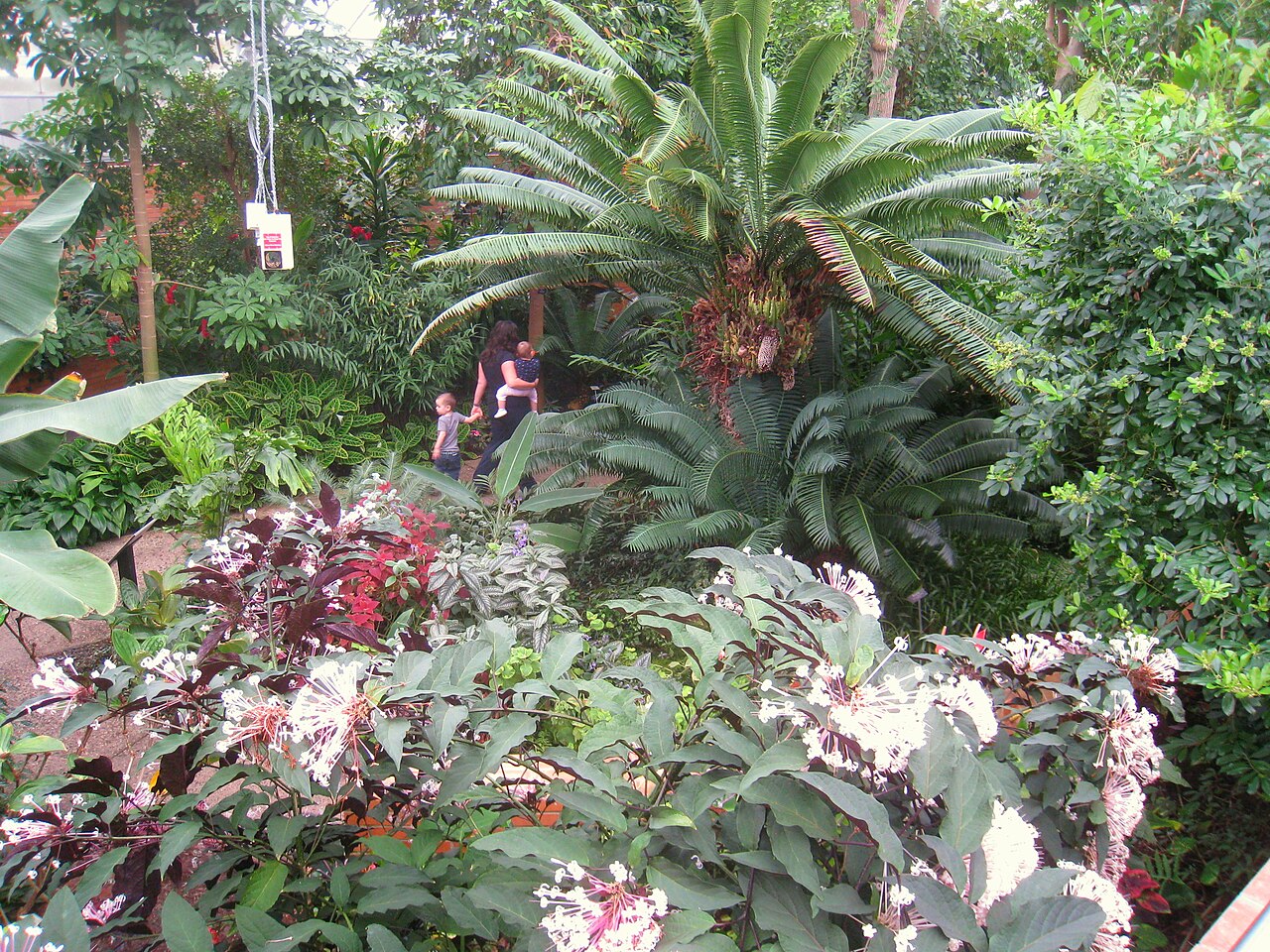
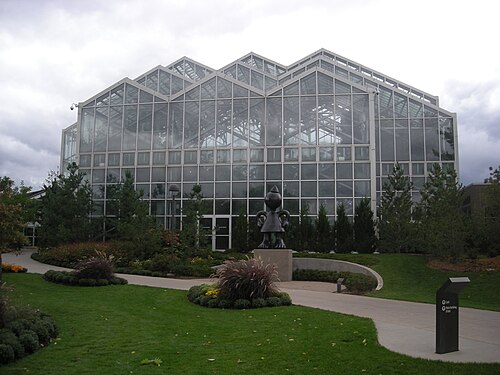
Part of the complex that Alden B. Dow's firm built from 1959 to 1965 for the University of Michigan's botanical garden, this conservatory of more than 10,000 square feet was completed in 1964. It is divided into three houses: tropical (cacao, coffee, black pepper, red mangrove, cycads), temperate, devoted to the Mediterranean and warm-temperate Asia with camellias, olive, cork oak and bonsai, and arid, for cacti, aloes and euphorbias. The 300-acre garden around it on Dixboro Road is named after its donors, Frederick and Mildred Matthaei.
Affiliate links — booking through Verrière helps fund our research, at no extra cost to you.
History
The conservatory belongs to the Matthaei Botanical Gardens, the University of Michigan's botanical garden founded in 1957. That year Frederick C. Matthaei Sr., a university regent, and his wife Mildred Hague Matthaei gave the university 200 acres on the north-east side of Ann Arbor; combined with the former Matteson Farm, the land became the new garden, which was formally named after its donors in 1969. The property was enlarged in 1965, 1970 and 1987 and now covers 300 acres.
The commission went to Alden B. Dow (1904–1983), a leading Michigan modernist based in Midland who had studied with Frank Lloyd Wright at Taliesin in 1933. Dow also designed the university's Fleming Administration Building and received an honorary Doctor of Architecture from Michigan in 1963. His firm, Alden B. Dow Associates, built the complex of offices, conservatory and superintendent's house between 1959 and 1965, with the conservatory completed in 1964. The botanist Herb Wagner later recalled having to fight for a lobby and a meeting room to be included in the plans.
The building is believed to be the largest university-operated display greenhouse in the United States. Since 2004 the botanical gardens and Nichols Arboretum, owned by the university since 1907, have been run as a single institution, and the tropical house now bears the names of Kimberly and Theodore Maged.
Architecture and engineering
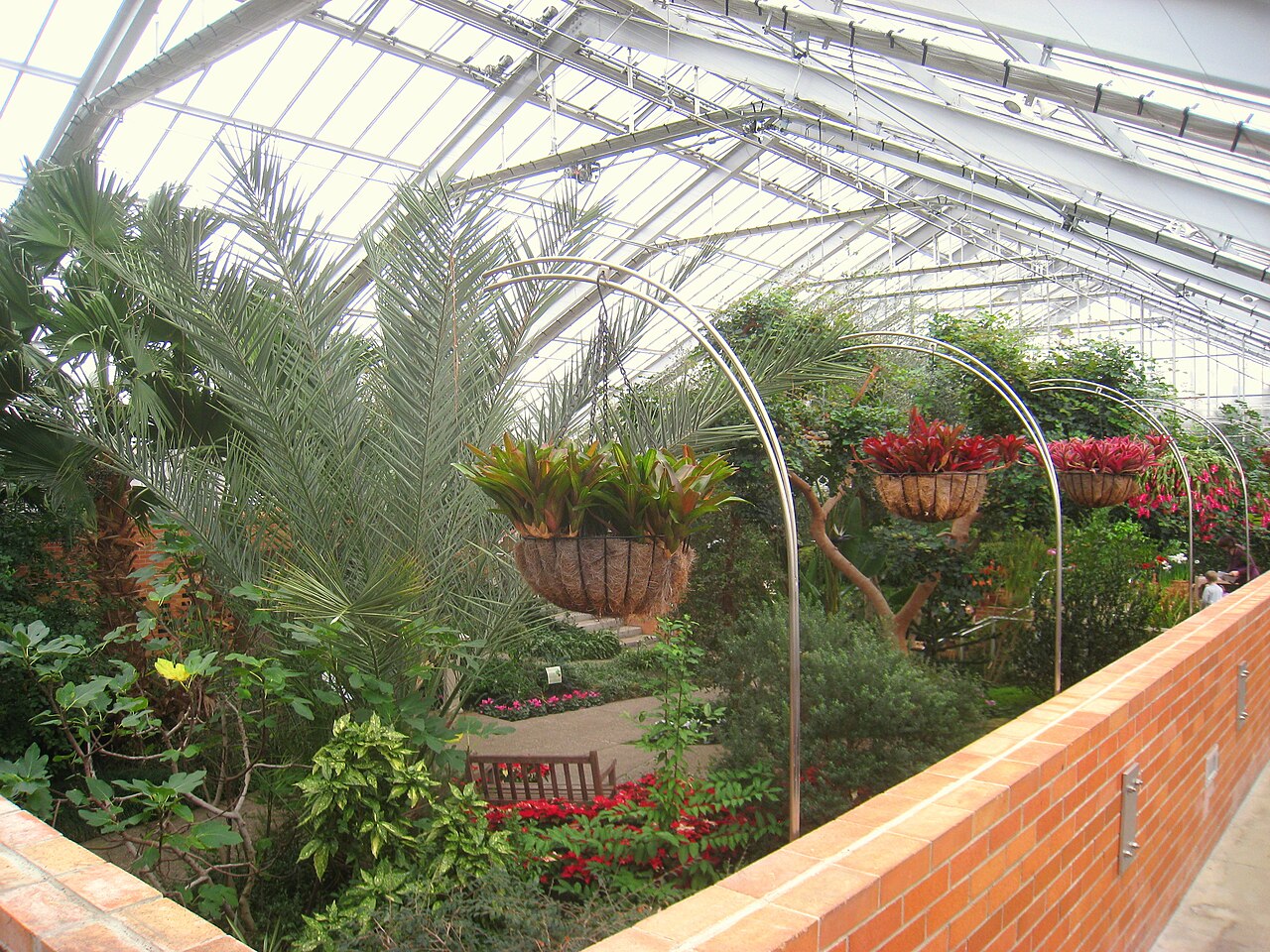
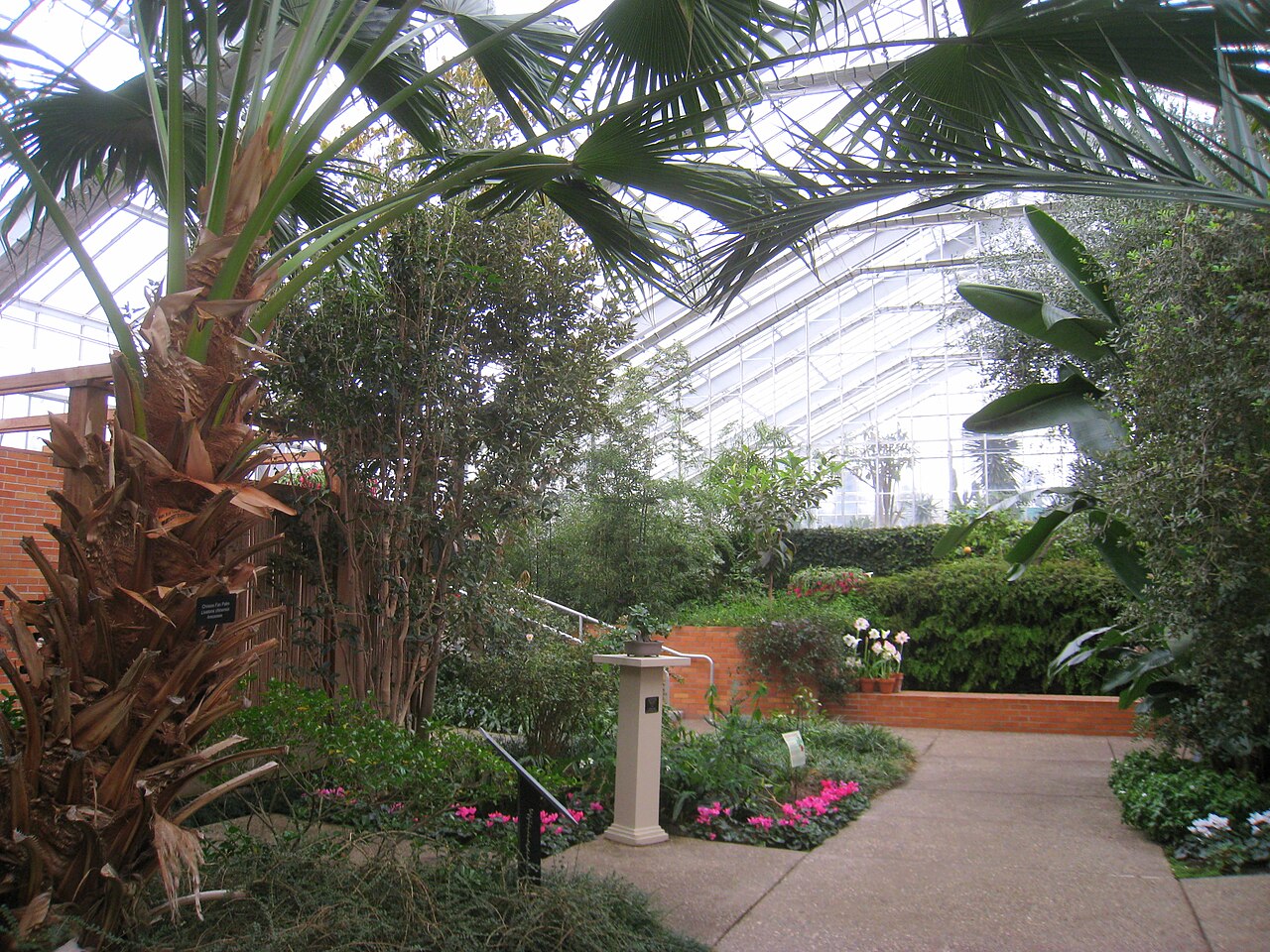
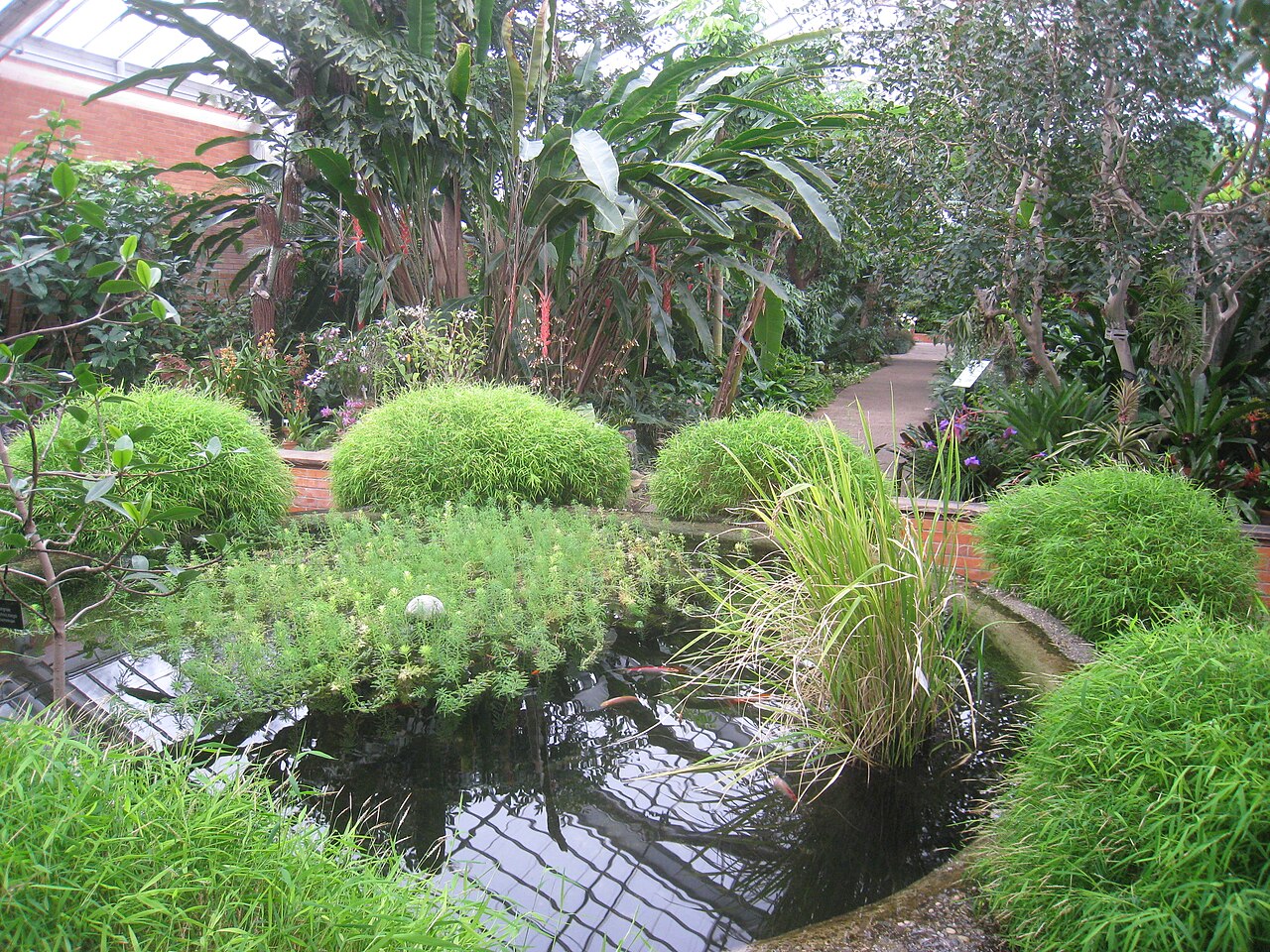
The conservatory covers more than 10,000 square feet, or about 930 m². It brings together three separate climate houses, attached to the visitor and office building designed by the same firm: a tropical house, a temperate house and an arid house. Each reproduces the conditions of its model region: constant, frost-free warmth in the first, the climate of the Mediterranean and warm-temperate Asia in the second, and the hot deserts of the world in the third. The temperate house includes a pool stocked with koi.
In her 1998 survey of Dow's Ann Arbor buildings for the Ann Arbor Observer, Grace Shackman noted that the offices and conservatory were instantly recognisable as his work thanks to their turquoise-faced second-storey planters, long since abandoned. The programme, pressed for by the botanist Herb Wagner, also included a lobby and a meeting room, and Dow designed the garden superintendent's house as well. Conservatory and offices thus form a single scheme, conceived between 1959 and 1965.
Plant collections
The tropical house gathers plants from warm, frost-free regions, from towering foliage to understorey species: pineapple (Ananas comosus), soursop (Annona muricata), bromeliads, fishtail palm (Caryota mitis), coconut, coffee (Coffea arabica), cacao (Theobroma cacao), black pepper (Piper nigrum), rice, bananas, mangrove (Rhizophora mangle), Kigelia pinnata, Heliconia vellerigera, orchids and cycads. Among the cycads is a Dioon spinulosum given by Smith College in the 1920s and still on display.
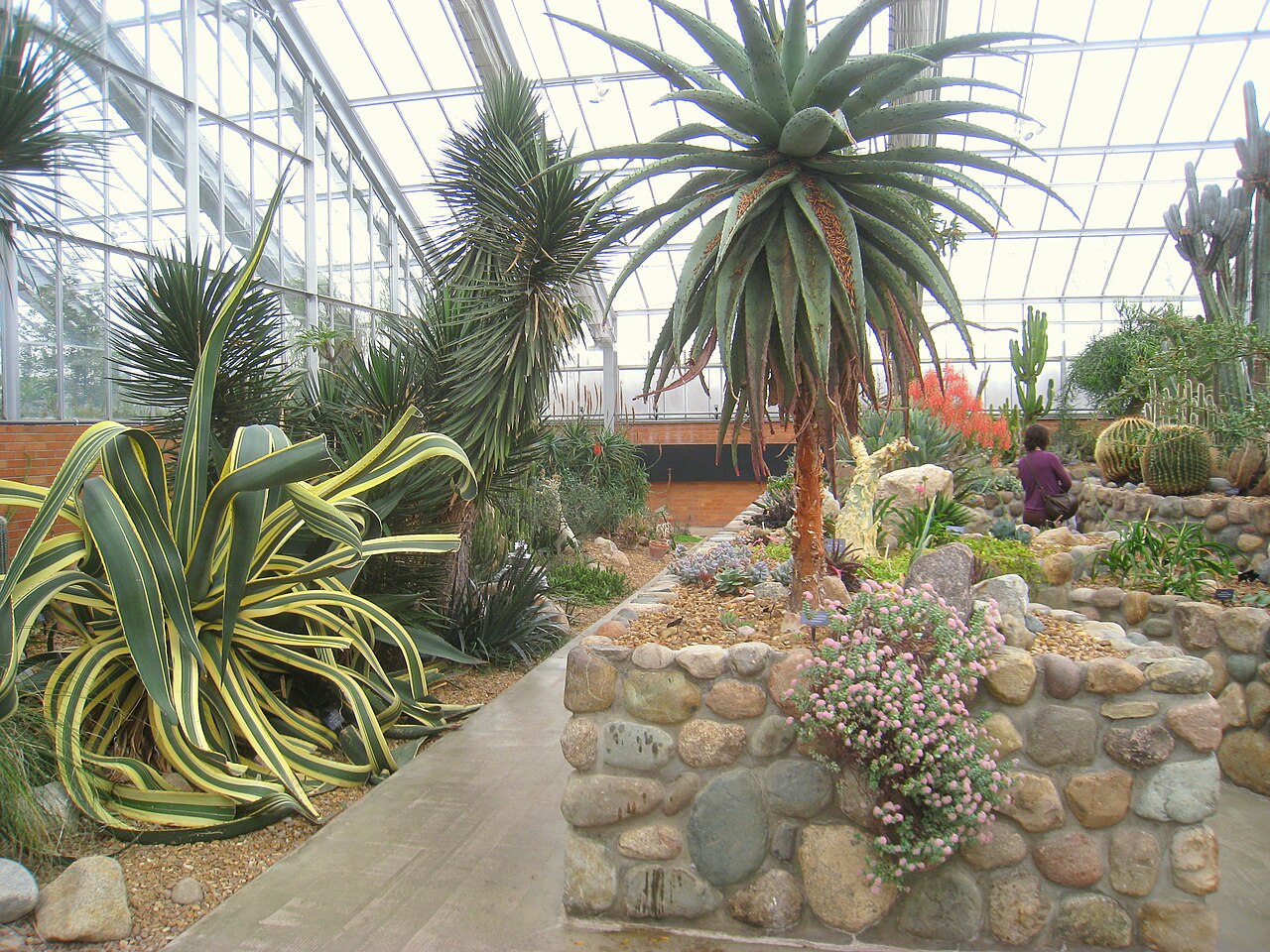
The temperate house evokes the Mediterranean and warm-temperate Asia, with tea, carob, papyrus, fig, tree cotton, bay laurel, olive, date palm, the bamboo Phyllostachys nigra, cork oak and a display of oriental camellias. It also shows part of the bonsai collection, which numbers more than forty specimens and continues in an outdoor garden. The arid house, devoted to the hot deserts of the world, brings together cacti, succulents, euphorbias and lithops, including Agave americana, Aloe marlothii, Bowiea volubilis, Cyphostemma juttae and Euphorbia milii.
Visiting
The conservatory stands at the heart of the Matthaei Botanical Gardens, at 1800 North Dixboro Road, east of U.S. 23 and away from the central campus. Entry to the building is free. An hour is enough for the three houses.
Outside, the visit continues with the Melvyn C. Goldstein Bonsai Garden, the Great Lakes Gardens, the Gaffield Children's Garden and the labyrinth, as well as four nature trails totalling 3.2 miles (about 5 km), one of them along Fleming Creek. Nichols Arboretum, run by the same institution, rounds out a spring visit, especially for its peony garden.
More photos
42.30° N, 83.66° W
Greenhouses nearby
Architecture nearby
More greenhouses — United States
Do you have a good photo of this greenhouse? Suggest it for this page →
Sources (8)
- mbgna.umich.edu/conservatory-matthaei
- mbgna.umich.edu/facilities/conservatory
- en.wikipedia.org/wiki/Matthaei_Botanical_Gardens
- michmemories.org/records/matthaei-botanical-garden-university-michigan-2
- aadl.org/node/15608
- aadl.org/node/83737
- michiganmodern.org/architects/alden-b-dow
- en.wikipedia.org/wiki/Alden_B._Dow
Affiliate links — booking through Verrière helps fund our research, at no extra cost to you.