Display House and alpine glasshouses, Holehird Gardens
Holehird Gardens, Patterdale Road, Windermere, Cumbria, England
No freely licensed photo of this greenhouse yet. Do you have one? Suggest it for this page →
Sources checked October 2026
- Year
- Alpine house: 2000; Display House: 2017
- Architect
- Display House: Griffin Glasshouses (manufacturer)
- Style
- Victorian-style lean-to glasshouse (aluminium), alpine house, converted Victorian pit house
- Status
- Open to the public: gardens open daily from dawn to dusk, volunteer-run, minimum donation of £6 per adult on entry
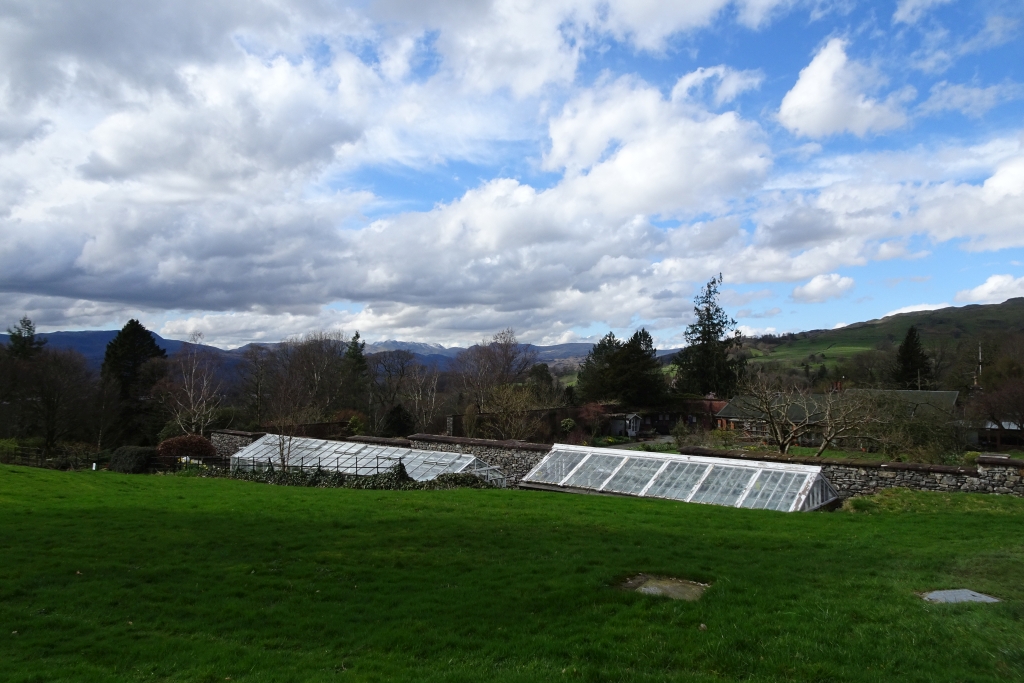
In the walled garden at Holehird, near Windermere, the Lakeland Horticultural Society looks after several glasshouses open to visitors. The Display House, put up in 2017 alongside the east wall, is a Victorian-style glasshouse kept at a minimum of 5 °C, replacing an old propagation greenhouse that was closed to the public. The main alpine house dates from 2000 and shows a selection from a collection of more than 500 species; the Tufa House is a former Victorian pit house converted into a permanent display. Two propagation greenhouses behind the walled garden can be walked through when volunteers are not working in them.
Affiliate links — booking through Verrière helps fund our research, at no extra cost to you.
History
Holehird has written records going back to the 17th century, when much of the land belonged to Thomas Hird and his family. In 1885 the Manchester industrialist John Macmillan Dunlop laid out formal gardens and had the present walled garden built, with a range of heated greenhouses against the north wall, where the visitor reception and members' rooms now stand. The Groves family continued the work from 1897. In 1945 Henry Leigh Groves gave the estate to the Westmorland county council, and the Holehird Trust now manages it.
The Lakeland Horticultural Society, founded in 1969, gradually rescued the derelict garden. In 1980 it took over the walled garden, then used as a tree nursery: the derelict glasshouses were cleared, the walls repaired and the internal layout agreed. In the 1990s outbuildings were renovated as potting sheds and propagation areas. The main alpine house was built in 2000.
In 2017 a new Display House was installed in the walled garden, alongside the east wall, in place of an old propagation greenhouse that was not open to the public. It was paid for by donations and ordered from Griffin Glasshouses after the society researched Victorian-style greenhouses.
Architecture and engineering
The Display House is a Victorian-style lean-to glasshouse with a porch, built against the east wall of the walled garden; the society refers to the back wall as Grade II listed. Its maker, Griffin Glasshouses, describes a maintenance-free aluminium structure with steep-pitched roofs, fitted with ventilation and painted off-white to suit the walled garden. The glasshouse is wheelchair accessible. In 2017 the society planned to stand potted plants on the Victorian display benches along the sides and to give the central bench to changing displays. The garden states that the temperature is kept at a minimum of 5 °C all year.
The other houses are older or more modest. The 2000 alpine house shelters plants that fear excessive winter wet more than cold. The Tufa House began as a Victorian pit house; the Victorian Pit House is in the back lane. Beside it, the more recent Cambridge greenhouse is heated and ventilated automatically.
Plant collections
The alpine house shows a changing selection from a collection of more than 500 species, grown by a team of keen alpine gardeners. According to the garden, these plants generally tolerate cold but not winter wet, which the glasshouse spares them. The permanently planted Tufa House shows large cushions of Dianthus, Draba and Helichrysum, with cascades of Saxifraga and Verbascum.
The Display House combines permanent planting with seasonal displays. It makes it possible to grow plants that would not otherwise thrive in Lake District conditions; in 2017 the society said some would be planted in the soil to climb the wall, others would stand in pots on the benches, and the central bench would show examples of what is grown elsewhere in the garden.
Behind the walled garden, the Victorian Pit House holds fuchsias, and the Cambridge greenhouse is used to raise bedding plants: pelargoniums, osteospermums, argyranthemums, penstemons and herbs. Some are planted out in the garden and the rest are sold in the plant sales area.
Visiting
The glasshouses stand in and behind the walled garden, about 400 yards from the entrance up a steeply sloping tarmac drive, according to the website. Visitor Information, staffed by volunteers from April to October, is in the walled garden, with maps, guides and hot drinks. The two propagation greenhouses in the back lane can be walked through when nobody is working in them. The Display House is wheelchair accessible, though the garden warns that some paths are steep.
The hillside garden has views towards Windermere and the fells, and the Lakeland Horticultural Society also grows several national collections there, among them Astilbe, Daboecia and Meconopsis. A free guided walk leaves on Wednesday mornings from May to September. Dogs are not allowed apart from assistance dogs. Windermere is about a mile away and can be reached on foot by two routes described on the website.
54.40° N, 2.91° W
Greenhouses nearby
More greenhouses — United Kingdom
Do you have a good photo of this greenhouse? Suggest it for this page →
Sources (7)
- holehirdgardens.org.uk/holehird-gardens/display-house
- holehirdgardens.org.uk/holehird-gardens/the-glasshouse-alpines
- holehirdgardens.org.uk/holehird-gardens/history-of-garden
- holehirdgardens.org.uk/visit
- griffinglasshouses.com/new-glasshouse-holehird-gardens-opens-visitors/
- rhs.org.uk/gardens/gardendetails/holehird-gardens
- en.wikipedia.org/wiki/Holehird_Gardens
Affiliate links — booking through Verrière helps fund our research, at no extra cost to you.