Cliffe Castle Park glasshouses (Dome House)
Cliffe Castle Park, Keighley, West Yorkshire, England

Sources checked October 2026
- Year
- Rebuilt 2016-2017 from a Victorian original of the 1870s-1880s (dates differ)
- Architect
- Original: George Smith (local architect), Messenger & Co (Loughborough); rebuild: CambridgeHOK
- Style
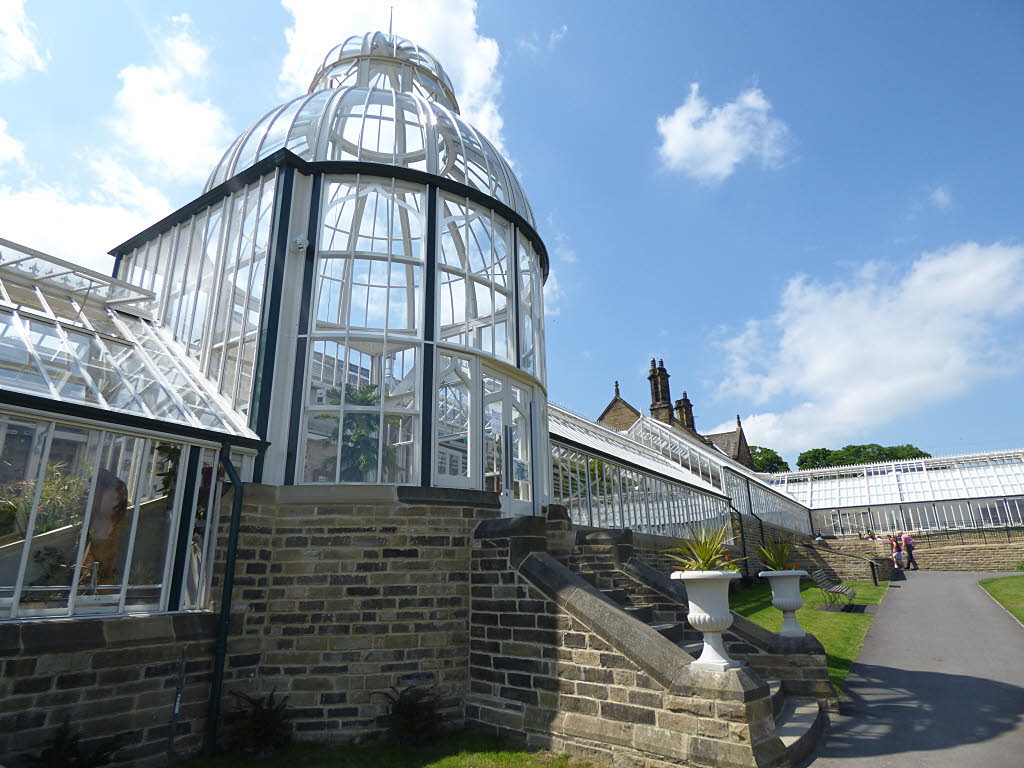
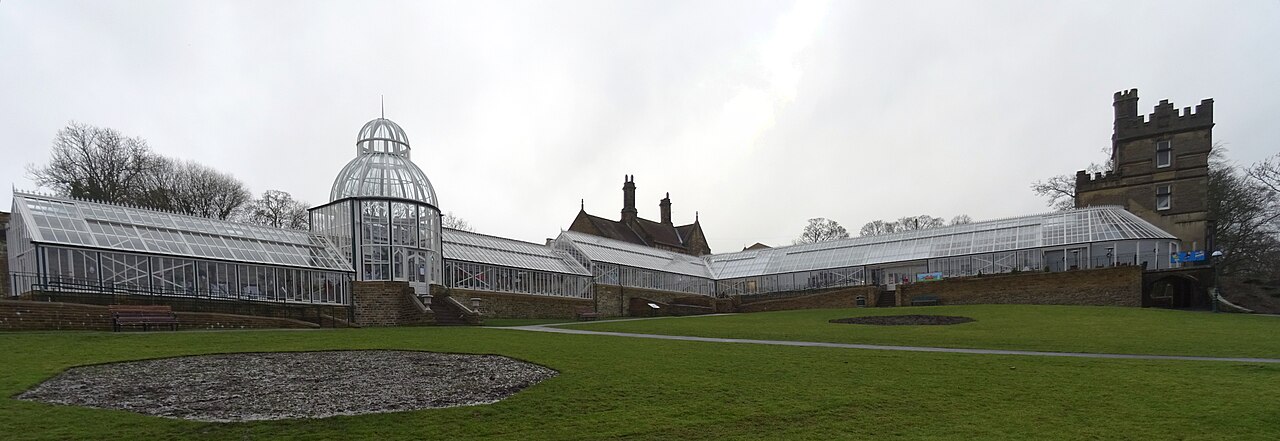
- Heritage reconstruction of a Victorian glasshouse, with a central Dome House and sections stepping up to vineries
- Dimensions
- Metal structure of about 26 tonnes
- Status
- In a park with free access; part of the range houses a cafe; interior opening hours to be checked
In the grounds of Cliffe Castle at Keighley, the Victorian glasshouses built by Messenger & Co of Loughborough for the Butterfield family were demolished in the 1920s according to Bradford Council, then replaced in the 1960s by an aluminium greenhouse. Rebuilt in 2016-2017 by CambridgeHOK on the original footprint, working from old photographs, as part of a park restoration backed by 3.5 million pounds from the Heritage Lottery Fund, they include a central Dome House, a display of cacti and succulents maintained with the Bradford branch of the British Cactus & Succulent Society, and a cafe in part of the building.
Affiliate links — booking through Verrière helps fund our research, at no extra cost to you.
History
Cliffe Castle is the name given in 1878 to Cliffe Hall, the house the textile-manufacturing Butterfield family had bought in 1848. Henry Isaac Butterfield enlarged it and added glasshouses. According to Bradford Council's page, the range, designed by the local architect George Smith and built in cast iron and wood by Messenger & Co of Loughborough, was organised around a Dome House holding a Norfolk Island pine and rose in sections to vineries; each section held a different collection, bananas included. The council gives 1878, Wikipedia 1875-1880 for the conservatories, and the firm that rebuilt the glasshouse "between 1875 and 1891".
The council places the demolition of the glasshouses in the 1920s and their replacement by an aluminium greenhouse in the 1960s; Wikipedia places that of the conservatories at the conversion of the castle into a museum in the 1950s, which may refer to other structures. In the 1950s Sir Bracewell Smith commissioned the architect Albert Richardson to turn the gardens into a public park.
By the early 2010s the glasshouses were decaying and the nearby cafe was failing. The council won a Heritage Lottery Fund grant of 3,524,900 pounds in July 2013, for a project whose final cost reached 4.87 million. Work began in June 2016 and the derelict glasshouses were demolished in July. The project closed in December 2017 with a Victorian-themed ceremony in which the ribbon was cut in the dome.
Architecture and engineering
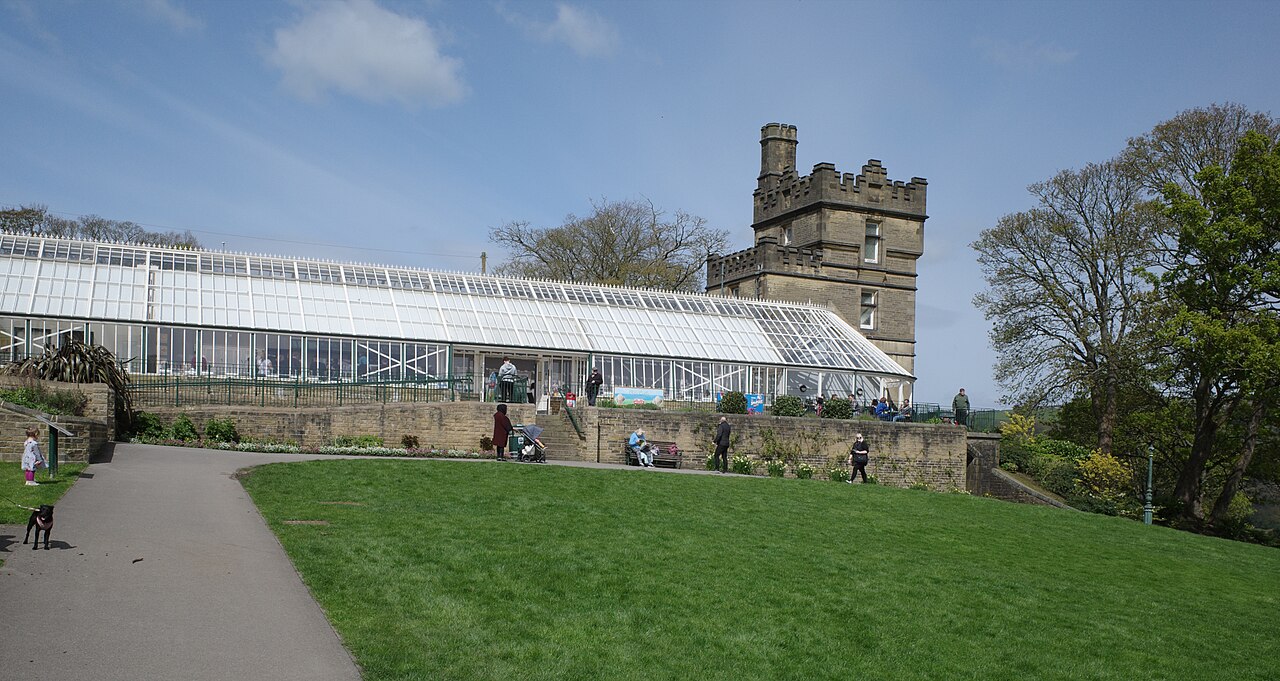
The rebuild was entrusted to CambridgeHOK, which handled design, manufacture and erection. The metal frame, about 26 tonnes, was made at the company's factory in East Yorkshire. The engineers worked mainly from old black-and-white photographs; parts of the original base survived on site. The result follows the original footprint, with a central Dome House and sections that step up towards the back, as the council describes it.
The project's evaluation report records an extra 110,000 pounds for the heating system, required by the council's facilities management. Part of the range serves as a cafe, the Pavilion Cafe, which the same report describes as an independent business. A tree grows in the dome: in October 2017 schoolchildren buried a time capsule at the foot of the tree.
Plant collections
Bradford Council advertises a wide variety of tropical plants and cacti in the glasshouses. The project's evaluation report adds that the Bradford branch of the British Cactus & Succulent Society helped restore the cactus and succulent display, advised on moving the plants during the works, helped plan the new display and carries out its ongoing maintenance; the display also includes advice on growing these plants. A 2018 Geograph caption describes a large collection of cacti and succulents.
The glasshouses also host community art exhibitions, group events and, in March 2018, reptiles at the Easter event, according to the report. A microscope has been installed in the glasshouses.
Visiting
The glasshouses stand in the upper part of the park: walking up the hill or entering from the car park, visitors see them appear with the animal and bird houses on one side and the cafe on the other. The cafe occupies part of the building.
The neighbouring castle houses Cliffe Castle Museum, whose stained glass includes, according to Wikipedia, some of the earliest William Morris glass in the country. The park also hosts a Saturday-morning Parkrun, according to the evaluation report, and has an outdoor play area. A visit to the glasshouses combines naturally with one to the museum.
53.88° N, 1.91° W
Greenhouses nearby
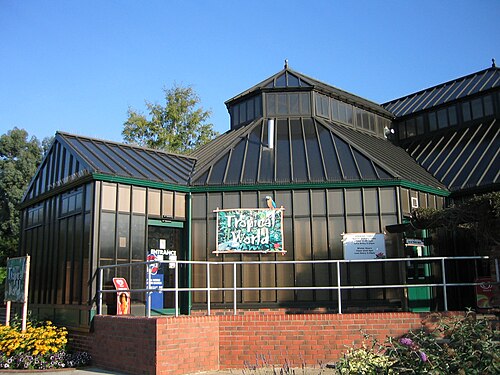
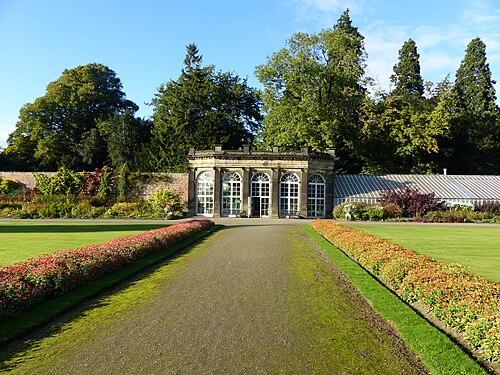
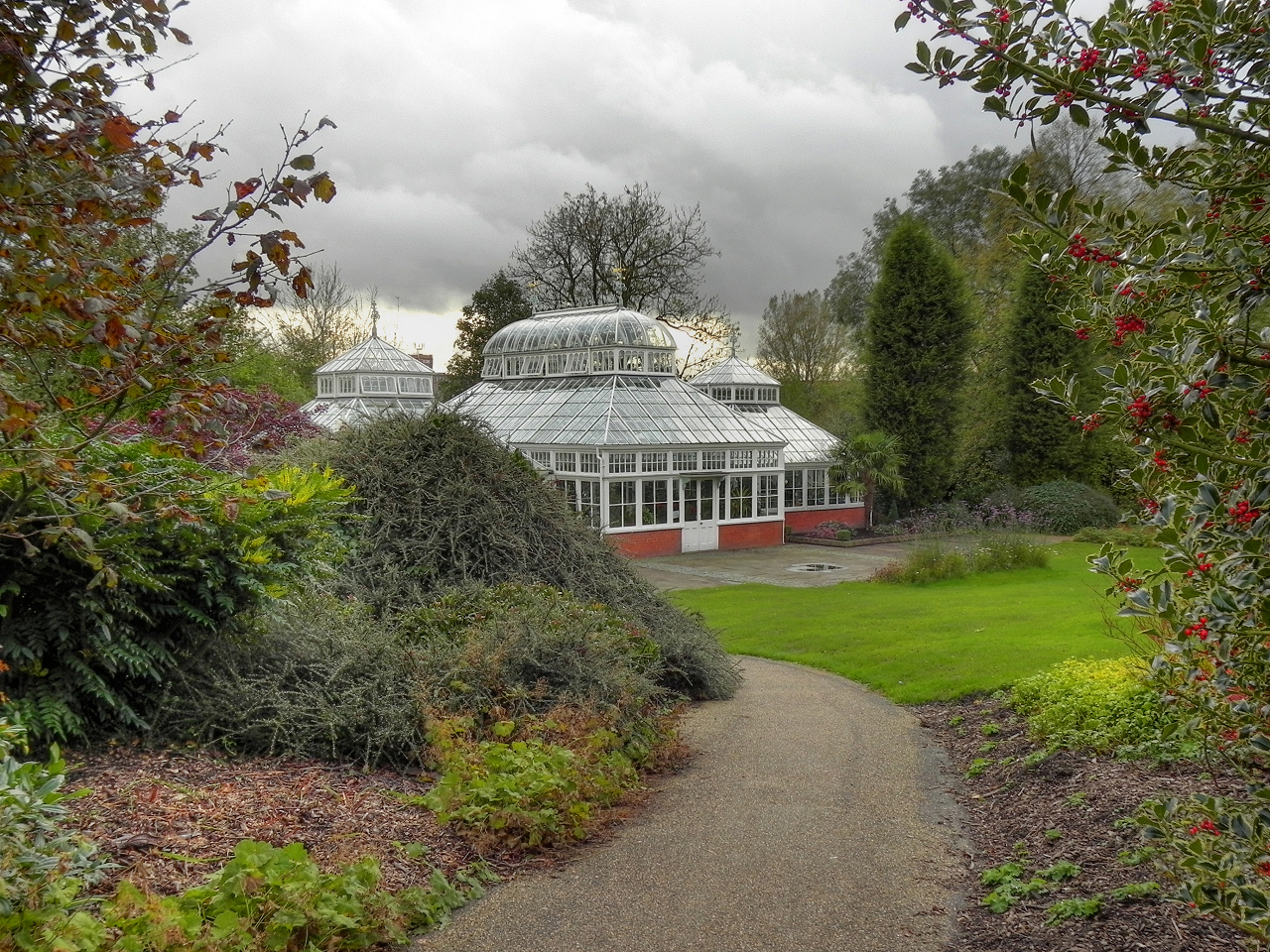
More greenhouses — United Kingdom
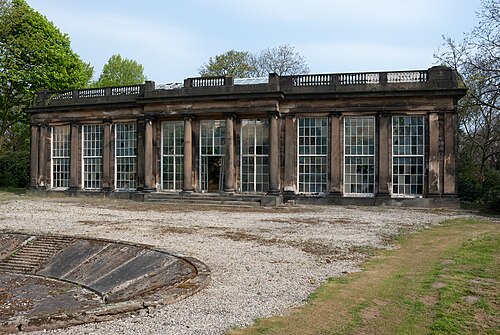
Do you have a good photo of this greenhouse? Suggest it for this page →
Sources (8)
- bradforddistrictparks.org/park/cliffe-castle-museum-park/
- bradforddistrictparks.org/wp-content/uploads/2019/12/HLF-EVALUATION-REPORT-v-1-0-3-1.pdf
- cambridgehok.co.uk/projects/cliffe-castle
- en.wikipedia.org/wiki/Cliffe_Castle_Museum
- bradfordmuseums.org/venue/cliffe-castle-museum/
- casey.co.uk/casestudies/cliffe-castle-park
- geograph.org.uk/photo/5790034
- deborahrehmat.wordpress.com/2016/07/02/cliffe-castledrawing-the-work-3-glasshouses/
Affiliate links — booking through Verrière helps fund our research, at no extra cost to you.