Großes Glashaus and theme houses of the Wuppertal Botanical Garden (Botanischer Garten Wuppertal)
Wuppertal (Elberfeld, Hardt), North Rhine-Westphalia

Sources checked October 2026
- Year
- 2007
- Style
- Three contemporary glasshouses on a metal frame
- Dimensions
- Large glasshouse about 400 m² (south part about 150 m², north part about 250 m²); two satellite houses of about 100 m² each
- Status
- Open to the public, free entry; theme houses by guided tour only
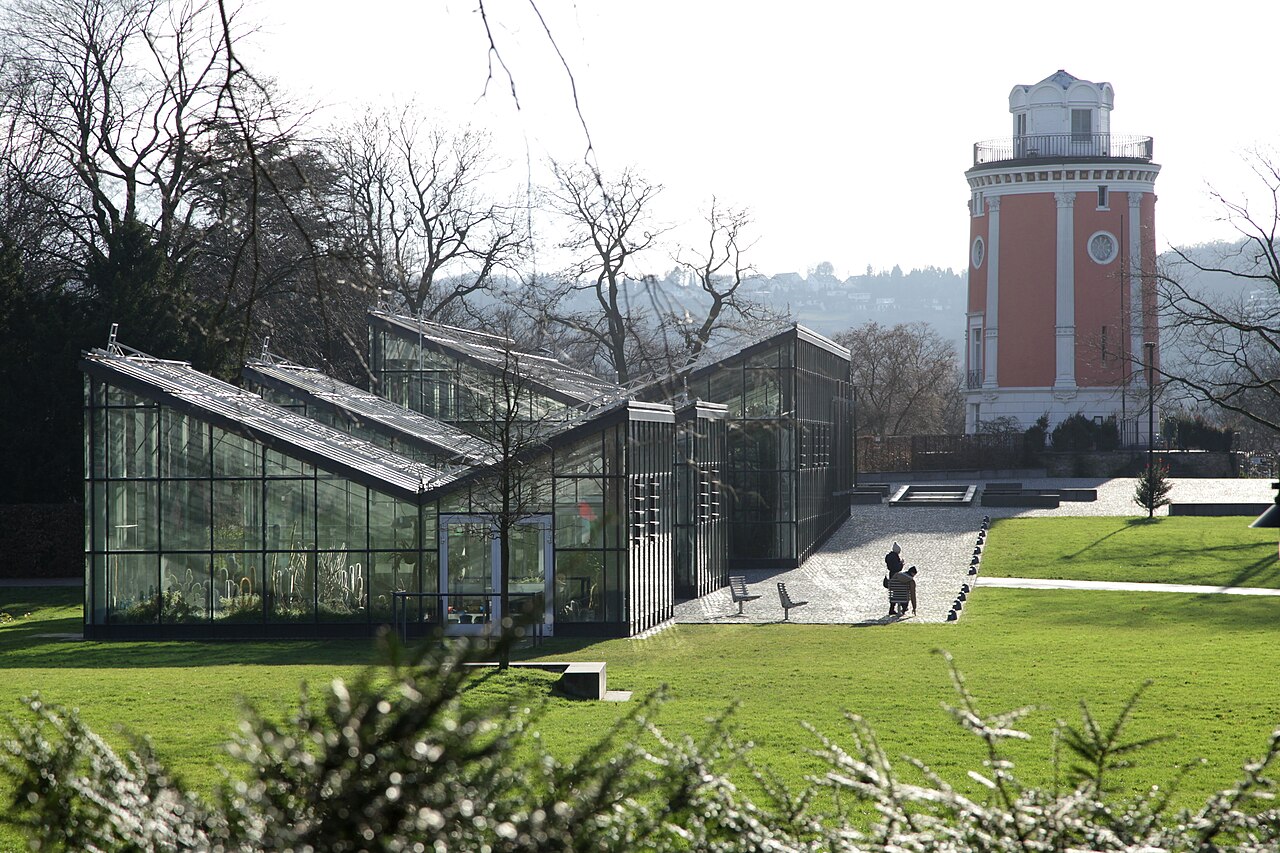
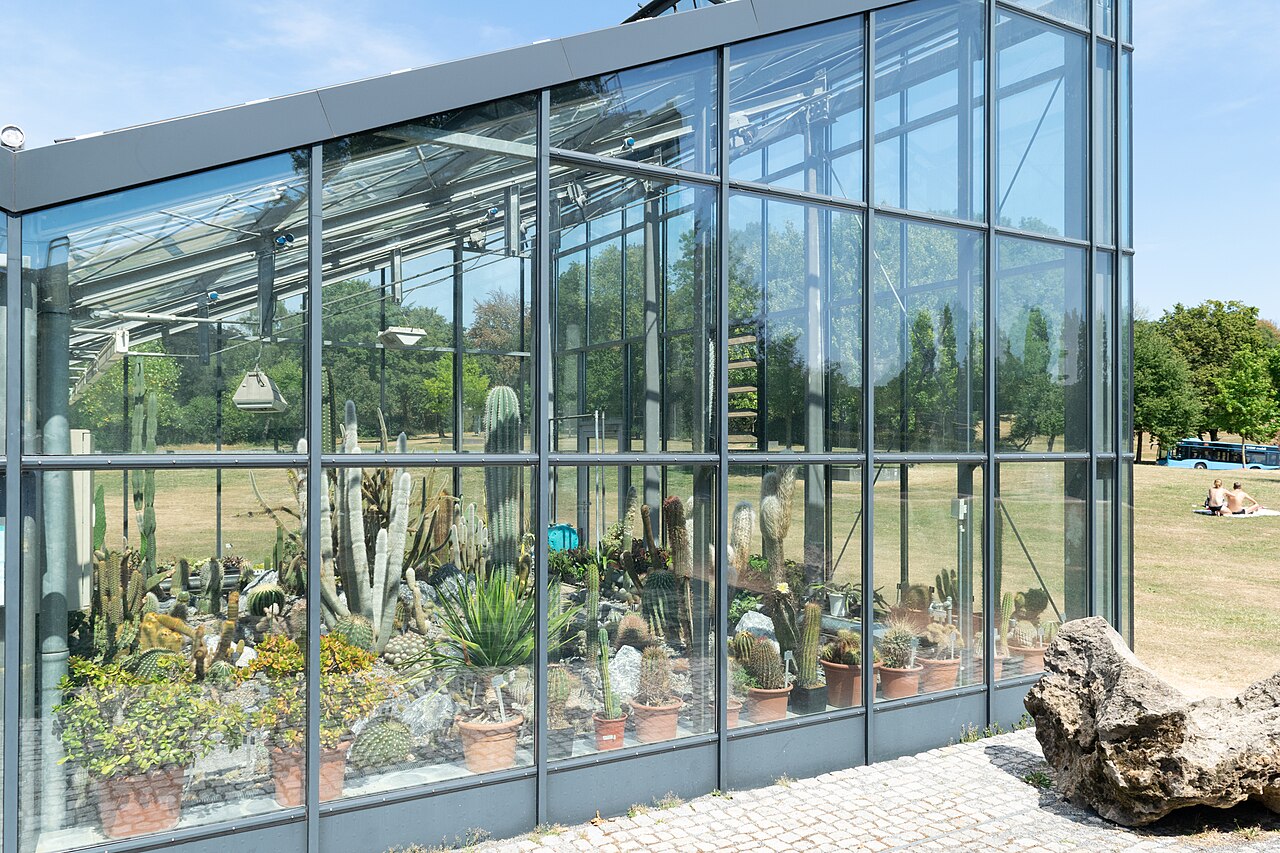
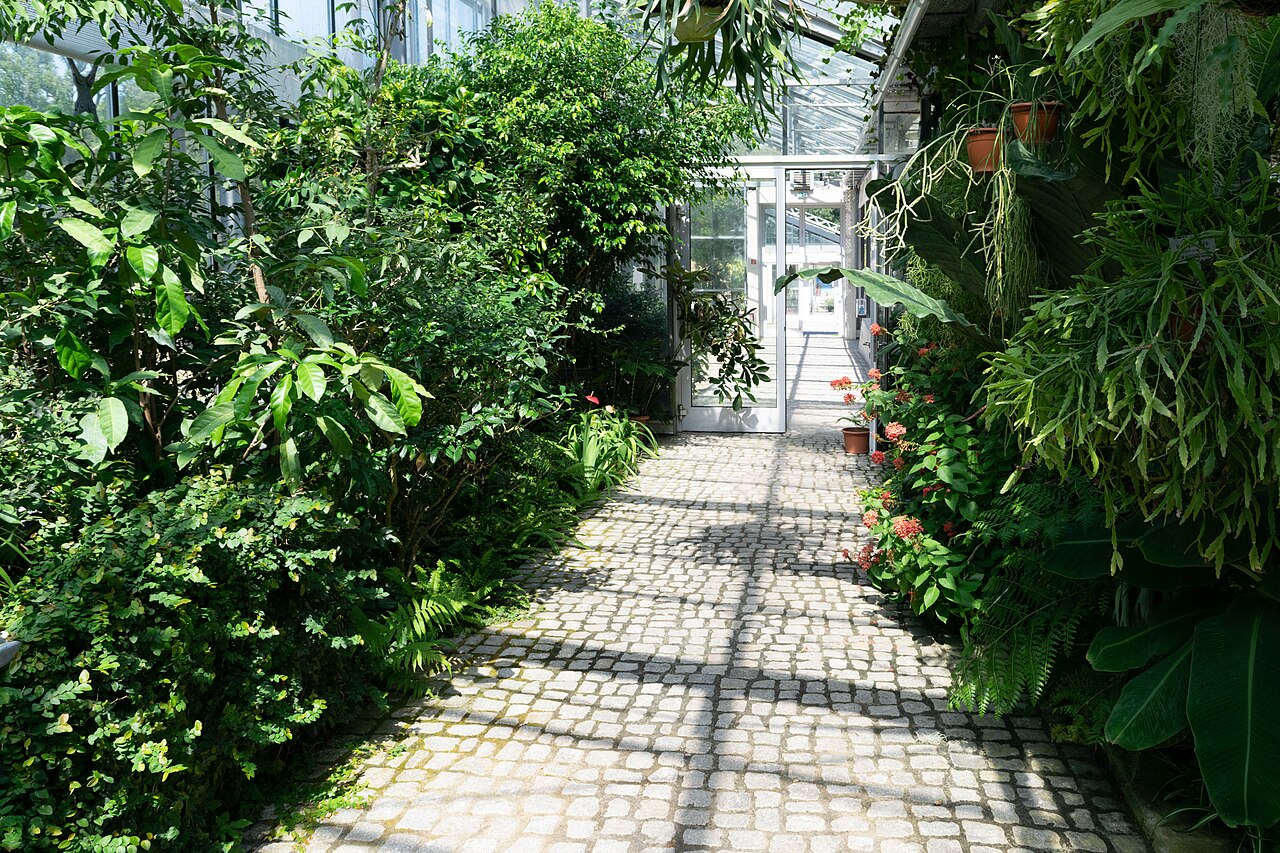
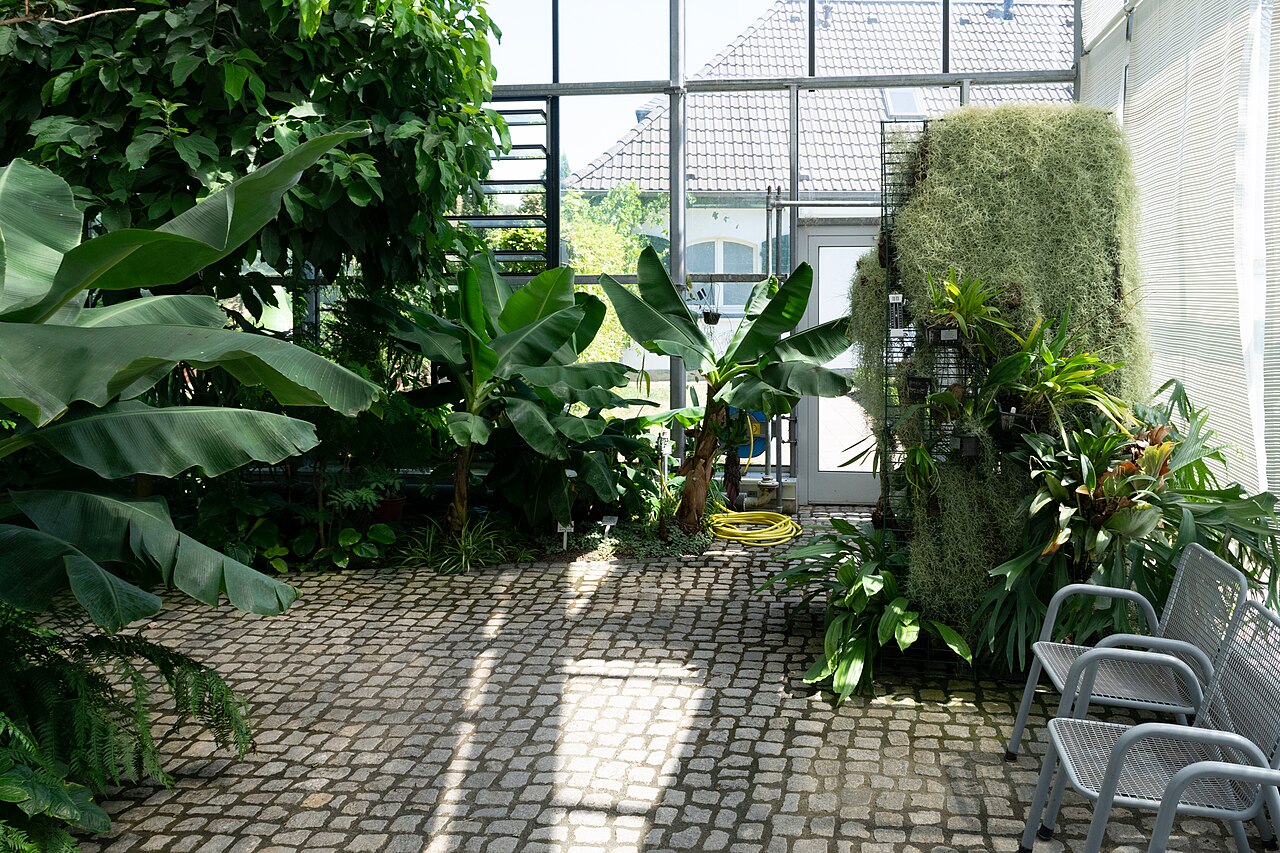
The Wuppertal Botanical Garden's three glasshouses were built under the Regionale 2006 programme on the site of the former Stadtgärtnerei, north of the historic garden, and opened to the public with the Neuer Garten Hardt on 5 May 2007. The main glasshouse, about 400 m², has a southern part given to tropical plants, mostly useful species, and a northern part used as an exhibition hall in summer and as overwintering space in winter. Two satellite houses of about 100 m² each hold bulbs and tuberous plants in one case and cacti in the other; they open only for guided tours.
Affiliate links — booking through Verrière helps fund our research, at no extra cost to you.
History
The Wuppertal Botanical Garden began in 1890 as a botanical school garden of the then independent city of Elberfeld, on the site of today's Hardt rose garden. It moved in 1910 (the friends' association's website speaks of 1908 to 1910) to the Eller estate, where the Elisenturm, a tower of 1838, and an early nineteenth-century landscape garden already stood. It became the municipal botanical garden of Wuppertal after the city was formed in 1929. The garden's friends' association, founded in 1993, financed in 2000 what its website calls its largest project to that date: a show greenhouse for succulent plants.
The present glasshouses stem from the closure, in 2003, of the neighbouring Stadtgärtnerei, which lay to the north and had cut across the Hardt for almost a century. Garden and municipal nursery had worked closely together, notably for overwintering frost-tender plants. A park management plan written in 1990 by the Wuppertal landscape architects Gustav and Rose Wörner had already proposed annexing the land. The Regionale 2006 programme, under its "Freiraumprogramm Talachse" strand, made a new glasshouse complex possible and turned the site into a "new garden for the city". The whole, 3.6 hectares with its three glasshouses, was inaugurated on 5 May 2007 by the mayor, Peter Jung.
Architecture and engineering
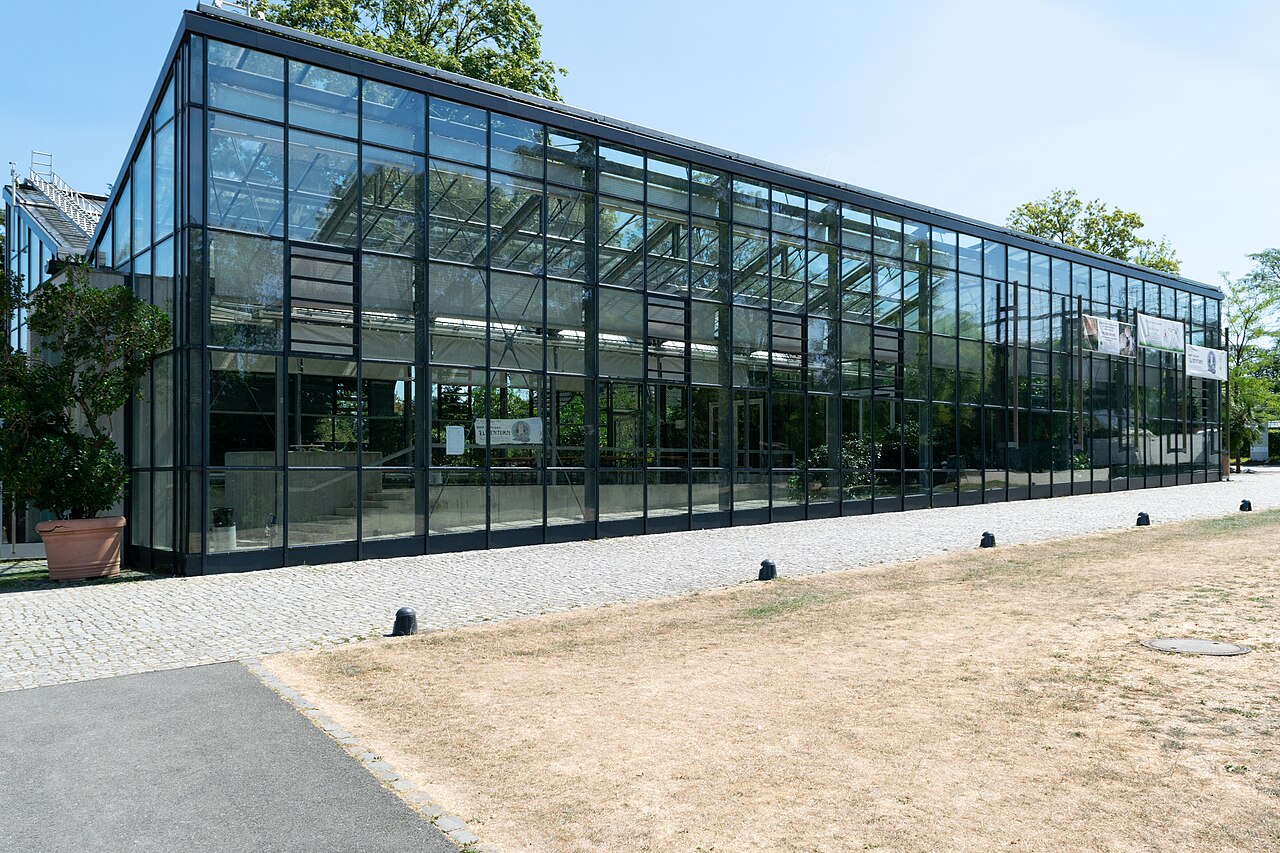
The complex consists of three single-storey buildings: a large Glashaus, which the friends' association's website and Wikipedia also call a demonstration greenhouse (Demonstrationsgewächshaus), with a floor area of about 400 m², and two satellite houses of about 100 m² each. The outline of the main building, mapped in OpenStreetMap as Großes Glashaus, measures about 399 m², which confirms the order of magnitude. Inside, the southern part, about 150 m², is the tropical section; the northern part, about 250 m², serves for exhibitions and events in summer and for overwintering potted plants in winter. The friends' association's website also distinguishes a "Warm- und Kalthausbereich", a warm area and a cold area.
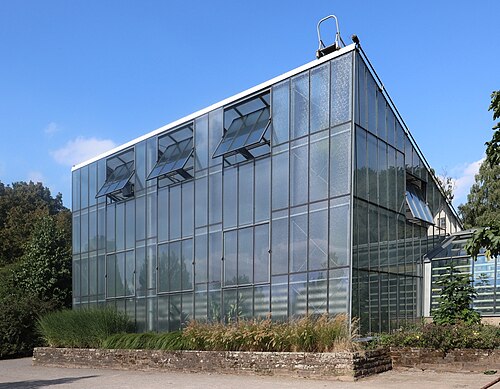
Photographs on Wikimedia Commons dating from 2007 to 2018 show fully glazed walls and roofs on a dark metal frame, volumes with sloping planes that step from one building to the next, and a small, light-coloured masonry entrance block.
Plant collections
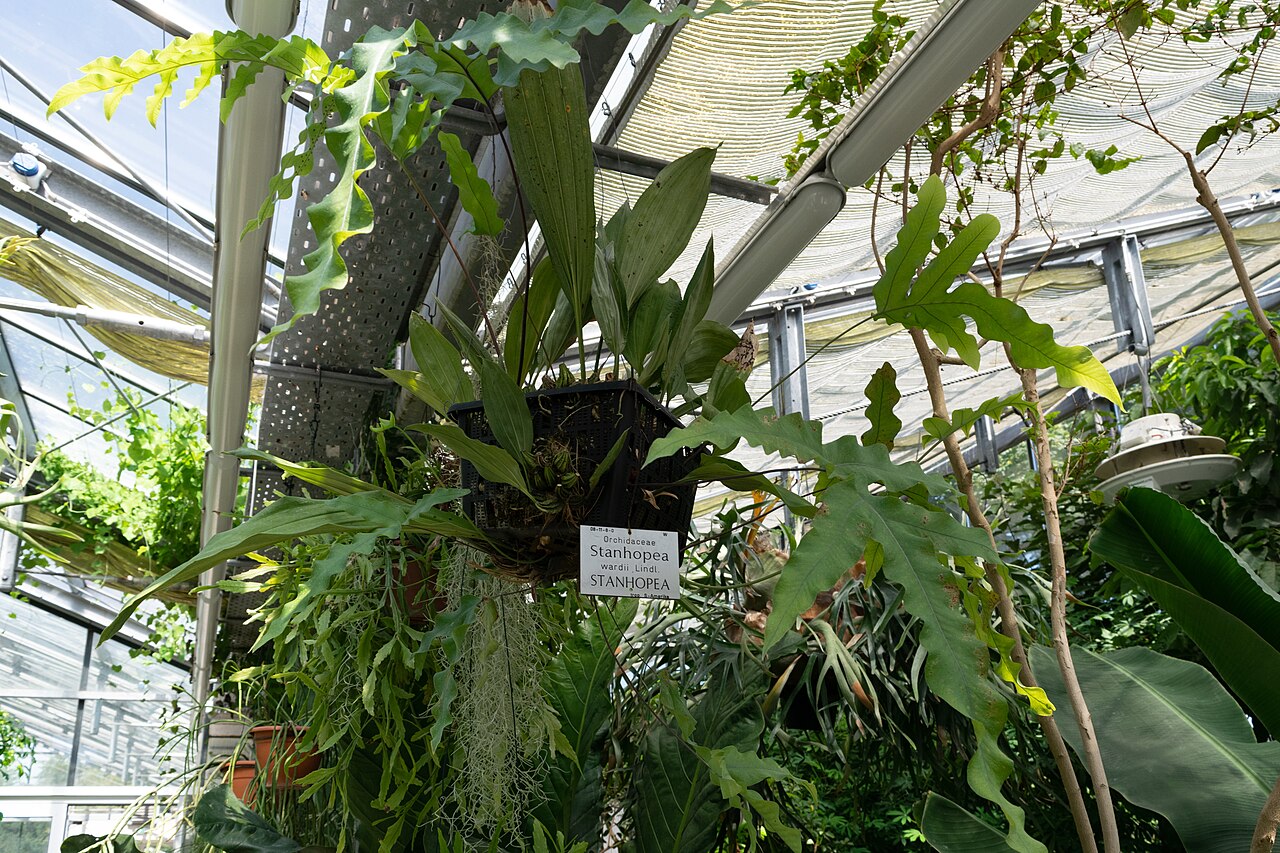
According to the friends' association's website and Wikipedia, the southern part of the main glasshouse shows tropical plants at the garden for the first time, with an emphasis on useful plants. The two satellite houses hold specialist collections of bulbs and tuberous plants and of cacti, with the official website adding succulents. The EGHN heritage network likewise describes three houses: one for cacti, one for bulbs and tubers, and a hothouse for tropical and subtropical plants.
The rest of the garden holds, according to the association, about 4,000 species, including some 400 protected species that are grown and propagated. Bulbous plants have a special place: the website cites the genera Cyclamen, Iris, Paeonia, Scilla, Moraea, Babiana and Gladiolus, and the EGHN notes wild cyclamen and crocus that stand out in spring. The EGHN also mentions carnivorous plants, such as the Venus flytrap, displayed alongside plants that store water. In summer the northern part of the Glashaus hosts exhibitions.
Visiting
The glasshouses stand in the northern part of the garden, on the former Stadtgärtnerei site, north of the Elisenturm, a tower of 1838 that is 21.40 m high, and close to the Villa Eller and its orangery. Entry to the garden is free. The main Glashaus has shorter hours than the garden and is occasionally closed on Mondays; the theme houses (cacti, succulents, bulbs and tubers) open only on guided tours, which the EGHN lists as bookable through the garden. The same network puts a visit at about two hours. It combines naturally with the historic Hardt park next door, begun in 1807 and extended by Heinrich Siesmayer between 1880 and 1882, and with a walk up to the Elisenturm.
51.26° N, 7.16° E
Greenhouses nearby
More greenhouses — Germany
Do you have a good photo of this greenhouse? Suggest it for this page →
Sources (8)
- botanischer-garten-wuppertal.de/wordpress/
- botanischer-garten-wuppertal.de/wordpress/?page_id=2001
- botanischer-garten-wuppertal.de/wordpress/?page_id=2064
- de.wikipedia.org/wiki/Botanischer_Garten_Wuppertal
- en.wikipedia.org/wiki/Botanischer_Garten_Wuppertal
- eghn.org/en/hardt-botanical-garden/
- naturparkbergischesland.de/en/poi/wuppertal-botanical-garden
- openstreetmap.org/way/105591938
Affiliate links — booking through Verrière helps fund our research, at no extra cost to you.