Schlossgärtnerei and Pineapple House, Muskau Park (Fürst-Pückler-Park Bad Muskau)
Bad Muskau, Saxony

Sources checked October 2026
- Year
- 1833; pineapple house rebuilt in 2012
- Style
- Row of due-south-facing glasshouses with brick north walls and timber and metal frames
- Status
- Open to the public from April to October ("Pineapple!" exhibition, daily in 2026)
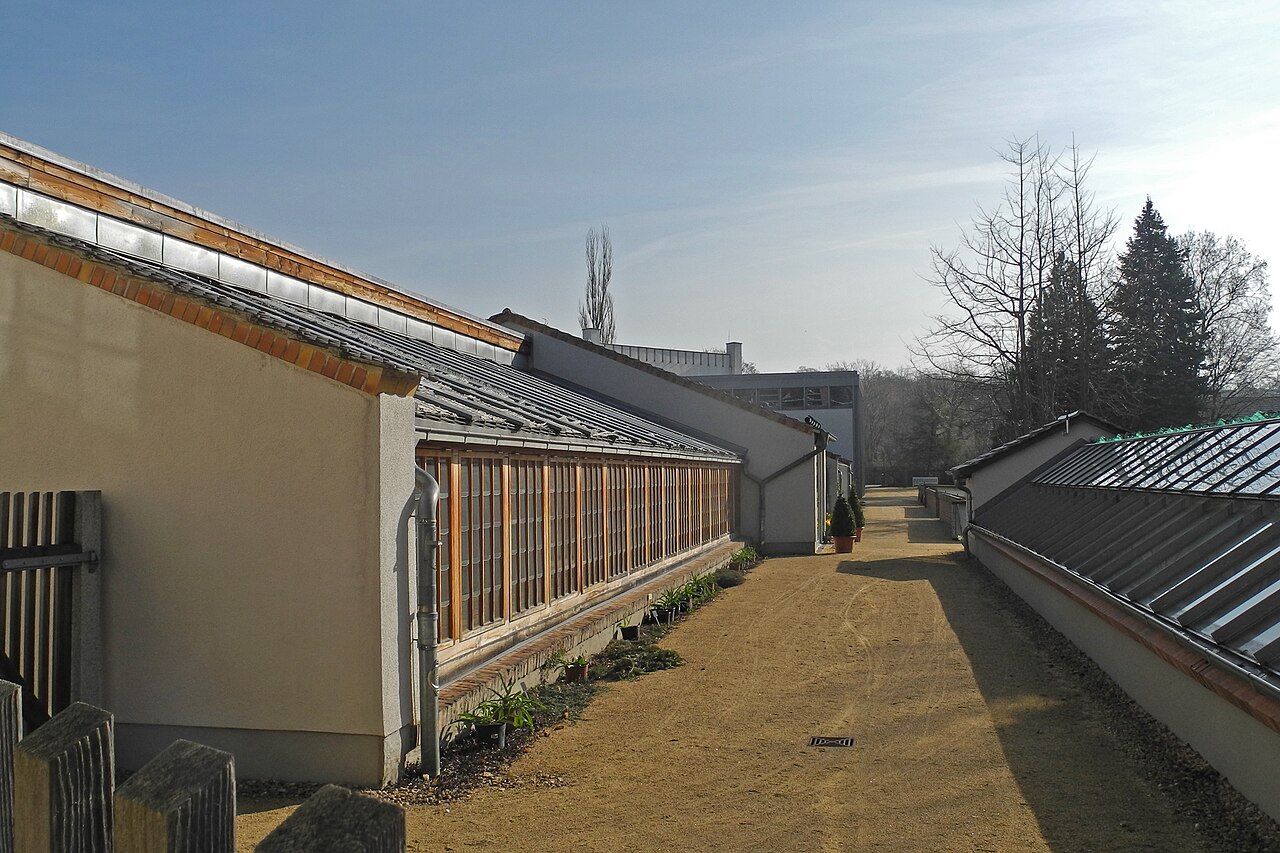
The Schlossgärtnerei of Muskau castle, on the German bank of the Fürst-Pückler park, brings together a row of glasshouses, a kitchen garden closed by an espalier fruit wall and an exhibition devoted to the pineapple. The present buildings date from 1833 and the years after, starting with the pineapple house; restored in 2012 on historical models and old drawings, the nursery grows pineapples again, as it did in the time of Pückler and his grandfather. The glasshouses face due south, with brick walls on the north side and timber or metal frames. The whole is open from April to October.
Affiliate links — booking through Verrière helps fund our research, at no extra cost to you.
History
A nursery and kitchen garden served Muskau castle long before Pückler's time. The prince's grandfather, Count Hermann von Callenberg, grew the first pineapple in Bad Muskau; Hermann von Pückler-Muskau (1785-1871), the creator of the park, took up the idea. The present buildings, however, date only from 1833, beginning with the pineapple house: its construction started that year in the kitchen garden near the Schlossvorwerk and was completed in 1834 according to Wikipedia. The row of glasshouses then lengthened bit by bit and took in other frost-tender plants. When pineapples became easier to transport in the early twentieth century, growing them stopped paying.
After the Second World War the nursery mainly produced fruit and vegetables to feed the people of Muskau. In 1959 a Tropenhaus opened in the glasshouses, in East German times; its exotic plants fascinated visitors who could not travel far. The Stiftung Fürst-Pückler-Park Bad Muskau restored the nursery in 2012: the pineapple house was rebuilt from old drawings and pineapple growing resumed. The park's website speaks of glasshouses and a kitchen garden rebuilt on historical models, the Schlösserland Sachsen portal of glasshouses put back into repair. According to the TU Dresden, a freelance landscape architect laid the groundwork for this revival, starting from a student diploma thesis.
Architecture and engineering
The Schlossgärtnerei is a row of glasshouses (Gewächshauszeile) facing exactly south, to let in as much sun as possible and to cut winter heating. The foundations and the north sides of the houses are of brick; to frame the panes, timber was used (in the pineapple house) and metal. The tallest building is the "Grüner Salon"; the Orangerie stands behind the row, as a photograph issued by the foundation, taken from the kitchen garden, shows.
In front of the glasshouses lies the Küchengarten, closed by an espalier fruit wall (Spalierobstmauer), also rebuilt on historical models. The pineapple house was rebuilt from old drawings.
Plant collections
Today the nursery again grows fruit, vegetables, flowers and pineapples. In one of the glasshouses a raised bed holds pineapple plants; a plant takes three years to bear a fruit. The foundation's gardeners have grown pineapples in Bad Muskau since 2012, as Pückler and his grandfather did.
In the re-created kitchen garden the beds mix vegetables and herbs in the manner of Pückler's own kitchen garden, with many plants to smell and taste. Wikipedia also lists, among the surviving elements of the park, a historic Tropenhaus with cacti, without saying where it stands today or whether it is accessible. In the restored glasshouses a permanent exhibition, "Pineapple! The Queen of Fruits in Muskau Park", traces the cultural history and cultivation of the fruit, at Muskau and elsewhere.
Visiting
The Schlossgärtnerei lies in the castle's service buildings, near the Orangerie, on the German bank of the park. It opens from April to October; visitors find the permanent pineapple exhibition, the glasshouses and the kitchen garden. The entrance to the Schlossgärtnerei has a call button for wheelchair users, buggies and walking frames, and the exhibition is wheelchair accessible. The foundation also mentions a glazed room that can be used for celebrations.
A visit combines with the park, inscribed by UNESCO in 2004, the Neues Schloss and the Orangerie, where the potted orange trees spend the winter. The park's visitor centre, in the west wing of the Neues Schloss, offers regular guided tours of the landscape, setting out from the centre.
51.55° N, 14.73° E
Greenhouses nearby
More greenhouses — Germany
Do you have a good photo of this greenhouse? Suggest it for this page →
Sources (7)
- muskauer-park.de/ausstellungen/schlossgaertnerei
- muskauer-park.de/media/pages/files/ae40ce04d6-1782112406/6_steckbrief-schlossgaertnerei.pd
- muskauer-park.de/besuch-planen
- schloesserland-sachsen.de/de/veranstaltungen-ausstellungen/detailseite/event/schlossgaertn
- de.wikipedia.org/wiki/Muskauer_Park
- tu-dresden.de/bu/architektur-landschaft/ila/gla/forschung/forschungsfelder/gaertnern-unter
- historicalgardensblog.com/?p=73
Affiliate links — booking through Verrière helps fund our research, at no extra cost to you.