Karlsaue Orangery
Kassel

Sources checked September 2026
- Year
- 1701–1739
- Style
- French baroque, octagonal central pavilion flanked by two corner pavilions
- Dimensions
- ≈140 m long, 35 window bays
- Status
- Museum closed for renovation; park and exterior accessible
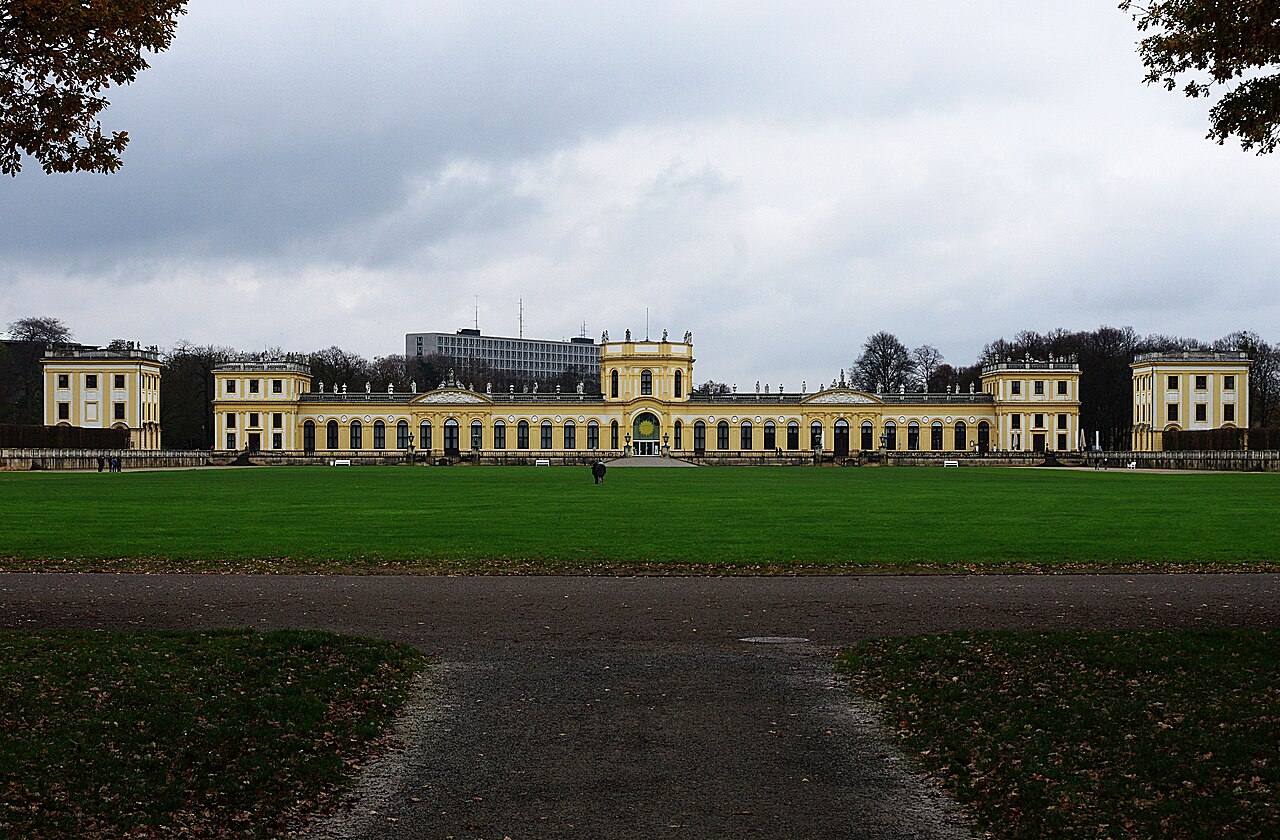
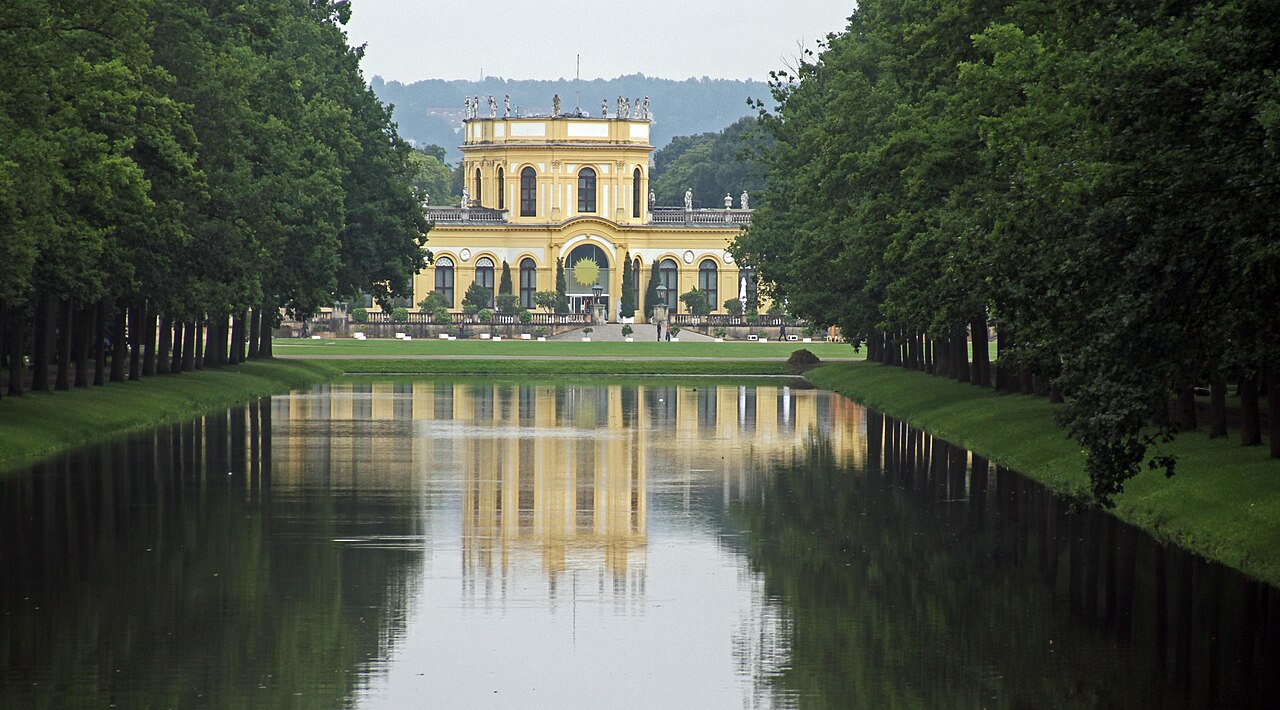
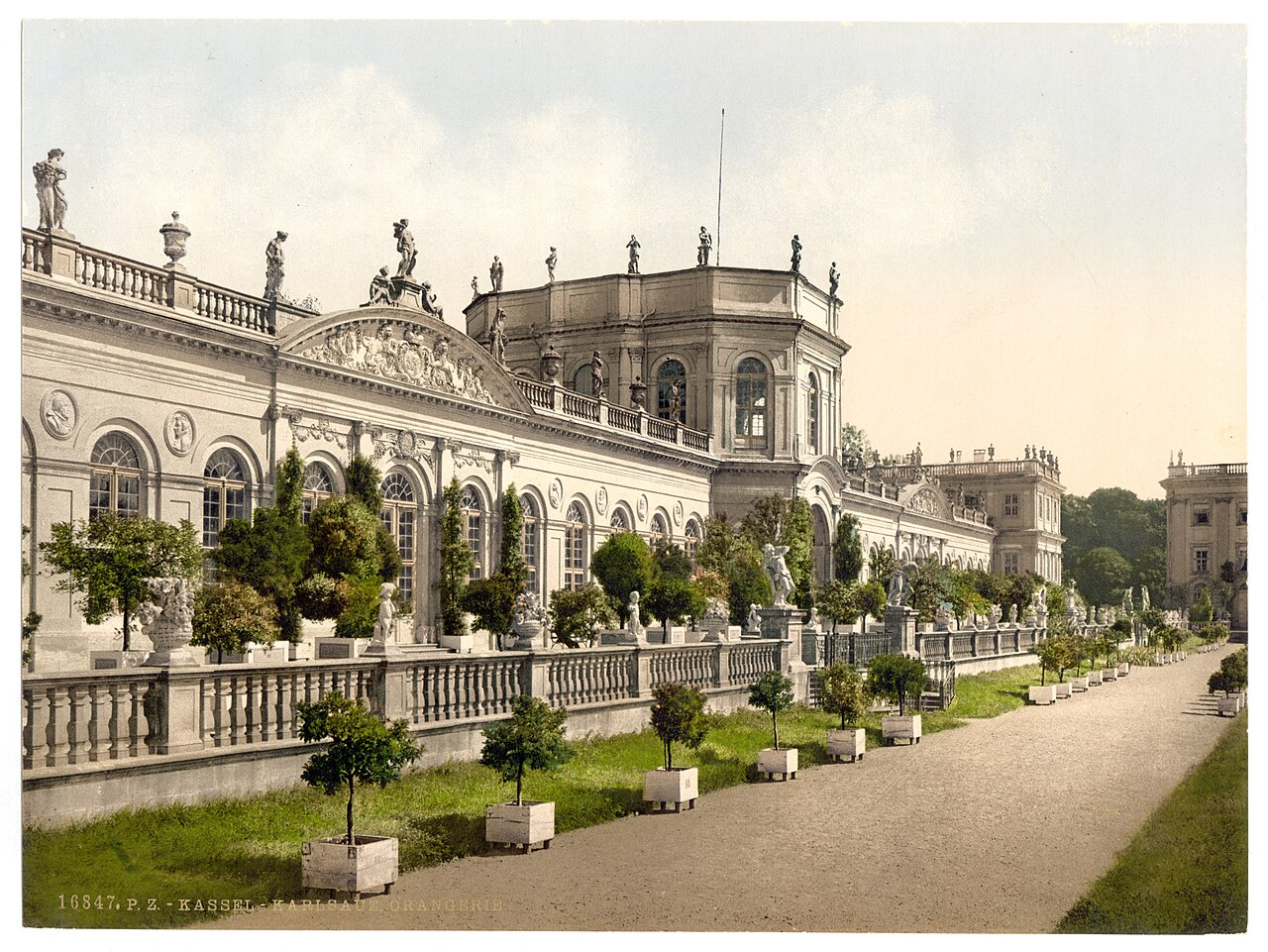
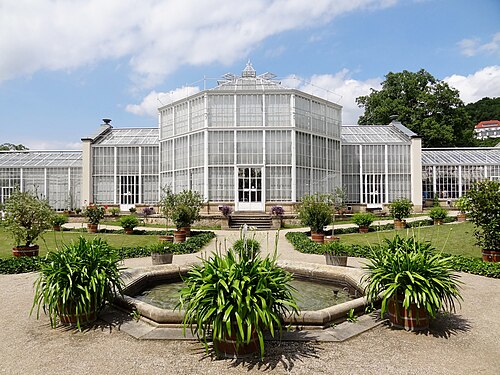
Rebuilt between 1701 and 1739 after the fire of 1700, the Karlsaue Orangery combines a two-storey octagonal central pavilion with two corner pavilions joined by low galleries. An inventory of 1800 recorded around 150 orange trees and 40 bay trees here. Damaged by bombing in October 1943, it was rebuilt for the 1981 Bundesgartenschau and now serves as an exhibition venue, with its potted citrus trees displayed in a historical arrangement.
History
Citrus growing on the banks of the Fulda goes back a long way. In 1568 Landgrave Wilhelm IV laid out a pleasure garden on an island in the river, complete with a house for bitter oranges; it was rebuilt in 1579 and partly wrecked by a storm in 1583. Fire destroyed the orange house in 1688, and its successor burned down in turn in August 1700.
Landgrave Karl of Hesse-Kassel then launched the present Orangery palace, designed by his court architect Johann Conrad Giesler after French baroque models. The main building is placed between 1701 or 1703 and 1711, while completion of the whole ensemble is sometimes dated as late as 1739. The Marmorbad, a marble bath pavilion at the western end, was finished in 1722, and Simon Louis du Ry's kitchen pavilion was added in 1765 to balance it on the east. In the 1760s Landgrave Friedrich II used the roofs to follow the moon and planets through his telescopes.
The British air raid of 22 October 1943 left the Orangery a burnt-out shell; only the Marmorbad survived. The ruins served as a backdrop for the 1955 Federal Garden Show and for documenta II in 1959. Reconstruction was completed only in 1981, for another Federal Garden Show, at the cost of much of the original fabric. The building is now undergoing a thorough renovation that has closed its museum spaces.
Architecture and engineering
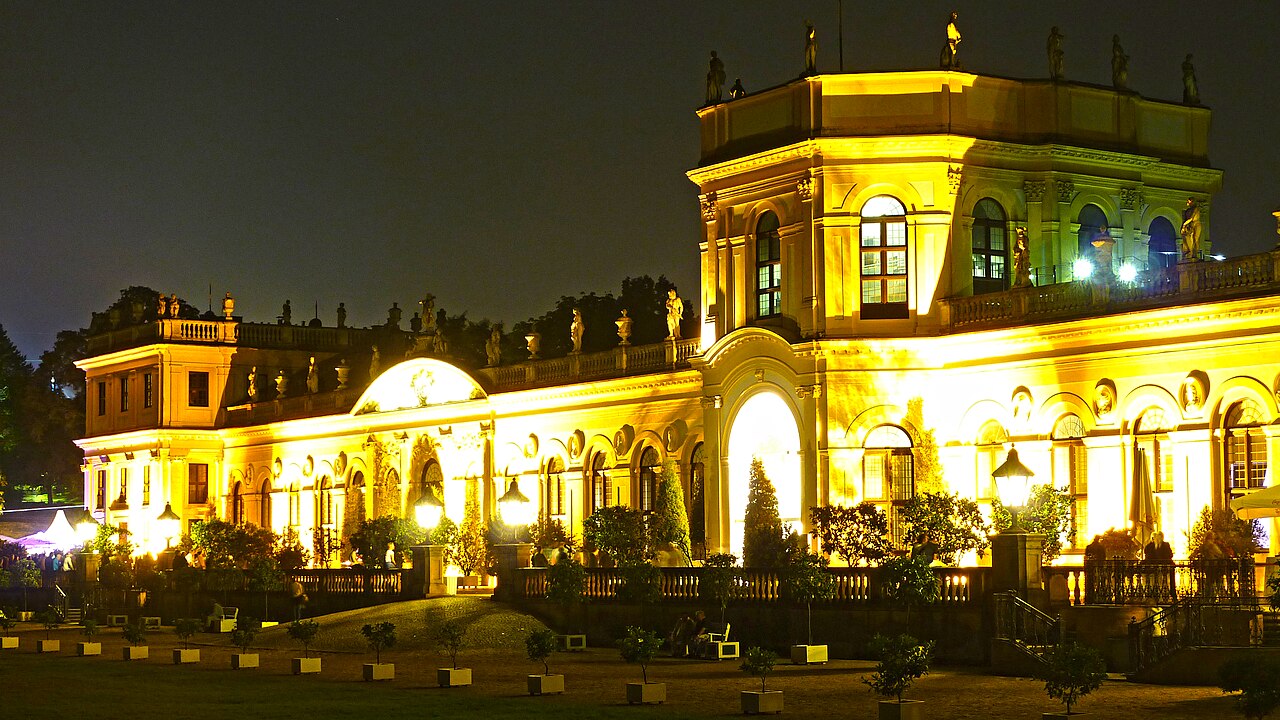
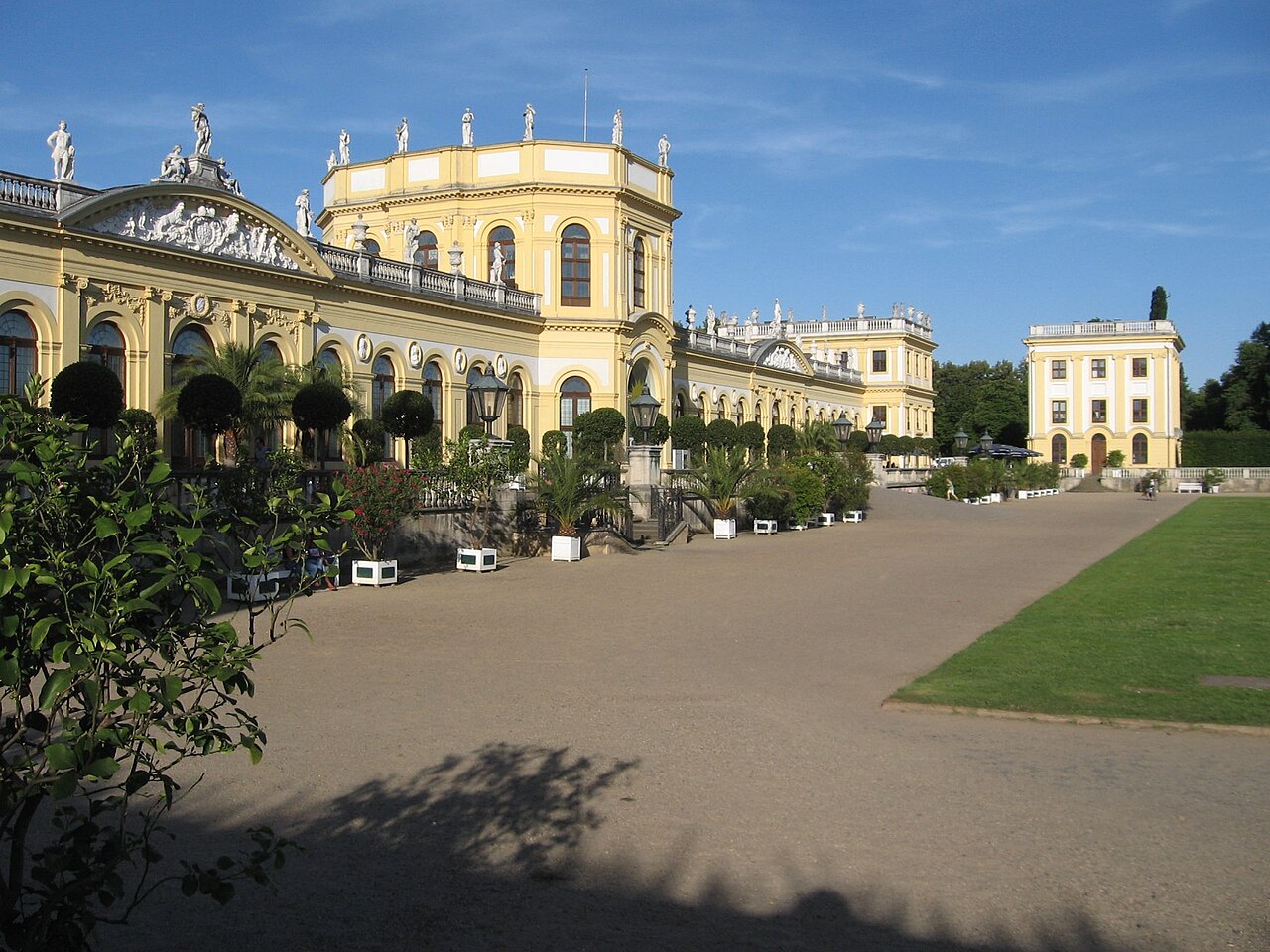
The main building is 139.40 metres long, with 35 window bays. It consists of three pavilions joined by low single-storey galleries: in the centre, a taller two-storey block, described as octagonal, holds the Apollo Hall on its upper floor; at either end, three-storey corner pavilions housed the apartments of the landgrave and his wife. Originally an open arcade ran through the building, linking the different parts of the garden.
The plan reflects the building's dual role. The long galleries served as festive halls in summer and as winter quarters for tubbed plants, while the pavilions formed a summer residence. Two separate buildings, the Marmorbad and the kitchen pavilion, frame the composition on either side. The yellow façade, visible from far across the Karlsaue, faces south over the gardens of the Karlsaue. When the palace was rebuilt in 1981, the south front was only partly restored to its original form.
Plant collections
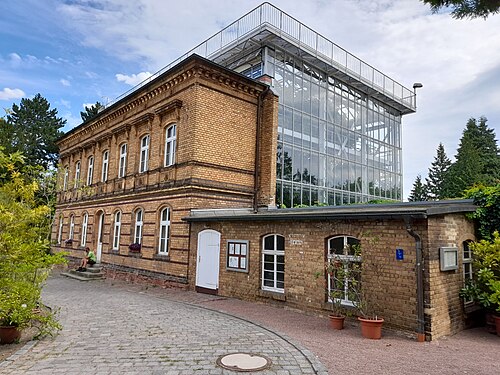
The earliest surviving inventory, from 1800, lists about 150 orange trees and 40 bay trees up to twelve feet tall, together with 181 other greenhouse plants including cacti, shrubs and perennials. Since the 1981 reconstruction the galleries no longer serve as winter quarters; the plants now overwinter in a modern glasshouse built at the park's maintenance yard.
In the warmer months tubbed plants are once again set out in front of the building and on the terraces: eugenias, oleanders, bay, pomegranates, aucubas and citrus, including standard-trained bitter oranges (Citrus × aurantium). Indoors, the Orangery houses the Astronomical-Physical Cabinet, the former princely collection of scientific instruments and clocks, as well as the largest planetarium in Hesse.
Visiting
The Orangery marks the northern entrance to the Karlsaue, a large baroque park beside the Fulda. The tubbed plants are on show only in the warmer months, when the terrace also hosts outdoor dining and cultural events. During the current renovation the Astronomical-Physical Cabinet's permanent exhibition is closed, with selected pieces shown at the Hessisches Landesmuseum, while the planetarium remains open for shows booked in advance. A walk can continue to the Marmorbad, the planetary trail laid out in 1996 and, in documenta years, the exhibitions staged in the park.
51.31° N, 9.50° E
Greenhouses nearby
Architecture nearby
More greenhouses — Germany
Do you have a good photo of this greenhouse? Suggest it for this page →
Sources (8)
- heritage-kassel.de/en/locations/orangerie
- heritage-kassel.de/en/locations/planetarium
- de.wikipedia.org/wiki/Orangerie_(Kassel)
- en.wikipedia.org/wiki/Orangerie_(Kassel)
- orangeriekultur.de/pages/orangerien/orangerien-und-glashaeuser-in-deutschland/hessen/orang
- burgen.de/burgen-und-schloesser/deutschland/orangerieschloss/
- kassel.de/buerger/kunst_und_kultur/parks_und_gaerten/karlsaue/orangerie.php
- openstreetmap.org/way/25637454