Großes Gewächshaus (Great Greenhouse), Bergpark Wilhelmshöhe
Kassel, Hesse
Entry updated on October 3, 2026
- Year
- 1822–1823
- Architect
- Johann Conrad Bromeis
- Style
- Filigree iron-and-glass construction; central block rebuilt 1886-1888
- Status
- Open to the public in winter (November to March)
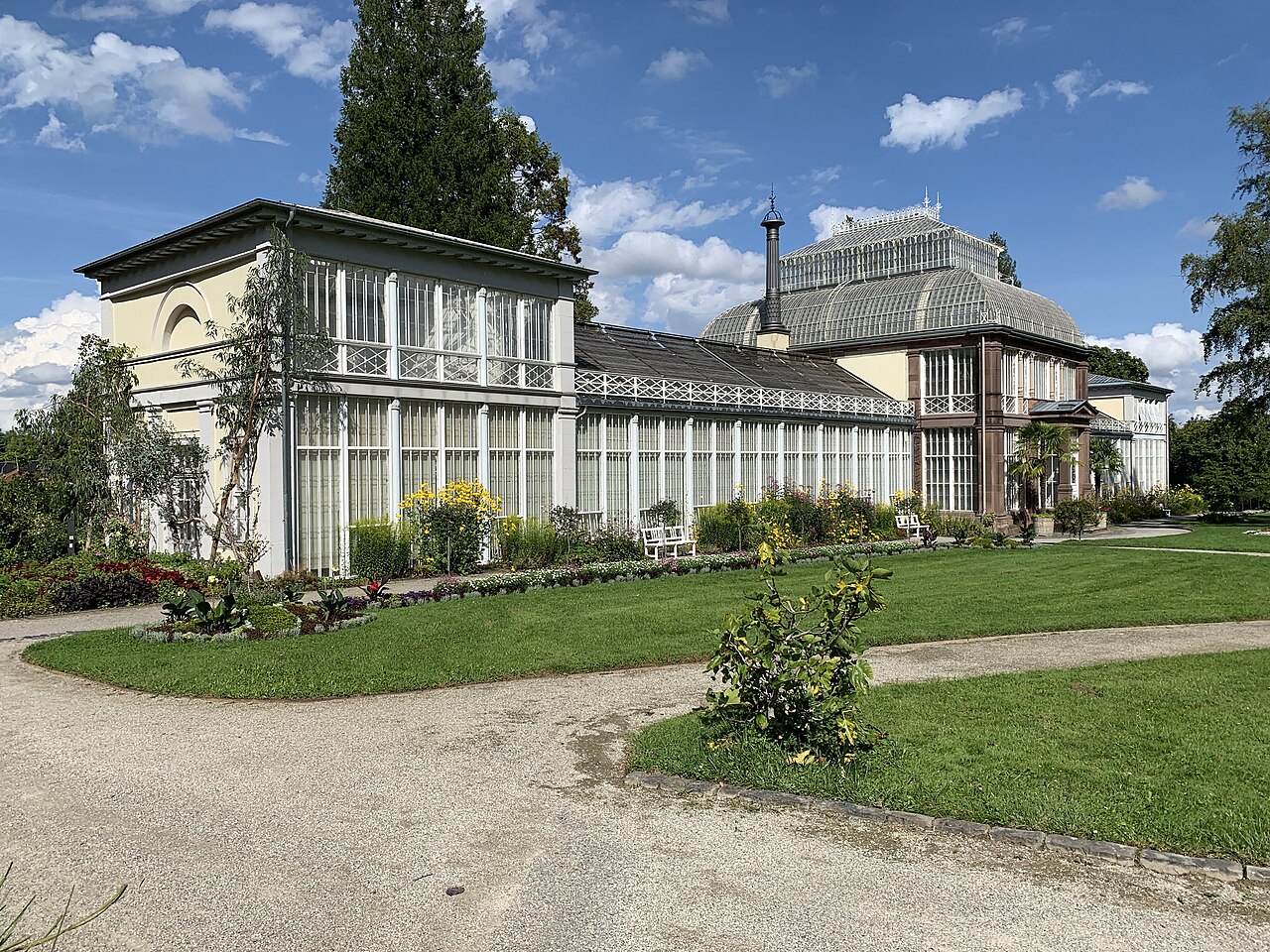
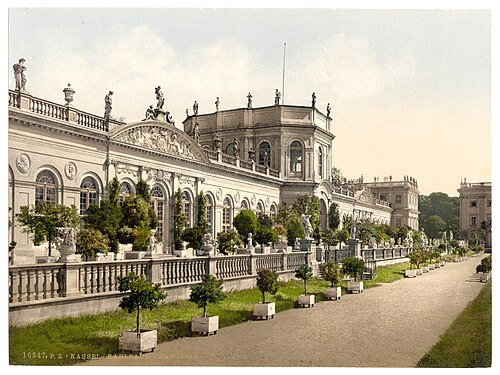
Near Wilhelmshöhe Palace in Kassel's Bergpark, the Great Greenhouse was built in 1822-1823 by court architect Johann Conrad Bromeis for Elector William II of Hesse-Kassel, who wished to grow precious exotic plants. Its delicate iron-and-glass frame makes it one of the earliest buildings of its kind in Europe. The round central salon where the elector took tea with his guests was replaced in 1886-1888 by a large rectangular block used as a palm house. Open in winter, it shelters palms, bananas, orchids and camellias, some of the container plants being up to 150 years old.
Affiliate links — booking through Verrière helps fund our research, at no extra cost to you.
History
1 min
The Great Greenhouse at Wilhelmshöhe grew out of Elector William II of Hesse-Kassel's taste for exotic plants. In 1822-1823 he had his court architect, Johann Conrad Bromeis, build it close to the palace that overlooks the Bergpark. The building was meant to let frost-tender species spend the winter under cover, and an elaborate heating system kept it at a comfortable temperature throughout the cold season.
The greenhouse was more than a horticultural tool. In the round salon at its centre the elector received his guests for tea and showed them his collection of precious plants. This dome-like pavilion disappeared during the alterations of 1886 to 1888, when it was replaced by a large rectangular central block, more massive than its predecessor, into which the warm-house plants were moved.
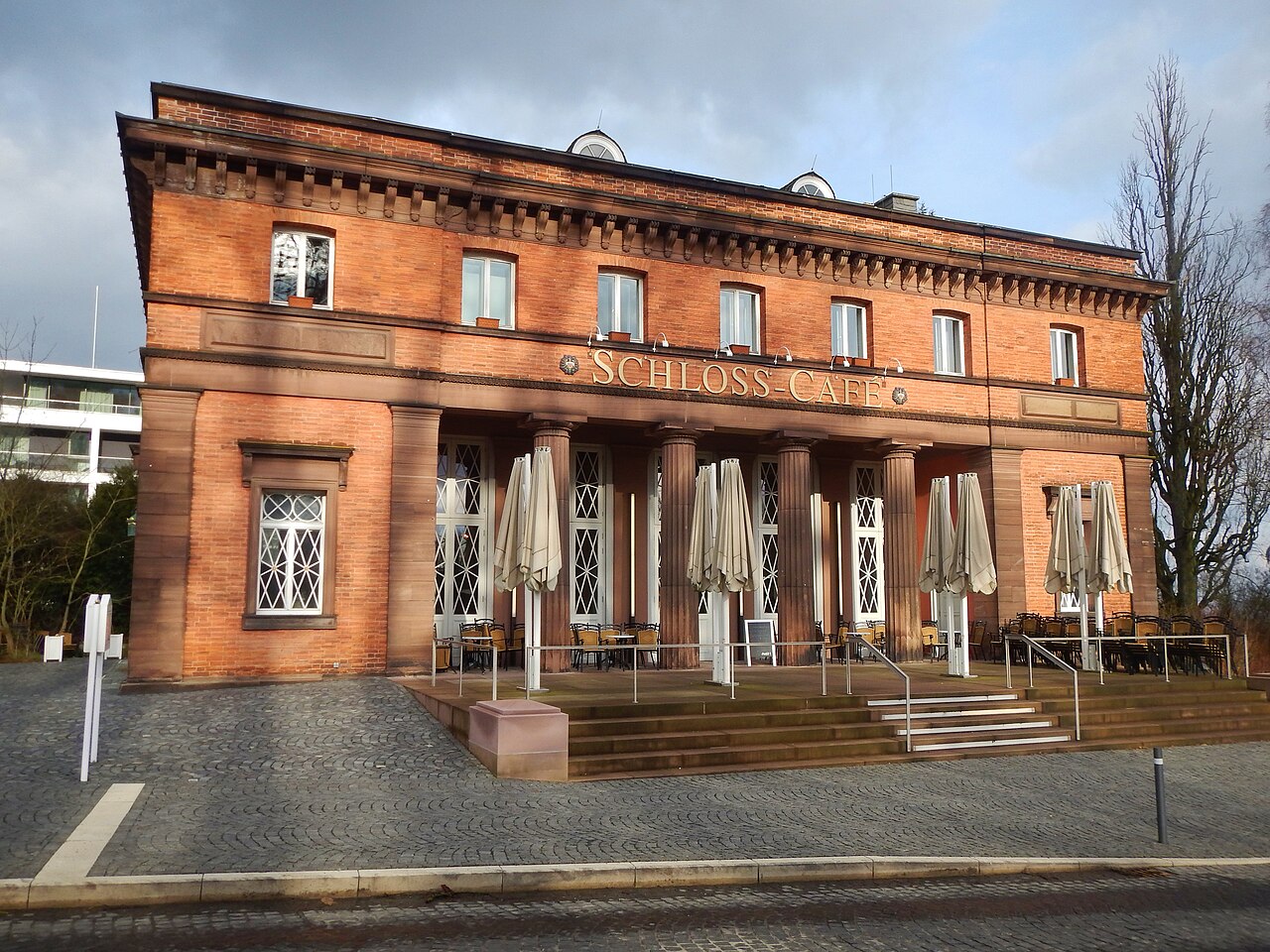
The building is a listed monument and belongs to the Bergpark Wilhelmshöhe, a UNESCO World Heritage site. It is run by the Museumslandschaft Hessen Kassel, which now presents itself as Hessen Kassel Heritage and also manages Wilhelmshöhe Palace. Part of the plants it holds today are historic specimens.
Architecture and engineering
1 min
Bromeis designed a delicate structure combining an iron frame with large glazed surfaces, a pioneering solution in Germany at the time; the greenhouse is counted among the earliest examples of this way of building on the European continent. The original layout joined a long glazed range to a round, dome-like central pavilion that served as a salon. The collection database of Hessen Kassel Heritage holds a section drawing through the long house (Langhaus) and the central block.
The 1886-1888 works replaced the salon with a large rectangular central volume, more solid than its predecessor and conceived as a palm house. The building as a whole nonetheless keeps its light iron-and-glass construction, which is still what makes it remarkable today. Heating mattered from the start: the system installed for the elector allowed tropical plants to come through the Hessian winter. The sources consulted do not publish the dimensions of the building.
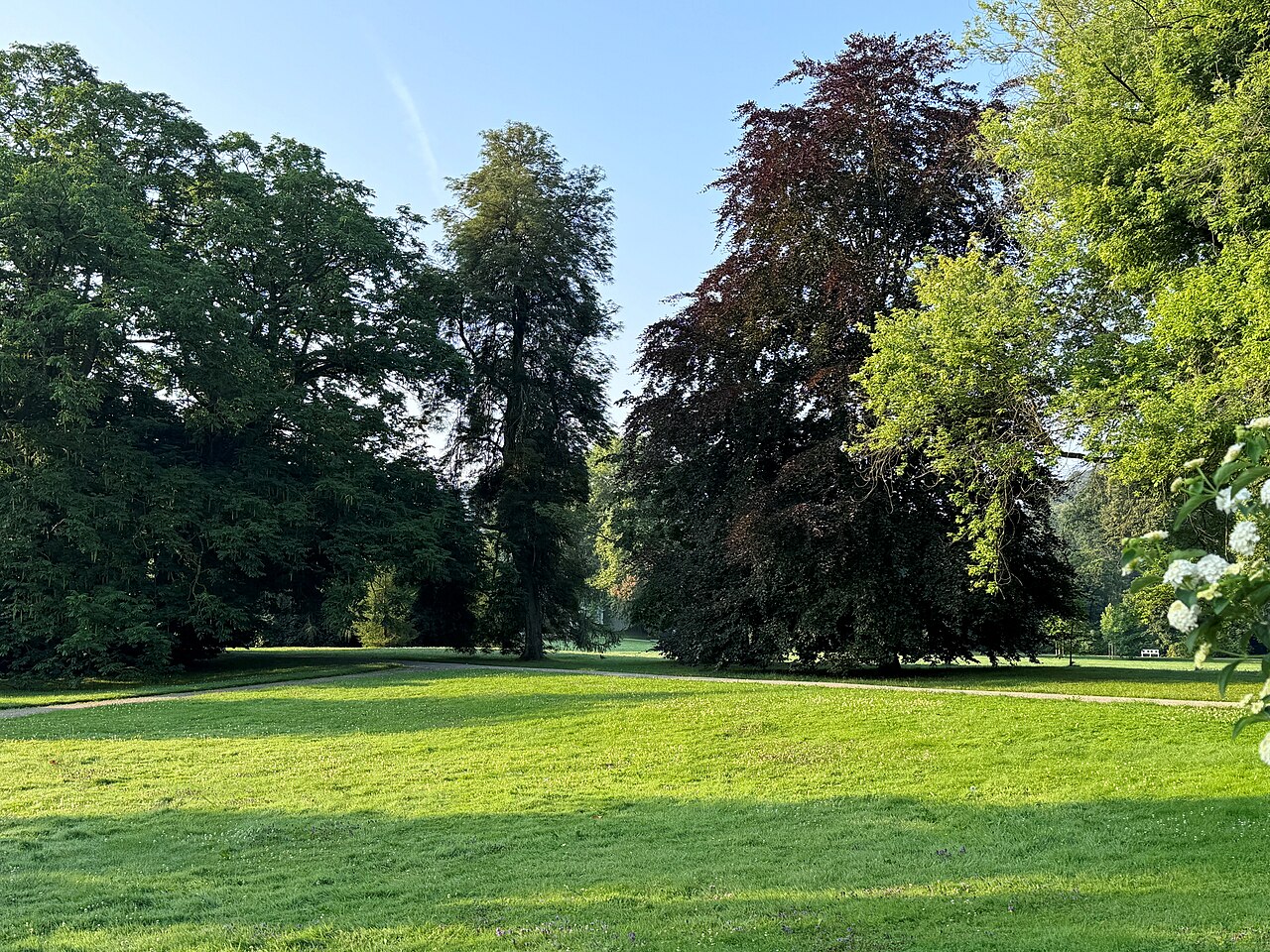
Plant collections
1 min
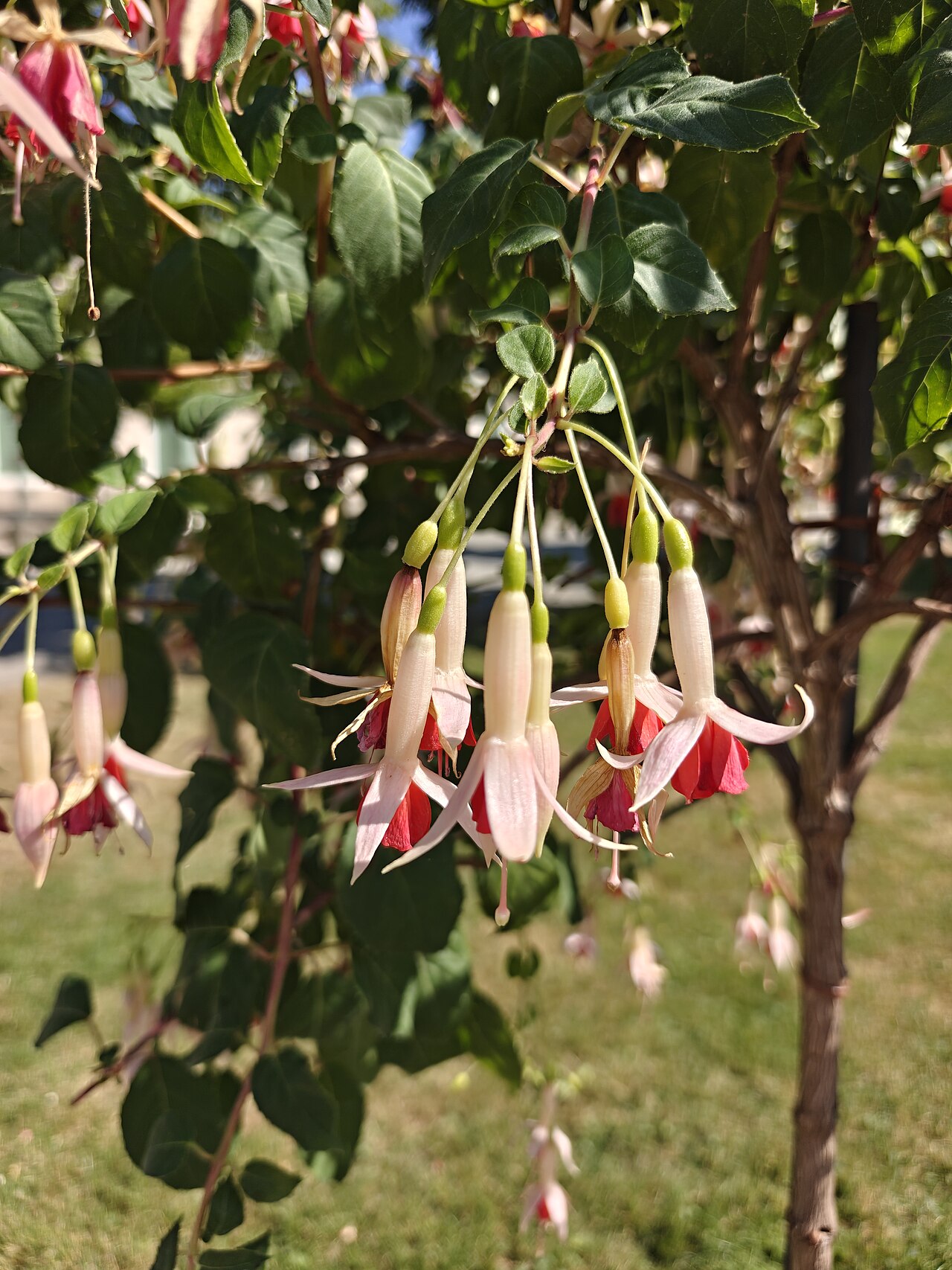
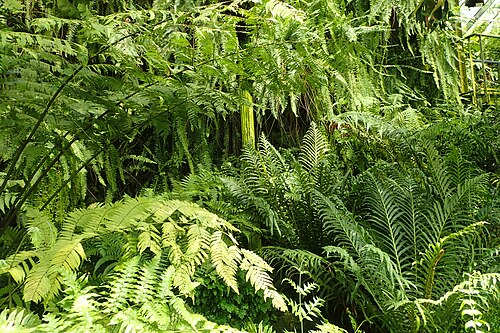
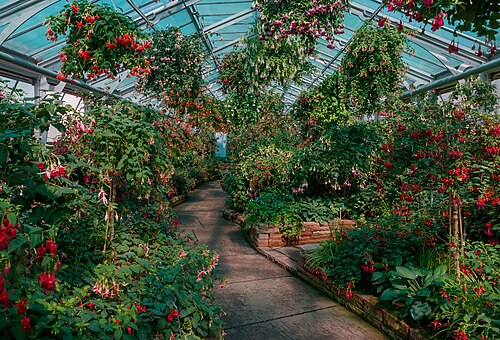
Part of the plants in the greenhouse are historic. The building serves above all as winter quarters for frost-tender species: palms, bananas, camellias and other exotic plants in containers, some of which are up to 150 years old. Camellias are especially numerous.
During the opening season rare orchids and bromeliads, including the pineapple, are shown alongside colourful displays of cyclamen, primulas and cinerarias, joined seasonally by poinsettias. In spring, part of the collection leaves the greenhouse to decorate the outdoor areas of the Bergpark, continuing the overwintering role the elector intended for the building in 1822.
Visiting
1 min
The greenhouse stands in the Bergpark Wilhelmshöhe near the palace, at Schloßpark Wilhelmshöhe 7. It opens only in the cold season: the city and the operator give November to March, and it is closed from April to October, when part of its plants are moved out into the park. The building is wheelchair accessible.
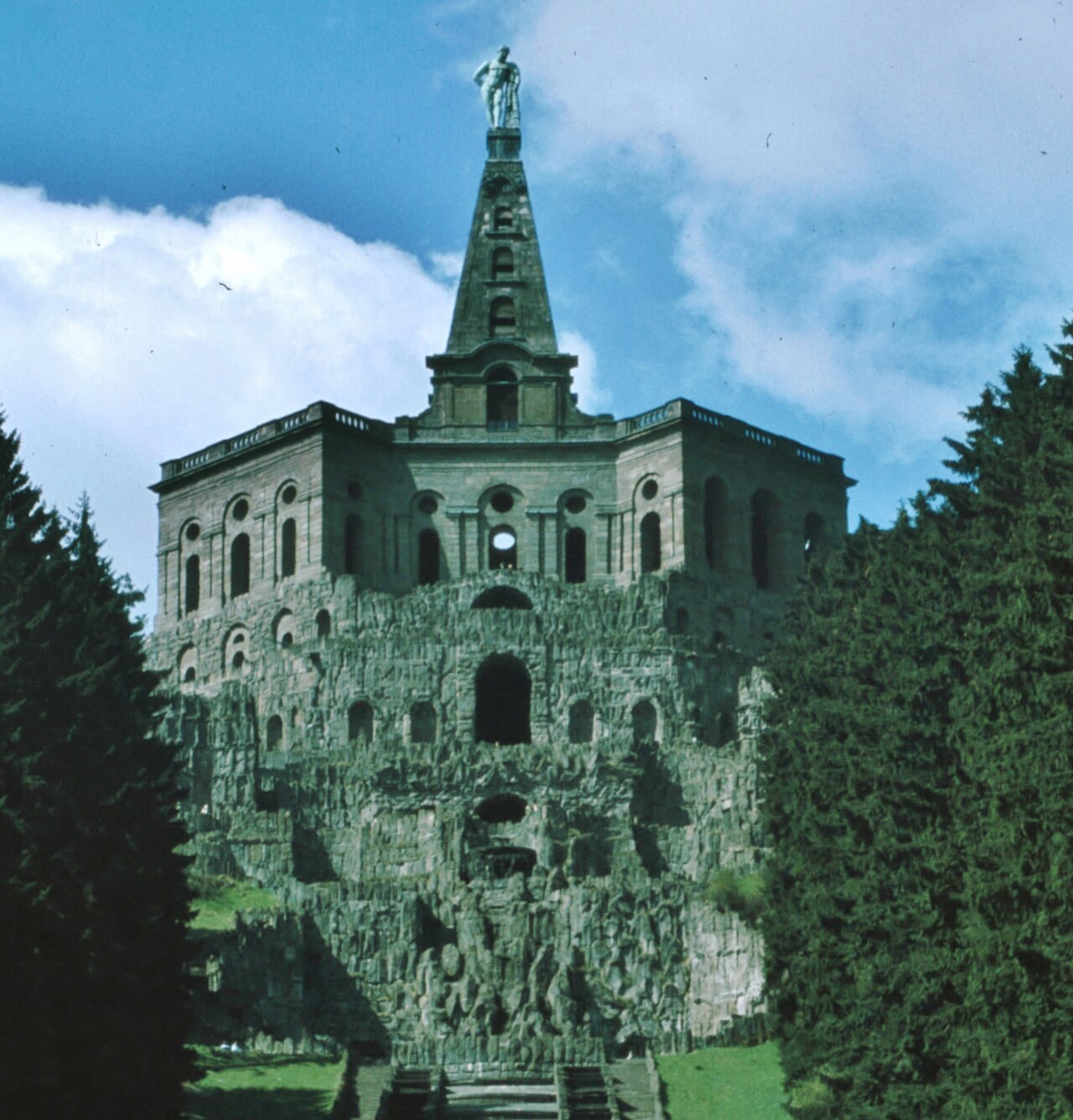
The day ticket also covers Wilhelmshöhe Palace and the Löwenburg, so the greenhouse combines easily with the palace collections and a walk through the park, whose slopes are crowned by the Hercules monument at the top of the cascades.
51.32° N, 9.41° E
Greenhouses nearby
More greenhouses — Germany
Do you have a good photo of this greenhouse? Suggest it for this page →