Manggha Museum of Japanese Art and Technology (Muzeum Sztuki i Techniki Japońskiej Manggha)
Kraków, Lesser Poland Voivodeship
Sources checked November 2026
- Year
- 1994
- Architect
- Arata Isozaki
- Type
- Museum of Japanese art and technology
- Access
- Open to the public, closed on Mondays (official website, November 2026)
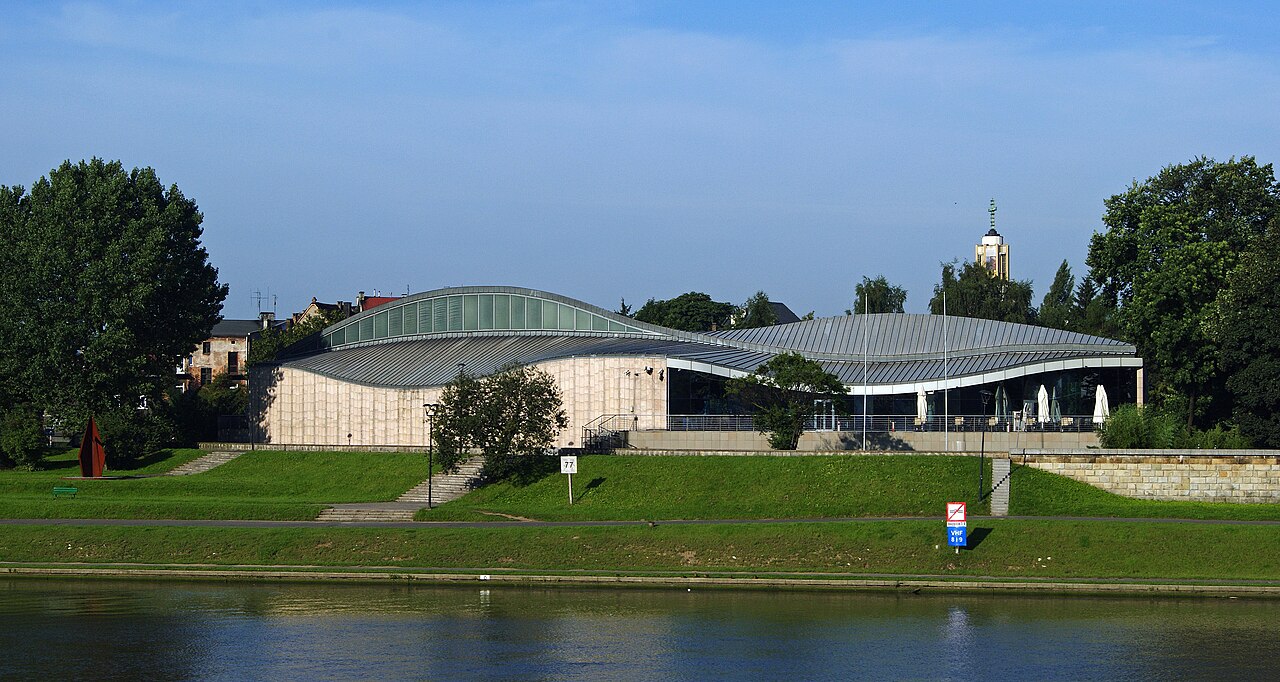
The Manggha Centre opened in 1994 in Kraków, facing Wawel Hill, to house the Japanese art collection gathered mostly by Feliks Jasieński. Arata Isozaki designed it working with Krzysztof Ingarden, Jacek Ewý and JET Atelier, all Kraków architects, and looked for a form neutral enough that neither its relation to Wawel outside nor its role as a backdrop for Japanese art inside would dominate. The bends of the Vistula set the layout of the roof structure's lines.
Affiliate links — booking through Verrière helps fund our research, at no extra cost to you.
History
The museum began with an initiative by the film director Andrzej Wajda. In 1920 the collector Feliks "Manggha" Jasieński gave his collection, more than 15,000 objects, to Kraków's National Museum; in 1944 Wajda, then nineteen, saw part of it on show in the Cloth Hall. In 1987 the Inamori Foundation awarded him the Kyoto Prize, and he put the whole sum into the Kyoto–Kraków Foundation, set up to raise a building that would be a home for that collection.
By his own account, Krzysztof Ingarden, a Kraków architect and former trainee at Arata Isozaki's office, proposed to Wajda by letter that Isozaki be asked to design it. In 1991 the East Japan Railway workers' union joined the fundraising. In 1992 Isozaki prepared the concept design in collaboration with Krzysztof Ingarden, Jacek Ewý and the JET Atelier practice. The foundation stone was laid on 28 May 1993 at a ceremony that included a blessing by Shintō priests; the building work, more than 300,000 working hours, finished on schedule.
The Manggha Centre of Japanese Art and Technology opened on 30 November 1994, and the poster for the inauguration shows Jasieński in front of the building, a Hokusai print under his arm. For ten years the centre remained a branch of Kraków's National Museum; it gained autonomy in 2005 and museum status in 2007, and in 2009 the National Museum's Far Eastern art collection was deposited with it for good. The Europe–Far East Gallery, an annexe building, opened on 23 June 2015.
Architecture
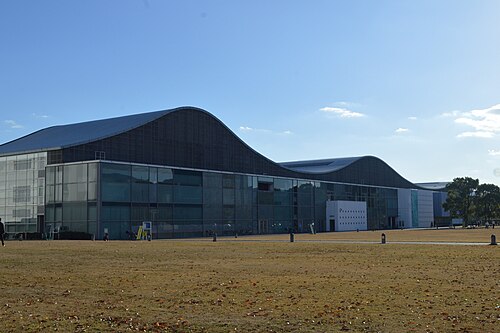
The building faces Wawel Hill, with the Vistula flowing between the two. Isozaki had a hard problem to solve: the exterior had to relate to the architecture of Wawel, and the interior had to be a fitting backdrop for Japanese art, with neither dominating the other. The answer is a relatively neutral form, free of direct cultural connotations, that points only distantly and indirectly to Japanese and Polish traditions. Isozaki wanted no cultural reference to be too prominent: as Jasieński's collection went beyond the limits of Japanese art, the building was to step outside "Japaneseness" and take root in Polish soil.
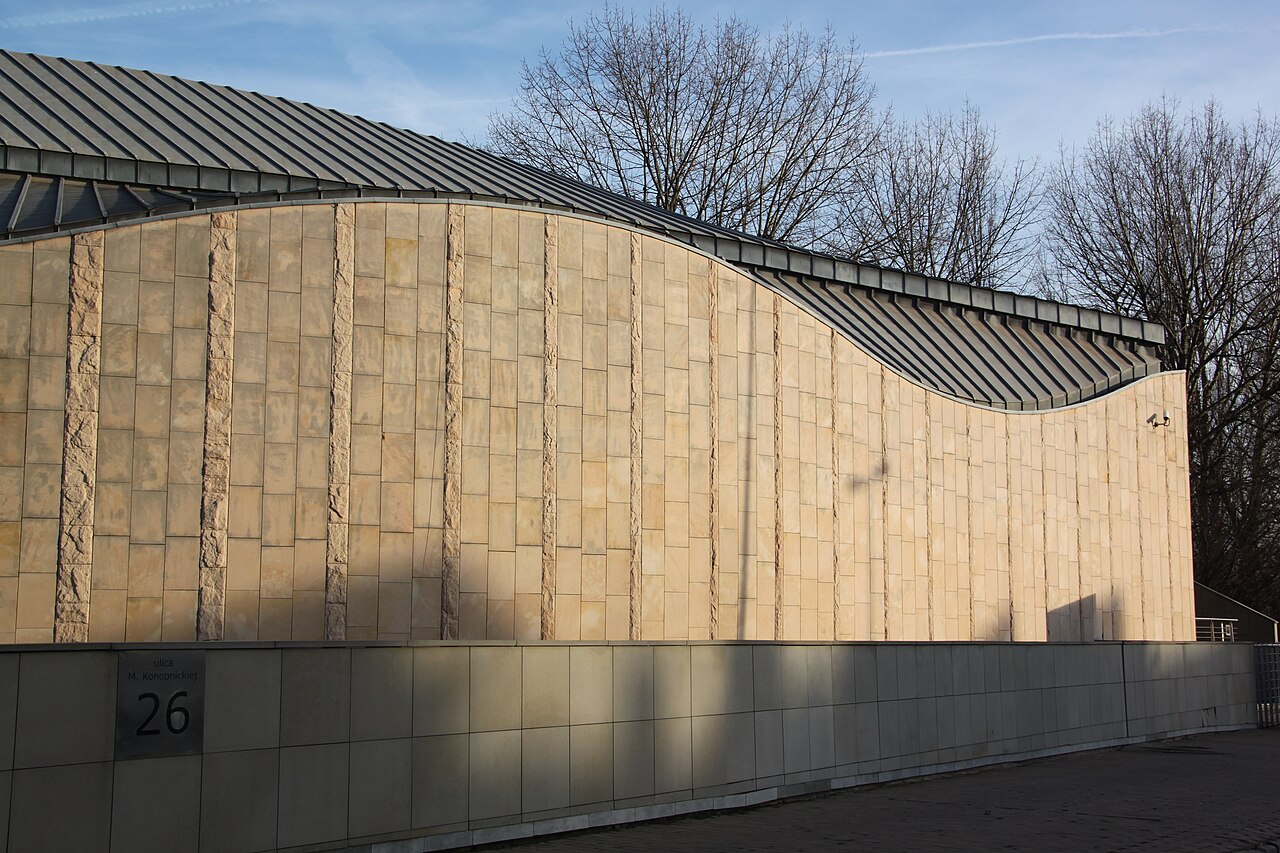
Seen from the terrace on Wawel Hill, the complex sits within the meanders of the Vistula. According to Isozaki, a few wavy lines of the nearby river fixed the geometry of the roof structure's lines. The broken curves of the waves also recall, from afar, a Hokusai print from the series Thirty-six Views of Mount Fuji, which belongs to the Jasieński collection: fishermen in a boat carried by a great wave that dominates the scene.
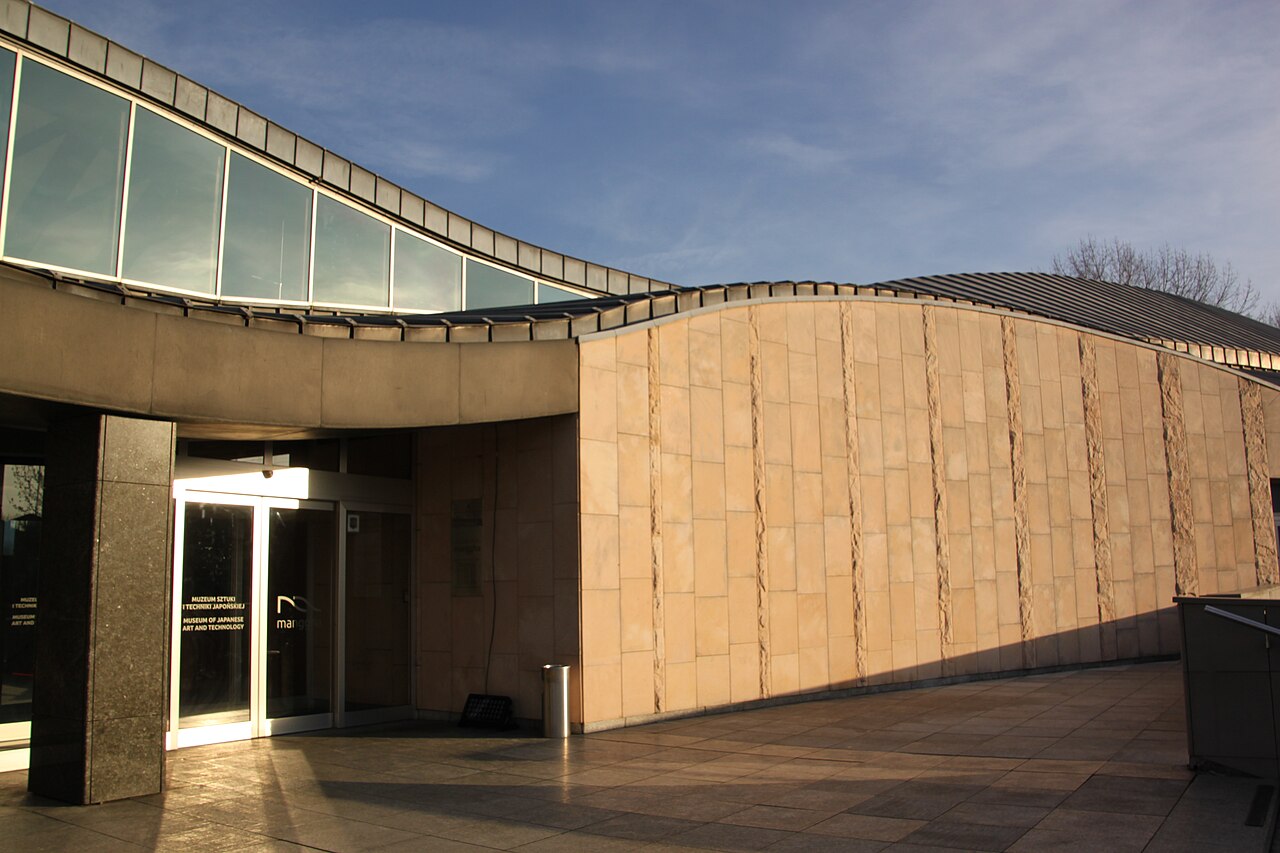
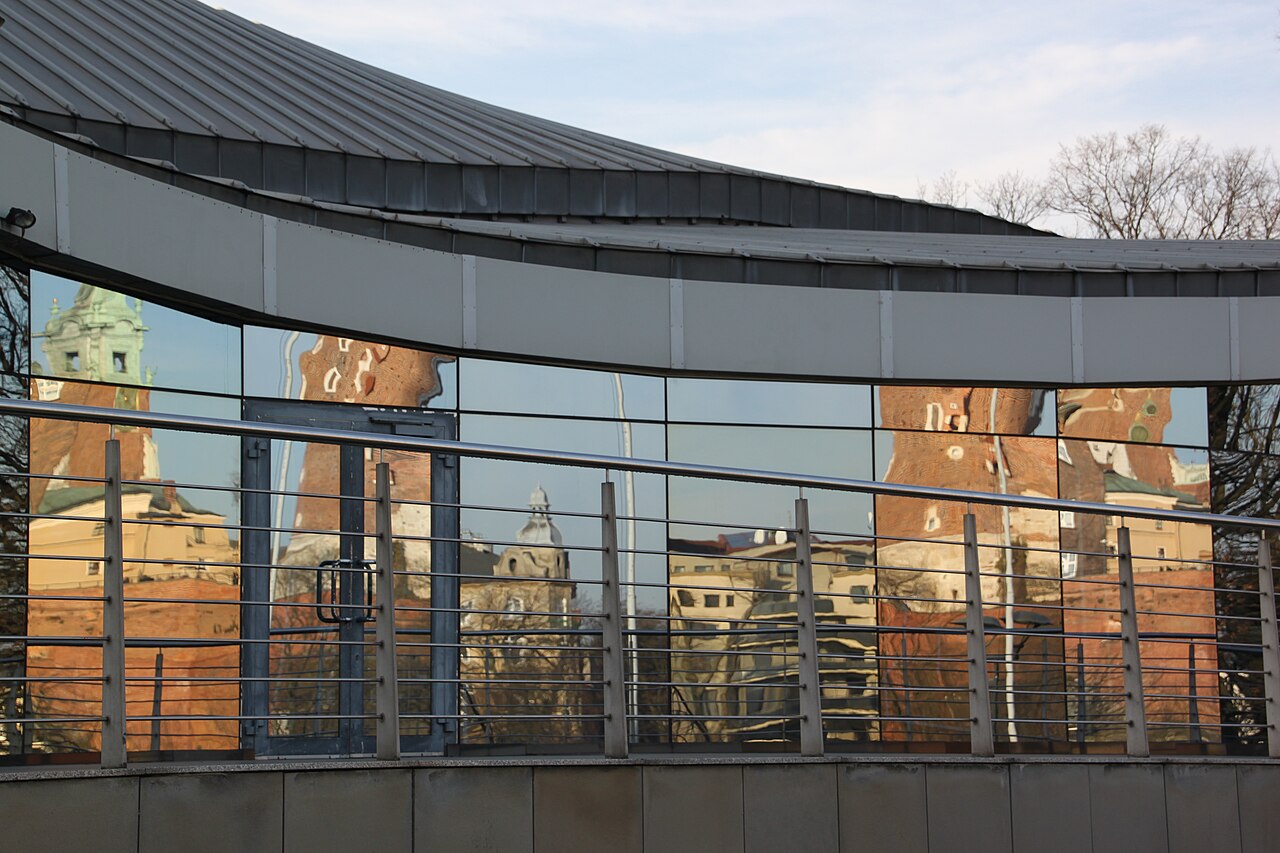
The main hall, on the east side of the building, opens onto a terrace with a view of the royal castle on Wawel. The lobby, rectangular in plan, receives daylight and opens onto the garden through a glass wall.
Use today
The building is at once a museum, an exhibition venue and a group of flexible halls for lectures, concerts and plays, with storerooms and offices as well. The multi-purpose hall is rectangular in plan, with a box stage and an adjustable proscenium.
The museum's own collection rests on the works gathered by the Kyoto–Kraków Foundation and handed over to the museum in 2006 and 2007; it consists mainly of contemporary Japanese, Korean and Polish art.
Visiting
The museum is open from Tuesday to Sunday, 10 am to 6 pm, and closed on Mondays; the last entry is half an hour before closing. A guided visit must be booked in advance, with at least ten days' notice. The museum is at 26 Marii Konopnickiej Street, in the Dębniki district.
Photos
50.05° N, 19.93° E
Greenhouses nearby
Architecture nearby
By the same architect
Sources (13)
- manggha.pl/en/architecture
- manggha.pl/architektura
- manggha.pl/en/history
- manggha.pl/historia
- manggha.pl/zaplanuj-wizyte
- manggha.pl/en/access-admission
- manggha.pl/hol-glowny
- manggha.pl/lobby
- manggha.pl/sala-wielofunkcyjna
- manggha.pl/kolekcja
- isozaki.co.jp/projects/manggha_center/
- visitmalopolska.pl/en/obiekt/-/poi/muzeum-sztuki-i-techniki-japonskiej-manggha-w-krakowie
- radiokrakow.pl/audycje/krzysztof-ingarden-lubie-projektowac-architekture-dla-kultury
Affiliate links — booking through Verrière helps fund our research, at no extra cost to you.