Sosnowiec Egzotarium (Ecological Education Centre)
Sosnowiec, Silesian Voivodeship

Entry updated on October 5, 2026
- Year
- 2023
- Architect
- R'House (Renata Gajer-Hackemer), with Malinowski Design Urban & Landscape and ARC2 Fabryka Projektowa
- Style
- Contemporary glazed hall
- Dimensions
- ≈6,690 m² usable area, up to 22.7 m high
- Status
- Open to the public
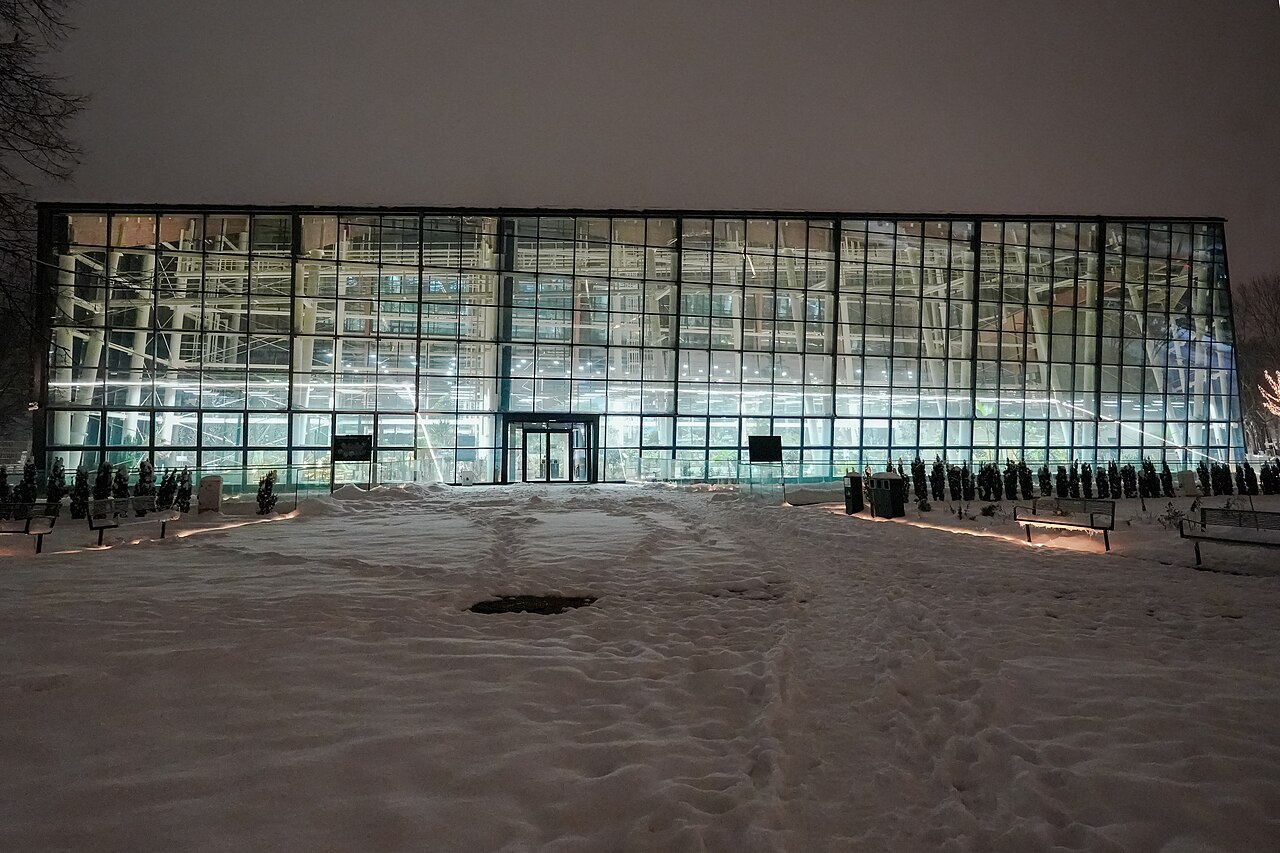
Opened on 2 December 2023 in the Jan Fusiński Park in central Sosnowiec, the Egzotarium replaces an exotarium built in 1954–1956 and demolished in 2020. The new building, designed by the R'House practice, combines a large fully glazed hall, a two-storey wing and a technical greenhouse. Plants and animals share six biotopes, ranging from Polish landscapes to the Amazon rainforest by way of the Mediterranean basin and the desert. Since 2023 the building and its park have been described as a botanical garden, and about 360,000 people visited in its first two years.
Affiliate links — booking through Verrière helps fund our research, at no extra cost to you.
History
1 min
The Egzotarium's story begins in a municipal park laid out in 1935 in central Sosnowiec. A construction committee promoted a first exotarium, built from 1954 to 1956 to designs by the architect Mirosław Celler. In 1957 an additional pavilion was added for monkeys, birds, pheasants, raccoons and bears. Teaching was its main purpose from the start, and its aquarium-fish department was said to be the largest in Poland.
After six decades the city chose to rebuild rather than renovate. A tender for an Ecological Education Centre was announced in 2019, the scheme by the Wrocław practice R'House won, and the old building was demolished in 2020 to make way for construction. According to lead architect Renata Gajer-Hackemer, the hardest task was reconciling the expectations of all the parties involved.
The new Egzotarium opened on 2 December 2023 after three years of work. Sources differ on the cost: 64 million złoty in one account, around 70 million in a 2026 article. Since 2023 the building and its surrounding park have formed a complex designated as a botanical garden. About 360,000 people visited in its first two years, an average of some 500 a day.
Architecture and engineering
1 min
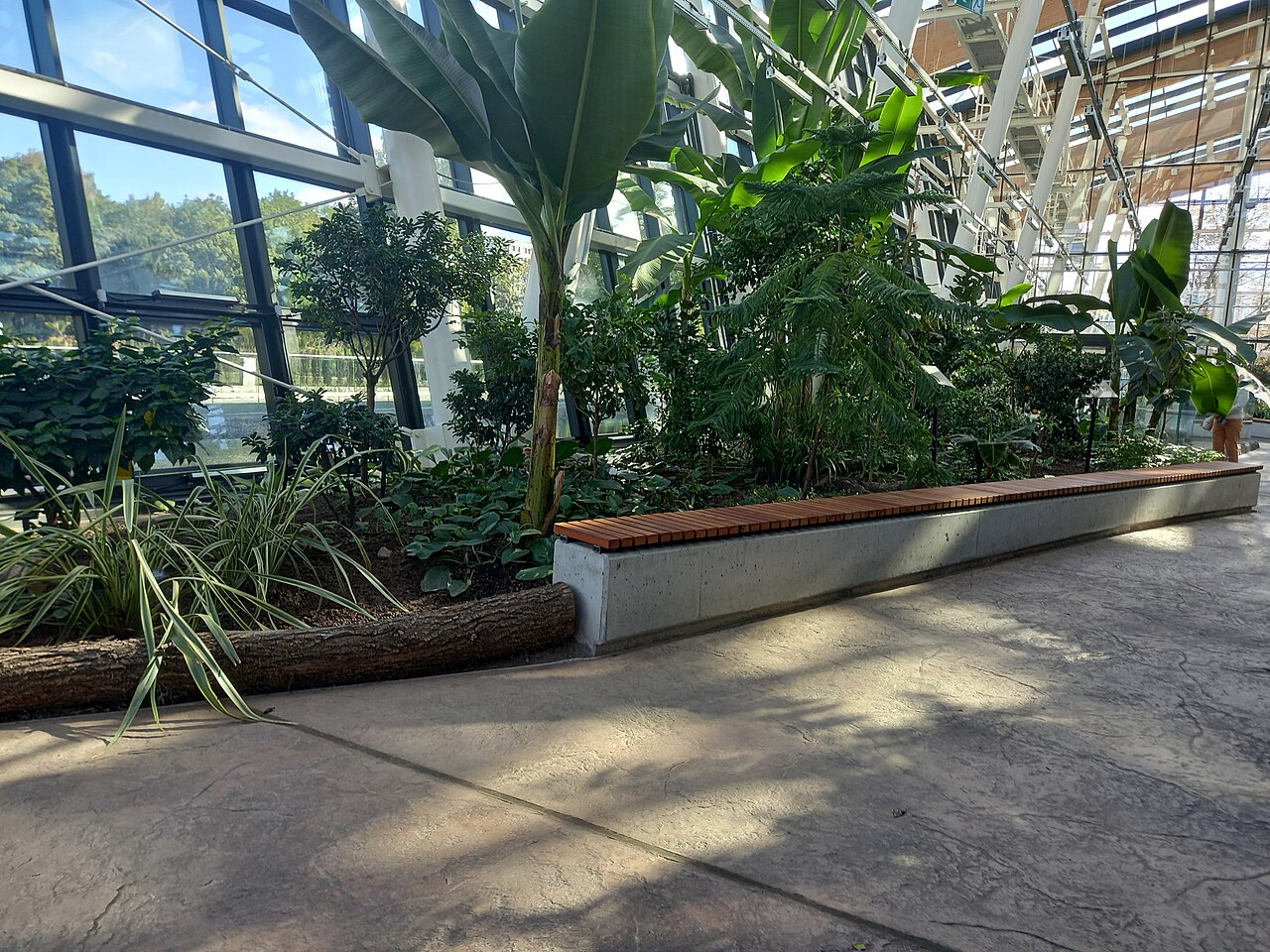
The building has three linked parts: a fully glazed hall, a two-storey wing set against it, and a technical greenhouse used for cultivation. It is organised on three levels: large aquariums on the first, plants, reptiles and teaching displays on the second, and a classroom, exhibition space, cinema and café on the third. The usable area is 6,686.47 m² and the highest point reaches 22.7 m; a 2026 article gives instead about 24 m and 5,000 m² of interior space.
The architects chose glazing that balances daylight with thermal insulation. A computerised system manages temperature, humidity, lighting, irrigation and shading; windows open automatically, and assimilation lighting supplements daylight for the plants. Photovoltaic panels cover the roof, and a retention system collects rainwater, which is filtered, and recovers water from the aquariums. Ramps and a lift make the whole building step-free.
Plant collections
1 min
The Egzotarium is part botanic garden, part zoo. Six biotopes shape the visit: Polish landscapes (reed beds, meadows, oak woods), the Mediterranean basin, the desert, the Amazon rainforest and aquatic habitats stocked with native fish. Palms, cacti, figs, bananas and orchids make up the planting, which alone cost about 1.36 million złoty.
At the centre of the hall, a 3 × 13 m green wall houses a colony of leafcutter ants. Terraria, aquaterraria and aquariums display green iguanas, caimans, anacondas, poison dart frogs and toucans. The old exotarium was known for its cichlids and for annual orchid and cactus shows.
Visiting
1 min
The Egzotarium stands in the Jan Fusiński Park at 116 Józefa Piłsudskiego Street, in the old centre of Sosnowiec. Allow an hour and a half to two hours for the six biotopes, the aquarium level and the ant wall. The building is fully step-free, which makes it easy to visit with children. With around 500 visitors a day on average, an early start is advisable. In the warmer months, a walk through the adjoining park, laid out as a biodiversity park, rounds off the visit.
50.28° N, 19.10° E
Greenhouses nearby
More greenhouses — Poland
Do you have a good photo of this greenhouse? Suggest it for this page →