Everson Museum of Art
Syracuse, New York
Sources checked October 2026
- Year
- 1968
- Architect
- I. M. Pei
- Type
- Art museum
- Access
- Open to the public Wednesday to Sunday, closed on Mondays and Tuesdays (official website, October 2026)
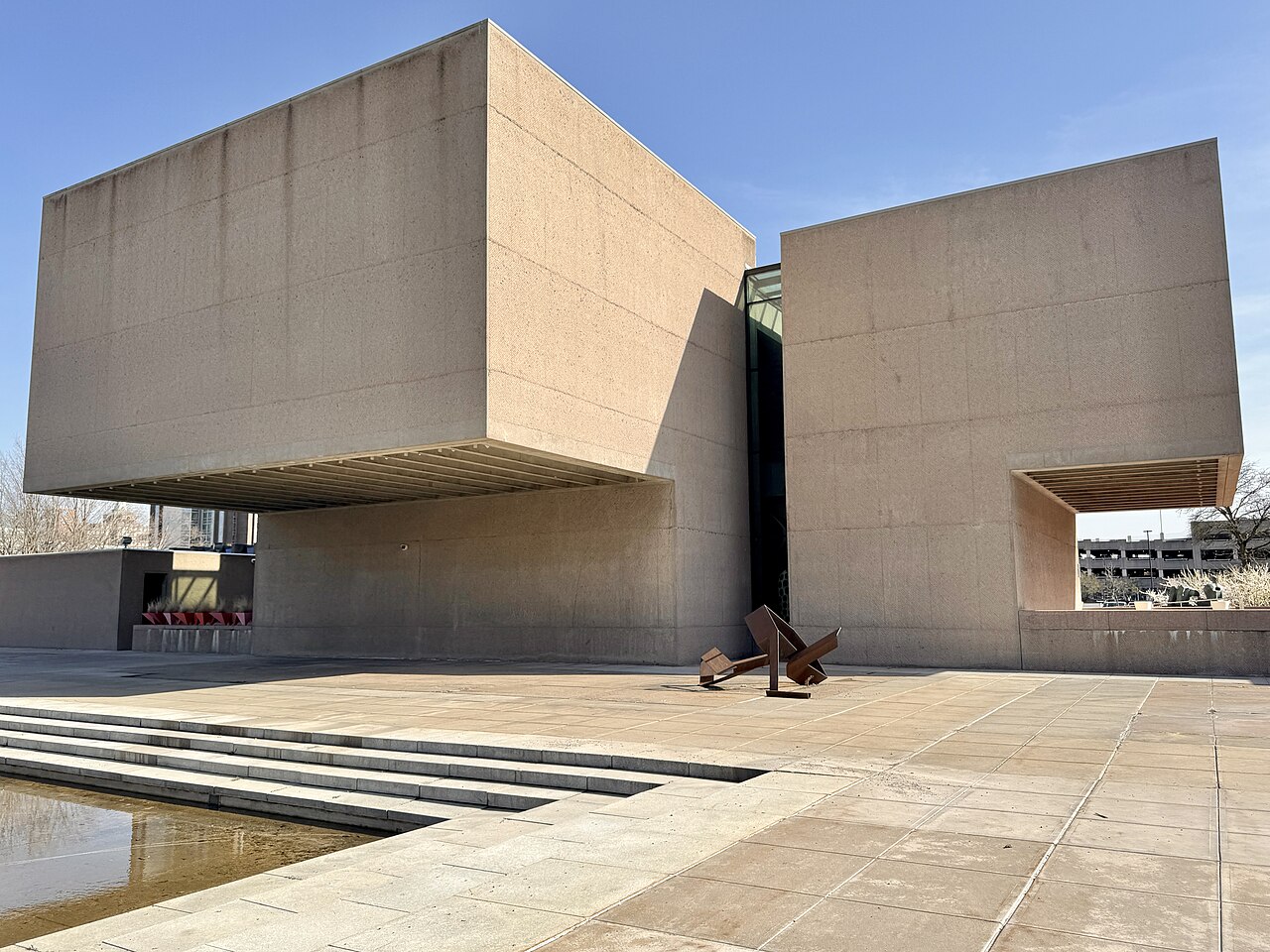
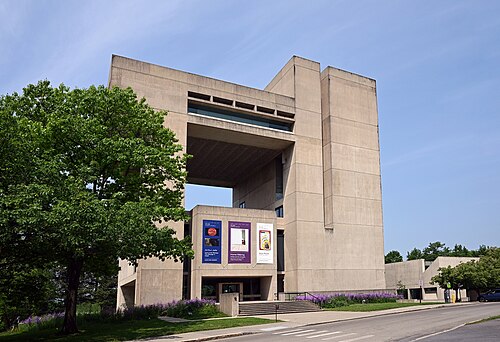
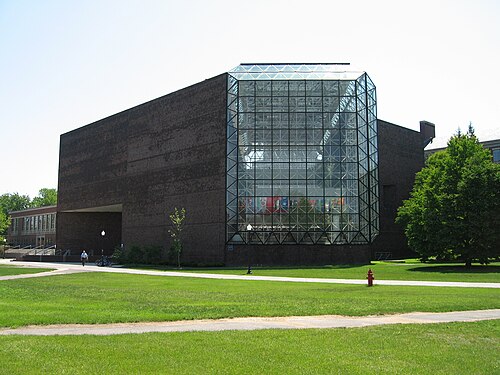
Opened in 1968 in Syracuse, the Everson Museum of Art is the first museum designed by I. M. Pei. The architect aimed for a large sculptural object set in a plaza, not a monumental container for art: four cantilevered volumes of cast-in-place concrete are arranged as a pinwheel around a double-height interior void. It shows mainly modern and contemporary American art, with ceramics and video art among its core collections.
Affiliate links — booking through Verrière helps fund our research, at no extra cost to you.
History
The museum began in 1897 as the Syracuse Museum of Fine Arts, founded by George Fisk Comfort. It was housed in several buildings, among them the Onondaga Savings Bank and the Syracuse Public Library, and each in turn became too small for it. In 1941 Helen Everson died, leaving about a million dollars to found an art museum that would bear her name; in 1957 the boards of the Everson and the Syracuse Museum of Fine Arts announced that they would merge under the Everson name and build a new museum if the city provided a site.
In 1961 the trustees interviewed several architects; Pei, Mitchell/Giurgola and Pietro Belluschi were among them. Pei's firm had almost no institutional work behind it by then. He designed the project with project architect Kellogg Wong, and the preliminary design was unveiled to the public in 1962. The museum's director had set one decisive requirement: the collections had to be displayed in a sequence of discrete galleries rather than in the large "flexible" halls then in fashion.
The museum stands at the corner of Harrison Street and South State Street. Its construction belonged to an urban renewal plan that, in the 1960s, displaced the residents of the 15th Ward, who were predominantly Black; the institution today acknowledges the role it played in that displacement.
A dedication dinner was held on 25 October 1968 and a dedication ceremony on the 26th; the museum opened to the public at noon on 27 October 1968. Ada Louise Huxtable, then architecture critic of The New York Times, wrote: “This is the architecture of today as art history will eventually record it.” Pei and Wong put forward a small addition in 2001, but the money was spent instead on a light renovation of the building envelope and glazing. Pei has named the Everson among his favorite projects.
Architecture
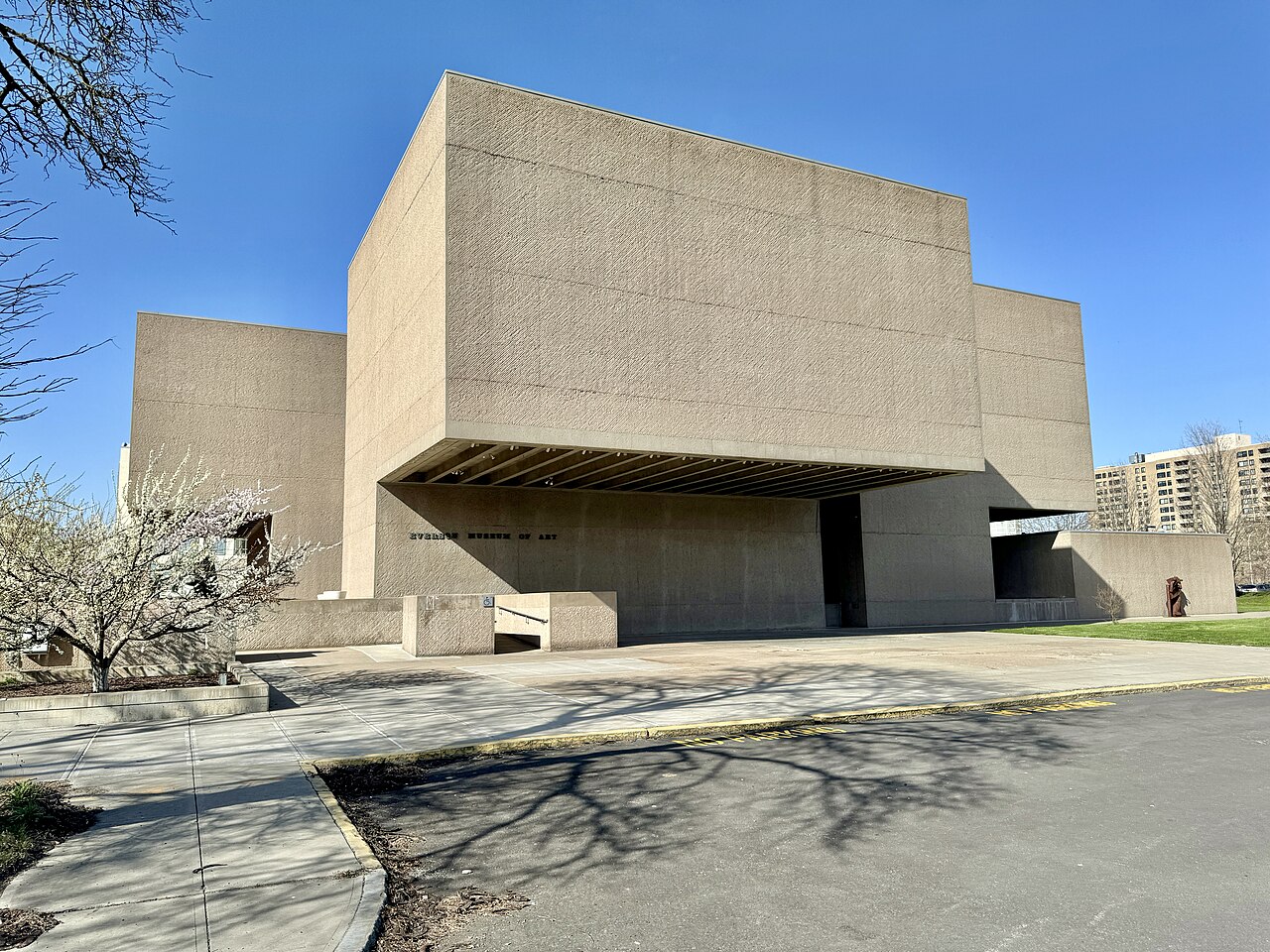
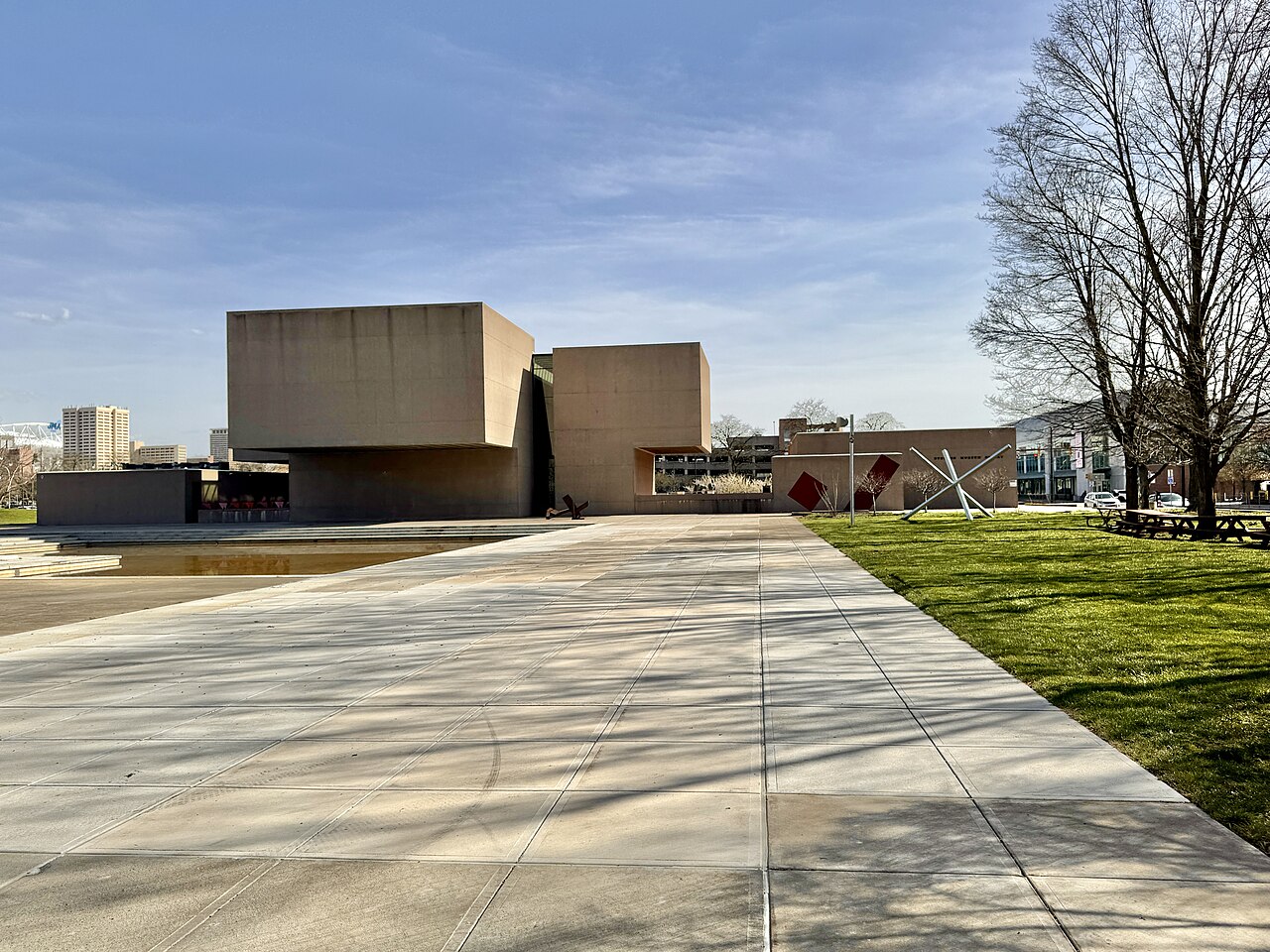
Pei did not want the monumental container for art that a museum was then expected to be; he wanted the Everson to be a large sculptural object set in a plaza, amid the forms of the modern city. The building is meant to be experienced as a sculpture, from several viewpoints, and its entrance does not announce itself: looking for the door is part of the journey.
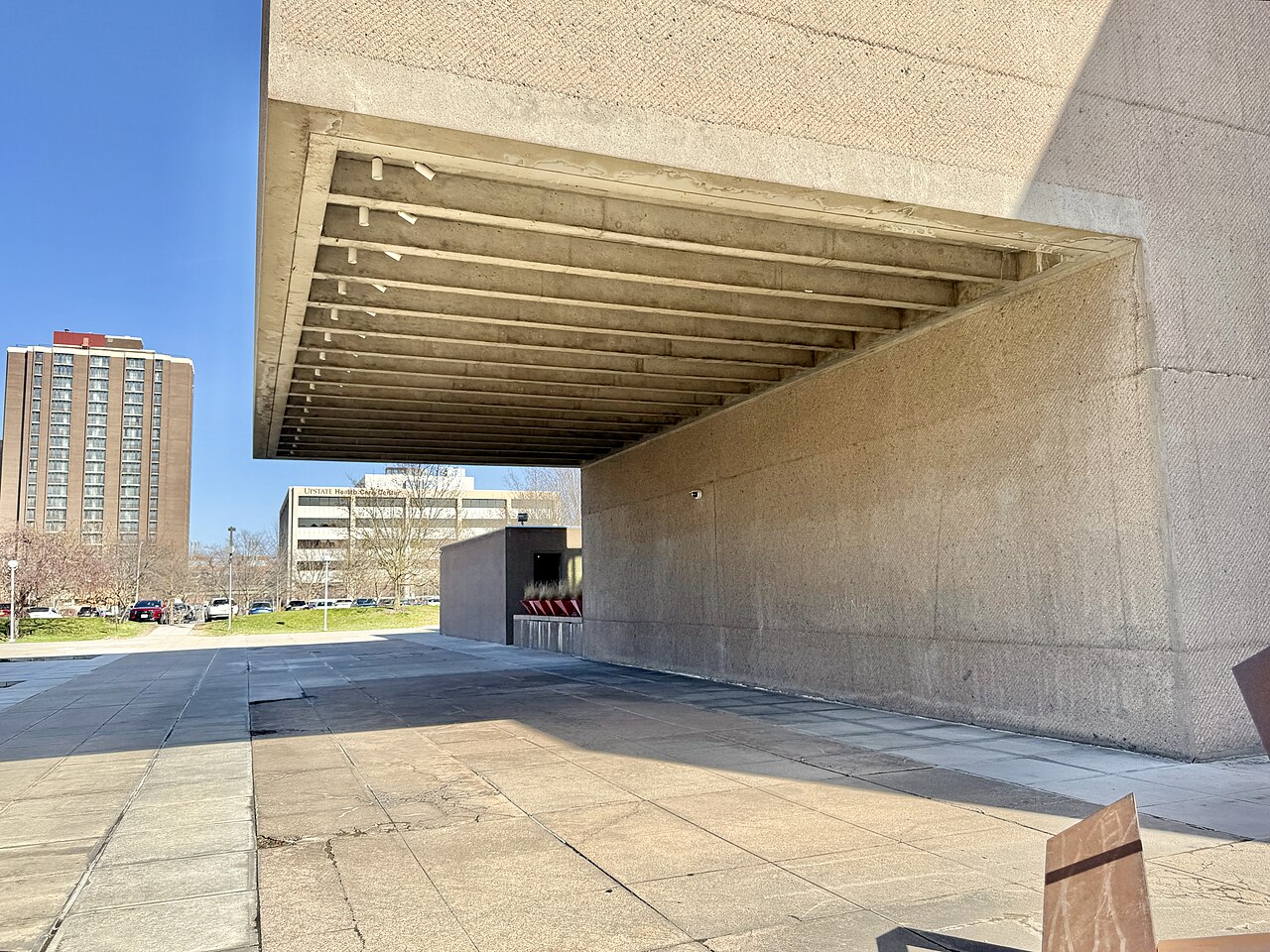
To answer the requirement for discrete galleries, Pei split the display spaces into four boxy, cantilevered volumes whose sizes differ by small increments. They are set as a pinwheel and delimit a double-height interior void that a helical stair punctuates. A low plinth that contains most of the support program extends east and west, rising at each end into a mute block that houses the upper parts of the auditorium and the administrative wings. The Sculpture Court is the home of the museum's iconic staircase.
Almost every visible element, inside and out, is cast-in-place concrete; the exceptions are the galleries' painted linen walls and oak floors. Roger Nicolet's office engineered the cantilevered structure. The four blocks look independent, yet they counterbalance one another: the central court's waffle-slab roof and a continuous belt, which runs through the concrete bridges linking the upper-level galleries, tie them together. The structure is expressed at the underside of the cantilevers, while the vertical surfaces are diagonally bush-hammered. The interstices between the concrete elements are glazed with minimal details, to read as far as possible as voids.
Use today
The museum shows mainly modern and contemporary American art: about 11,000 works, including paintings, ceramics, sculpture, video, photographs, works on paper and decorative arts. Its core collections include ceramics and video art.
The ceramics date back to 1916, when the museum bought thirty-two porcelains by the Syracuse potter Adelaide Alsop Robineau; in 1932 the Ceramic National exhibitions were founded in her memory. The museum opened a video arts department in 1972.
A café, Louise, and a museum shop complete a visit. The Urban Video Project, a program of Light Work run with the Everson and Onondaga County, projects experimental film and video onto the building's facade, visible from the neighbouring plaza across a large reflecting pool.
Visiting
The museum is open Wednesday to Sunday and closed on Mondays and Tuesdays: 11 am to 5 pm on Wednesday and Friday, 11 am to 8 pm on Thursday, 10 am to 5 pm on Saturday and Sunday. It is also closed on Juneteenth, 4 July, Thanksgiving Day, Christmas Day and New Year's Day.
Tickets can be bought online in advance. Admission is free for members, children aged 5 and under and military personnel (with ID), and pay-what-you-wish on Wednesdays all day and Thursdays from 5 to 8 pm.
Visitors enter from the Main Entrance Podium on Harrison Street, by stairs or a ramp; the State Street entrance is not public. A public elevator serves all three floors. Limited free parking is available in the lot in front of the building, two blocks from exit 18 (Harrison/Adams) of Interstate 81.
Photography is permitted, without flash, selfie sticks or tripods. Nothing may be carried on the back: free lockers are provided. Visitors must stay at least 24 inches (about 61 cm) from any artwork, and food and drink are not allowed in the galleries.
Photos
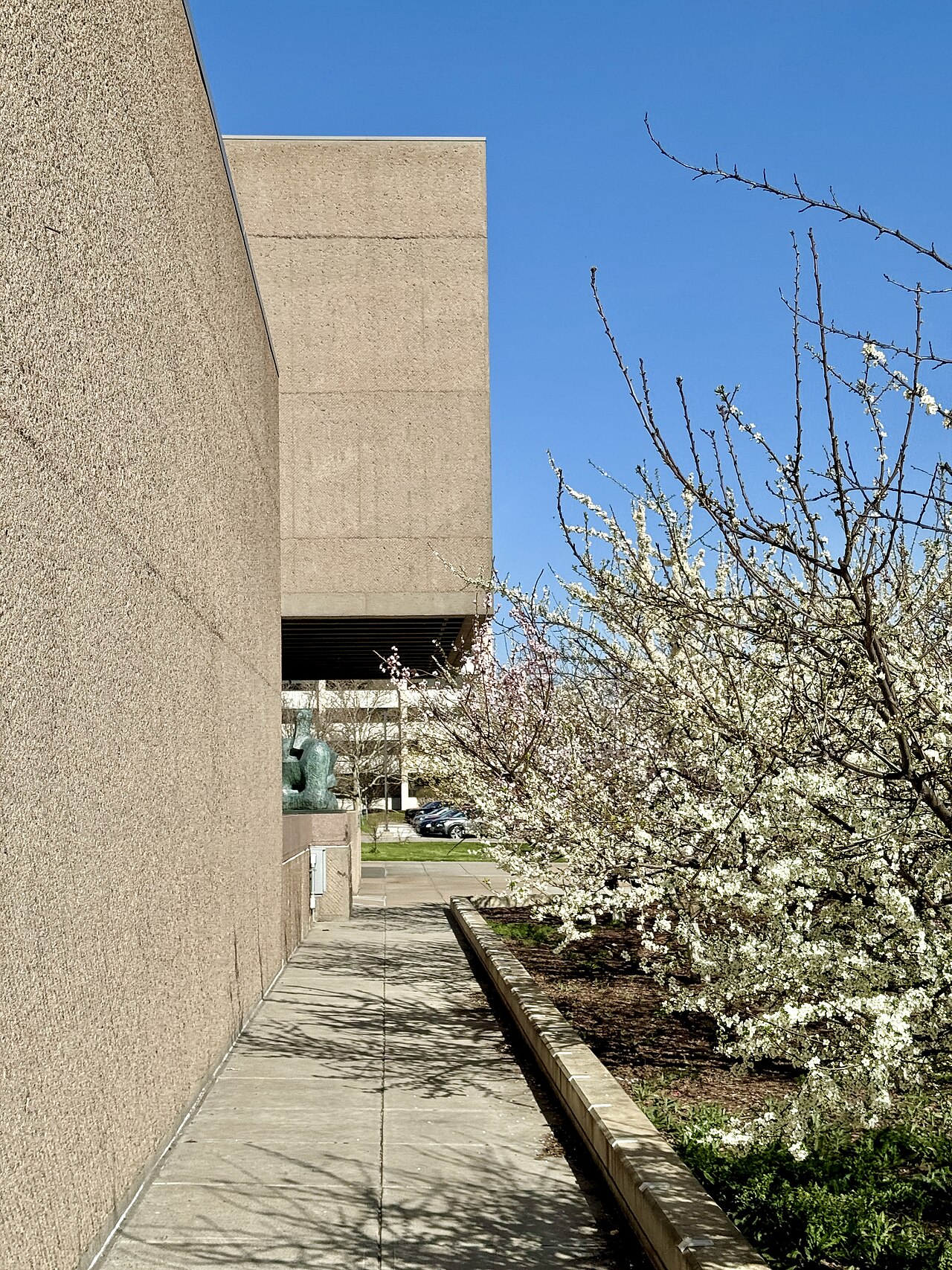
43.04° N, 76.15° W
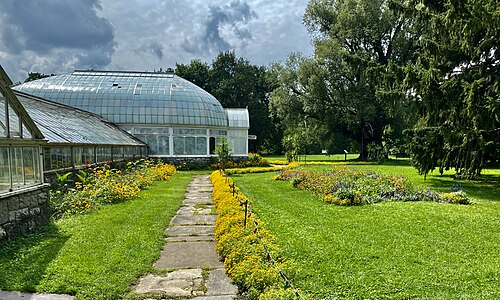
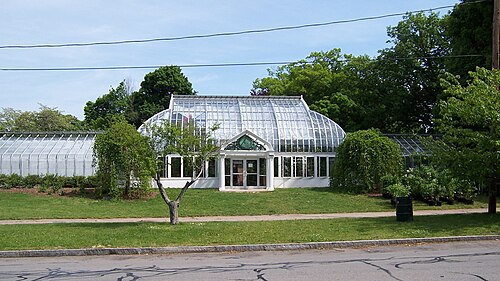
Greenhouses nearby
Architecture nearby
Sources (10)
- everson.org/about/
- everson.org/the-building/
- everson.org/visit/
- everson.org/our-collection/
- urbanvideoproject.com/
- wp2.docomomo-nytri.org/wp-content/uploads/2014/09/Mod-no1-Everson-Museum_high.pdf
- en.wikipedia.org/wiki/Everson_Museum_of_Art
- syracusenewtimes.com/everson-museum-50-year-anniversary/
- wikidata.org/wiki/Q5417350
- openstreetmap.org/way/296888862
Affiliate links — booking through Verrière helps fund our research, at no extra cost to you.