Herbert F. Johnson Museum of Art
Ithaca, New York
Sources checked October 2026
- Year
- 1973
- Architect
- I. M. Pei
- Type
- University art museum
- Access
- Open to the public, closed on Mondays, admission always free (official site, October 2026)
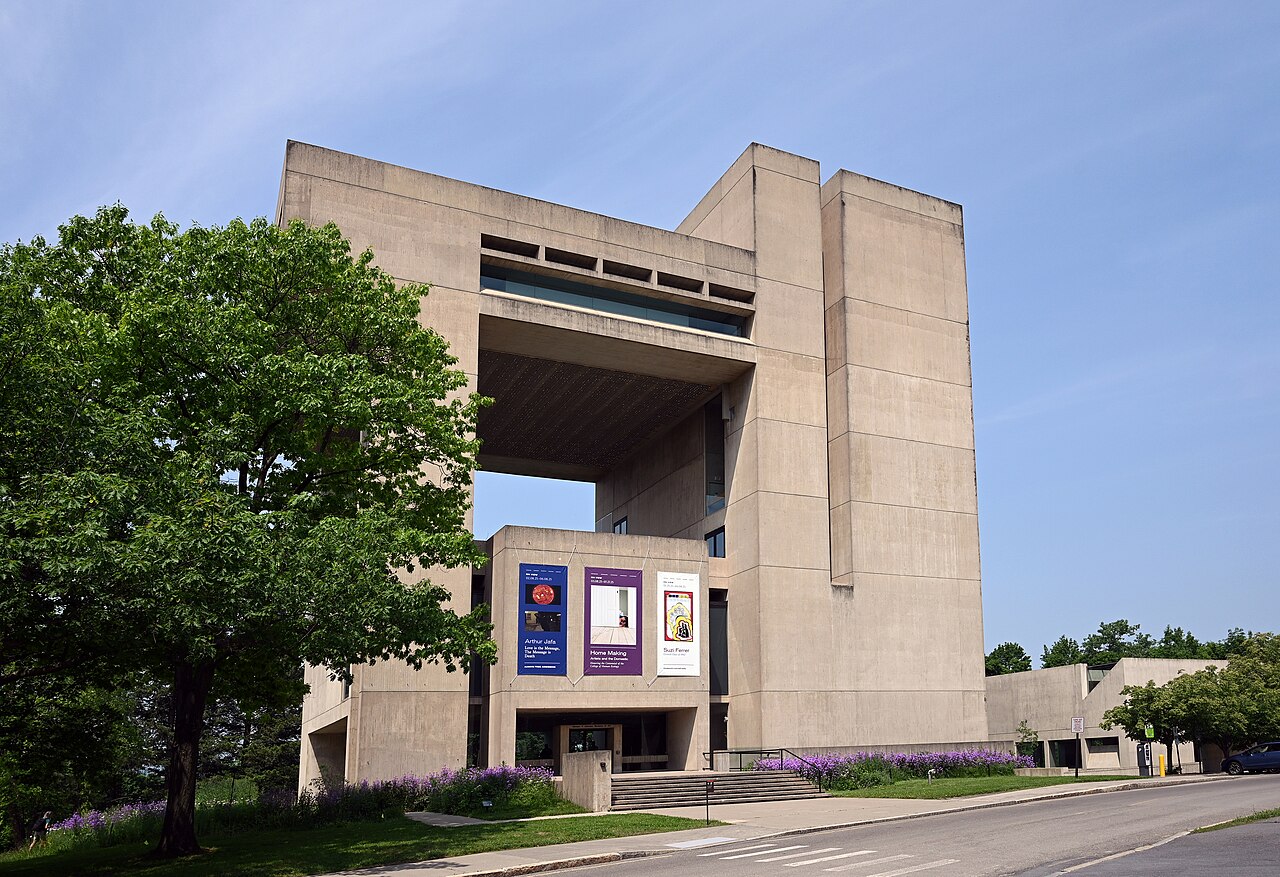
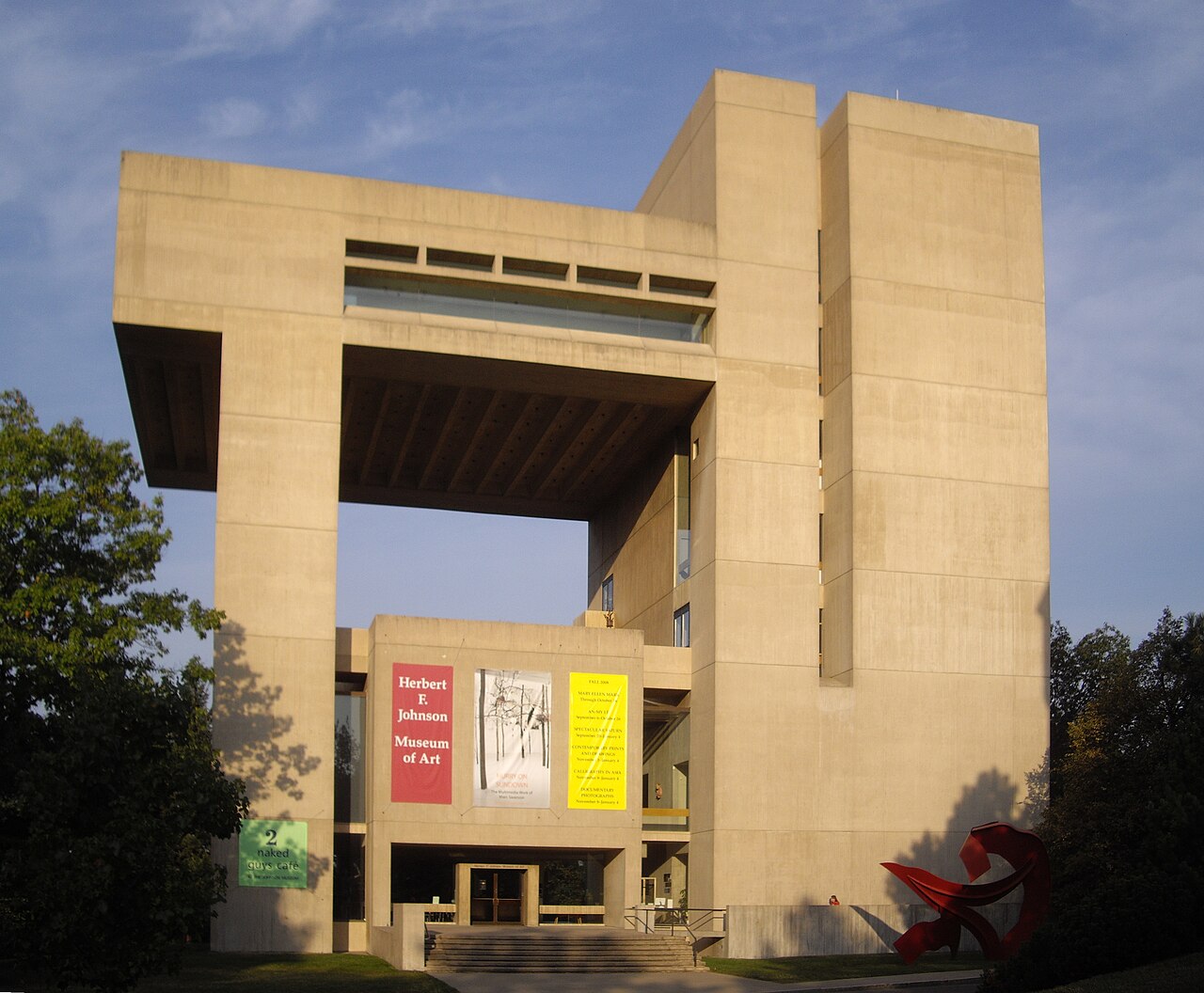
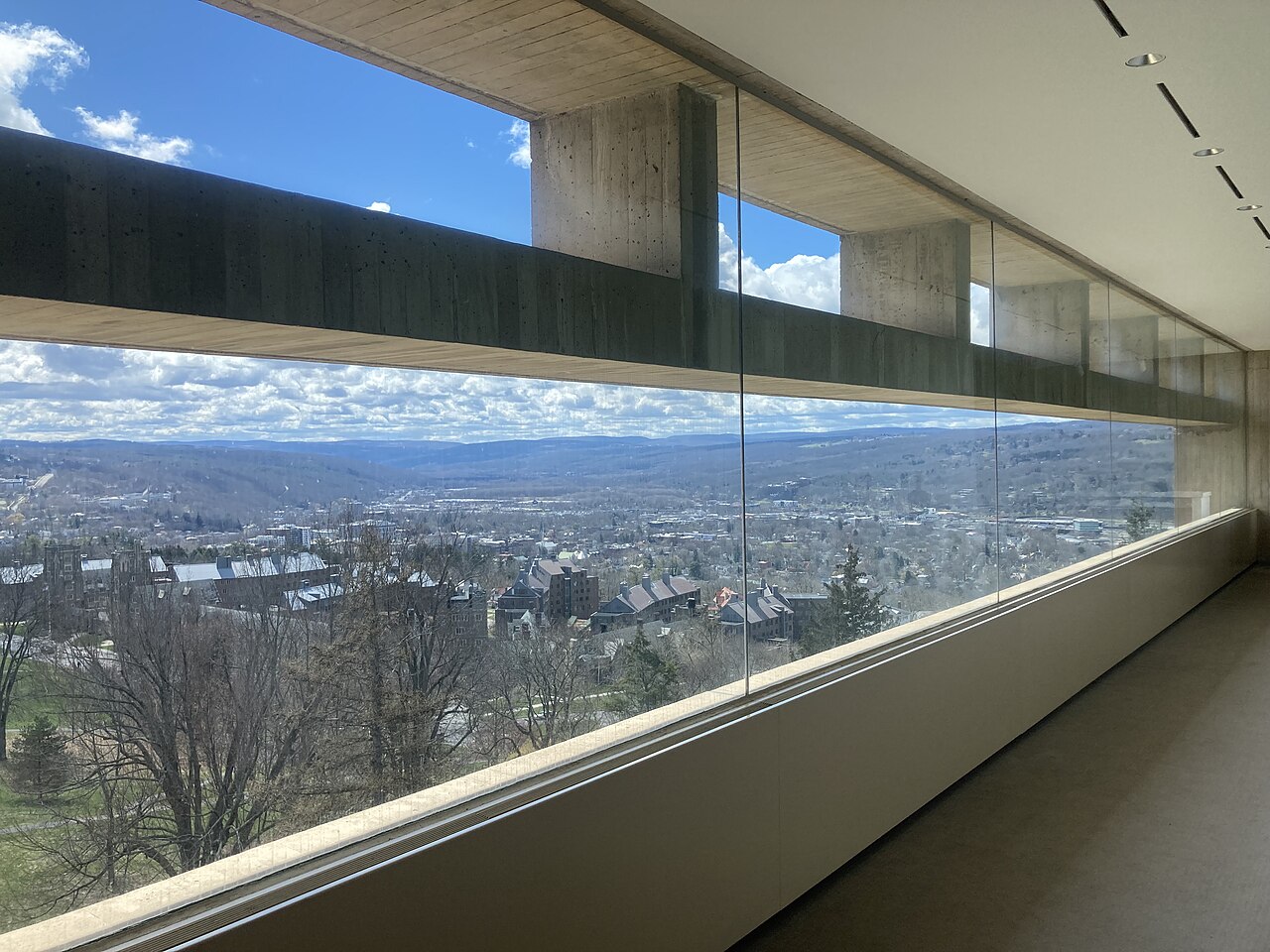
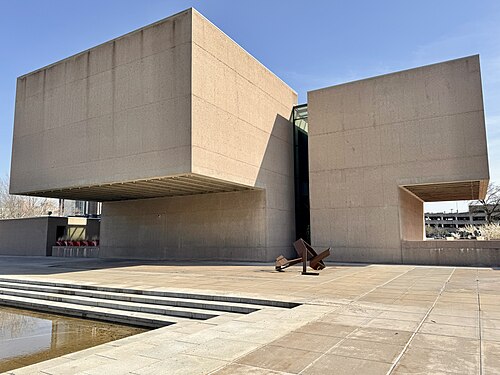
Designed by I. M. Pei and dedicated in 1973 on the Cornell University campus in Ithaca, the Johnson Museum is a modular, Bauhaus-inspired concrete structure. Its fifth level cantilevers over an open-air sculpture garden, and the building offers a panoramic view of Cayuga Lake. It holds more than 40,000 works, and admission is free.
Affiliate links — booking through Verrière helps fund our research, at no extra cost to you.
History
Before this building, Cornell University's art collections were kept in the A.D. White House, a Victorian villa built by founding president A. D. White as his presidential home; its small size and residential design made it ill suited to the purpose.
The new museum is named for its benefactor, Herbert F. Johnson, a Cornell graduate (Class of 1922) and university trustee, who was president of S C Johnson in Racine, Wisconsin, and whose $3.5 million gift paid for its construction.
In 1968 the commission to design the museum went to I. M. Pei. His firm worked in consultation with the museum's director at the time, Thomas W. Leavitt, and John L. Sullivan III, a Cornell architecture alumnus (Class of 1962), was the architect-in-charge of the building. On opening day Pei called the piece of land sacred: it was there, he said, that the founding father, Ezra Cornell, was standing as he told the board of trustees of his wish to build a university. He added that before, looking north across Library Slope, one saw nothing but sky and trees, a view that, as he put it, "you can't beat"; siting a building there, he said, was "a challenge we couldn't resist."
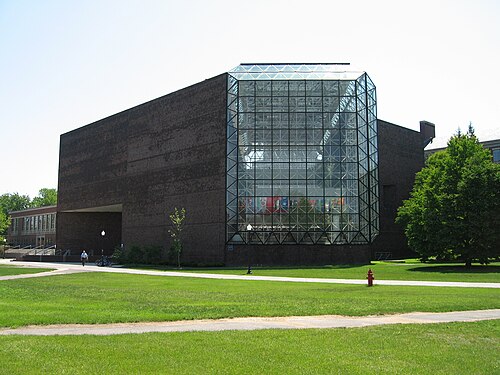
The museum was dedicated on 23 May 1973, two days before the university's Commencement, and more than 4,000 people visited it during its first days. A 16,000-square-foot wing (about 1,500 m²), The Wing, opened in 2011 to the north of the building, designed by Sullivan and Pei Cobb Freed & Partners.
Architecture
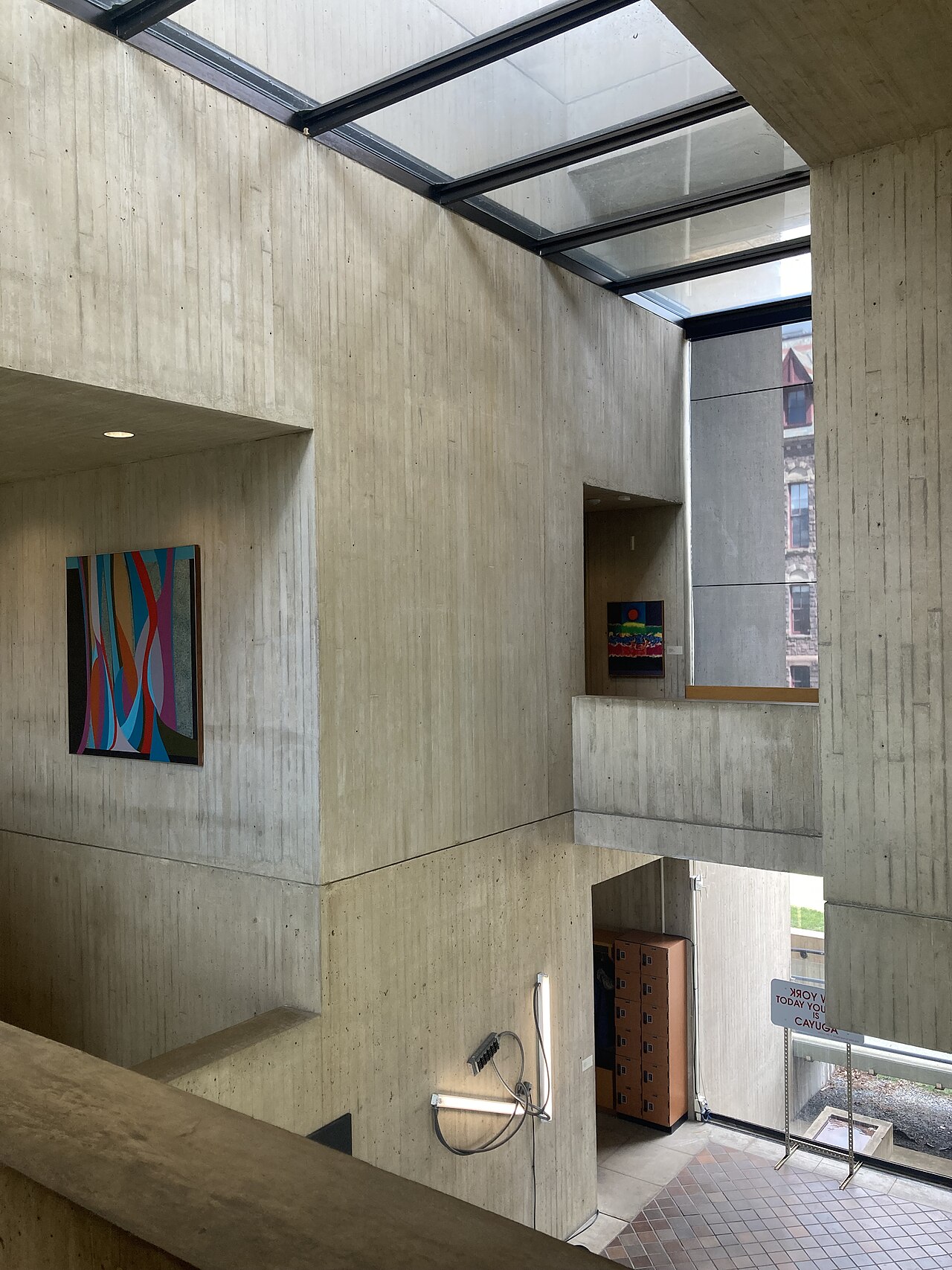
The site set its own constraints: building space was limited, and the building could not overwhelm either the view of Cayuga Lake or the neighbouring Arts Quad. It visually closes the north end of Library Slope, and the result is a narrow tower and a bridge.
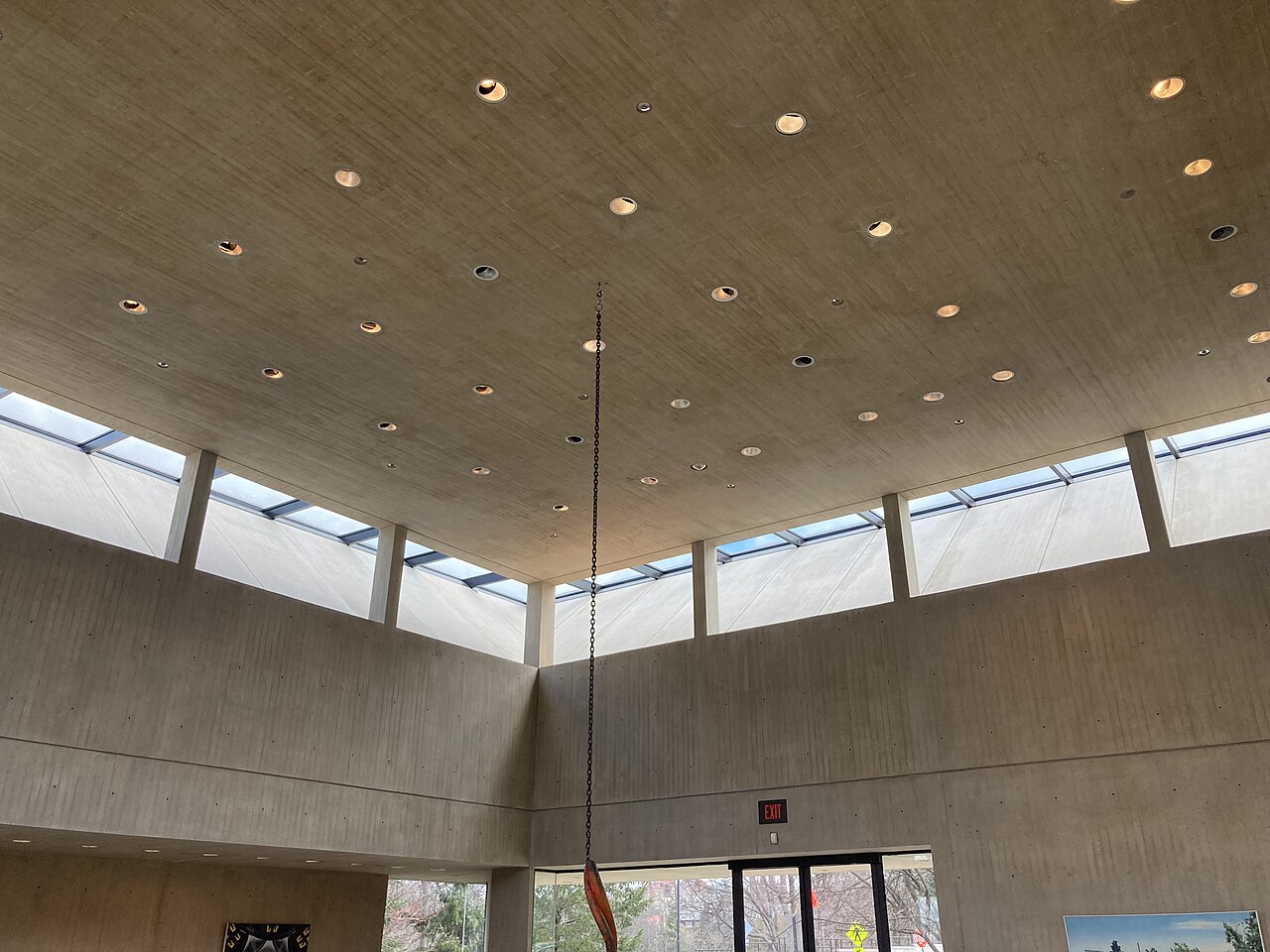
The modular, Bauhaus-inspired structure is built of concrete, and its concrete facade is what it is known for. The fifth level cantilevers over the open-air sculpture garden. The building was designed not to block the view of Cayuga Lake, which it offers as a panorama from its north and west sides; much of the interior is flooded with natural light. On the fifth level, where the Asian art galleries are, the view takes in the campus, Ithaca and the lake. The American Institute of Architects gave the building its Honor Award in 1975.
The 2011 wing (about 1,500 m²) draws in part on an underground section of Pei's design that had never been built. It added a 150-seat lecture hall, offices, exhibition spaces and a Japanese garden, the Morgan Garden, on the northwest side of the wing. Designed by Marc Peter Keane, it translates the tale of the Three Laughers of the Tiger Glen into abstract form: three upright boulders represent the protagonists, and a cleft lined with small stones, running through a field of moss, the torrent of the ravine. In the viewer's mind, the sound of water running in the nearby stone basin is meant to merge with the visual illusion of water running in the ravine.
Use today
The museum's holdings exceed 40,000 works, drawn from most of the world's cultures and covering six millennia. Asian art is among its strengths, alongside European art from antiquity to today, pre-Columbian sculpture and ceramics, African sculpture and textiles, modern and contemporary painting and sculpture, and prints, drawings and photographs dating from the fifteenth century onward.
Admission has been free for everyone since the museum opened. The outdoor Morgan Garden is open to visitors at all times, apart from possible seasonal closures for maintenance.
Visiting
The museum is open Tuesday to Friday from 10am to 5pm, and Saturday and Sunday from 12 to 4pm; it is closed on Mondays. Admission is always free. Special hours are posted for major holidays and Cornell break periods.
Photography without flash is allowed for personal use, except where otherwise indicated; flash, video and tripods are not allowed. Umbrellas, large bags, backpacks, water bottles, food and drink must be left in the entrance lobby, where small lockers are available at no charge. The building is accessible to visitors with various disabilities, and a wheelchair is available in the lobby.
The museum's address is 114 Central Avenue, where Central Avenue meets University Avenue; it stands on the Cornell campus, at the head of Libe Slope, with the Arts Quad opposite. Its car park is reserved for museum visitors and has twelve paid spaces and one accessible space. Free tours led by museum student educators, as available, last 45 to 60 minutes; they must be requested at least two weeks ahead, for at least five participants.
Photos
42.45° N, 76.49° W
Greenhouses nearby
Architecture nearby
Sources (10)
- museum.cornell.edu/about/visit/
- museum.cornell.edu/about/the-museum/
- news.cornell.edu/stories/2019/05/remembering-im-pei
- news.cornell.edu/stories/2007/05/new-johnson-museum-addition-expand-exhibition-storage-spa
- news.cornell.edu/stories/2008/05/johnson-museum-celebrate-groundbreaking-new-wing
- alumni.cornell.edu/cornellians/?p=19816
- en.wikipedia.org/wiki/Herbert_F._Johnson_Museum_of_Art
- api.openstreetmap.org/api/0.6/relation/6057417/full.json
- openstreetmap.org/relation/6057417
- wikidata.org/wiki/Q5734055
Affiliate links — booking through Verrière helps fund our research, at no extra cost to you.