Carpenter Center for the Visual Arts
Cambridge, Massachusetts
Sources checked October 2026
- Year
- 1963
- Architect
- Le Corbusier
- Type
- Contemporary art centre and university department
- Access
- Open to the public, free admission, Tuesday to Sunday 12 pm to 5 pm (official website, October 2026)
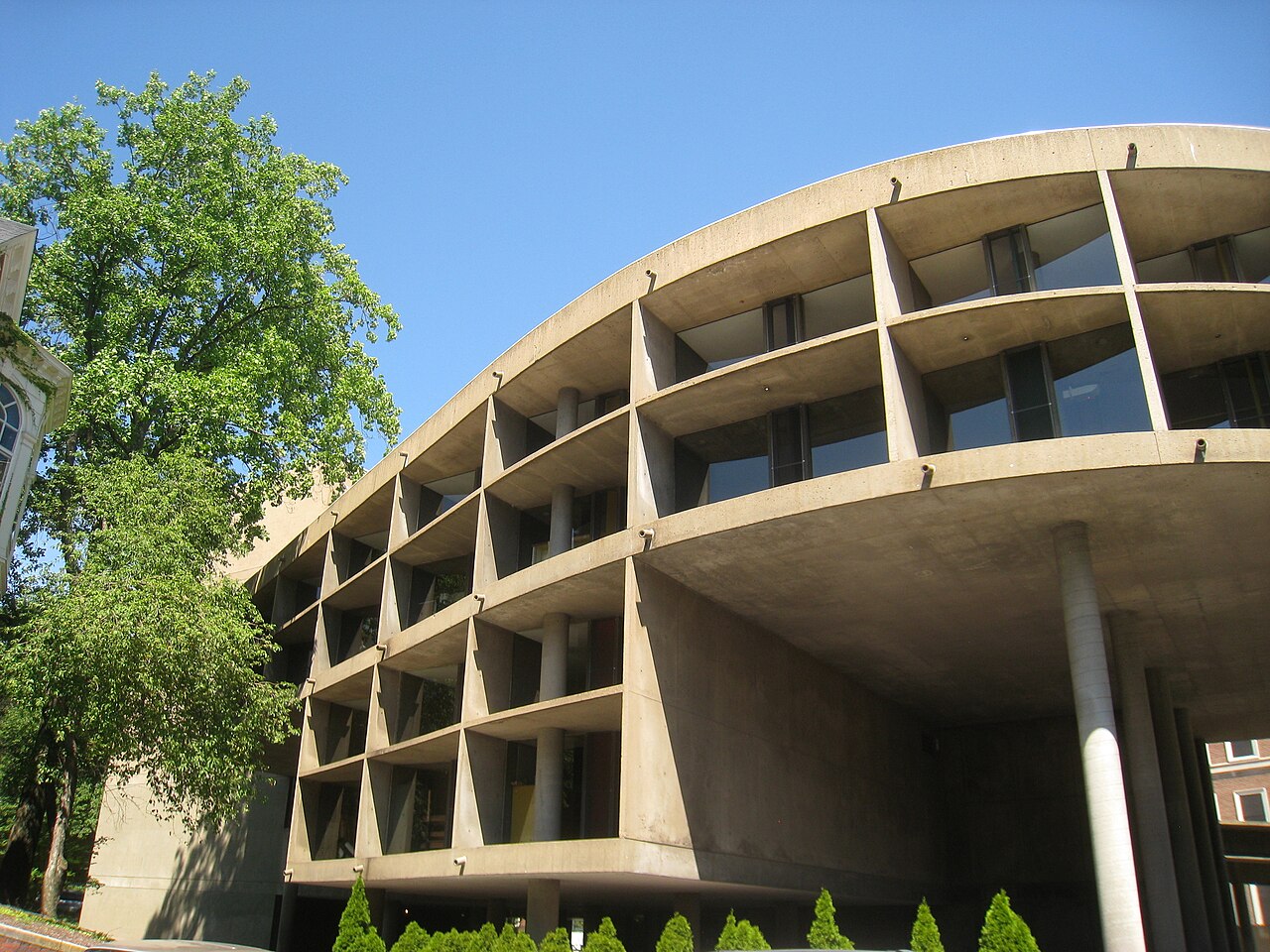
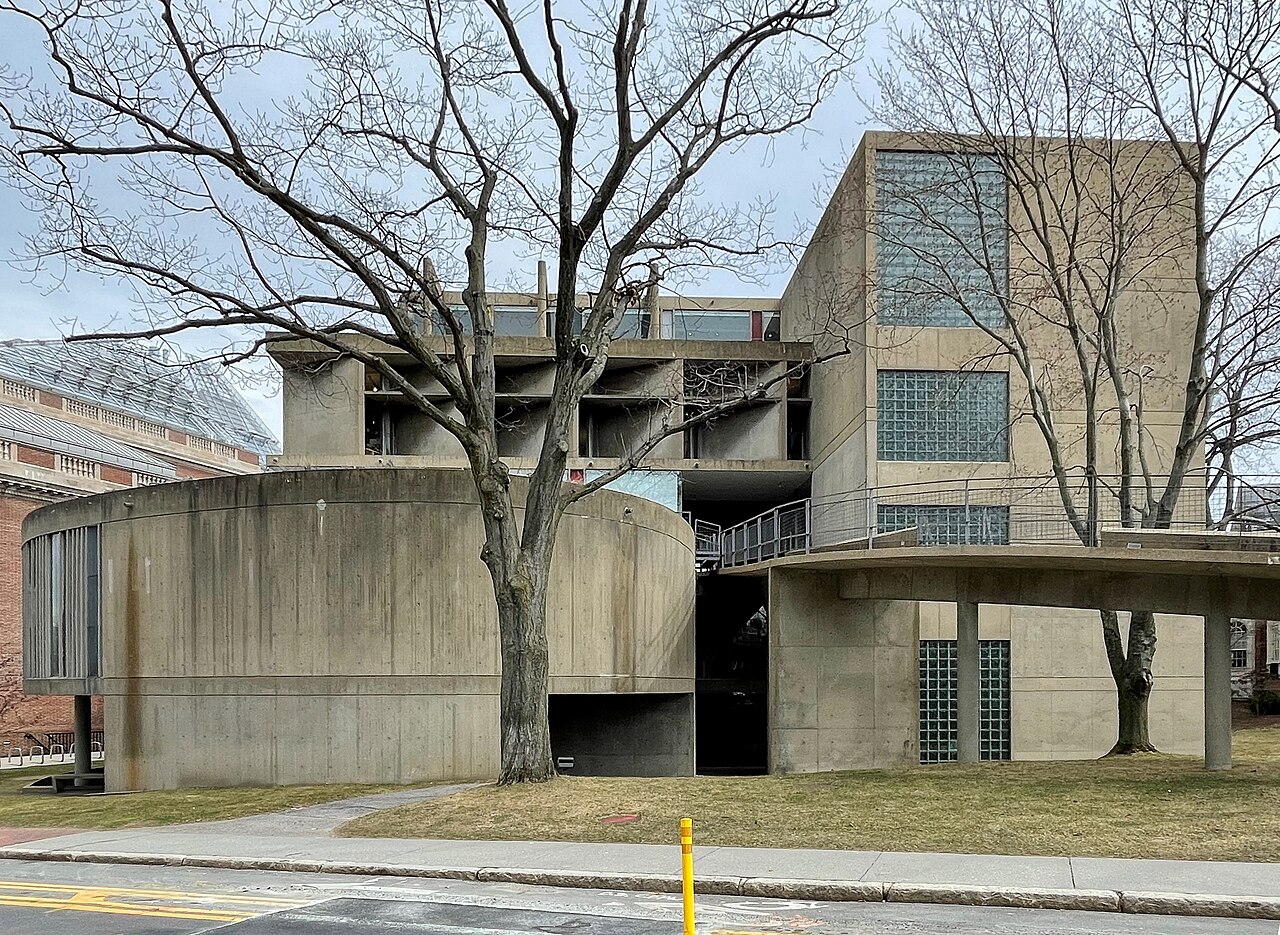
On the Harvard campus, between Quincy Street and Prescott Street, Le Corbusier brought together free plan, pilotis, brise-soleil and undulating panels in a five-level building completed in 1963. A concrete ramp runs through it and opens views into the studios. Today it is home to Harvard's contemporary art centre, the Harvard Film Archive and Harvard's Department of Art, Film, and Visual Studies.
Affiliate links — booking through Verrière helps fund our research, at no extra cost to you.
History
In 1956 President Nathan Pusey appointed a committee to look at the role of the visual arts within the undergraduate curriculum at Harvard, and its report proposed a centre that would bring the university's artistic entities together under one roof. The project was funded by a gift from Alfred St. Vrain Carpenter. Josep Lluís Sert, a former collaborator and friend of Le Corbusier, advised the president and the dean of Harvard College on the choice of architect and proposed Le Corbusier in 1959; they accepted the same day. Le Corbusier, who had never built in the United States, first received the proposal with scepticism, then changed his mind in view of what the place was for. He first went to Cambridge on 12 November 1959 and in 1960 presented his plans and a model, which were approved at once.
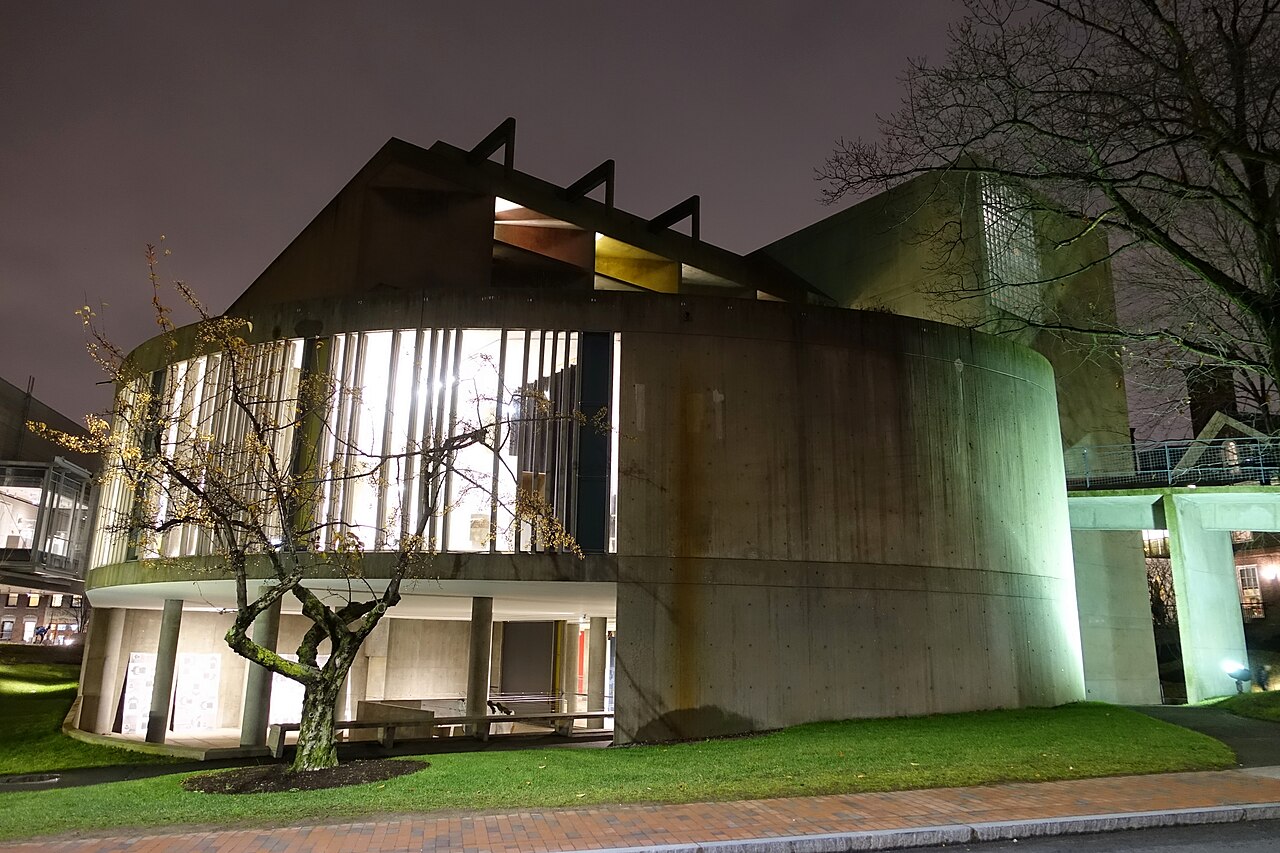
Le Corbusier designed the centre with the Chilean architect Guillermo Jullian de la Fuente in his studio at 35 rue de Sèvres, while Sert's office prepared the construction plans on site. Completed in 1963, it is one of his last projects and the only building he built in North America. A modernist building on an otherwise traditional campus, it stirred controversy. Le Corbusier, however, held that a building for the visual arts ought to be an experience of freedom and limitless creativity: he sought in it a "synthesis of the arts", architecture joined with painting and sculpture.
The Department of Visual and Environmental Studies has occupied the building since 1968; in 2019 it was renamed the Department of Art, Film, and Visual Studies. Listed on the National Register of Historic Places since 1978, it has been restored several times and is still used by the university.
Architecture
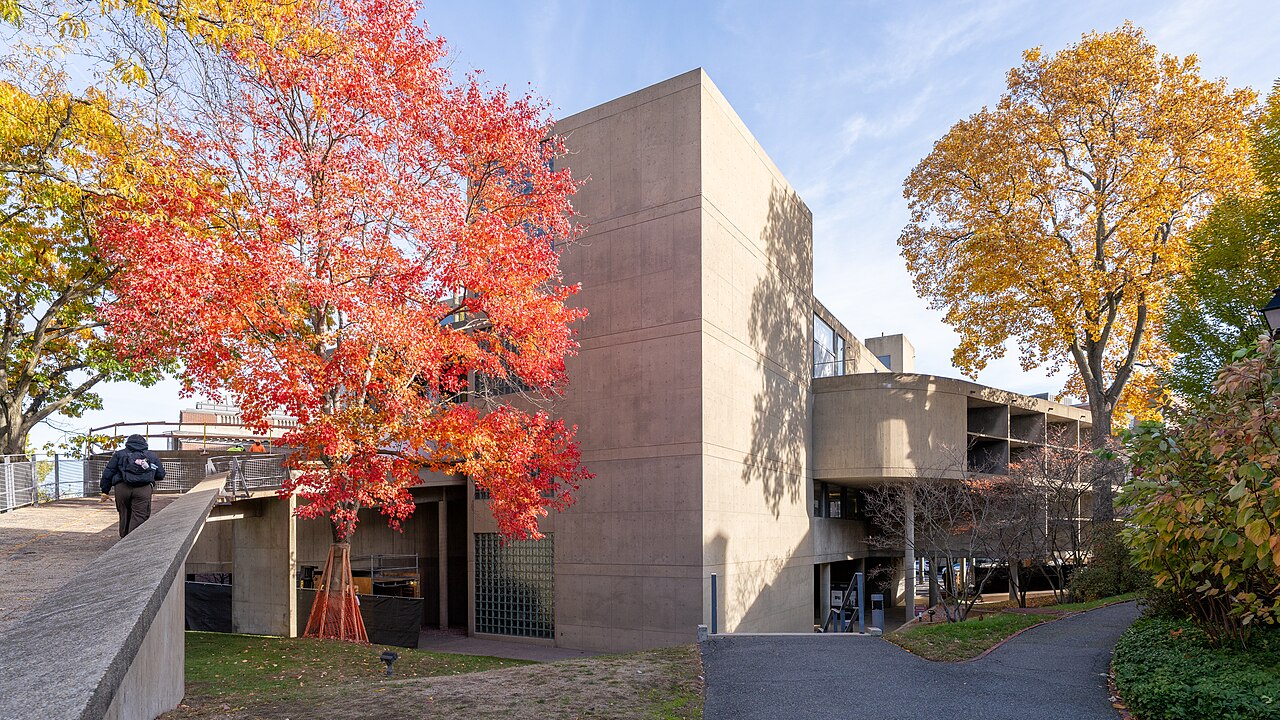
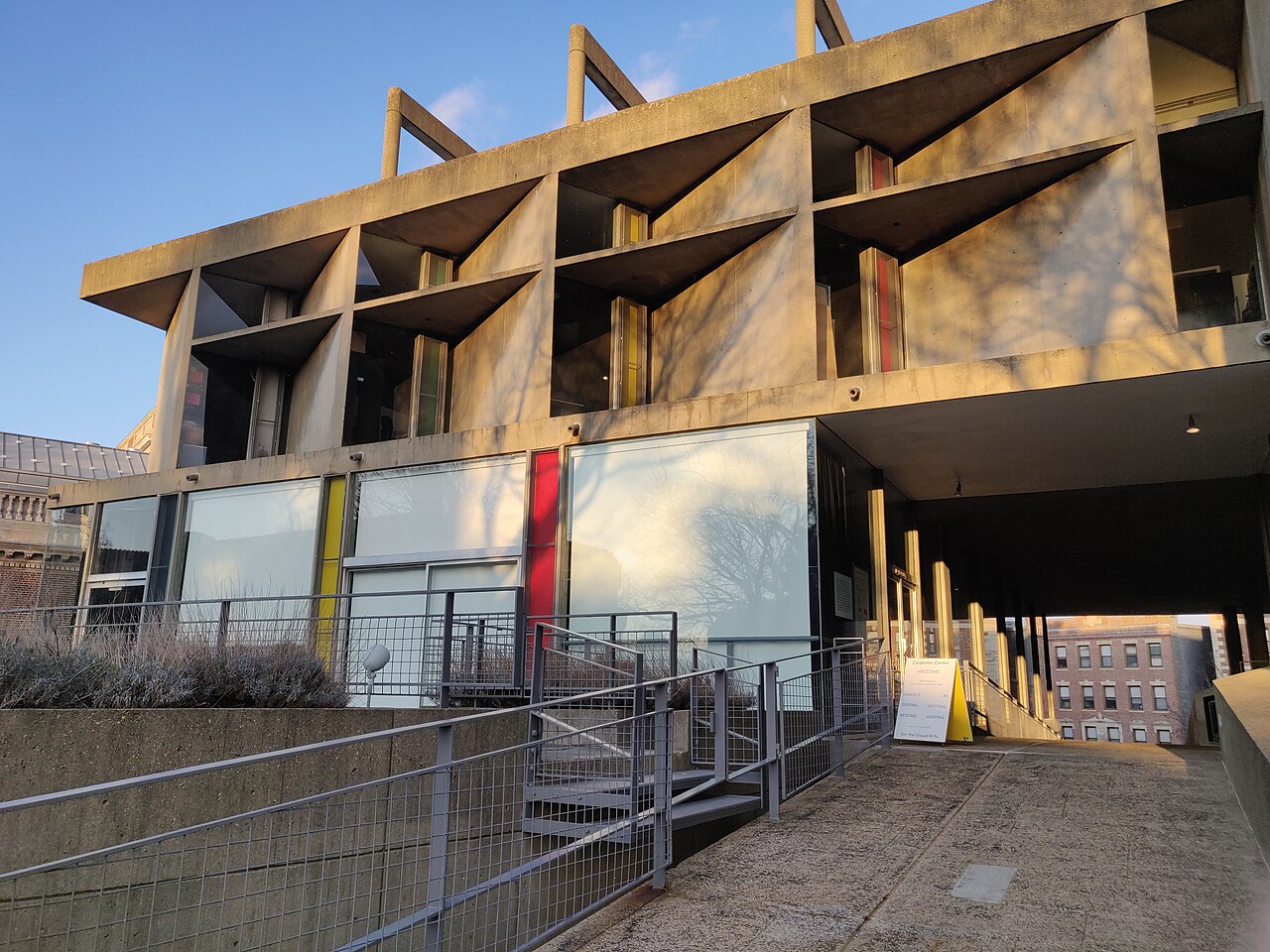
The centre appears as a synthesis of Le Corbusier's architectural principles: free plan, pilotis, brise-soleil, different types of glass, undulating panels. The building has five levels; it forms a compact, roughly cylindrical mass which an S-shaped ramp runs through at level 3. This concrete ramp, cantilevered from a central core, stands on a few pilotis; the core, which houses a lift, is where the two halves of the building meet.
At the top of the ramp, the landing leads to the studios and exhibition spaces, which can be seen through glass windows and doors without interrupting the activities in progress. The five levels provide flexible, open work areas for painting, photography, drawing, mixed media and sculpture, while the ramp that runs through the heart of the building draws the public through it and opens views into the studios: the creative process is made visible by the design of the building itself. Two ramps, one facing Quincy Street and the other Prescott Street, connect the building to the paths of Harvard Yard.
The levels engage with nature and the sun: some pilotis are aligned with trees, and the brise-soleil and the orientation follow the sun's course, giving natural lighting that varies throughout the day.
Use today
Harvard University's centre for contemporary art is the Carpenter Center for the Visual Arts. It has no collection: it presents exhibitions in the Sert and AUX Intermedia Galleries, around which conversations, residencies, publishing projects and study spaces take place. Exhibitions and programmes are free and open to the public.
The Department of Art, Film, and Visual Studies, whose students work in the building's studios, and the Harvard Film Archive, whose programme brings together classic, rare and experimental films, are housed in the same building. On level 3, the bookshop offers the centre's own publications and books related to its exhibitions.
Visiting
Admission is free and the centre is open to the public Tuesday to Sunday, 12 pm to 5 pm, at 24 Quincy Street. The entrances can be hard to find: you go up the ramp from Quincy Street to arrive at the level 3 gallery, or down the steps from Quincy Street, by the poster kiosk, to enter the level 1 gallery.
Visitors can explore part of the building: level 1, level 3 with the Sert Gallery, and the publicly accessible outdoor spaces. The studios are reserved for students enrolled in Department of Art, Film, and Visual Studies courses. Exhibition and building tours can be arranged on a case-by-case basis; groups and classes request them with a form, and the centre periodically offers public architecture tours.
Photos
42.37° N, 71.11° W
Greenhouses nearby
Architecture nearby
By the same architect
Sources (8)
- carpenter.center/visit
- carpenter.center/building
- carpenter.center/about
- fondationlecorbusier.fr/oeuvre-architecture/realisations-carpenter-center-for-visual-arts-
- news.harvard.edu/gazette/story/2023/10/for-60th-anniversary-carpenter-center-takes-rare-lo
- en.wikipedia.org/wiki/Carpenter_Center_for_the_Visual_Arts
- openstreetmap.org/way/1052049399
- wikidata.org/wiki/Q2940137
Affiliate links — booking through Verrière helps fund our research, at no extra cost to you.