Le Corbusier
Charles-Édouard Jeanneret
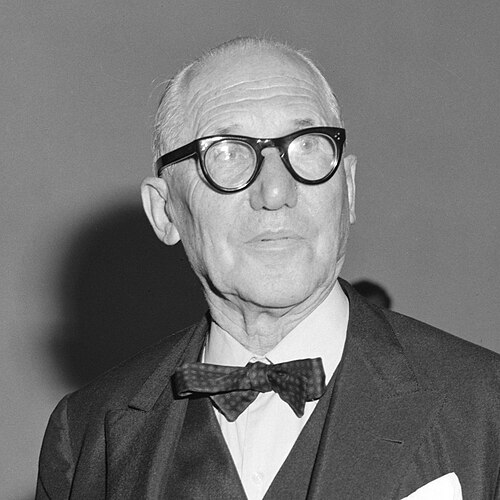
Charles-Édouard Jeanneret was born on 6 October 1887 in La Chaux-de-Fonds, a Swiss watchmaking town, to a father who was a watch enameller and a mother who was a pianist and music teacher. Admitted in 1900 to the town's School of Art, he was steered towards architecture in 1905 by his teacher Charles L'Eplattenier and, with the help of René Chapallaz, built his very first building, the Villa Fallet. From 1907 to 1911 he travelled across Europe, from Italy to Vienna, Paris and Munich, worked from November 1910 to April 1911 in Peter Behrens's office, and amassed a quantity of notes and drawings that would feed his work for the rest of his life. In 1911 the "Voyage d'Orient" took him from Prague through the Balkans towards Turkey and Greece. He had no architecture degree: in 1940 a ministerial decision allowed the non-graduate architects Auguste Perret, Eugène Freyssinet and Le Corbusier to practise.
He settled in Paris for good in February 1917. With Amédée Ozenfant and Paul Dermée he founded the journal L'Esprit Nouveau in 1920, in which he took the pseudonym Le Corbusier to sign his architecture articles. From 1922 he worked with his cousin Pierre Jeanneret; Vers une architecture appeared in 1923 and, on 18 September 1924, he opened the studio at 35 rue de Sèvres, which he would occupy until his death. The Plan Voisin (1925), proposed for the centre of Paris, takes its name from the aircraft and car manufacturers who gave financial support to the Pavillon de l'Esprit Nouveau, where the study was shown: the centre of Paris, Le Corbusier and Pierre Jeanneret write in the Œuvre complète, "must be rebuilt upon itself". The Dom-Ino system, devised in 1914, a frame of posts and slabs, frees the plan and the façades. The five points of a new architecture (pilotis, ribbon window, roof garden, free plan, free façade), theorised in 1927, appeared as early as 1923 in the Maison La Roche in Paris; the Villa Le Lac, at Corseaux on Lake Geneva (1923-1924), brings together three of them, and the Villa Savoye in Poissy (1928-1931) illustrates them. At Pessac, the Cité Frugès (1924-1926) is the first experiment with his social theories of architecture. In June 1928, with Siegfried Giedion and Hélène de Mandrot, he organised the first International Congress of Modern Architecture (CIAM), at the château de La Sarraz. He obtained French nationality by decree of 19 September 1930.
He moved to Vichy in January 1941 to obtain from the new authorities the running of reconstruction; he received only temporary assignments and seats on commissions without power, and left the town for good on 1 July 1942. That stay and, more broadly, his political positions are the subject of controversy and of debate among historians. Between 1943 and 1950 he developed the Modulor, a system of proportions based on the height of a man of 1.83 m (six feet), which provides the measure for the Unité d'Habitation in Marseille, commissioned in July 1945 and inaugurated in 1952: a reinforced-concrete block raised on pilotis to leave the ground to greenery as well as to pedestrians and cars, at the centre of a wooded park. The Radiant City, whose principles he took up again in a book published in 1935, must, he wrote in 1964, be placed "under the masterly aegis of the conditions of nature: sun – space – greenery". From the 1950s his work answers to the characteristics of Brutalism: materials left raw, formwork marks left visible. Several of his works deal with light and the framing of the landscape: the 11-metre window of the Villa Le Lac opens on Lake Geneva and the Alps; the two windows of the Cabanon at Roquebrune-Cap-Martin (1951) frame, one the Mediterranean, the other a centuries-old carob tree; the concrete chapel at Ronchamp (1950-1955) expresses itself in curves, light and colour, with painted glass; at the Sainte-Marie de La Tourette convent (1953-1960) he deploys light cannons, light machine-guns, slits, light wells and glass panels.
From 1950 he was general consultant for Chandigarh, the new capital of Punjab, whose construction site was run by his cousin Pierre Jeanneret. He received the gold medal of the American Institute of Architects on 27 April 1961. He died on 27 August 1965 of a heart attack during his daily swim in the Mediterranean, at Roquebrune-Cap-Martin. A state funeral was held on 1 September in the Cour Carrée of the Louvre, with a funeral oration by André Malraux; his urn joined that of his wife Yvonne in their tomb at Roquebrune-Cap-Martin. Of the 79 buildings or groups of buildings he completed, 65 survive. Since 17 July 2016, seventeen buildings or sites, spread across seven countries (Germany, Argentina, Belgium, India, Japan, Switzerland, France), have been inscribed on UNESCO's World Heritage List as "The Architectural Work of Le Corbusier, an Outstanding Contribution to the Modern Movement": among them the La Roche and Jeanneret Houses in Paris, the Villa Savoye, the Unité d'Habitation in Marseille, the chapel at Ronchamp, the La Tourette convent, the Capitol Complex in Chandigarh and the Curutchet House in La Plata.
Map of the works 79
- Featured work (own page)
- Other work (in the list)
- Work no longer standing
Works in the list: building position when known, otherwise the city; private homes without an address, at a point published by a public source, at neighbourhood or at city level.
Featured works
Doncourt-lès-Conflans flying club
Beistégui penthouse apartment
Bhakra Dam
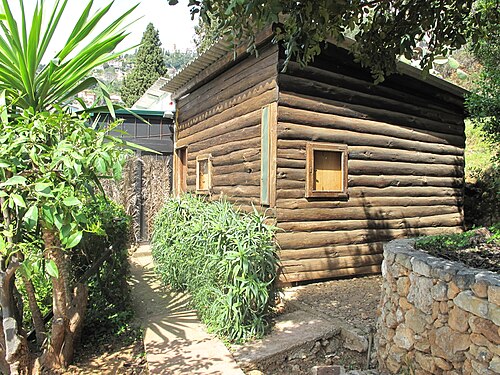
Le Corbusier's Cabanon
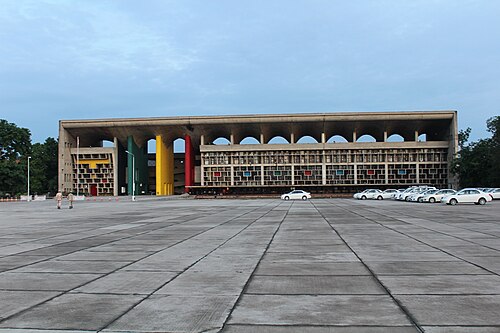
Capitol Complex
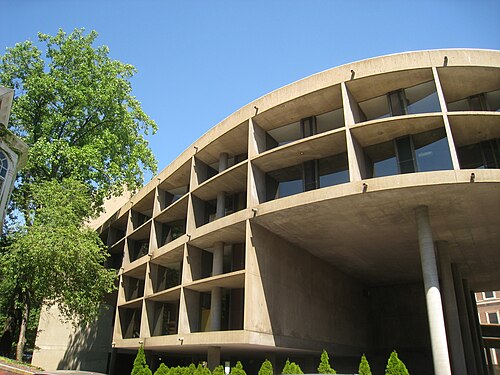
Carpenter Center for the Visual Arts
Rehabilitation centre for the young unemployed
Centre scientifique de la Main-d'œuvre
Tsentrosoyuz building
Chandigarh College of Architecture
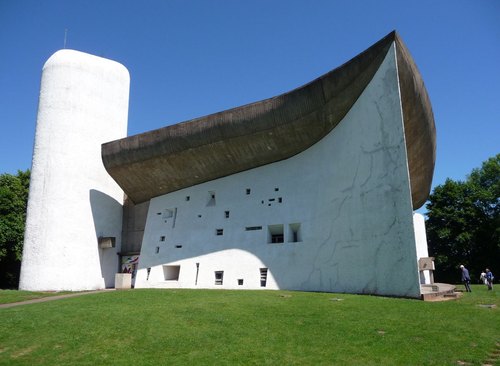
Notre-Dame-du-Haut Chapel
Chavat water tower
La Scala cinema
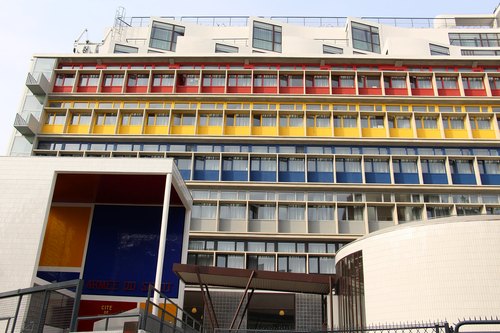
Salvation Army Cité de Refuge
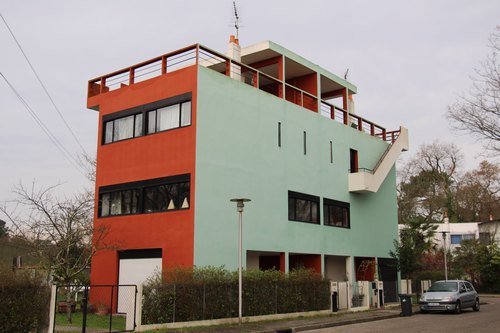
Frugès Estate (Cité Frugès)
Saint-Nicolas-d'Aliermont workers' estate
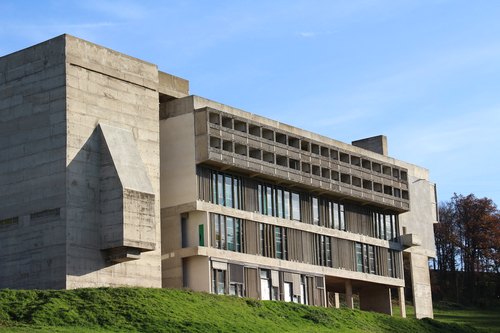
Sainte-Marie de La Tourette Convent
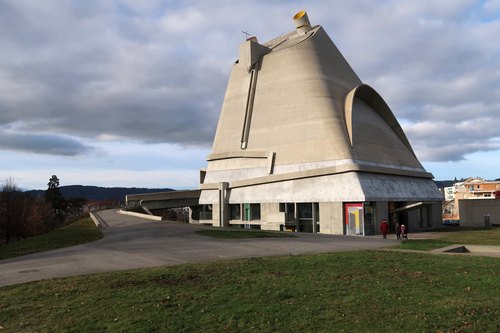
Saint-Pierre Church, Firminy
Sensaud de Lavaud Garage
Government Museum and Art Gallery, Chandigarh
Baghdad Gymnasium
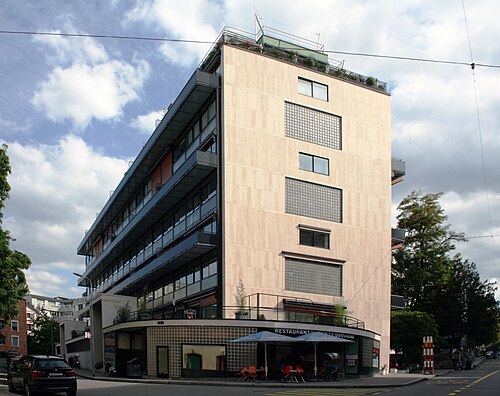
Clarté apartment building
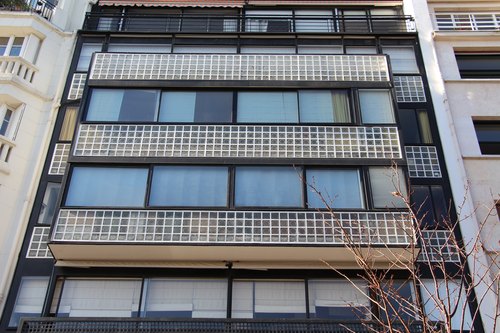
Molitor Building and Le Corbusier's Apartment-Studio
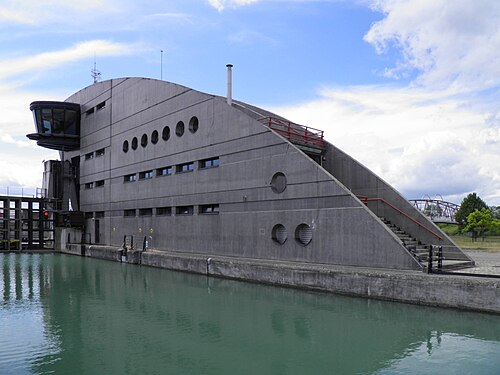
Kembs-Niffer lock buildings
Lège Workers' Estate (Houses and Canteen)
Ozenfant House and Studio
Cook House
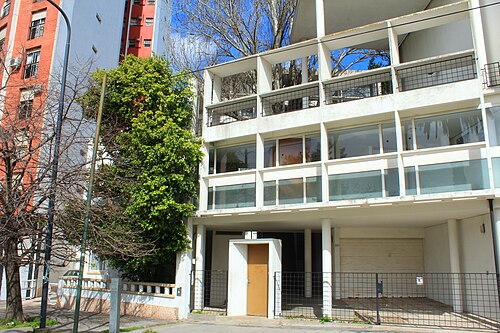
Curutchet House
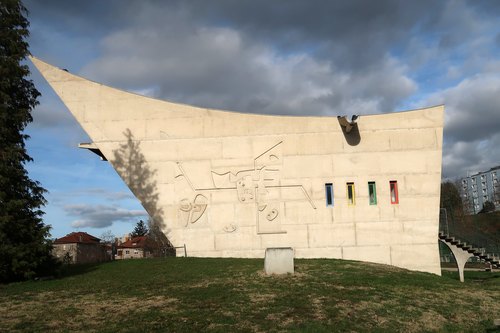
Maison de la Culture, Firminy-Vert
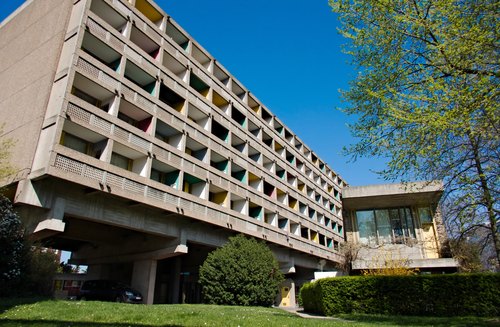
Maison du Brésil (Brazil House)
Tonkin House
Maison Guiette
Henfel weekend house
Planeix House
Ternisien House
Jaoul Houses
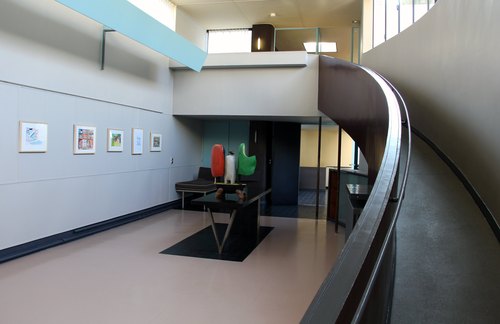
La Roche and Jeanneret Houses
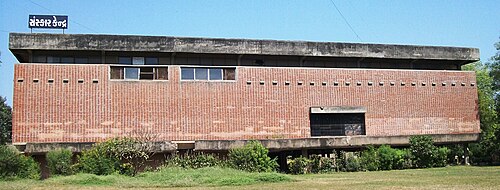
Ahmedabad Museum (Sanskar Kendra, સંસ્કાર કેન્દ્ર)
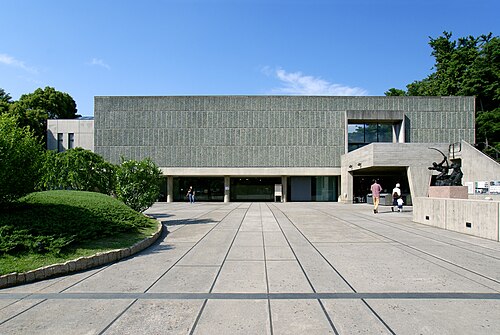
National Museum of Western Art, Tokyo (国立西洋美術館)
Mill Owners' Association Building
Palais du Peuple of the Salvation Army
Esprit Nouveau Pavilion (1977 replica)
Esprit Nouveau Pavilion
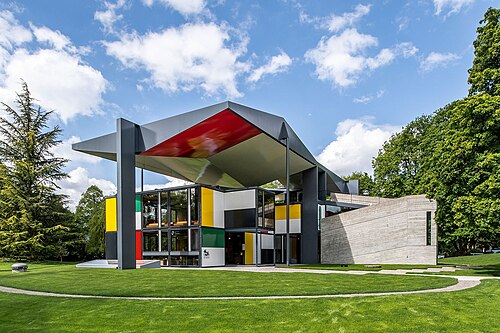
Pavillon Le Corbusier
Nestlé Pavilion
Philips Pavilion, Expo 58
S.T.A.R. pavilion
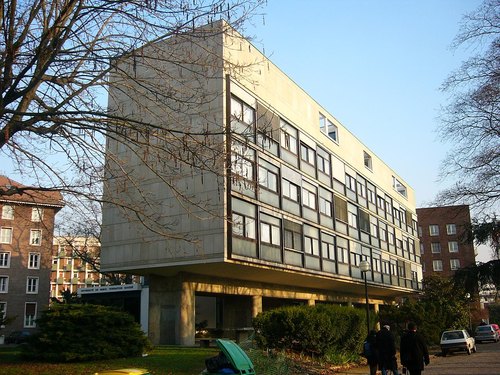
Swiss Pavilion (Fondation Suisse)
Pavilion of the New Times
Salvation Army floating shelter (Louise-Catherine barge)
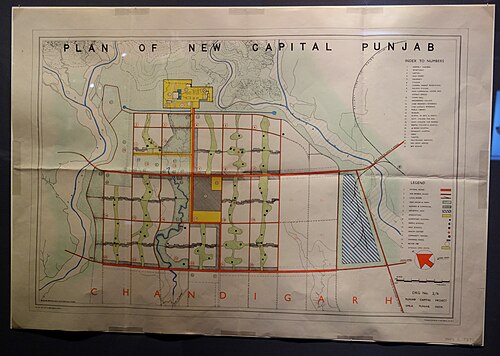
Chandigarh master plan
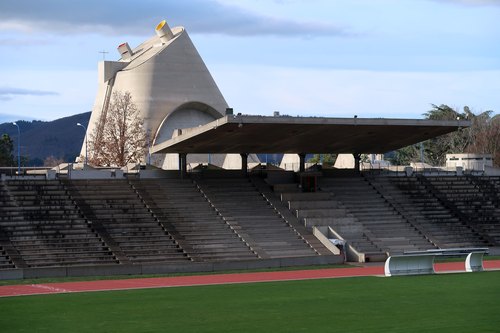
Le Corbusier Stadium, Firminy-Vert
Grave of Le Corbusier and Yvonne Gallis
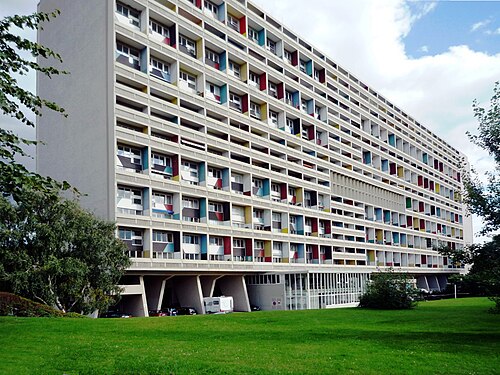
Unité d'Habitation of Berlin (Corbusierhaus)
Unité d'Habitation of Briey-en-Forêt (Cité Radieuse)
Unité d'Habitation of Firminy-Vert
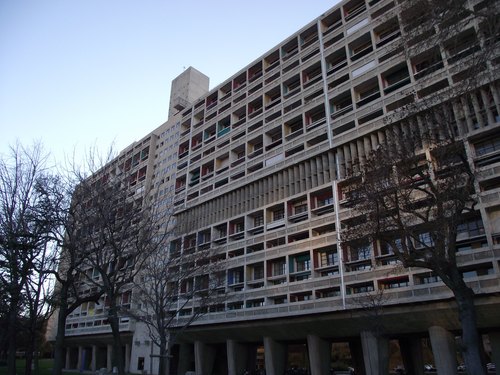
Unité d'Habitation of Marseille (Cité Radieuse)
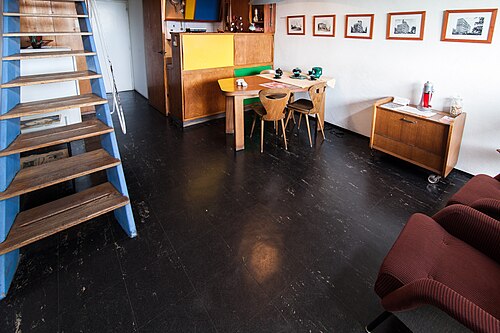
Unité d'Habitation of Rezé (Maison Radieuse)
Camping units
Claude et Duval factory
Villa Baizeau
Villa Berque refurbishment
Villa Besnus (Ker-Ka-Ré)
Villa Church
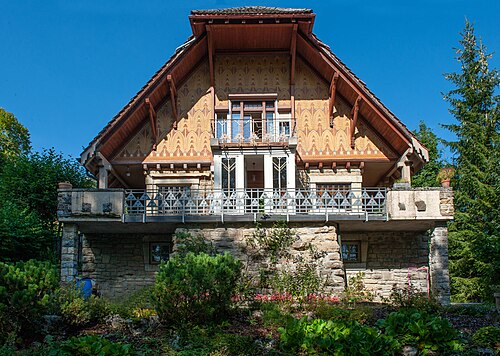
Villa Fallet
Villa Favre-Jacot
Villa Jaquemet
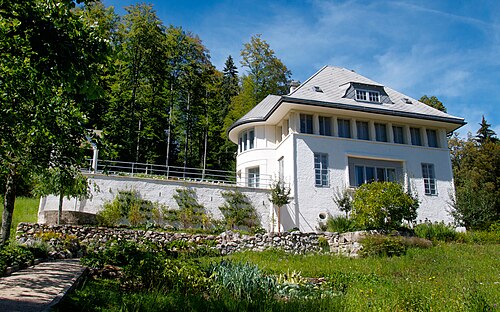
Villa Jeanneret-Perret (Maison Blanche)
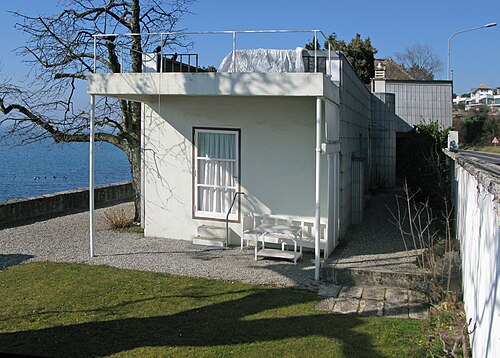
Villa 'Le Lac'
Villa Le Sextant
Villa de Mandrot (Villa l'Artaude)
Villa Sarabhai
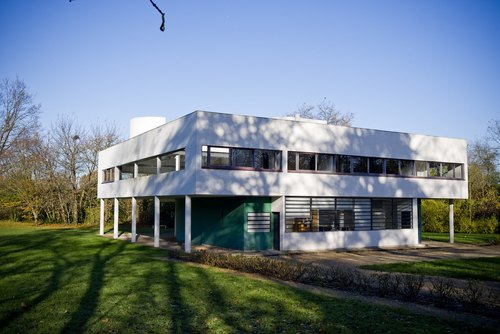
Villa Savoye
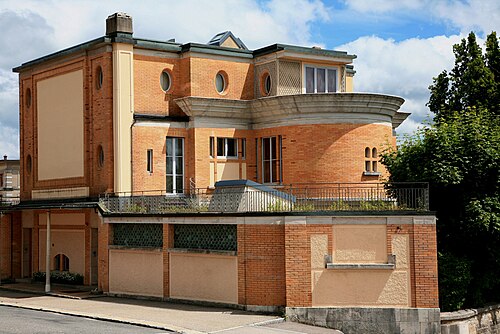
Villa Schwob (Turkish Villa)
Villa Shodhan
Villa Stein-de-Monzie "Les Terrasses"
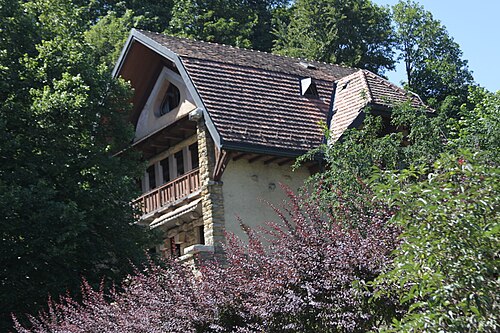
Villa Stotzer
Lipchitz-Miestchaninoff house-studios
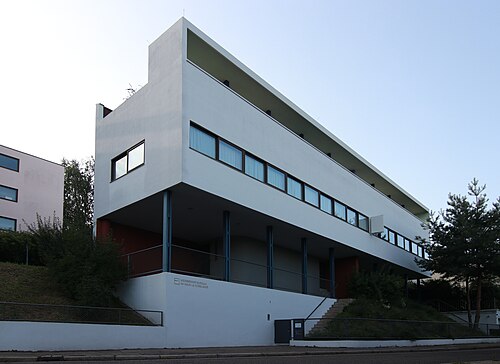
Weissenhof Estate houses
All works 79 works
Private homes are not open to visitors; they are placed without an address, at a point published by a public source, at neighbourhood or at city level.
France 49
- Chavat water tower Château d'eau – domaine ChavatPodensac · 1917Seen from outside
- Saint-Nicolas-d'Aliermont workers' estate Cité ouvrière de Saint-Nicolas-d'AliermontSaint-Nicolas-d'Aliermont · 1917Private home, not open to visitors
- Villa Berque refurbishment Villa Berque (aménagement)Paris · 1921Private home, not open to visitors
- Ozenfant House and Studio Maison-atelier OzenfantParis · 1922Private home, not open to visitors
- Villa Besnus (Ker-Ka-Ré) Villa BesnusVaucresson · 1922Private home, not open to visitors
- La Roche and Jeanneret Houses Maisons La Roche-JeanneretParis · 1923Open to visitors
- Lipchitz-Miestchaninoff house-studios Maisons-ateliers Lipchitz-MiestchaninoffBoulogne-Billancourt · 1923Private home, not open to visitors
- Esprit Nouveau Pavilion Pavillon de l'Esprit NouveauParis · 1924Demolished
- Frugès Estate (Cité Frugès) Cité FrugèsPessac · 1924Open to visitors
- Lège Workers' Estate (Houses and Canteen) Lotissement de Lège (maisons et cantine)Lège-Cap Ferret · 1924Seen from outside
- Tonkin House Maison du TonkinBordeaux · 1924Demolished
- Planeix House Maison PlaneixParis · 1925Private home, not open to visitors
- Sensaud de Lavaud Garage Garage Sensaud de LavaudNeuilly-sur-Seine · 1925Demolished
- Cook House Maison CookBoulogne-Billancourt · 1926Private home, not open to visitors
- Palais du Peuple of the Salvation Army Armée du Salut, Palais du PeupleParis · 1926Not open to the public
- Villa Stein-de-Monzie "Les Terrasses" Villa Stein-de Monzie « Les Terrasses »Vaucresson · 1926Private home, not open to visitors
- Nestlé Pavilion Pavillon NestléParis · 1927Demolished
- Ternisien House Maison TernisienBoulogne-Billancourt · 1927Demolished
- Villa ChurchVille-d'Avray · 1927Demolished
- Beistégui penthouse apartment Appartement de M. Charles de BeistéguiParis · 1929Seen from outside
- Salvation Army floating shelter (Louise-Catherine barge) Asile flottant (péniche Louise-Catherine)Paris · 1929Not open to the public
- Villa de Mandrot (Villa l'Artaude) Villa de Madame H. de MandrotLe Pradet · 1929Private home, not open to visitors
- S.T.A.R. pavilion Pavillon S.T.A.R.Le Bourget · 1930Demolished
- Molitor Building and Le Corbusier's Apartment-Studio Immeuble locatif à la porte MolitorParis (Boulogne-Billancourt) · 1931Open to visitors
- Villa Savoye Villa Savoye et loge du jardinierPoissy · 1931Open to visitors
- Salvation Army Cité de Refuge Cité de Refuge de l'Armée du SalutParis · 1933By request
- Swiss Pavilion (Fondation Suisse) Pavillon suisse (Fondation suisse)Paris · 1933Open to visitors
- Henfel weekend house La maison Henfel ou maison de week-endLa Celle-Saint-Cloud · 1934Private home, not open to visitors
- Villa Le Sextant Villa « Le Sextant »Les Mathes · 1934Private home, not open to visitors
- Pavilion of the New Times Pavillon des Temps NouveauxParis · 1936Demolished
- Centre scientifique de la Main-d'œuvreParis · 1938Demolished
- Rehabilitation centre for the young unemployed Centre de réadaptation des jeunes chômeursParis · 1938Demolished
- Claude et Duval factory Usine Claude et DuvalSaint-Dié-des-Vosges · 1946Seen from outside
- Doncourt-lès-Conflans flying club Aéroclub de DoncourtDoncourt-lès-Conflans · 1951Not open to the public
- Jaoul Houses Maisons JaoulNeuilly-sur-Seine · 1951Private home, not open to visitors
- Le Corbusier's Cabanon Cabanon de Le CorbusierRoquebrune-Cap-Martin · 1951Open to visitors
- Unité d'Habitation of Marseille (Cité Radieuse) Unité d'habitation de Marseille (Cité radieuse)Marseille · 1952Open to visitors
- Maison de la Culture, Firminy-Vert Maison de la Culture de FirminyFirminy · 1953Open to visitors
- Sainte-Marie de La Tourette Convent Couvent Sainte-Marie de La TouretteÉveux · 1953Open to visitors
- Le Corbusier Stadium, Firminy-Vert Stade de Firminy-VertFirminy · 1955Open to visitors
- Notre-Dame-du-Haut Chapel Chapelle Notre-Dame-du-HautRonchamp · 1955Open to visitors
- Unité d'Habitation of Rezé (Maison Radieuse) Unité d'habitation de RezéRezé · 1955Open to visitors
- Camping units Unités de campingRoquebrune-Cap-Martin · 1956Open to visitors
- Grave of Le Corbusier and Yvonne Gallis Tombe de Le CorbusierRoquebrune-Cap-Martin · 1958Open to visitors
- Maison du Brésil (Brazil House) Maison du BrésilParis · 1959Open to visitors
- Unité d'Habitation of Briey-en-Forêt (Cité Radieuse) Unité d'habitation de Briey-en-ForêtBriey · 1959Open to visitors
- Kembs-Niffer lock buildings Bâtiments de l'écluse de Kembs-NifferKembs · 1960By request
- Saint-Pierre Church, Firminy Église Saint-PierreFirminy · 1960Open to visitors
- Unité d'Habitation of Firminy-Vert Unité d'habitation de Firminy-VertFirminy · 1965Open to visitors
Switzerland 10
- Villa FalletLa Chaux-de-Fonds · 1906Open to visitors
- Villa JaquemetLa Chaux-de-Fonds · 1907Private home, not open to visitors
- Villa StotzerLa Chaux-de-Fonds · 1907Private home, not open to visitors
- Villa Favre-JacotLe Locle · 1912Private home, not open to visitors
- Villa Jeanneret-Perret (Maison Blanche) Villa Jeanneret-Perret, dite Maison BlancheLa Chaux-de-Fonds · 1912Open to visitors
- La Scala cinema Cinéma « La Scala »La Chaux-de-Fonds · 1916Open to visitors
- Villa Schwob (Turkish Villa) Villa Schwob, dite Villa TurqueLa Chaux-de-Fonds · 1916Seen from outside
- Villa 'Le Lac' Petite villa au bord du lac LémanCorseaux · 1923Open to visitors
- Clarté apartment building Immeuble ClartéGeneva · 1930Seen from outside
- Pavillon Le Corbusier Pavillon Le Corbusier (Maison de l'Homme / Heidi Weber Museum – Centre Le Corbusier)Zurich · 1967Open to visitors
India 9
- Chandigarh master plan Chandigarh (plan directeur)Chandigarh · 1950Open to visitors
- Ahmedabad Museum (Sanskar Kendra, સંસ્કાર કેન્દ્ર) Sanskar KendraAhmedabad · 1951Visits suspended
- Mill Owners' Association BuildingAhmedabad · 1951By request
- Villa Sarabhai Villa de Madame Manorama SarabhaiAhmedabad · 1951Private home, not open to visitors
- Villa ShodhanAhmedabad · 1951Private home, not open to visitors
- Capitol Complex Capitol Complex, ChandigarhChandigarh · 1952Open to visitors
- Bhakra DamBhakra · 1955Seen from outside
- Chandigarh College of ArchitectureChandigarh · 1961Not open to the public
- Government Museum and Art Gallery, Chandigarh Government Museum and Art GalleryChandigarh · 1962Open to visitors
Belgium 2
- Maison Guiette Maison Guiette (Les Peupliers)Antwerp · 1926Private home, not open to visitors
- Philips Pavilion, Expo 58 Pavillon PhilipsBrussels · 1957Demolished
Germany 2
- Weissenhof Estate houses Haus Le Corbusier / WeissenhofsiedlungStuttgart · 1927Open to visitors
- Unité d'Habitation of Berlin (Corbusierhaus) Unité d'Habitation Typ Berlin (Corbusierhaus)Berlin · 1956By request
Argentina 1
- Curutchet House Casa CurutchetLa Plata · 1949Open to visitors
Iraq 1
- Baghdad Gymnasium Stade / gymnase de BagdadBaghdad · 1955Seen from outside
Italy 1
- Esprit Nouveau Pavilion (1977 replica) Padiglione dell'Esprit Nouveau (replica)Bologna · 1977Open to visitors
Japan 1
- National Museum of Western Art, Tokyo (国立西洋美術館) 国立西洋美術館Tokyo · 1955Open to visitors
Russia 1
- Tsentrosoyuz building CentrosoyusMoscow · 1928Seen from outside
Tunisia 1
- Villa BaizeauCarthage · 1928Not open to the public
United States 1
- Carpenter Center for the Visual ArtsCambridge (Massachusetts) · 1963Open to visitors
Sources (28)
- fondationlecorbusier.fr/le-corbusier/biographie/
- fondationlecorbusier.fr/biographie/1887-1906/
- fondationlecorbusier.fr/biographie/1907-1911/
- fondationlecorbusier.fr/biographie/1917-1922/
- fondationlecorbusier.fr/biographie/1923-1925/
- fondationlecorbusier.fr/biographie/1926-1928/
- fondationlecorbusier.fr/biographie/1929-1938/
- fondationlecorbusier.fr/biographie/1939-1946/
- fondationlecorbusier.fr/biographie/1947-1951/
- fondationlecorbusier.fr/biographie/1952-1956/
- fondationlecorbusier.fr/biographie/1961-1965/
- fondationlecorbusier.fr/dossier-thematique/vocabulaire-corbuseen/
- fondationlecorbusier.fr/oeuvre-architecture/projets-plan-voisin-paris-france-1925/
- fondationlecorbusier.fr/dossier-thematique/mise-au-point-sur-les-polemiques-contre-le-corb
- fondationlecorbusier.fr/droits-auteur/gestion-des-droits/
- fondationlecorbusier.fr/le-corbusier/oeuvres/architecture/realisations/
- fondationlecorbusier.fr/la-fondation/missions/patrimoine-mondial/
- fondationlecorbusier.fr/oeuvre-architecture/realisations-petite-villa-au-bord-du-lac-leman
- fondationlecorbusier.fr/oeuvre-architecture/realisations-villa-savoye-et-loge-du-jardinier
- fondationlecorbusier.fr/oeuvre-architecture/realisations-unite-dhabitation-marseille-franc
- fondationlecorbusier.fr/oeuvre-architecture/realisations-cabanon-de-le-corbusier-roquebrun
- fondationlecorbusier.fr/oeuvre-architecture/realisations-chapelle-notre-dame-du-haut-ronch
- fondationlecorbusier.fr/oeuvre-architecture/realisations-couvent-sainte-marie-de-la-touret
- fondationlecorbusier.fr/oeuvre-architecture/realisations-cite-fruges-pessac-france-1924-19
- fondationlecorbusier.fr/oeuvre-architecture/realisations-maisons-la-roche-jeanneret-paris-
- sites-le-corbusier.org/en/
- en.wikipedia.org/wiki/Le_Corbusier
- wikidata.org/wiki/Special:EntityData/Q4724.json