Bruder Klaus Field Chapel
Wachendorf (Mechernich), North Rhine-Westphalia
Sources checked November 2026
- Year
- 2005-2007
- Architect
- Peter Zumthor
- Type
- Field chapel, privately founded
- Access
- Open to the public daily except Mondays, 10 a.m. to 5 p.m. (4 p.m. from November to March); reached on foot only (chapel website, November 2026)
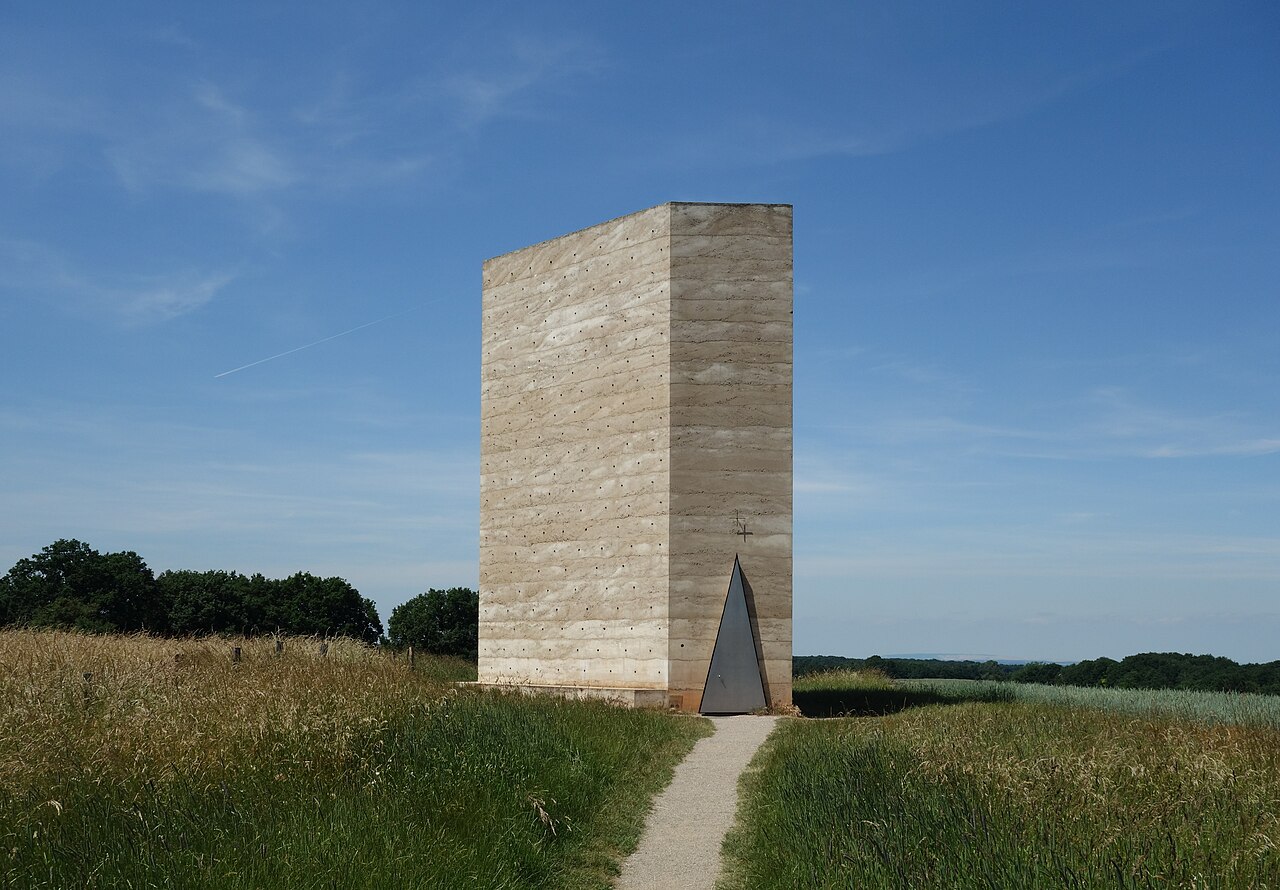
Peter Zumthor designed this chapel for a farmer, Hermann-Josef Scheidtweiler, who wanted it placed under the patronage of Nicholas of Flüe, known as Bruder Klaus. The walls are rammed concrete; inside, 112 tree trunks were embedded in the concrete and then burned, and rain falling through the opening in the roof forms a small pool on the floor.
Affiliate links — booking through Verrière helps fund our research, at no extra cost to you.
History
The chapel grew out of the wish of Trudel and Hermann-Josef Scheidtweiler, who had belonged for decades to the Catholic rural youth association and to the Catholic rural movement, whose patron is St Nicholas of Flüe. A farmer, Hermann-Josef had decided years earlier to build a chapel under the patronage of this Swiss saint (1417-1487), called Bruder Klaus, who is revered as a saint of peace in Switzerland and many regions of the world. He noticed Peter Zumthor when the architect won the competition for the Cologne diocesan museum and wrote to him; the architect replied that Scheidtweiler could not afford him, but that they should meet all the same.
Building work began in 2005. The Scheidtweilers carried it out with friends, acquaintances, craftsmen and Zumthor himself, in a friendly collaboration; without the great commitment of many volunteers, sponsors and the craftsmen involved, it could not have been done. The chapel was inaugurated in 2007 and then placed in a foundation responsible for its upkeep and preservation.
Architecture
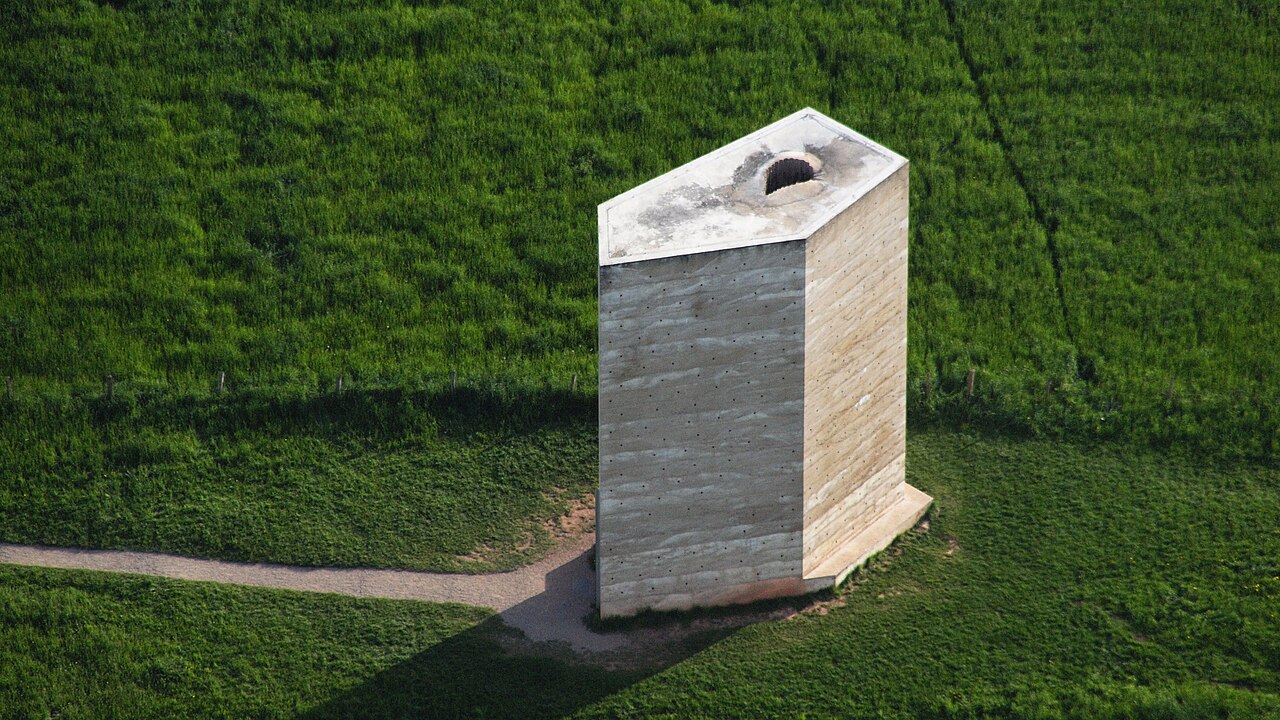
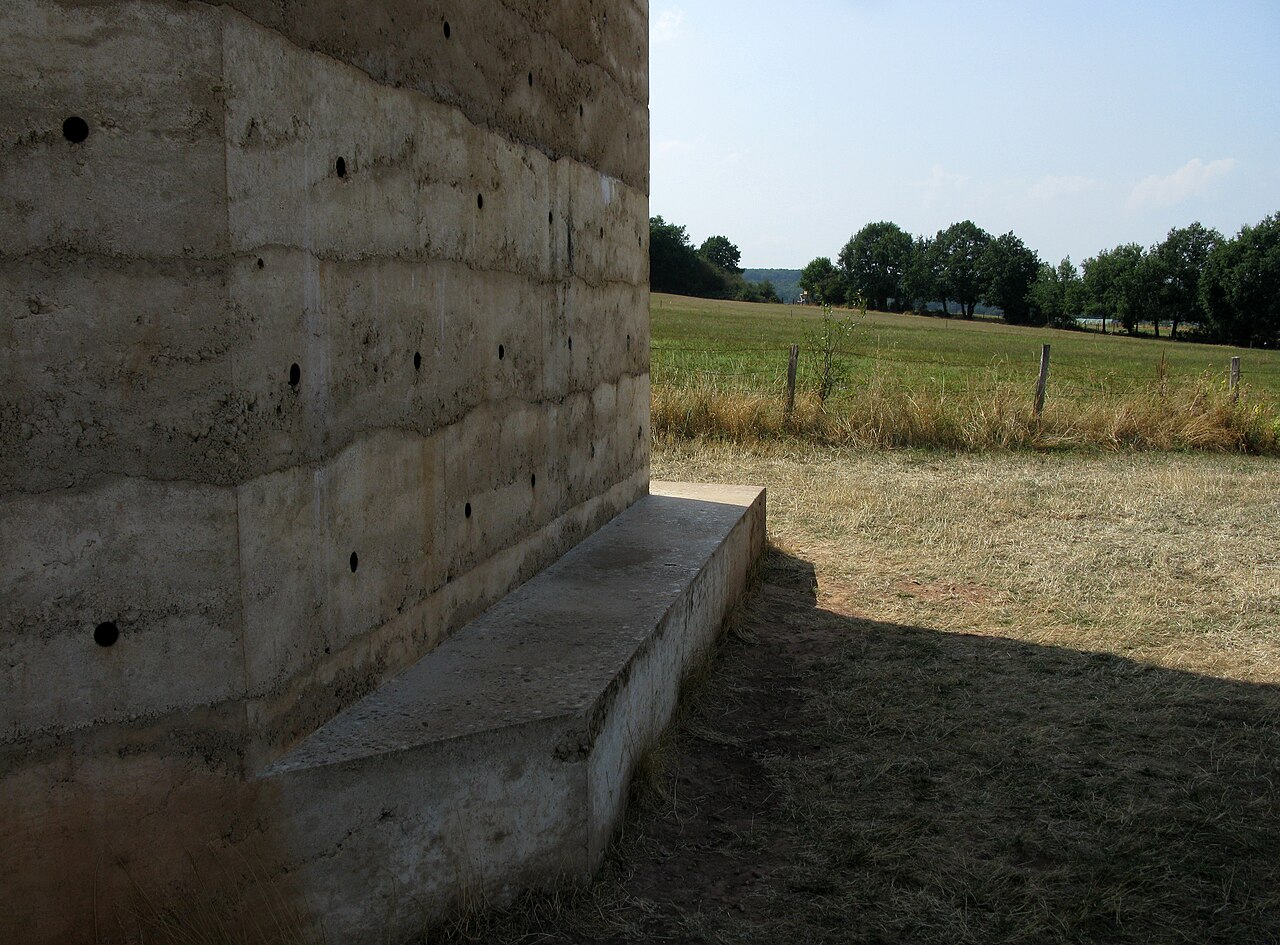
The five-sided building rises as a 12-metre tower on a hill near Wachendorf, like a defensive tower or a campanile. From a distance its walls look smooth; up close the surface is rough and brittle. The rammed concrete is made of river gravel, reddish-yellow sand and white cement, laid in layers following the region's craft tradition; its colour and texture echo the soil of the neighbouring fields.
The starting idea, drawn from the life of the hermit Bruder Klaus, was to translate the four elements into contemporary architecture. Air and light are represented by the many small openings in the outer skin, and by the passage from light to dark and back to light on entering the chapel. Fire is that of the tree trunks, first used as a kind of lost formwork for the shell and then burned. Earth is the concrete. Water is the rain, which the opening in the roof lets in.
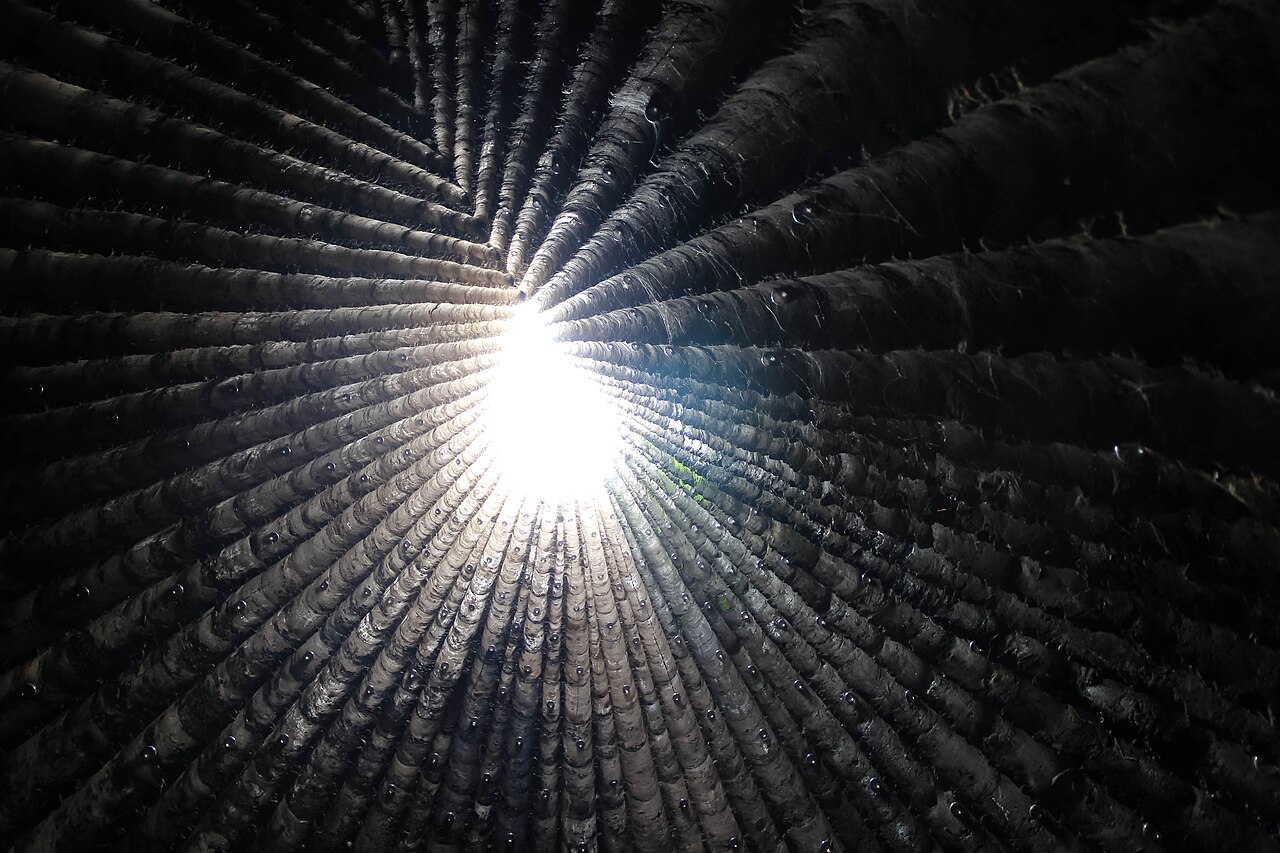
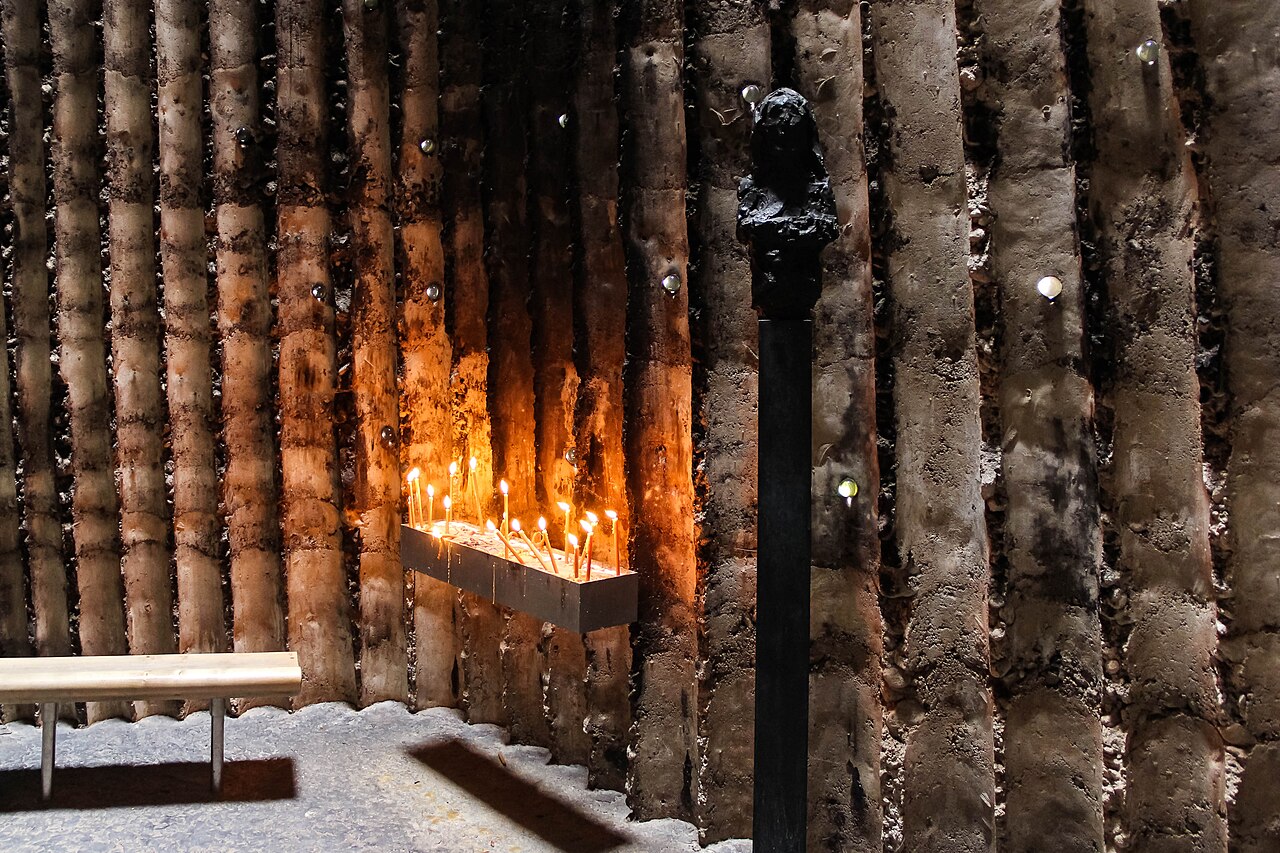
Inside, 112 trunks were set up in the shape of a tent, the concrete was poured around them, and they were left for three weeks to a charcoal-burner's fire. They were then taken out through the opening left in the roof. The pale imprints of the wood in the concrete were blackened by a second fire, leaving the charred walls with the negative of the trunks, and the smell of smoke. The entrance is a tall pointed triangle with an iron cross hanging above it. The concrete floor later received a 2 cm layer of tin and lead, with a slight slope: when rain falls through the opening in the roof, it forms a small pool there. More than 300 glass plugs close stainless-steel tubes that run through the outer walls.
In 2010 the interior held a narrow bench of solid lime wood, a candle stand, a bronze head of Nicholas of Flüe by the Swiss sculptor Hans Josephsohn and, on the wall, a meditation sign in cast brass made by Zumthor.
Use today
Privately founded, the chapel is a place of silence, meditation and prayer, and anyone who visits it with that intention is welcome.
Visiting
Apart from Easter Monday, Whit Monday and Christmas, the chapel does not open on Mondays; Christmas Day and New Year's Day are opening days too. Because it echoes the hermitage of Bruder Klaus, large groups fit it badly; a party above ten people can come only after booking.
The only way in is on foot, up a field track of 1,300 m that climbs gently, a walk of 15 to 20 minutes.
Photos
50.59° N, 6.73° E
Greenhouses nearby
Architecture nearby
By the same architect
Sources (9)
- feldkapelle.de/
- feldkapelle.de/entstehung/
- feldkapelle.de/%C3%B6ffnungszeiten/
- feldkapelle.de/anreise/
- feldkapelle.de/besuchergruppen/
- feldkapelle.de/stiftung/
- kuladig.de/Objektansicht/Drucken/O-3337-20101214-2
- kuladig.de/Objektansicht/Drucken/KLD-251847
- baukunst-nrw.de/objekte/Feldkapelle-Bruder-Klaus-Wachendorf--424.htm
Affiliate links — booking through Verrière helps fund our research, at no extra cost to you.