Osaka Prefectural Sayamaike Museum
Ōsakasayama, Osaka Prefecture
Sources checked October 2026
- Year
- 2001
- Architect
- Tadao Ando
- Type
- Museum of land-development and water history
- Access
- Open to the public, free admission (official website, October 2026)
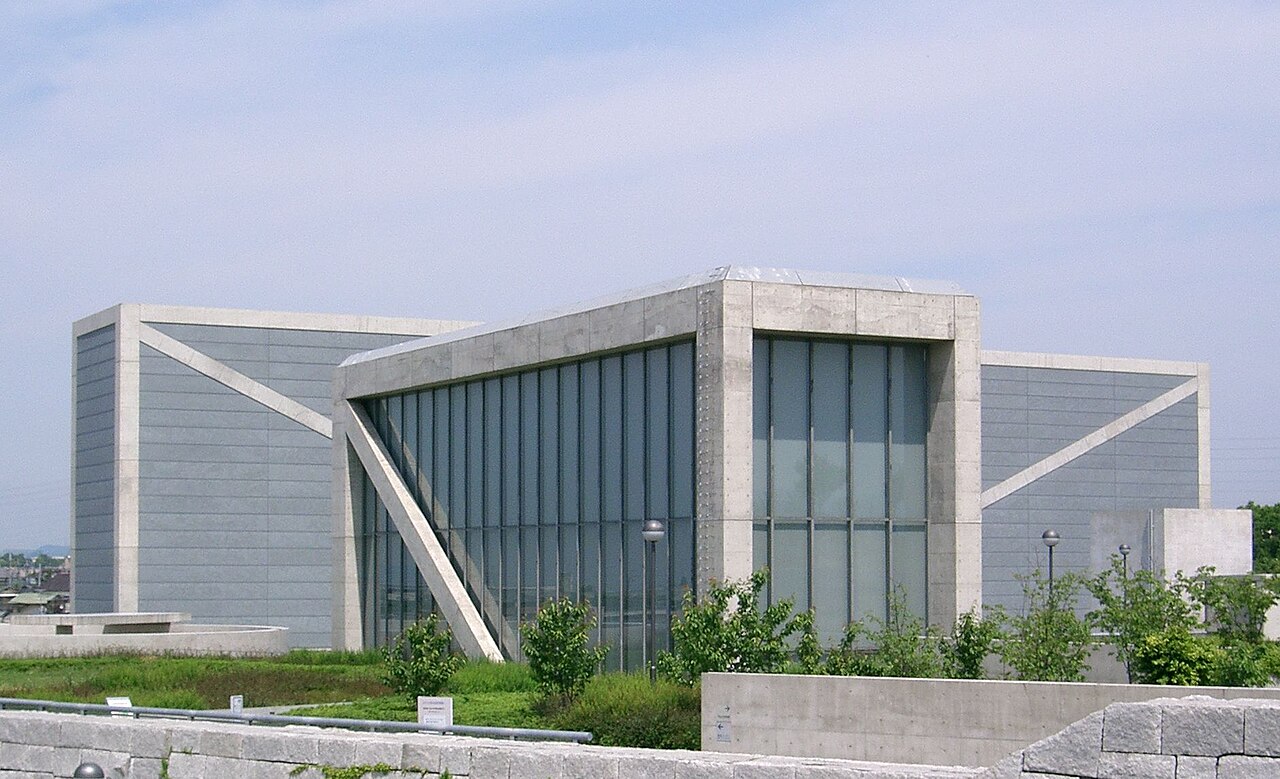
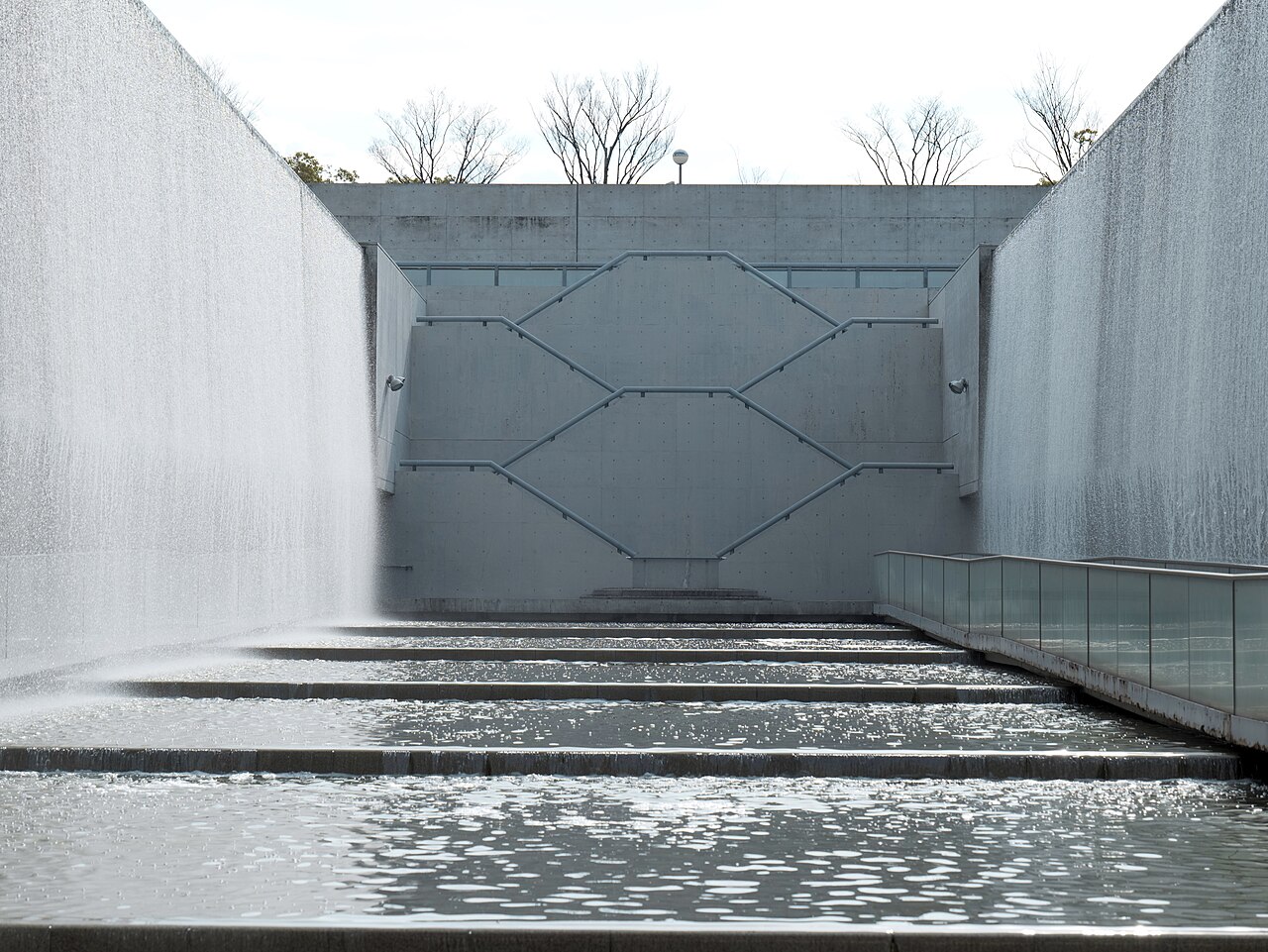
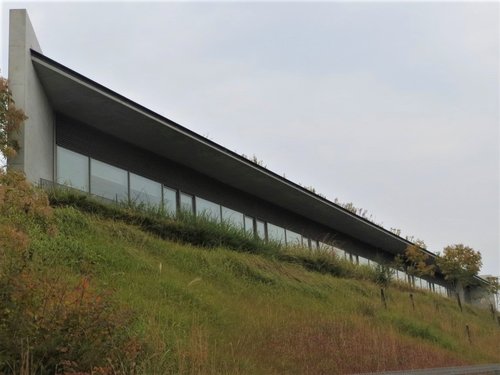
This exposed-concrete museum, designed by Tadao Ando and opened in 2001 in Ōsakasayama, houses the cross-section of an embankment about 15 m high and 60 m wide, taken from Japan's oldest irrigation reservoir, Sayamaike. Visitors arrive through a water court where a waterfall drops from the roof. The route follows, in seven zones, the history of the pond and its works, from the Asuka period to its conversion into a dam.
Affiliate links — booking through Verrière helps fund our research, at no extra cost to you.
History
The museum grew out of work on Sayamaike (狭山池), Japan's oldest irrigation reservoir, in Ōsakasayama (大阪狭山市). In August 1982, heavy rain flooded more than 3,000 houses in the basin of the Nishiyoke river (西除川). To protect the people living in the Nishiyoke and Higashiyoke basins, Osaka Prefecture decided to turn the pond, upstream of both rivers, into a flood-control dam. The works, begun in December 1988 and called the "Heisei renovation" (平成の改修), brought to light many finds.
The museum was created to preserve and show this civil-engineering heritage. Design ran from June 1994 to March 1997, construction from July 1997 to March 2001, and the institution, then run by Osaka Prefecture, opened on 28 March 2001. Tadao Ando (安藤忠雄) designed the building; the company Nomura (乃村工藝社) designed the exhibitions.
Since 2009 the museum has been run jointly by Osaka Prefecture, the city of Ōsakasayama and the Sayamaike Festival committee; the city's local-history museum moved into the building's second floor that year. In 2014 the excavated civil-engineering structures, including the conduits, became nationally designated Important Cultural Properties, and the pond was listed as a World Heritage Irrigation Structure (世界かんがい施設遺産); it has been a national historic site since March 2015.
Architecture
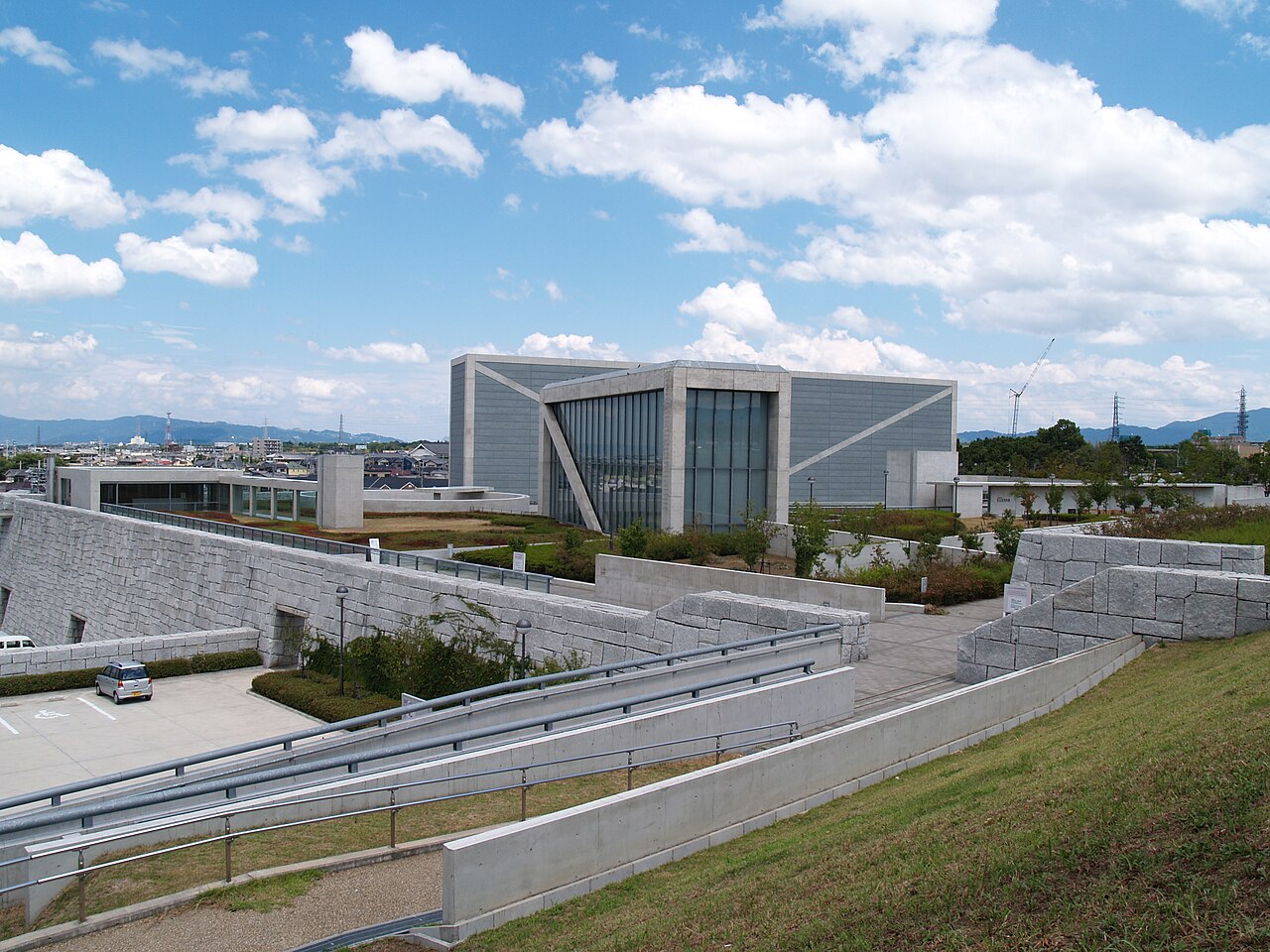
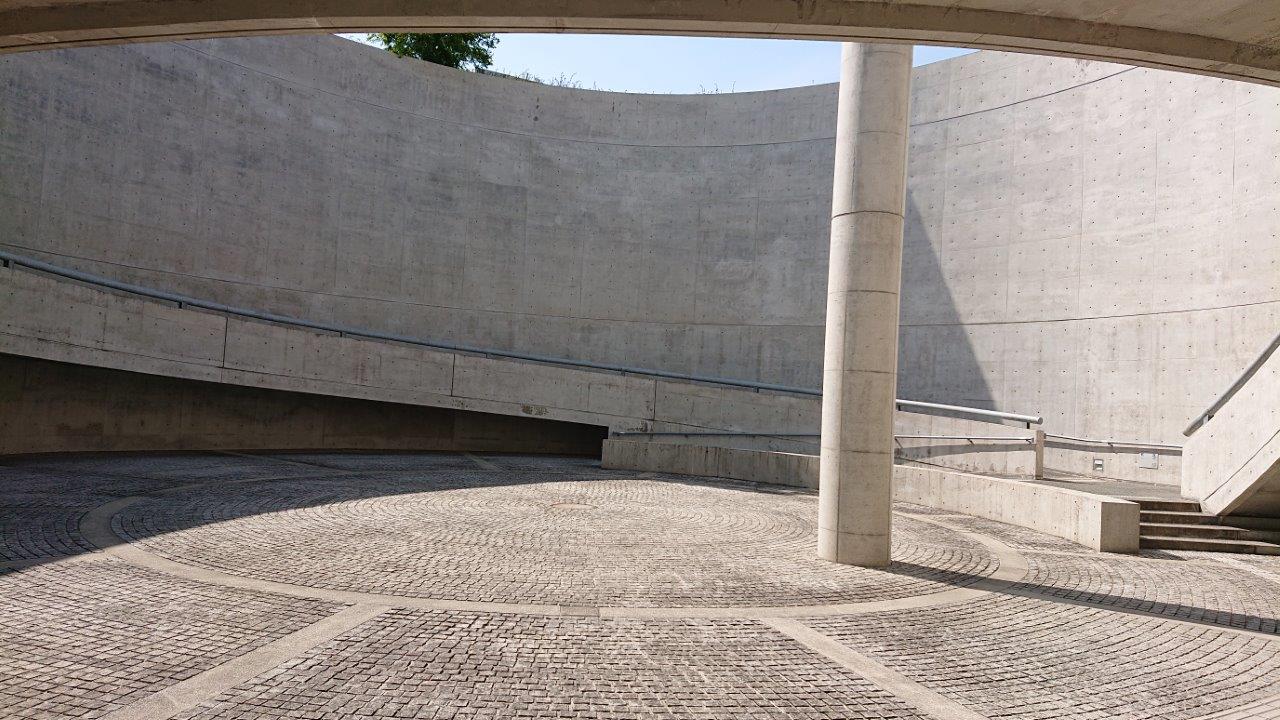
Ando designed a huge cuboid of exposed concrete (コンクリート打ち放し) that serves as a landmark and can be seen from all around the pond. The museum is meant to work as one whole with the pond's historic site, with an open-air character.
Visitors approach through a water court (水庭) running from the entrance to the building's door; a waterfall drops from the roof into it. Other outdoor spaces include two courts, one circular and one square.
Inside, many double-height voids open up the volume. The building houses the cross-section of the embankment, about 15 m high and 60 m wide, moved inside (移築), together with the intake tower.
Use today
It is a museum specialised in the history of land development (土地開発史), exploring the relationship between water and land through the pond and the objects excavated from it. The route is chronological, in seven zones; at the entrance, a space presents civil-engineering works such as dams (どぼくランド), and part of the finds is displayed outdoors.
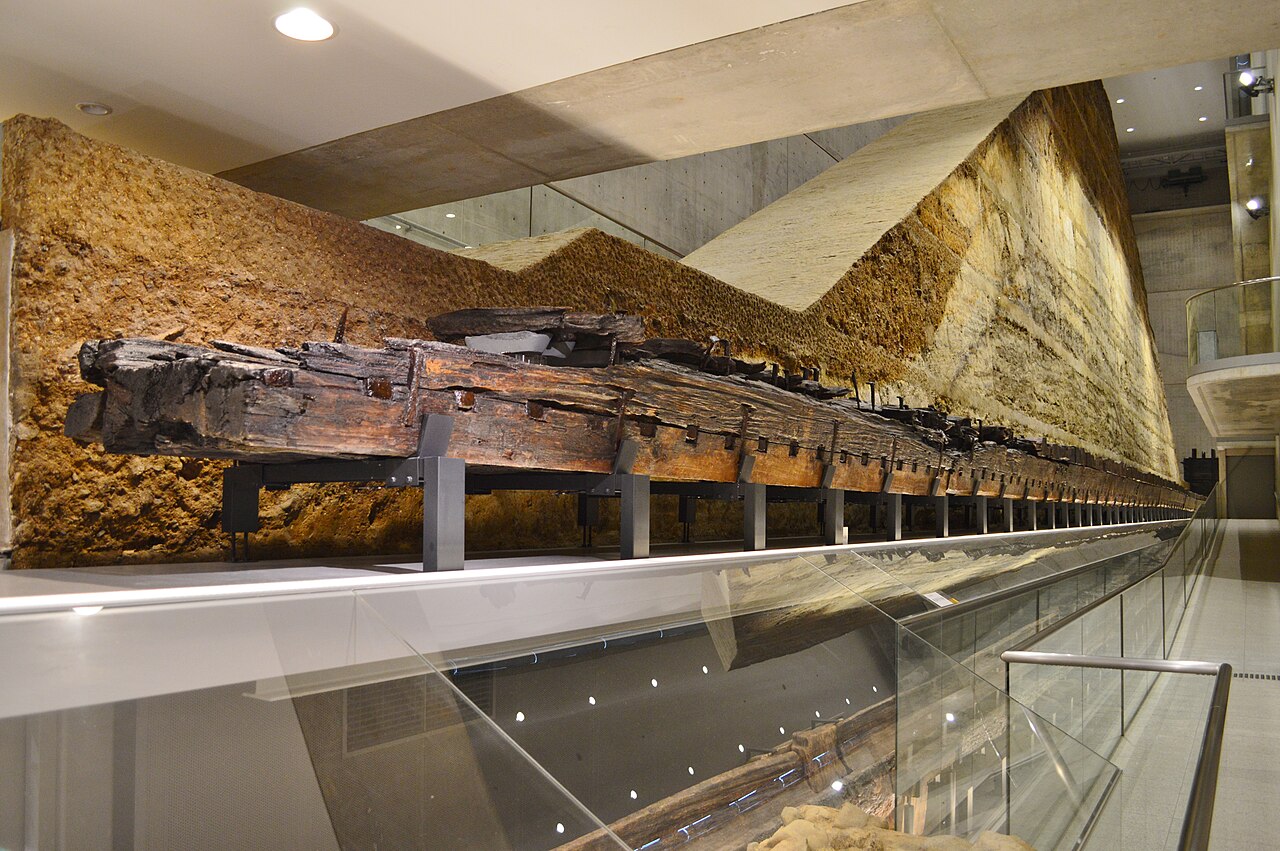
In the first zone, the embankment section shows the technique of laying branches in layers beneath the earth (敷葉工法), which holds the fill: the pale lower half dates from the Asuka and Nara periods. The second zone displays, over about 60 m, two intake conduits (東樋): the Asuka one, made of hollowed kōyamaki (コウヤマキ) trunks, and the Edo one, assembled from planks joined with large iron nails. Tree-ring dating places the pond's creation in the early seventh century. The fourth zone presents the monk Chōgen (重源), who renovated the pond in the Kamakura period and reused burial-mound-era sarcophagi as stone conduits; the stele recording his work was unearthed during the excavations. The fifth zone covers the great renovation of 1608, led by Katagiri Katsumoto (片桐且元) on the orders of Toyotomi Hideyori (豊臣秀頼).
Outdoors are sarcophagi taken from the excavations, which Chōgen had brought from nearby tombs, and the bust of the archaeologist Suenaga Masao (末永雅雄).
Visiting
Admission is free. The museum is open from 10 am to 5 pm (last entry 4:30 pm); it closes on Mondays — when the Monday is a public holiday, the closure moves to the following day — and from 28 December to 4 January.
Volunteers give free commentary on the collections, for 30 minutes to 2 hours: ask at the reception, but they are not there every day. On Sundays, a tour of about 1 h 30, with no booking, leaves the lobby, inside the museum or around the pond (a circuit of 2,850 m).
Address: 大阪狭山市池尻中2丁目. From Namba, Nankai's Kōya line goes to Ōsakasayama-shi station, then it is a walk of about 700 m west. The museum's own car park is reserved for coaches (notify in advance) and wheelchair users; other vehicles use the free north-embankment car park, west of the museum.
Photos
34.51° N, 135.55° E
Greenhouses nearby
Architecture nearby
Sources (17)
- sayamaikehaku.osakasayama.osaka.jp/?page_id=49
- sayamaikehaku.osakasayama.osaka.jp/?page_id=5
- sayamaikehaku.osakasayama.osaka.jp/?page_id=25
- sayamaikehaku.osakasayama.osaka.jp/?page_id=27
- sayamaikehaku.osakasayama.osaka.jp/?page_id=31
- sayamaikehaku.osakasayama.osaka.jp/?page_id=33
- sayamaikehaku.osakasayama.osaka.jp/?page_id=37
- sayamaikehaku.osakasayama.osaka.jp/?page_id=39
- sayamaikehaku.osakasayama.osaka.jp/?page_id=59
- sayamaikehaku.osakasayama.osaka.jp/?page_id=1519
- sayamaikehaku.osakasayama.osaka.jp/?page_id=2880
- sayamaikehaku.osakasayama.osaka.jp/?page_id=4622
- sayamaikehaku.osakasayama.osaka.jp/?page_id=4982
- osaka-info.jp/spot/sayamaike-museum/
- ja.wikipedia.org/wiki/%E5%A4%A7%E9%98%AA%E5%BA%9C%E7%AB%8B%E7%8B%AD%E5%B1%B1%E6%B1%A0%E5%8
- wikidata.org/wiki/Special:EntityData/Q11441131.json
- openstreetmap.org/way/31767310
Affiliate links — booking through Verrière helps fund our research, at no extra cost to you.