Pulitzer Arts Foundation
St. Louis, Missouri
Sources checked October 2026
- Year
- 2001
- Architect
- Tadao Ando
- Type
- Art museum (temporary exhibitions)
- Access
- Open to the public, free admission, Thursday to Sunday (official website, October 2026)
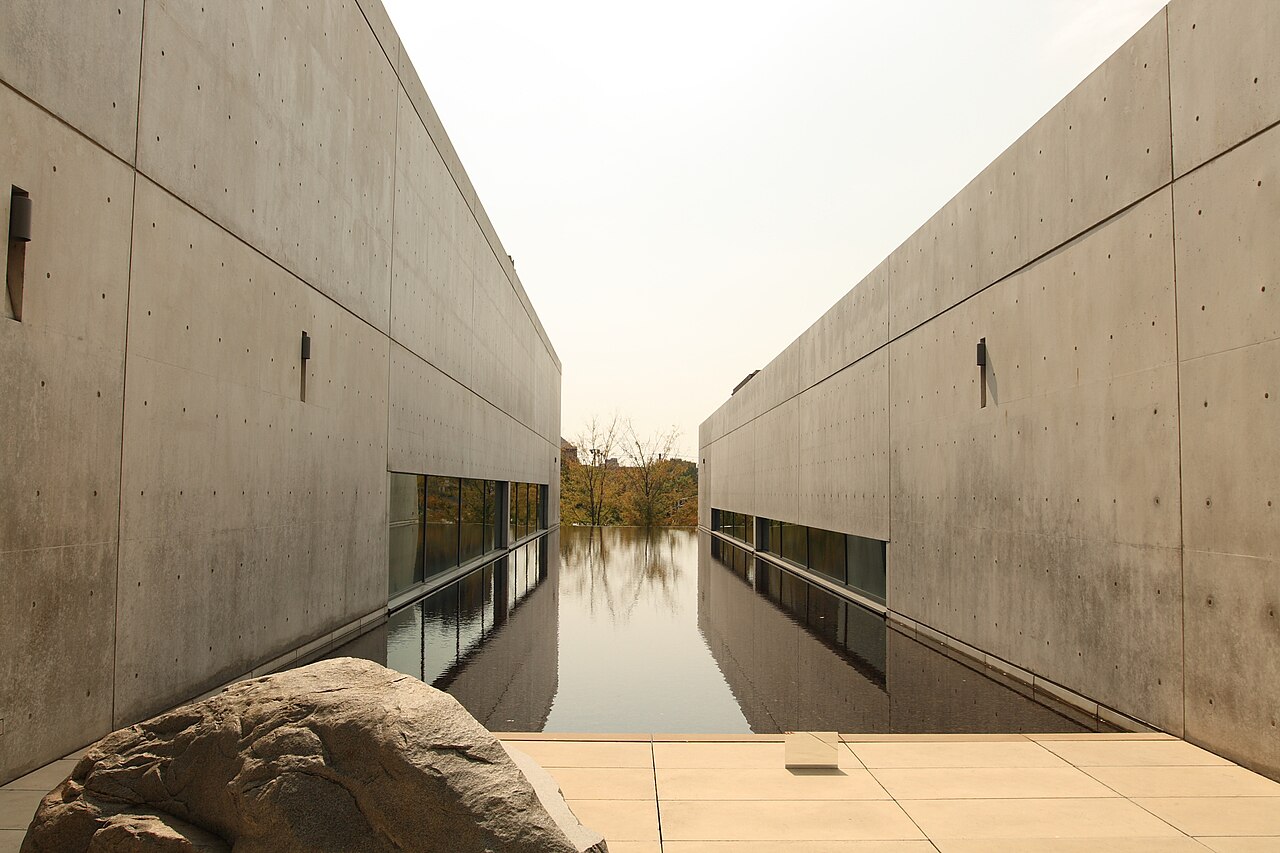
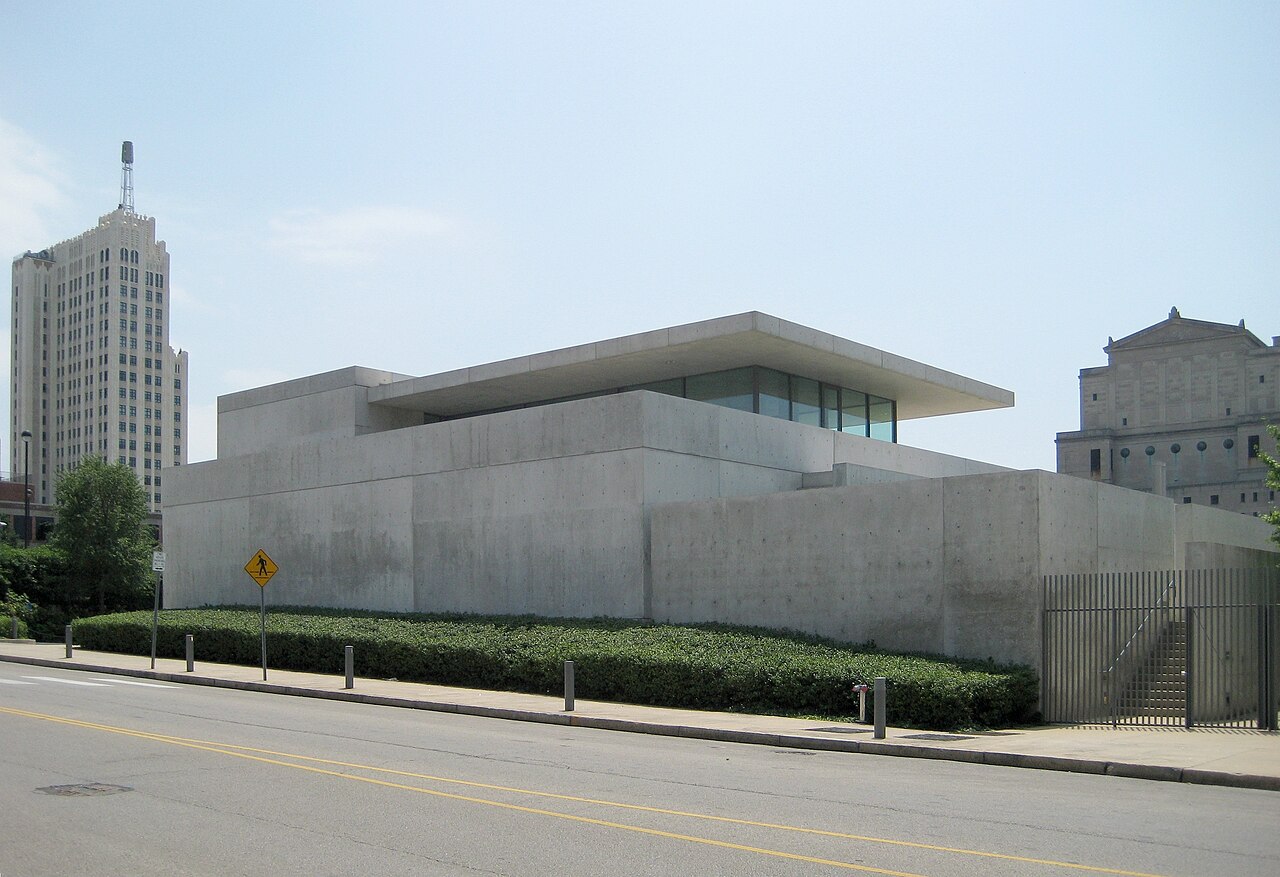
In St. Louis's Grand Center Arts District, Tadao Ando (安藤忠雄) built a two-story concrete museum that opened in October 2001, his earliest freestanding public building in the US. A central reflecting pool fills the main-level galleries with abundant, ever-changing natural light. Three works, by Scott Burton, Ellsworth Kelly and Richard Serra, are permanently installed, and admission is free.
Affiliate links — booking through Verrière helps fund our research, at no extra cost to you.
History
In 1991, Emily Rauh Pulitzer and Joseph Pulitzer Jr. commissioned Tadao Ando (安藤忠雄) to design a permanent space for their art collection. They had bought property in St. Louis's Grand Center Arts District, a once-thriving entertainment district they hoped to help revitalize. Over some ten years the idea evolved into a museum that does not collect and instead organizes temporary exhibitions of historical and contemporary art from all over the world.
Construction took four years, and the building was completed in October 2001. To complement the architecture, Emily Pulitzer extended an invitation to Richard Serra and Ellsworth Kelly to make works for the place: Kelly's Blue Black for the Main Gallery and Serra's Joe for the courtyard, named in homage to the late Joseph Pulitzer Jr. Ando and the artists collaborated on each installation.
In 2015 the lower level became public spaces and new galleries, which enlarged the museum's exhibition space by almost fifty percent.
Architecture
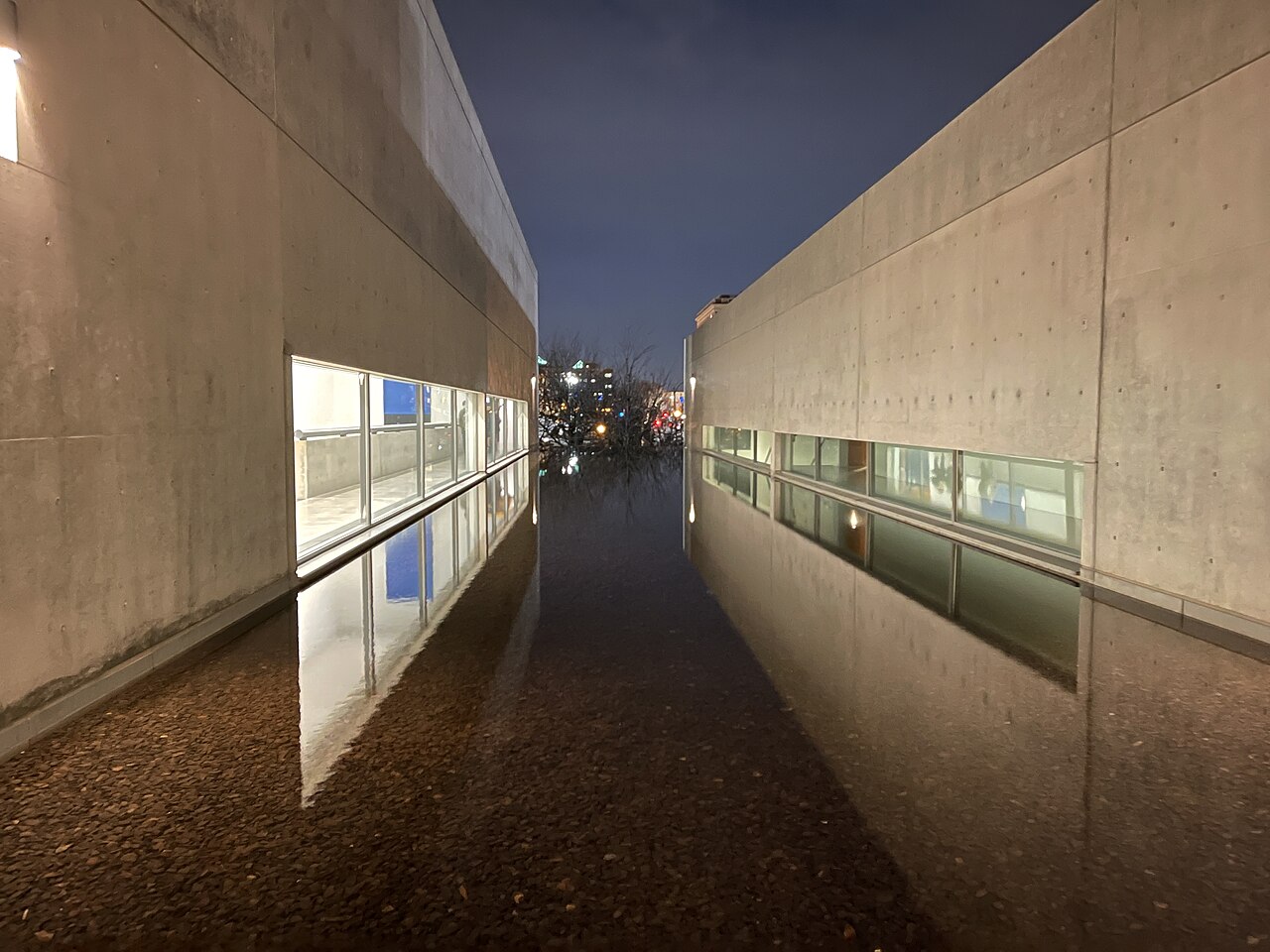
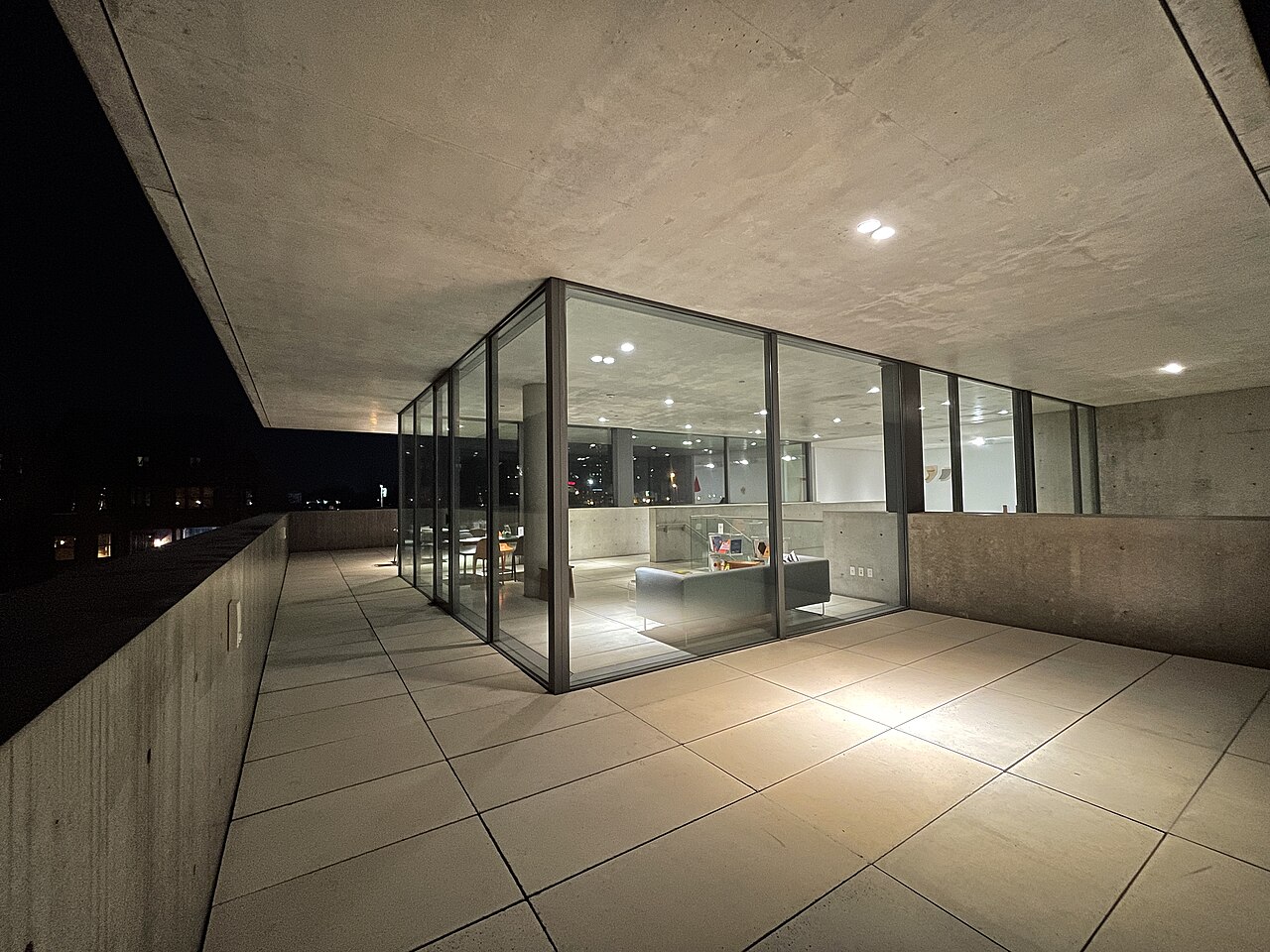
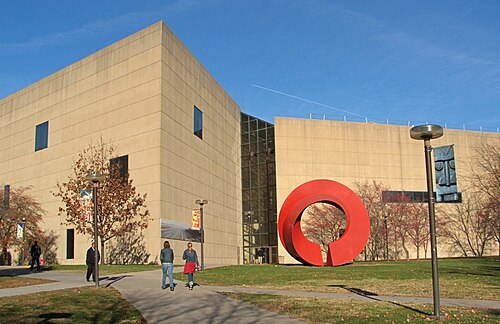
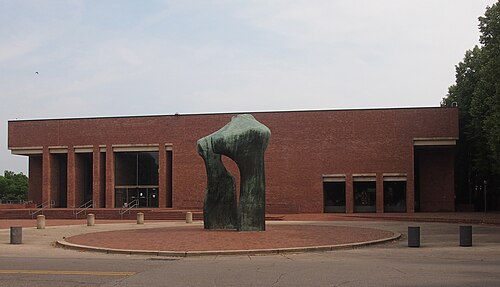
The museum is a two-story concrete building, Ando's signature material. The concrete forms were cast on site over nearly four years, using techniques that were uncommon in America at the time. A central reflecting pool fills the main-level galleries with abundant, ever-changing natural light; Ando holds that bringing elements of the natural world inside is essential to experiencing the art shown there. He has written that he sought a highly stimulating place, where artworks would not be displayed as mere specimens but could speak to viewers as living things.
Three works are permanently installed. Ellsworth Kelly's Blue Black, a site-specific wall sculpture, is hung in the Main Gallery on a large wall under a narrow skylight. Richard Serra's Joe, a torqued spiral of weathering steel, stands in the courtyard. Scott Burton's Rock Settee faces the exterior reflecting pool.
Use today
The Pulitzer presents temporary exhibitions of historical and contemporary art, with free programs that include talks, concerts, literary readings, dance, performances and wellness workshops.
The campus has three outdoor spaces. Park-Like, across the street from the museum, is a half-acre rain garden with over a hundred varieties of plants, where found building materials have become water filtration systems, retaining structures and seating; its design is the work of Studio Land Arts, which is led by the artist and landscape designer Chris Carl. The Spring Church, around the corner, is an open-air stone pavilion: the Gothic Revival-inspired church, built in 1884, housed several congregations until an electrical fire largely destroyed it in 2001, and the Pulitzer has been its steward since 2020. The Tree Grove, behind the museum, gathers oaks, ashes and redbuds around picnic tables, and can also be seen from the water court.
Visiting
Admission and the adjacent parking lot are free. The museum is open Thursday to Sunday, 10am to 5pm, and until 9pm on First Fridays; it is closed for Thanksgiving, Christmas, New Year's Day, Juneteenth and Independence Day. The outdoor campus is open daily, sunrise to sunset. Address: 3716 Washington Boulevard (Grand Center Arts District); the MetroLink Blue and Red lines stop at Grand station.
In the galleries, flash photography, food and drink are prohibited, and only small bags are allowed (free lockers are provided). Photographing the museum and campus for personal use is welcome; commercial photography needs the museum's prior permission. Guided tours are offered on a limited basis, on request by email. An elevator serves all levels, and a free digital guide is available on the Bloomberg Connects app.
Photos
38.64° N, 90.23° W
Greenhouses nearby
Architecture nearby
Sources (14)
- pulitzerarts.org/visit/
- pulitzerarts.org/about/mission-and-history/
- pulitzerarts.org/location/museum/
- pulitzerarts.org/campus/
- pulitzerarts.org/location/park-like/
- pulitzerarts.org/location/spring-church/
- pulitzerarts.org/location/tree-grove/
- pulitzerarts.org/visit/visitor-tips-policies/
- pulitzerarts.org/visit/groups-and-tours/
- pulitzerarts.org/visit/accessibility/
- pulitzerarts.org/visit/digital-guide/
- en.wikipedia.org/wiki/Pulitzer_Arts_Foundation
- api.openstreetmap.org/api/0.6/way/379499176/full
- ja.wikipedia.org/wiki/安藤忠雄
Affiliate links — booking through Verrière helps fund our research, at no extra cost to you.