Nishinomiya Shell Museum (西宮市貝類館)
Nishinomiya, Hyōgo Prefecture
Sources checked October 2026
- Year
- 1999
- Architect
- Tadao Ando
- Type
- Municipal shell museum
- Access
- Open to the public, closed on Wednesdays (official website, October 2026)
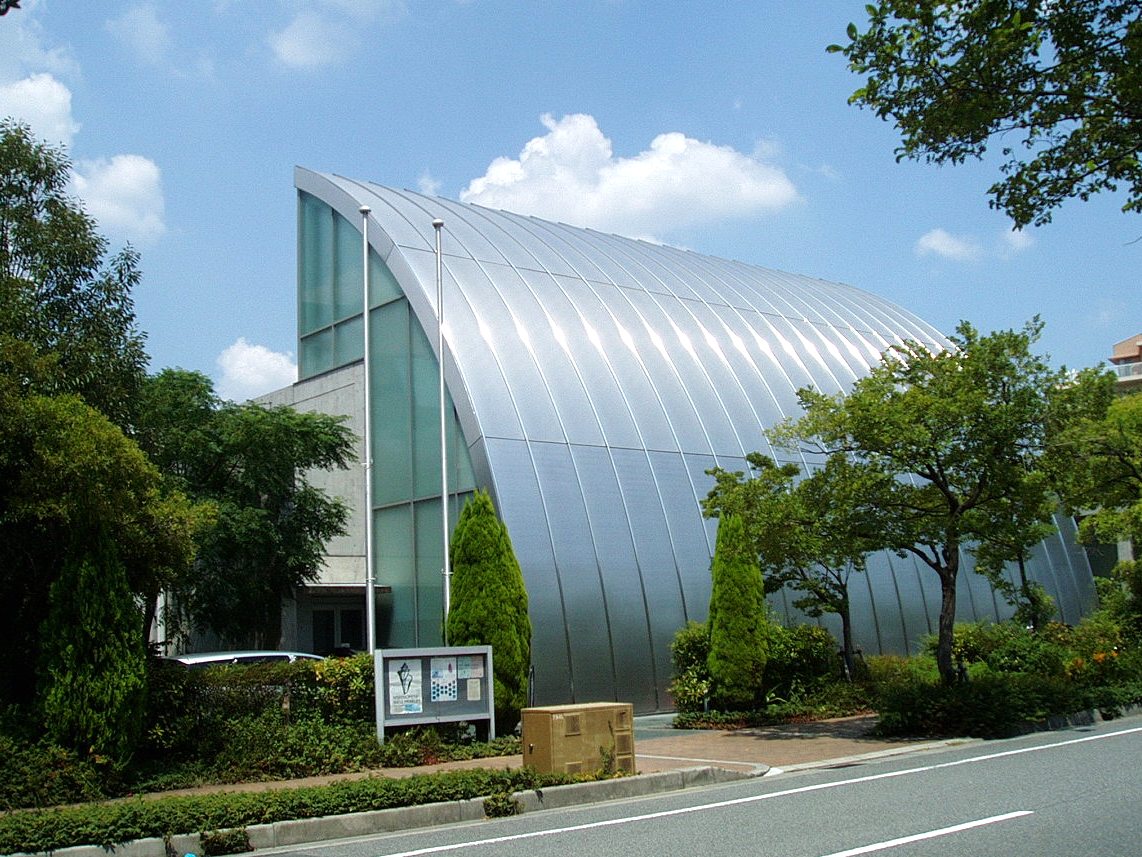
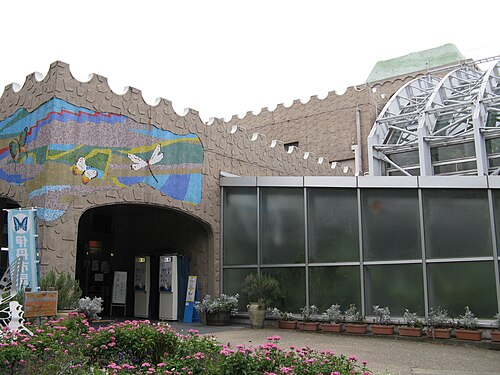
This municipal museum devoted to shells opened in 1999 in Nishinomiya. Tadao Ando gave it an exterior that evokes the sail of a yacht, in bare concrete and glass, and an interior unified in a sea-bottom blue. About 2,000 species are on display, built around the collection of the malacologist Kuroda Tokubei, and the courtyard holds Horie Kenichi's yacht Mermaid IV.
Affiliate links — booking through Verrière helps fund our research, at no extra cost to you.
History
The Nishinomiya Shell Museum (西宮市貝類館) opened on 7 May 1999 in Nishinomiyahama (西宮浜). It is run directly by the City of Nishinomiya, with no outside operator, and is one of the few museums in the country devoted solely to shells.
Its core is the scientific collection of Kuroda Tokubei (黒田徳米). Born in Fukura (福良), on Awaji Island, he worked at the Hirase shell museum (平瀬貝類博物館) and then as an assistant at Kyoto Imperial University, and from the age of 80 he spent his last years of research in Nishinomiya. In his lifetime he described 689 new species of shells and laid the foundations of malacology in Japan.
To this collection is added that of Kikuchi Norio (菊池典男), born in Nishinomiya. A physician, he gathered shells from around the world and in 1984 opened his own museum, the Kikuchi Kairuikan (菊池貝類館), at Nishinomiya Kaisei Hospital (西宮回生病院), on the grounds of his home. He also helped to build the municipal museum. After his death, his family gave the museum about 16,000 lots of shells in February 2015.
Originally classed among institutions similar to a museum (博物館類似施設), the museum was designated on 18 February 2016, by the Hyōgo Prefectural Board of Education, as an institution equivalent to a museum (博物館相当施設) under the Museum Act.
Architecture
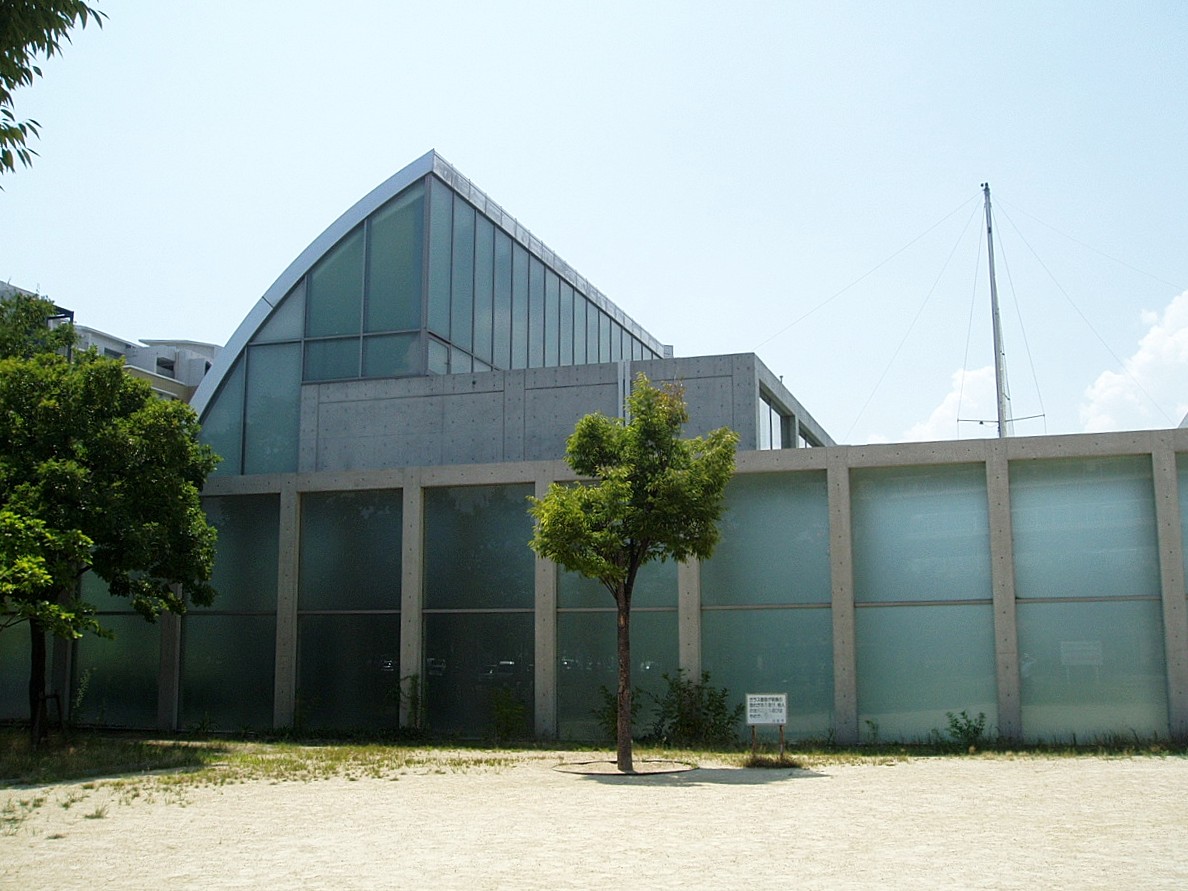
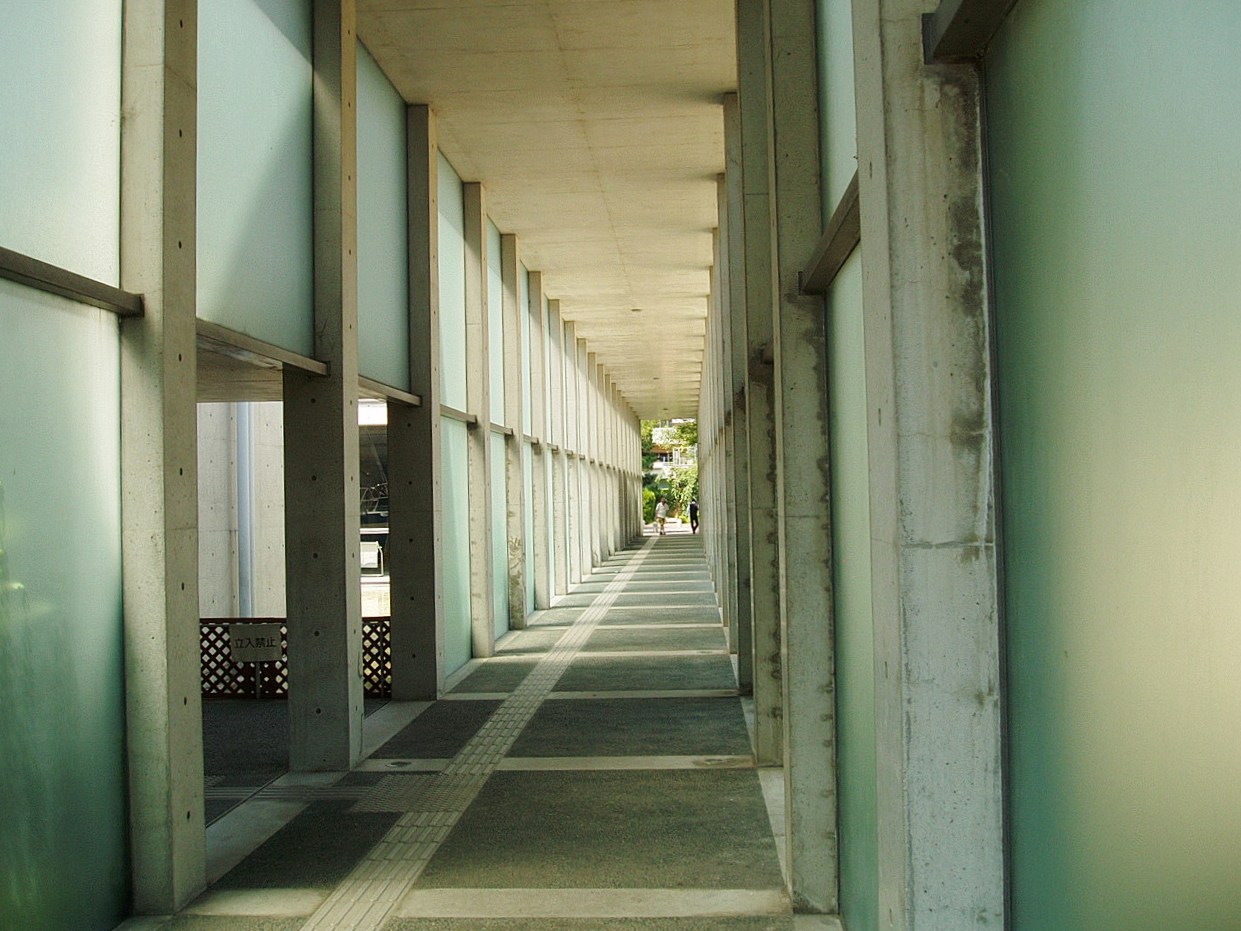
Tadao Ando (安藤忠雄) gave the building the look of a yacht's sail. The concrete is left bare on the outside (打ち放し).
The museum adjoins the Nishinomiyahama community centre (西宮浜公民館). Between the two lies a courtyard where Mermaid IV (マーメイド4世号), the yacht of the sea adventurer Horie Kenichi (堀江謙一), is displayed.
The permanent exhibition room covers 270 m² on the ground floor.
Use today
The tour follows 16 themes, from the nature of Nishinomiya to the shells of the world, with about 2,000 species (5,000 specimens) shown under large explanatory panels. Visitors learn that the ancestors of shells go back to the Cambrian, about 500 million years ago, that shells fall into seven groups, and that they have served as money, as a sign of wealth, as inlaid mother-of-pearl (螺鈿) and ornaments, as a shell-matching game (貝合わせ), as go stones (碁石) and as food.
Kuroda's specimens, rich in rare species, include type specimens, the ones used to describe a new species; Kikuchi's include many beautiful shells from around the world. The museum displays the most valuable of them.
The "Katatsumuriumu" (カタツムリウム) shows nine species of snails in nine cases. A display case presents the Awazu shell midden (粟津貝塚), in Ōtsu, Shiga Prefecture: a middle Jōmon site, about 4,500 years old, under Lake Biwa, rare in Japan because it is made of freshwater shells.
Each visitor receives a shell at the entrance. On days off, the museum runs workshops, practical courses, lectures and outdoor observation outings, and every year special exhibitions on shells and seashore life.
Visiting
The museum is open from 10:00 to 17:00 (last entry 16:30) and closed on Wednesdays; when a Wednesday is a public holiday, the closure moves to the next day. It is closed from 29 December to 3 January and open every day from 20 July to 31 August.
Admission is charged, at a reduced rate for primary and junior high school pupils, and free for young children. The entrance is step-free and almost all the exhibits can be seen from a wheelchair.
From Hanshin Nishinomiya, JR Nishinomiya or Hankyu Nishinomiya-Kitaguchi stations, a Hanshin bus for Marina Park stops at Marina Park Minami (マリナパーク南), a short walk from the museum, after about 20 minutes. There are three parking spaces to the south-west of the building.
Photos
34.71° N, 135.33° E
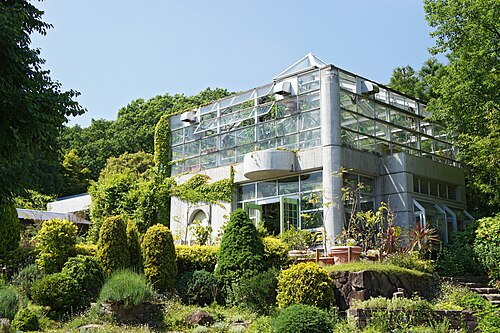
Greenhouses nearby
Sources (9)
- nishi.or.jp/bunka/bunka/kairuikan/about/index.html
- nishi.or.jp/bunka/bunka/kairuikan/riyou_annai/index.html
- nishi.or.jp/bunka/bunka/kairuikan/tenji_floorguide/index.html
- nishi.or.jp/bunka/bunka/kairuikan/access/index.html
- nishi.or.jp/bunka/bunka/kairuikan/about/uneihoushin.html
- nishi.or.jp/bunka/bunka/kairuikan/shuppanbutsu_shoukai/1140467202003.files/10nennoayumi.pd
- ja.wikipedia.org/wiki/西宮市貝類館
- nishi.or.jp/bunka/bunka/kairuikan/index.html
- wikidata.org/wiki/Special:EntityData/Q11627655.json
Affiliate links — booking through Verrière helps fund our research, at no extra cost to you.