Water Temple (本福寺水御堂)
Awaji, Hyōgo Prefecture
Sources checked October 2026
- Year
- 1991
- Architect
- Tadao Ando
- Type
- Main hall of a Shingon Buddhist temple (Honpuku-ji), beneath a pond
- Access
- Open to the public from 9 am to 5 pm, no closing day, admission charged (Awaji Island Tourist Association, October 2026)
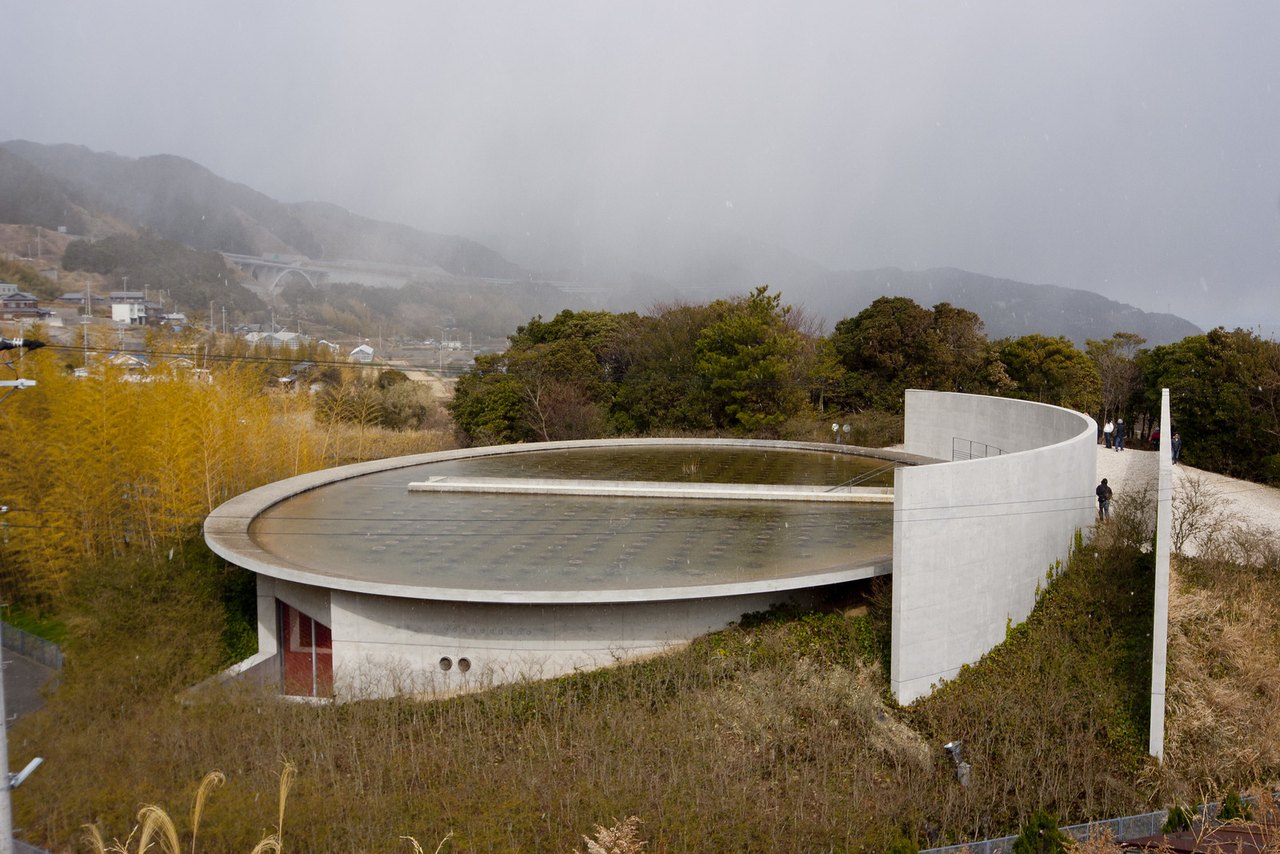
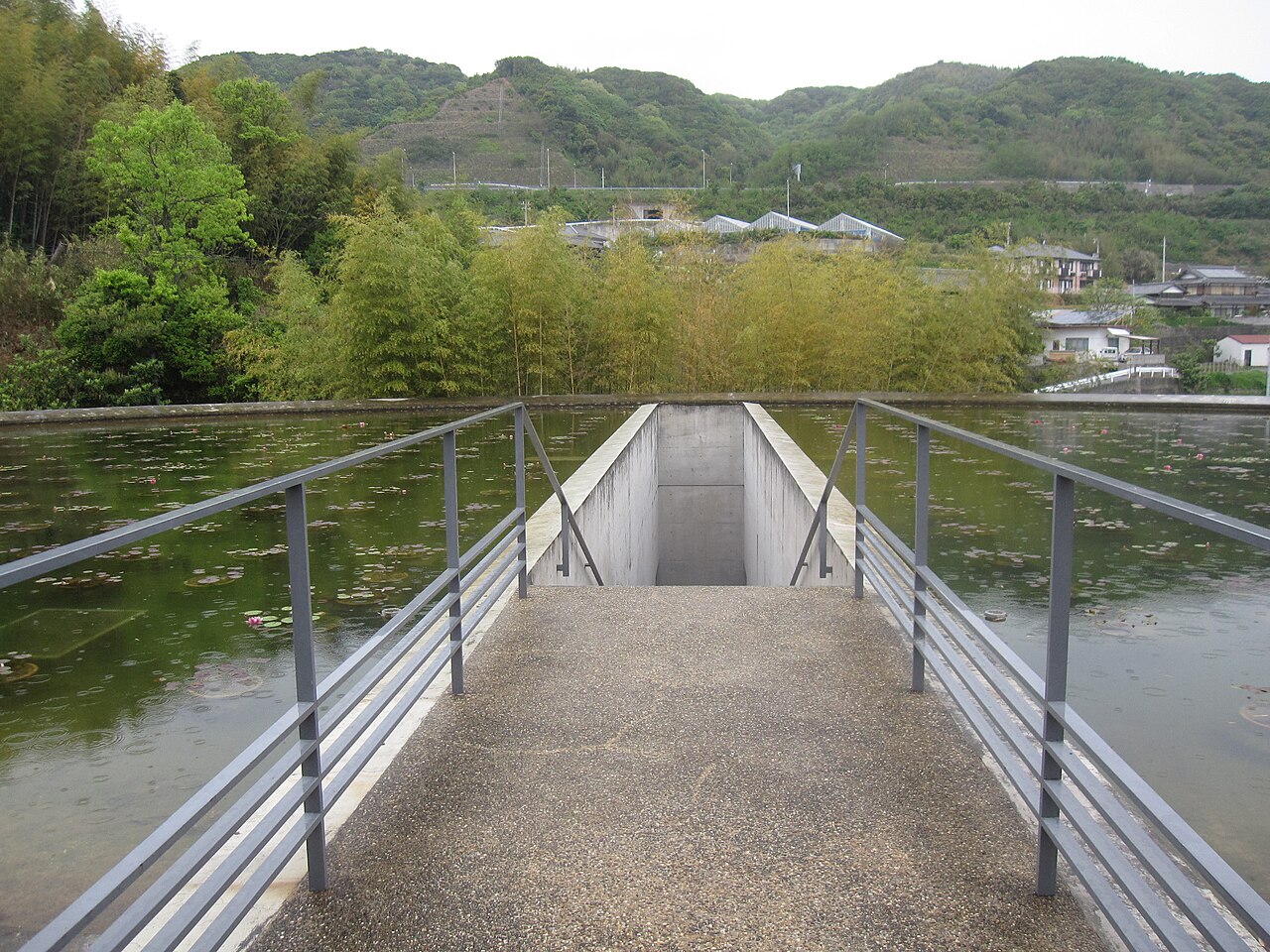
On a hill on Awaji Island looking out over Osaka Bay, Tadao Ando (安藤忠雄) rebuilt the main hall of the Shingon temple Honpuku-ji (本福寺) in 1991. Where a temple normally carries a great roof, he put an elliptical pond measuring 40 m by 30 m. A straight stair cuts through the water and descends to a vermilion hall where the statue of Yakushi Nyorai stands. The temple can be visited every day.
Affiliate links — booking through Verrière helps fund our research, at no extra cost to you.
History
Honpuku-ji (本福寺) is a temple of the Omuro school (御室派) of Shingon Buddhism, said to have been founded in the late Heian period. It is the 59th site of the Awaji Shikoku pilgrimage (淡路四国霊場). Its main hall, the Mizumidō (水御堂, “hall of water”), was rebuilt by Tadao Ando and completed in 1991. The statue of Yakushi Nyorai (薬師如来), the Buddha of medicine, enshrined there has been listed as a municipal cultural property since 1993.
A parishioner of the temple, Iue Toshio (井植歳男), founder of Sanyo Electric, had promised to rebuild it once his company had grown, but died before doing so; his son Satoshi (井植敏) turned to Ando, who got his first temple commission from it.
Ando began from a question: what is a temple? His answer was a space where people gather and feel the richness of the heart. The congregation told him that nobody came to the temple. A great roof, to his mind a symbol of power, was to be avoided; he proposed instead the lotus, the flower of Buddhism's origins, in a pond that one enters. The resident priest and the parishioners opposed it fiercely: building a hall under water seemed sacrilegious to them. A parishioners' representative asked the opinion of Tachibana Daikyū (立花大亀), a senior monk of Daitoku-ji (大徳寺) then over 90 years old, who found it admirable to enter the lotus, the origin of Buddhism; that remark changed the situation, and the hall was built as Ando had conceived it.
Architecture
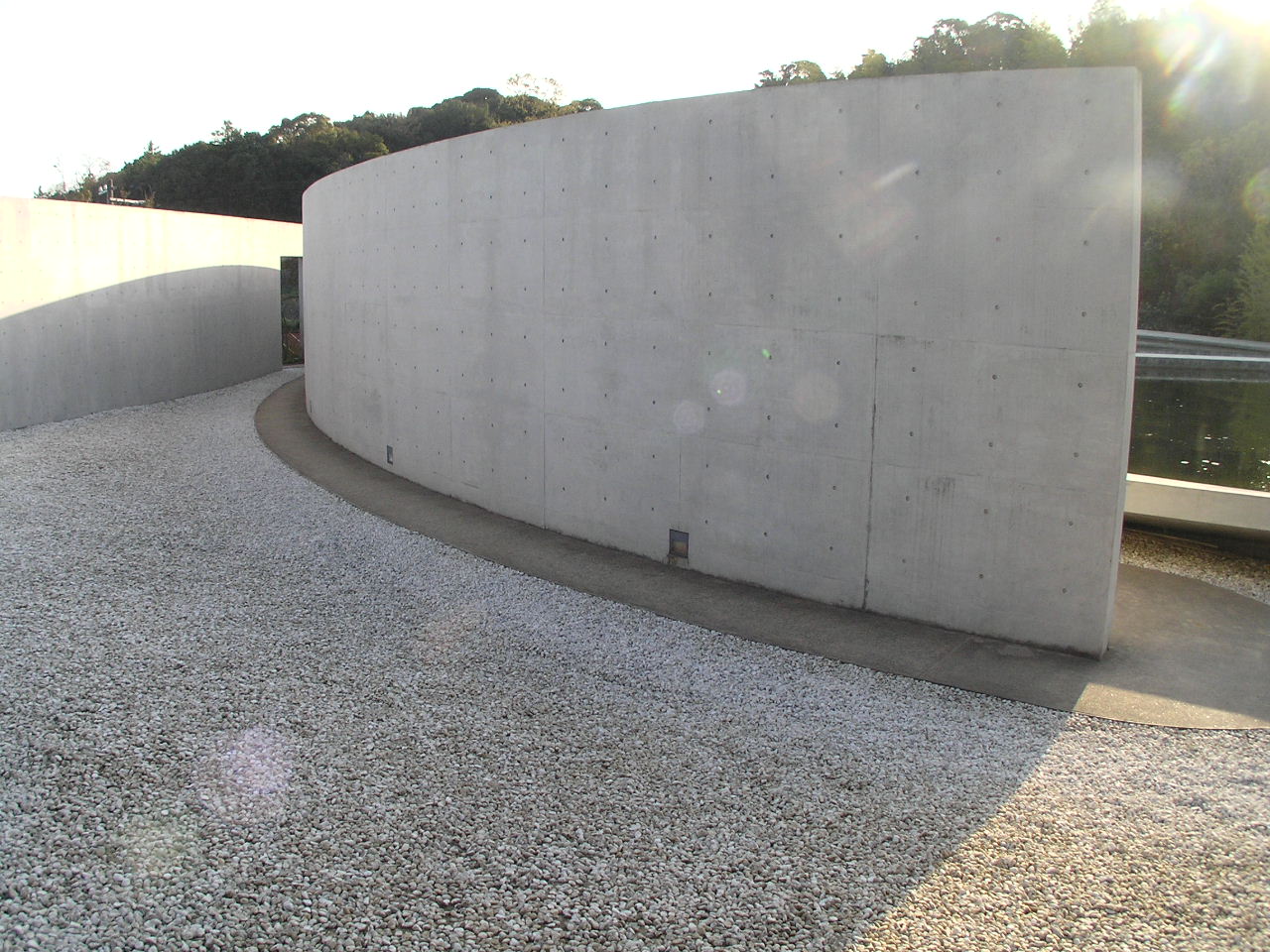
The temple stands on a small hill from which the whole of Osaka Bay can be seen. The way up crosses the old temple precinct and its cemetery, then follows a white gravel path between two polished concrete walls 3 m high. A large, free-standing curved wall marks the boundary between the profane and the sacred.
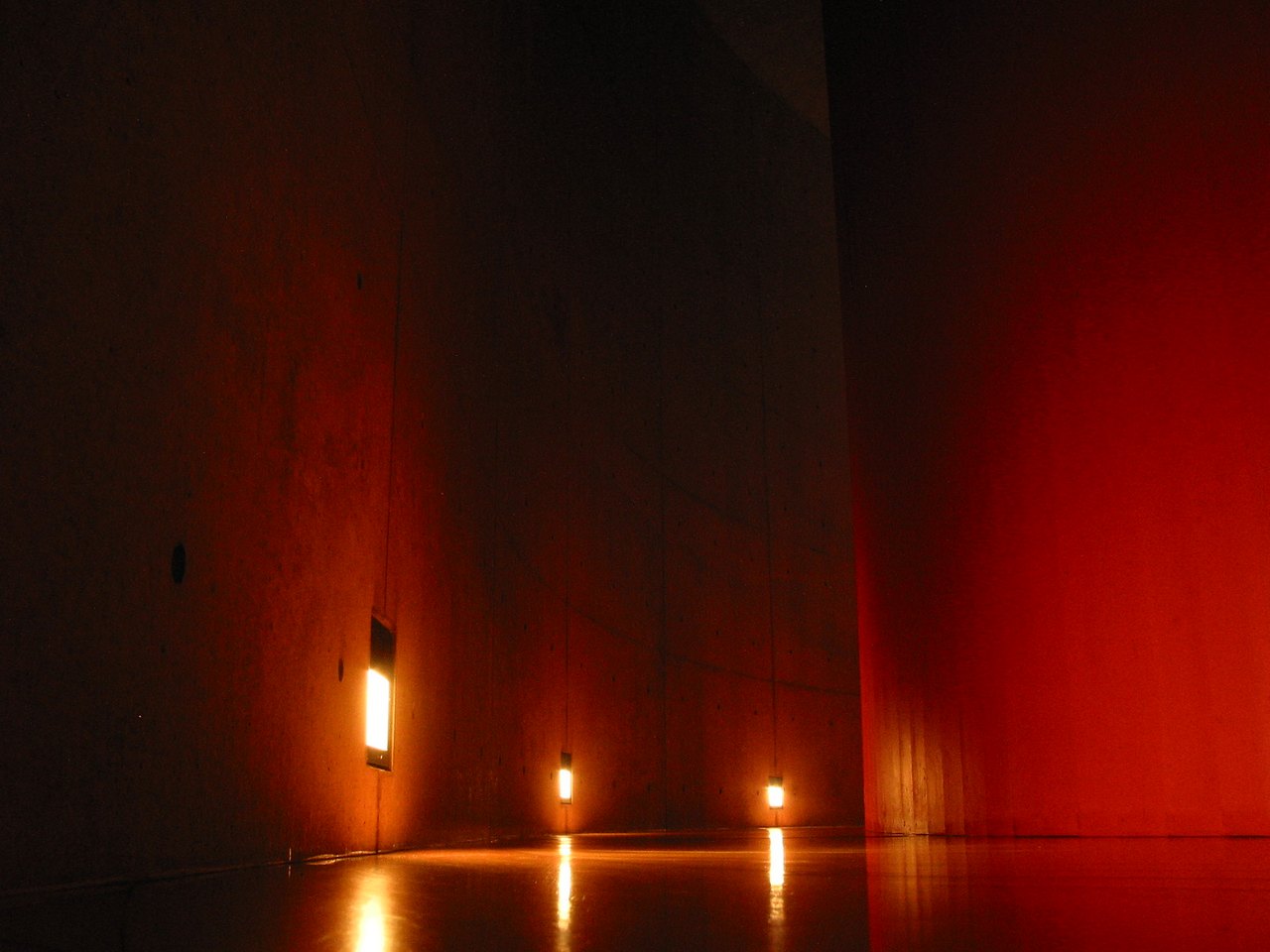
Beyond lies an elliptical concrete pond, 40 m on its long axis and 30 m on its short one: it serves as the roof of the main hall below. A straight stair splits the water, between water lilies and lotus. It leads to a vermilion-painted gallery, then to the main hall, also vermilion, in contrast to the grey concrete outside.
The statue of Yakushi Nyorai has the west behind it. When the great doors are opened, the light of the setting sun floods the hall and stains the statue red, like an apparition of the Pure Land; a lattice behind the statue also admits the western sun. Ando took this device from Jōdo-ji (浄土寺), built by Chōgen (重源) at Ono, in the same prefecture.
The building is reinforced concrete; the main hall occupies the underground level, beneath the pond. The site covers 2,990 m² and the floor area is 417 m².
Use today
The main hall of a temple, where the statue of Yakushi Nyorai is enshrined. The pond blooms with the seasons: water lilies from May to September, Ōga lotus (大賀ハス), discovered in a layer about 2,000 years old, from June to July. The temple is also the sixth stage of the Awaji Hanahenro flower circuit (あわじ花へんろ).
Visiting
Open from 9 am to 5 pm, with no closing day. Admission is charged, at a reduced rate for children (junior high school and under). The car park has 30 spaces for cars and 5 for large vehicles.
The bus stops at 立石川 (Tateishikawa), a 10-minute walk away; by car, allow about 5 minutes from the Higashiura (東浦) exit of the expressway and about 15 from the Awaji exit.
Photos
34.55° N, 134.99° E
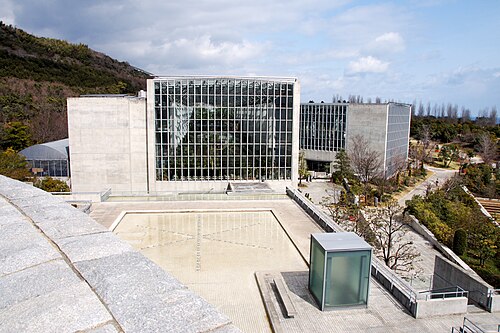
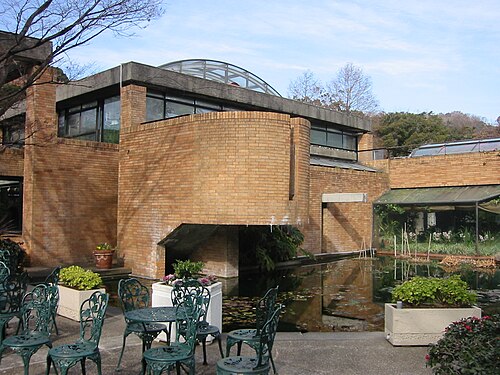
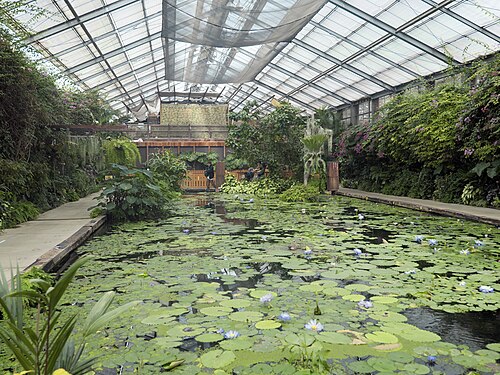
Greenhouses nearby
Architecture nearby
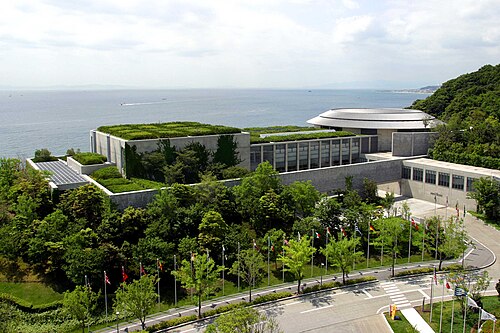
Sources (11)
- awajishima-kanko.jp/manual/detail.html?bid=454
- city.awaji.lg.jp/soshiki/shakai/47981.html
- city.awaji.lg.jp/site/kouhou/29345.html
- japan47go.travel/ja/detail/a71721a5-5d98-4d15-8997-80b279a31f6d
- japan.travel/en/spot/491/
- enaa.or.jp/GEC/nec/html/nyokai/sk93-2.pdf
- hanako.tokyo/learn/283810/
- kobecco.hpg.co.jp/38463/
- ja.wikipedia.org/wiki/本福寺_(淡路市)
- api.openstreetmap.org/api/0.6/way/1150379162/full
- wikidata.org/wiki/Special:EntityData/Q11093451.json
Affiliate links — booking through Verrière helps fund our research, at no extra cost to you.