Treborth Botanic Garden Glasshouses
Bangor, Gwynedd, Wales
No freely licensed photo of this greenhouse yet. Do you have one? Suggest it for this page →
Sources checked October 2026
- Style
- Group of themed glasshouses (tropical, temperate, orchid, carnivorous, cool house) in a university botanic garden
- Dimensions
- Five to seven glasshouses
- Status
- Open to the public; glasshouses open on Wednesdays and Fridays, garden free during daylight hours
Treborth Botanic Garden, owned by Bangor University since 1960, runs along the Menai Strait on land once earmarked for Britannia Park, a Joseph Paxton scheme that was never completed. Its glasshouse group brings together several themed houses: a tropical house kept between 18 and 35 °C, a temperate house of cacti and succulents, an orchid house, a carnivorous-plant house and a cool house. Looked after with the help of volunteers, they open to the public two days a week, while entry to the garden is free.
Affiliate links — booking through Verrière helps fund our research, at no extra cost to you.
History
The Treborth Isaf land was bought in 1846 by the Chester and Holyhead Railway, for which Joseph Paxton designed a leisure-park scheme, Britannia Park. According to the university's page, work began in March 1851 and stopped in September of the same year for lack of money. A garden-guide entry says the park was to include a grand hotel, conservatories and a station; the site then reverted to pasture and woodland.
In 1960 the University College of North Wales, now Bangor University, acquired the land to build a plant collection for its botany department. The BGCI database gives 1963 as the founding year, and the National Garden Scheme credits the garden's creation to Professor Paul Richards of the School of Botany.
The glasshouses grew over time. The official page says the cactus and succulent collection was established in the mid-1970s; a raised arid bed was made in 1977 in the temperate house, and an extended cactus and succulent mound was built in spring 2008. The cool house, first used for cacti and succulents and later for cool-temperate plants, has been refurbished, with no date given.
The Friends of the garden, founded in 1997 and a registered charity since 2008, help run it; according to Wikipedia they helped counter a threat of closure linked to maintenance costs. In 2024 the Size of Wales Garden, a gold-medal show garden at the Chelsea Flower Show, was replanted there.
Architecture and engineering
The glasshouses form a group of glazed buildings clustered near the garden's main building, which the collaborative OpenStreetMap map distinguishes as the Tropical House, Temperate House, Orchid House, Cool House and Carnivorous House. Each is set to a different climate. The tropical house is kept between 18 and 35 °C, reaching about 40 °C on hot days, and its humidity comes from automatic misters and hand watering. The orchid house has three sections, cool, intermediate (15 °C at night, 27 °C by day) and warm (18 °C at night, 30 °C by day); pink grow lights shine on the Nepenthes in the intermediate section. The temperate house holds the 1977 arid bed and the 2008 mound, while the refurbished cool house also hosts workshops, plant sales and lectures.
The official page names five glasshouses and also speaks of six; the National Garden Scheme and Wikipedia count six, the university's school facilities page seven.
Plant collections
The tropical house recreates a rainforest. The official page names Aristolochia gigantea and Aristolochia ringens, Fittonia and Tradescantia, Ficus aurea and Ficus pumila, along with economic plants: Cavendish banana, sugar cane, black pepper, papaya, coffee, mahogany and cocoa. The temperate house shows cacti and succulents from Africa and the Americas, a sago palm, Cycas revoluta, from Kyushu described as ancient, and Aloe polyphylla from Lesotho, whose seedlings are described as an important resource. The orchid house includes Vanda grown without soil in the warm section, and the carnivorous house holds more than a hundred species and cultivars, from Utricularia to Nepenthes, with Pinguicula, Sarracenia and Darlingtonia. The cool house carries large container-grown gymnosperms and ferns.
Outdoors, Treborth holds the UK's only National Collection of Welsh Ferns, recognised by Plant Heritage in September 2025 and grown in the woodland and bog garden; a Welsh herbal garden was unveiled in July 2025.
Visiting
The glasshouses are open only two days a week, on Wednesdays and Fridays, when staff and volunteers are present; the rest of the garden is open during daylight hours, free of charge, with donations welcome. The garden covers 18 hectares according to the university and lies on the Menai Strait: the Wales Coast Path runs through it, with views of the Menai and Britannia bridges, according to the National Garden Scheme. Four marked trails, the Chinese garden of the Two Dragons project and the Size of Wales Garden extend the visit, and the Friends hold seasonal plant sales. A garden-visiting site lists Plas Newydd gardens (about two miles) and Penrhyn Castle (about three miles) nearby. The official page reports over 70,000 visitors a year, another university page over 100,000.
53.22° N, 4.17° W
Greenhouses nearby
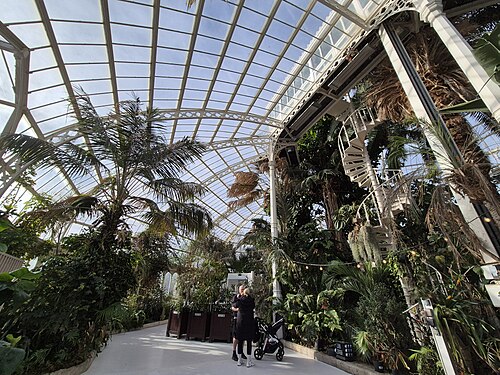
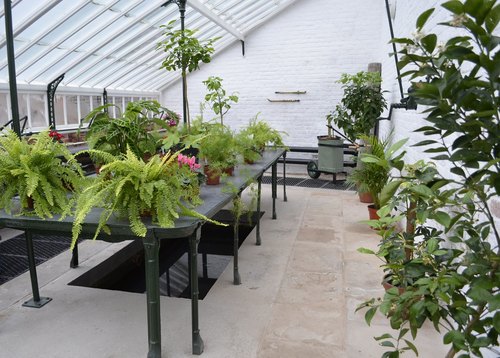
More greenhouses — United Kingdom
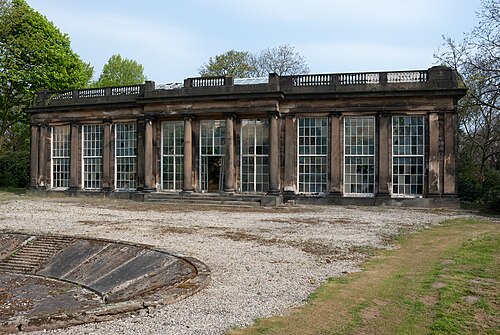
Do you have a good photo of this greenhouse? Suggest it for this page →
Sources (8)
- bangor.ac.uk/treborth
- en.wikipedia.org/wiki/Treborth_Botanic_Garden
- ngs.org.uk/gardens/treborth-botanic-garden-bangor-university-ll57/
- supergardens.co.uk/gardens/treborth-botanic-garden/
- tools.bgci.org/garden.php?id=836
- bangor.ac.uk/iswe/the-history-of-treborth-isaf
- gardenvisit.com/gardens/treborth_botanic_garden
- friendsoftreborthbotanicgarden.org/about-us
Affiliate links — booking through Verrière helps fund our research, at no extra cost to you.