Tropical Ravine (Belfast Botanic Gardens)
Belfast, Northern Ireland
Entry updated on October 3, 2026
- Year
- 1887–1889
- Architect
- Charles McKimm (head gardener)
- Style
- Victorian glass-roofed house built around a sunken ravine
- Dimensions
- ≈930 m² (10,000 sq ft) of glass fitted in 1980
- Status
- Open to the public (reopened April 2018 after restoration)
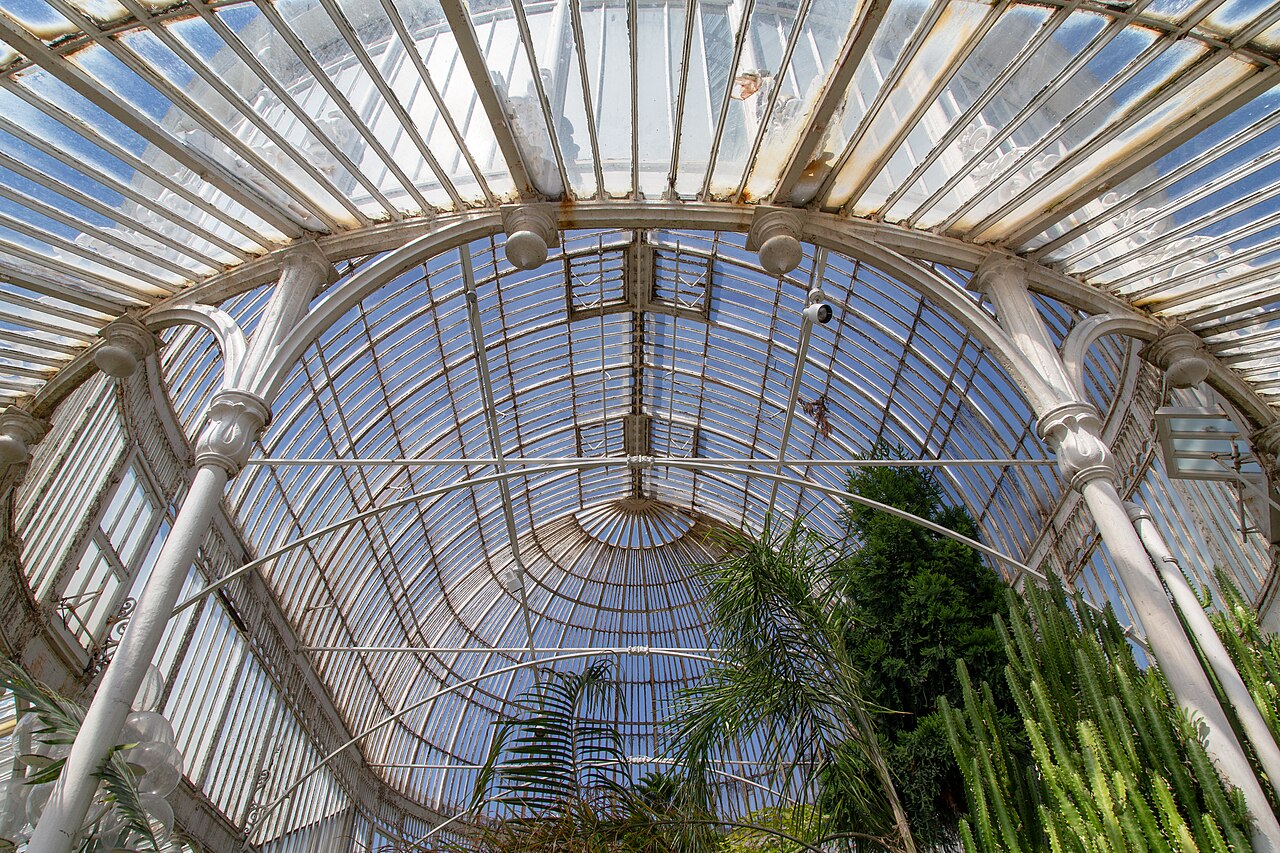
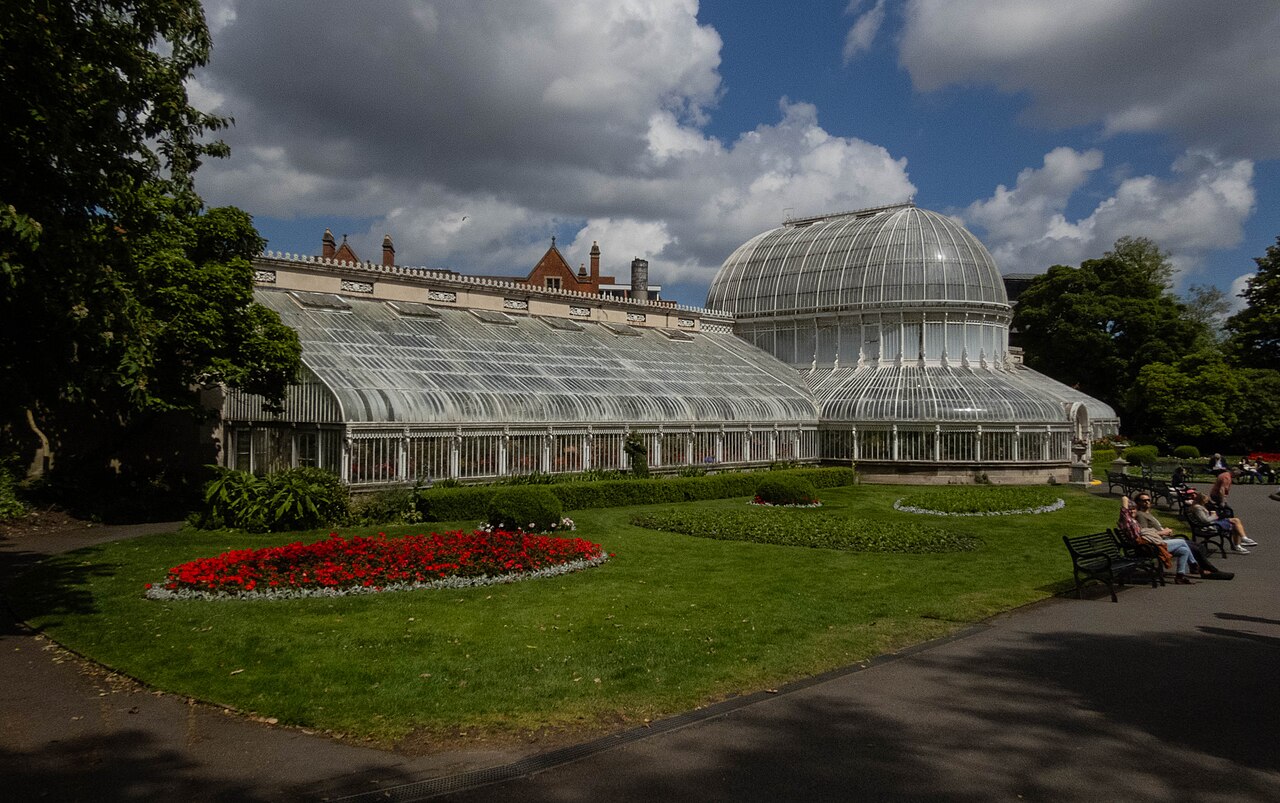
Begun in 1887 and opened in 1889, this glasshouse in Belfast's Botanic Gardens was built by head gardener Charles McKimm and his staff on the site of former orchid and propagating houses. Its defining feature is a sunken glen running the length of the building, looked down upon from a railed balcony. Extended in 1900 and given a heated pond for the South American giant water lily in 1902, it closed in 2014 and reopened in April 2018 after a £3.8 million restoration supported by the Heritage Lottery Fund.
Affiliate links — booking through Verrière helps fund our research, at no extra cost to you.
History
1 min
In 1887 Charles McKimm, head gardener of Belfast's Botanic Gardens, set his staff to work on a new glasshouse on the site of the old orchid and propagating houses. Opened in 1889 and long known as the Tropical Glen, it offered something unusual: a sunken glen that visitors surveyed from a high, railed balcony. Grottoes cut into the walls were lit by candles, with mirrors to multiply the light, while a waterfall worked by a chain and pulley fell into a pool on the lower level.
Work continued into the new century. In 1900 a second section, kept warmer for tropical plants, was added, and in 1902 a heated pond was built for the giant water lily of South America. According to the city council, these extensions added 76 feet, or about 23 metres, to the building.
A modernisation in 1980 put an aluminium-framed roof on the original trusses, with some 10,000 square feet of glass, and installed sprinklers, heating and lighting. The listed building nevertheless deteriorated and, according to the local press, closed in 2014. A £3.8 million project funded by the Heritage Lottery Fund, Belfast City Council and the Friends of Belfast Botanic Gardens returned it to its Victorian design while the plants waited in other glasshouses. The Lord Mayor, Nuala McAllister, reopened it in April 2018.
Architecture and engineering
1 min
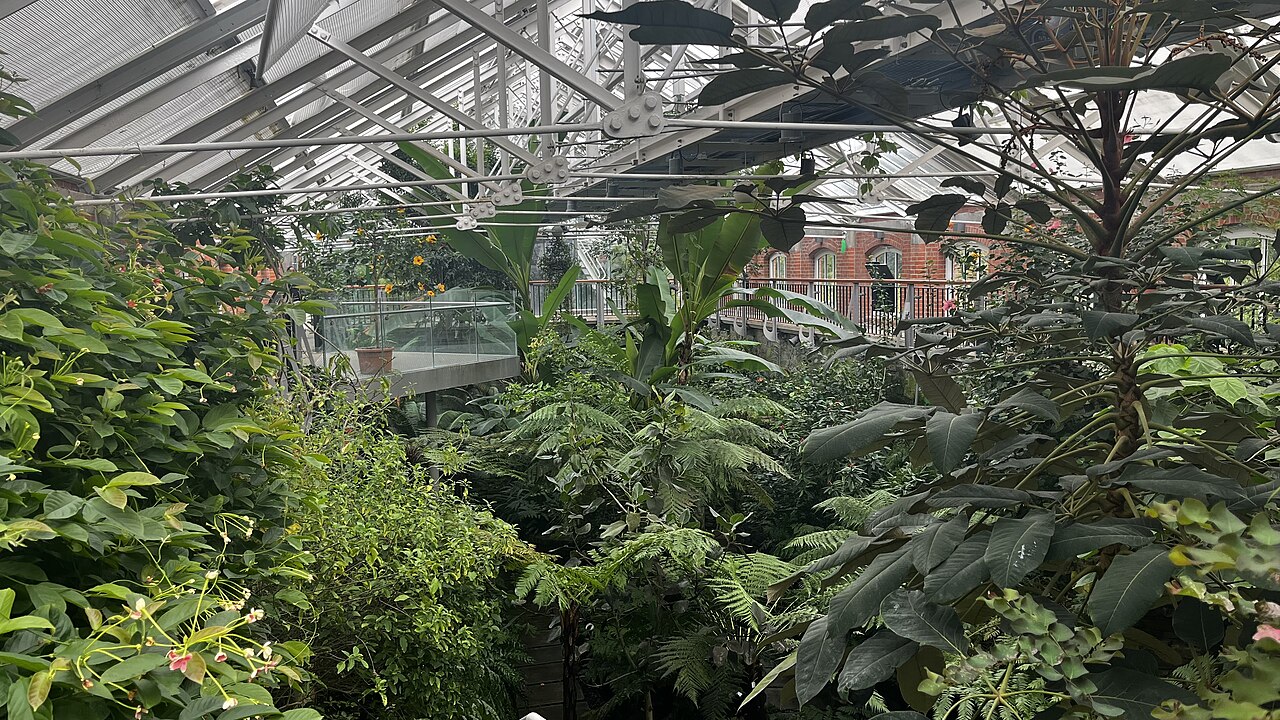
The Tropical Ravine is organised around a single, rare idea: a ravine set below ground level runs the whole length of the glasshouse, with a balcony along each side from which visitors look down into the vegetation. The planting is seen from above first, then from the path along the bottom.
The building carries several layers of history. Its roof rests on the original Victorian trusses, but the aluminium framing dates from the 1980 modernisation. The restoration completed in 2018 reinstated original features while bringing the structure up to modern standards: triple-glazed windows to hold in the heat, a fogging and misting system to keep the air humid, a frameless glass façade and a lift serving both levels. The visit is now arranged over two levels, with an open reception area on the ground floor and interactive panels on the plants and the conservation work.
The warmer section added in 1900 and the heated lily pond of 1902 show how the glasshouse was adapted, within a few years of opening, to the demands of tropical cultivation.
Plant collections
1 min
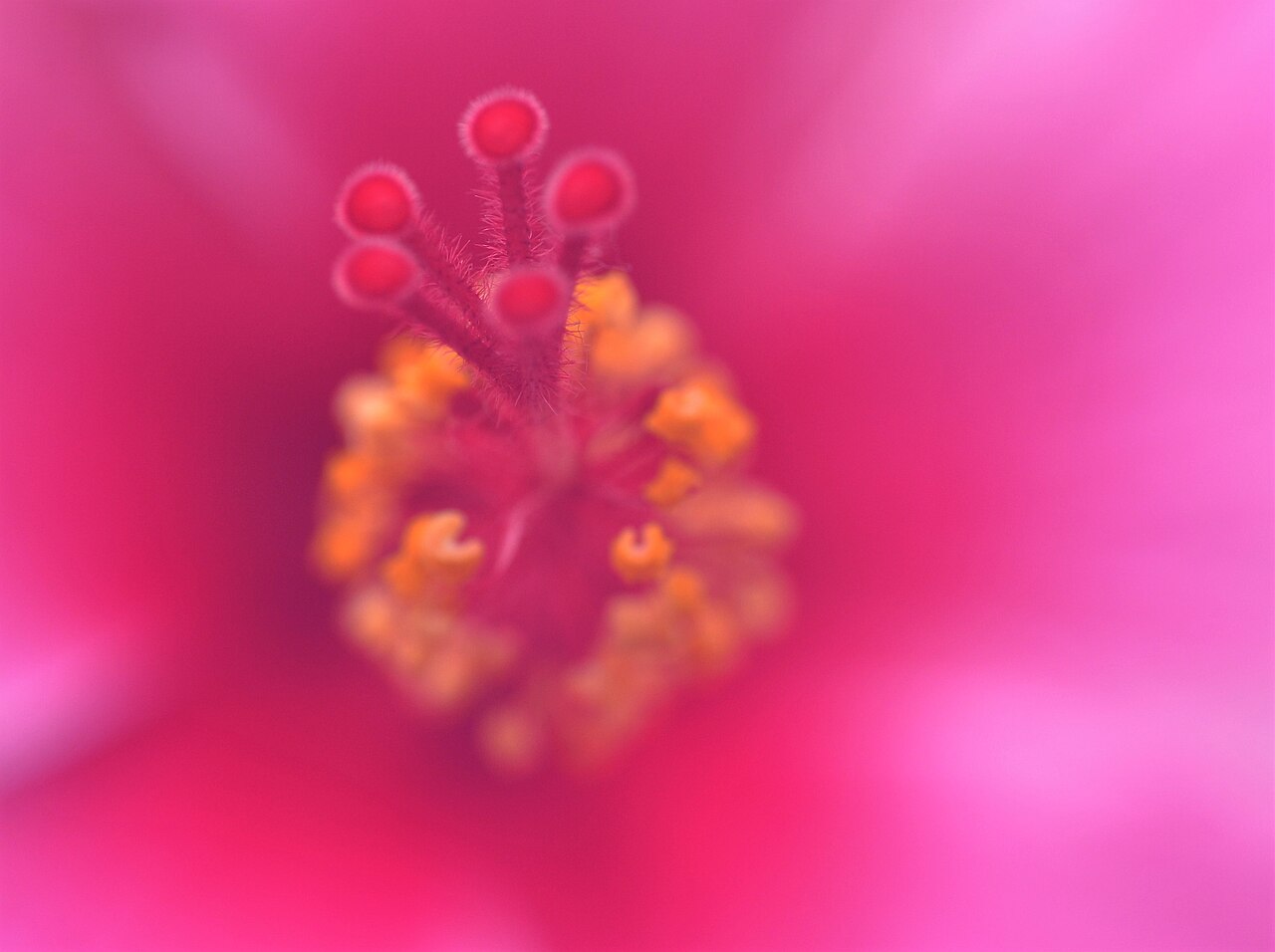
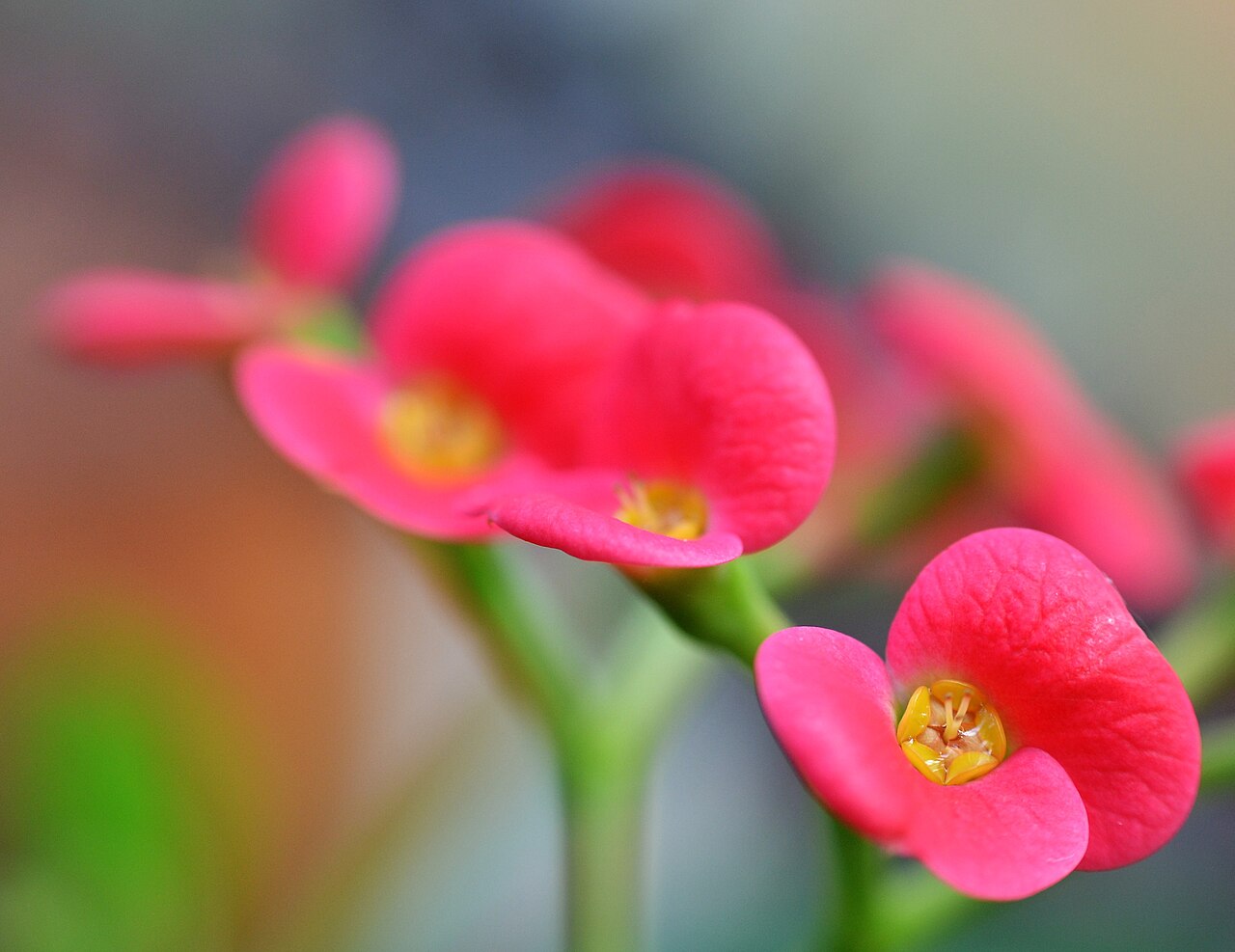
The planting brings together species from warm, humid climates: orchids, bananas, cinnamon and bromeliads, alongside the Killarney fern and some of the world's oldest seed plants. Several specimens are thought to be more than 150 years old; they were moved temporarily to other glasshouses during the restoration before returning to the ravine.
The most popular plant is a Dombeya, which flowers every February. The heated pond created in 1902 for the giant water lily of South America is a reminder that the house was designed from the outset to show off the most spectacular plants of the tropics.
Visiting
1 min
The Tropical Ravine stands in Botanic Gardens, the public park in south Belfast next to Queen's University, a few minutes' walk from the Palm House designed by Charles Lanyon and built by Richard Turner. Allow about half an hour to walk the balcony and the lower level; February, when the Dombeya is in flower, is a good time to come. The interactive displays installed in 2018 trace the history of the building and the conservation work behind the collection. A visit combines naturally with the Palm House and with the Ulster Museum, which stands in the same park.
54.58° N, 5.93° W
Greenhouses nearby
More greenhouses — United Kingdom
Do you have a good photo of this greenhouse? Suggest it for this page →
Sources (5)
- belfastcity.gov.uk/Things-to-Do/Tropical-Ravine/History-of-the-Tropical-Ravine
- en.wikipedia.org/wiki/Botanic_Gardens_(Belfast)
- heritagefund.org.uk/news/tropical-ravine-reopens-following-restoration
- irishnews.com/news/northernirelandnews/2018/04/12/news/tropical-ravine-reopens-after-3-8-m
- openstreetmap.org/way/311516181