Chiswick House Conservatory
Chiswick, London (Hounslow)
Entry updated on October 3, 2026
- Year
- 1813 · rebuilt 1932–33 · restored 2007–2010
- Architect
- Samuel Ware
- Style
- Long glasshouse with a central rotunda; present timber-and-glass structure of the 1930s
- Dimensions
- About 91 m (300 ft) long
- Status
- Wings closed to the public (as of 2022); added to the Heritage at Risk Register in 2025
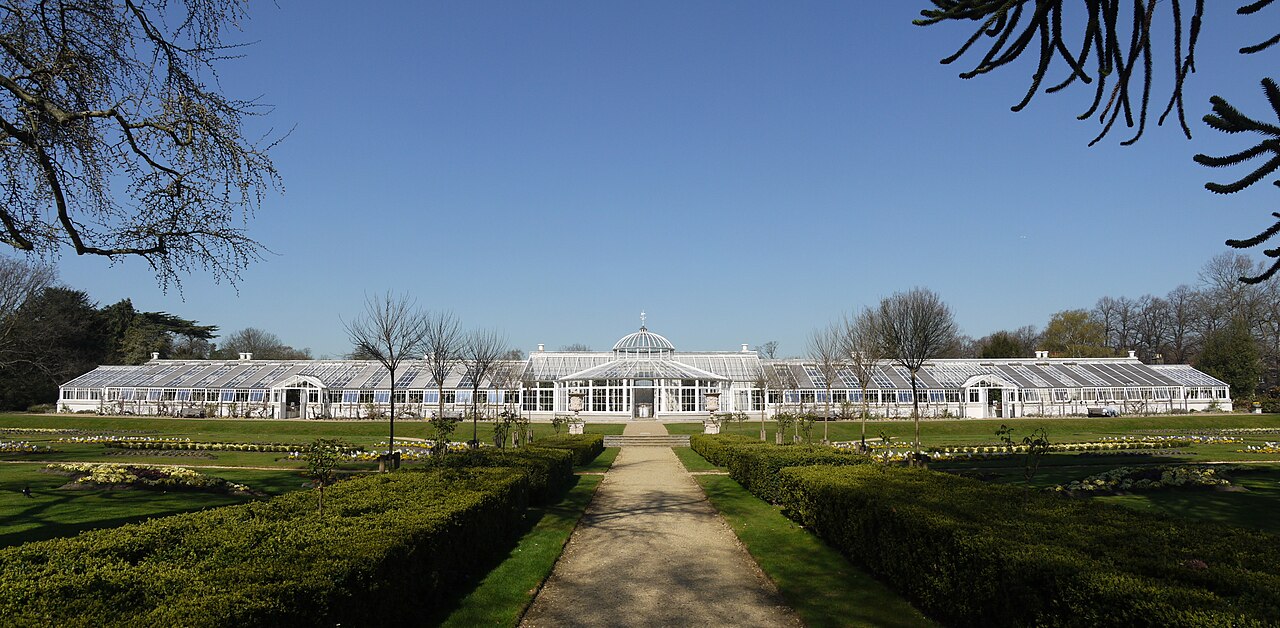
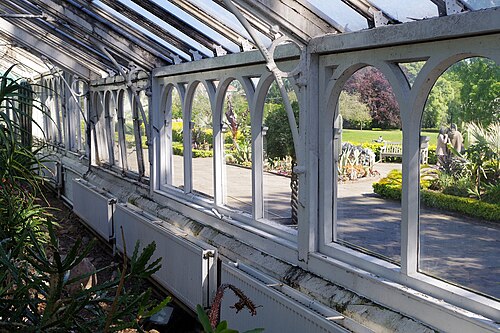
Some 300 feet (about 91 m) long, the Chiswick House Conservatory was completed in 1813 to designs by Samuel Ware for the 6th Duke of Devonshire. Built to grow fruit, it was given over to camellias from 1828, and some early plants survive in one of the oldest collections under glass in Europe. Largely rebuilt in timber and glass in 1932–33 and restored between 2007 and 2010, it was added to the Heritage at Risk Register in 2025: its fragile structure needs conservation work estimated at several million pounds.
Affiliate links — booking through Verrière helps fund our research, at no extra cost to you.
History
1 min
The conservatory was completed in 1813 for the 6th Duke of Devonshire, a great-grandson of Lord Burlington. It was designed by Samuel Ware, who also built the Burlington Arcade in London. At 300 feet long it was one of the earliest large glasshouses, predating both Decimus Burton's glasshouse at Kew and Joseph Paxton's Crystal Palace. It was first used for growing fruit, but in 1828 the Duke followed fashion and turned it over to camellias, bought among others from the 1831 catalogue of the Chandler and Sons nursery.
In 1855 the heating was renewed and the small panes were replaced with large sheets of glass. In danger of collapse by 1930, the building was largely rebuilt in 1932–33 by Messenger & Company. Bombs damaged it during the Second World War, one of them crashing through the roof without exploding. Repaired in 1983, it fell into decay in the late twentieth century until the International Camellia Society stepped in to save the camellias, paving the way for a Heritage Lottery Fund restoration: between 2007 and 2010 the structure was almost completely dismantled, conserved and reassembled.
By 2022 the wings were closed to the public pending repairs, and in November 2025 Historic England added the conservatory, owned by Hounslow Council, to its Heritage at Risk Register.
Architecture and engineering
1 min
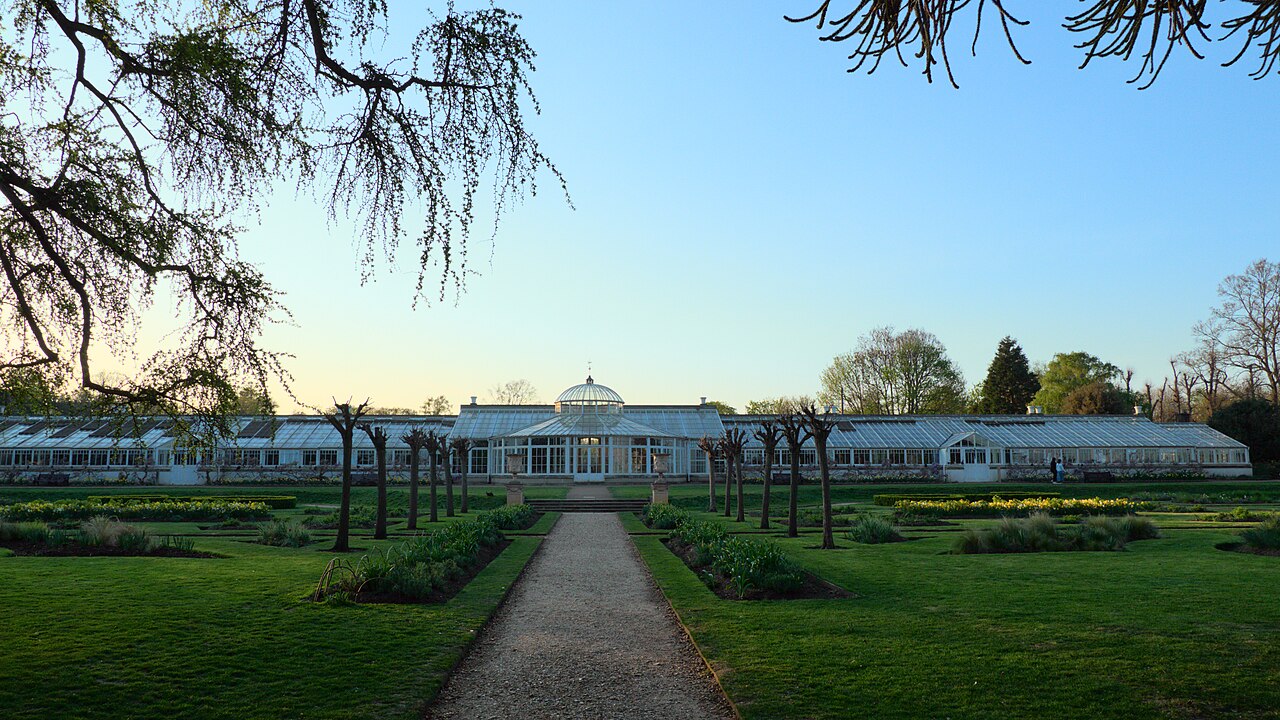
The conservatory stretches for 300 feet, about 91 m, on either side of a central rotunda. It was originally divided into compartments kept at different climates so that fruit would ripen in succession, with the end pavilions possibly used for pineapples. Six coal-fired furnaces heated it, burning more than 100 tons of coal a year.
The building seen today bears the marks of successive rebuildings. In 1855 the small original panes gave way to large sheets of glass. The campaign of 1932–33 gave the conservatory the timber-and-glass structure that survives today. During the 2007–2010 restoration it was taken apart almost entirely, conserved and put back together; in 2019 window cleaning alone still cost around £1,500 a year. The Heritage at Risk listing highlights the fragility of this 1930s frame, exposed to the weather and to the effects of climate change.
Plant collections
1 min
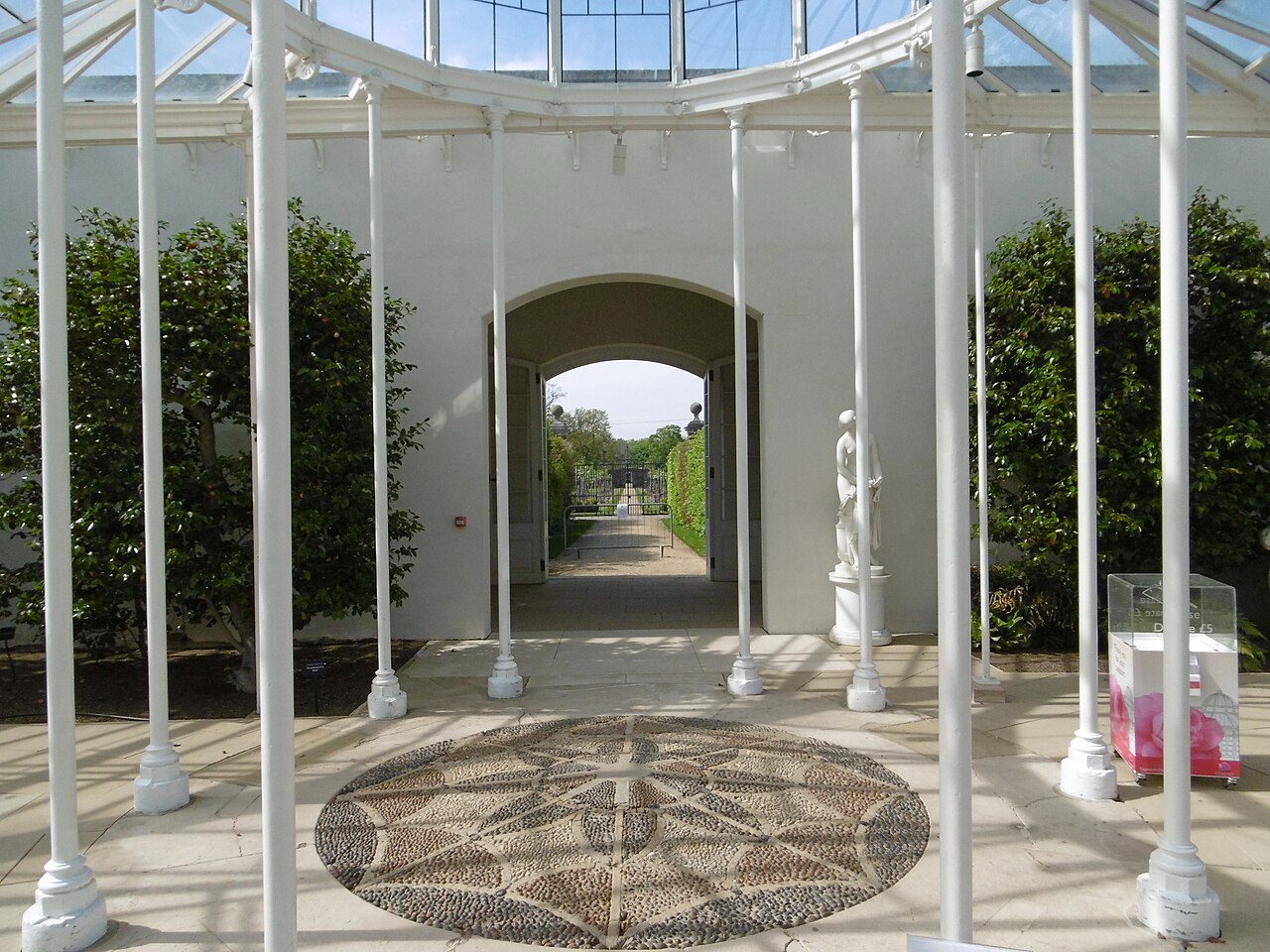
The conservatory first housed vines, peaches, figs and possibly pineapples. Since 1828 it has been devoted to camellias, and some plants are believed to go back to the collection the 6th Duke assembled at that time, making it one of the oldest collections under glass in Europe. In 2022 it held 33 different varieties, and in 2025 the Trust reported that the camellias were healthy and thriving despite the state of the building.
Their late-winter flowering used to be celebrated with a camellia festival. In 2022 only the rotunda opened, on two weekends in February and March, alongside guided tours of the outdoor camellias, an International Camellia Society competition and a talk on the cultural history of the tea plant.
Visiting
1 min
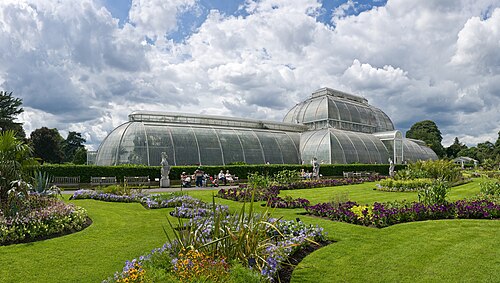
The conservatory stands in the gardens of Chiswick House in west London (London Borough of Hounslow), a public park run together with the house by the Chiswick House & Gardens Trust. Largely closed because of its condition, the interior has opened in recent years only on occasional days during the camellia flowering in February and March, so check the Trust's programme before setting out. The gardens alone justify a walk of an hour or two. Kew Gardens and the Great Conservatory at Syon Park, two other landmarks in the history of English glasshouses, are only a few kilometres away.
51.49° N, 0.26° W
Greenhouses nearby
More greenhouses — United Kingdom
Do you have a good photo of this greenhouse? Suggest it for this page →
Sources (4)
- chiswickhouseandgardens.org.uk/2019/04/24/chiswick-house-conservatory/
- chiswickhouseandgardens.org.uk/the-trust/historic-england-lists-chiswicks-conservatory-as-
- chiswickcalendar.co.uk/youll-have-to-be-organised-to-see-the-chiswick-house-camellias-this
- en.wikipedia.org/wiki/Grade_I_and_II*_listed_buildings_in_the_London_Borough_of_Hounslow