Palm House
Kew, London

Sources checked November 2026
- Year
- 1844–1848
- Architect
- Decimus Burton & Richard Turner
- Style
- Victorian wrought iron
- Dimensions
- ≈19 m high, 110 m long
- Status
- Open; closing in February 2027, reopening empty in summer, then under renovation from autumn 2027 until a planned reopening in 2032
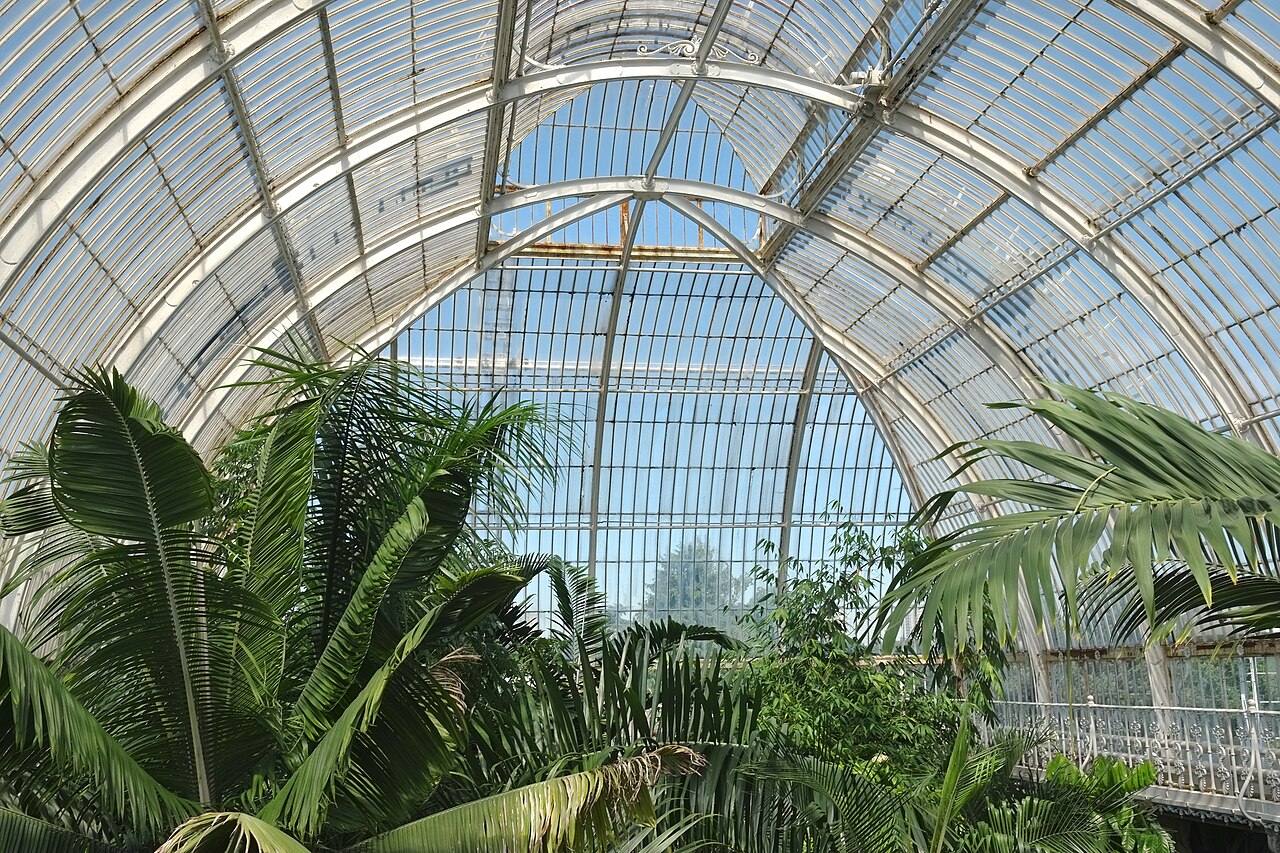
Commissioned by the trustees of Kew Gardens to house the palm collection brought back by the Empire's botanical explorers, the Palm House is one of the oldest major Victorian iron-and-glass structures still standing. Engineer Richard Turner adapted shipbuilding techniques to curve the metal ribs without a single interior column. It still houses one of the oldest known potted plants in the world, a cycad brought back from South Africa in 1775.
Affiliate links — booking through Verrière helps fund our research, at no extra cost to you.
Practical info
- Tickets
- Included in Kew Gardens admission. Off-peak rates (1 Nov-31 Jan): adult £17 online, £20 at the gate; child 4-15 £2 online, £4 at the gate; under 4 free.
- Opening hours
- Gardens: daily 10am-4pm (last entry 3pm) from 25 Oct to 11 Nov 2026, then 10am-3.15pm (last entry 2.30pm) from 12 Nov 2026 to 3 Jan 2027. The glasshouses usually close an hour before the Gardens. Closed 24 and 25 December (daytime).
- Getting there
- Victoria Gate (TW9 3JR), 500 m from Kew Gardens station (District line, Mildmay line, zone 3); bus 65 from Richmond station. Parking is limited, £10 per day at Brentford Gate.
Frequently asked questions
Is the Palm House included in the ticket?
Yes, a visit is included in standard Kew Gardens admission. It opens daily and usually closes an hour before the Gardens.
Do I need to book?
No: every ticket type can be bought at the gates, but booking online gets the best prices (adult £17 versus £20 at the gate, 1 November to 31 January).
Is the Palm House going to close?
Yes. It closes in February 2027 for the final phase of moving the plants out, reopens temporarily in summer 2027 so visitors can see the empty glasshouse, then closes fully in autumn 2027 for renovation; Kew is aiming to reopen it in 2032.
How do I find it in the Gardens?
Enter through Victoria Gate: the Palm House is on your right, one of the first landmarks. It was built from 1844 to 1848 by Decimus Burton and Richard Turner.
History
The Palm House was launched soon after Sir William Hooker became Director of Kew in 1841, to give the garden's palms and tropical plants a glasshouse on their own scale. Built between 1844 and 1848, it brought together the architect Decimus Burton, who favoured a Neoclassical vocabulary, and Richard Turner, a Dublin ironmaster who shaped both its design and its construction. Turner had already built the wings of the Belfast Palm House, completed in 1840.
The original panes were tinted green with copper oxide to stop leaves from scorching; as London's pollution dimmed the sky, they were replaced with clear glass by the 1890s. Listed Grade I on 10 January 1950, the building has had two major restorations, in 1955–1957 and 1984–1988, the second involving complete dismantling and rebuilding. An aquarium recreating marine ecosystems occupied its basement until 2019.
A new project is now in preparation. Submitted for planning in July 2025, the scheme by Hugh Broughton Architects and engineers Cundall aims to make the Palm House and the neighbouring Waterlily House the first net-zero heritage buildings of their kind. According to Kew (October 2026), the glasshouse closes in February 2027 for the final move of its plants, reopens that summer so visitors can see the empty building, then closes in autumn 2027 for works of three to five years, costed at around £66 million; reopening is planned for 2032.
Architecture and engineering
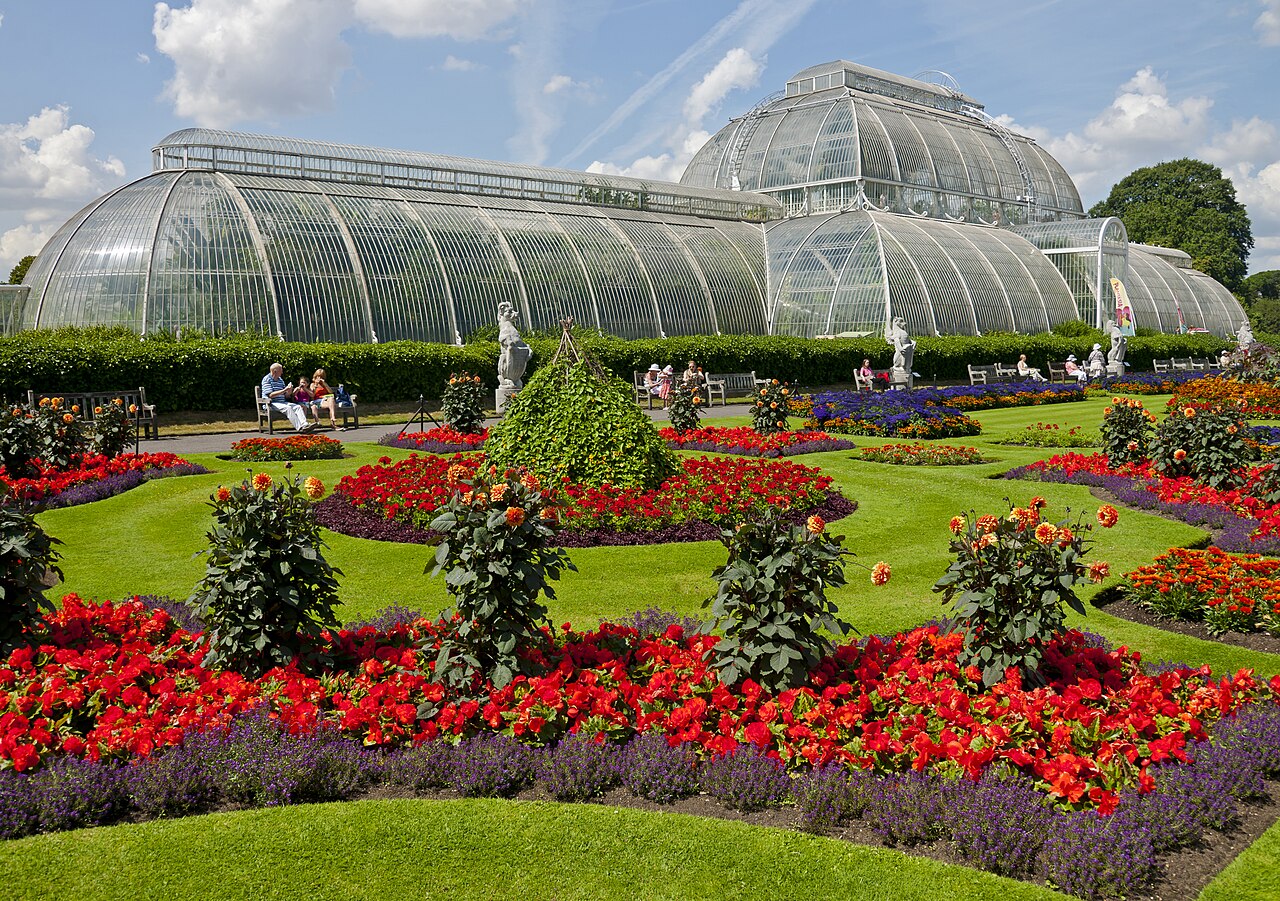
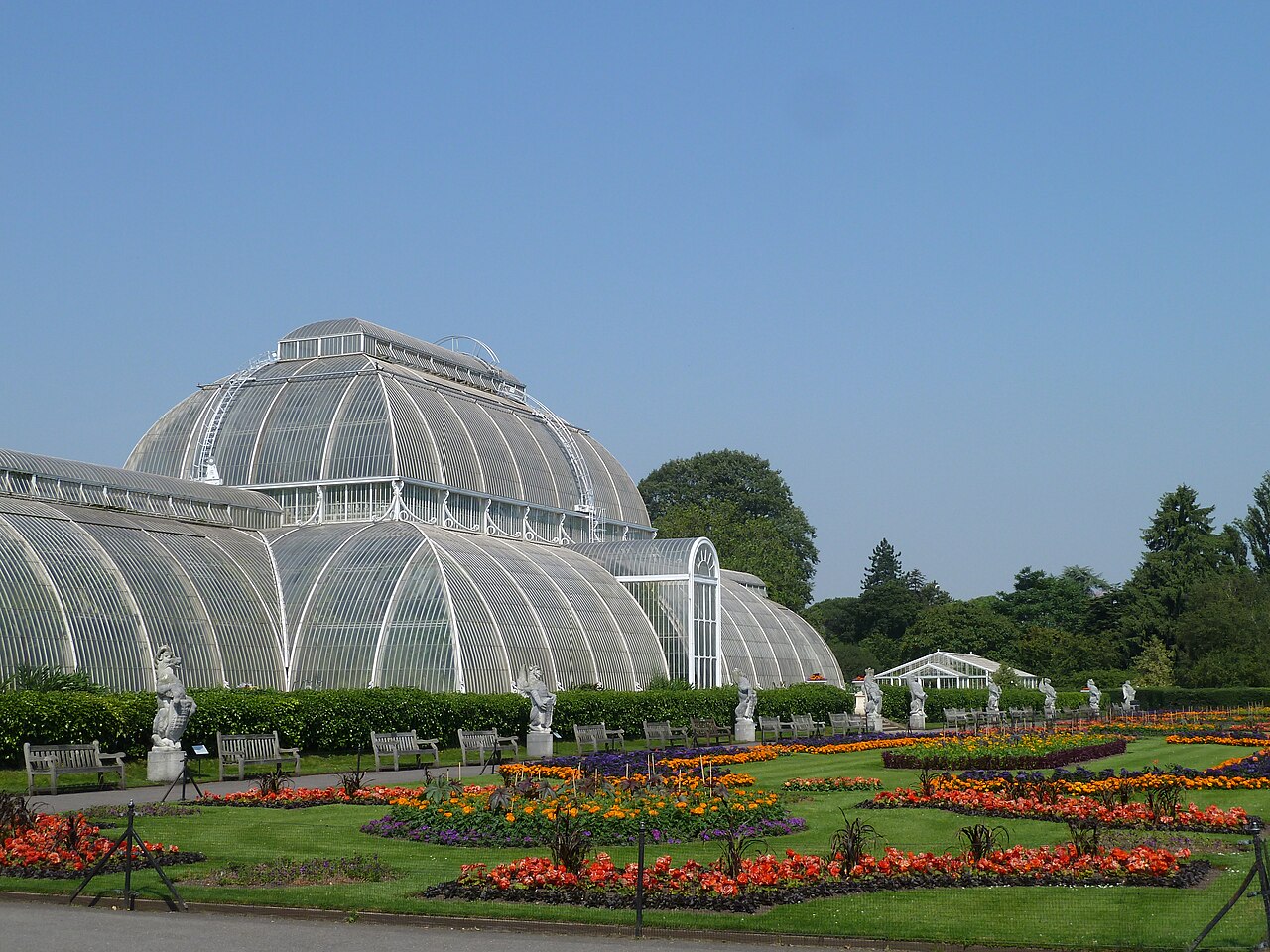
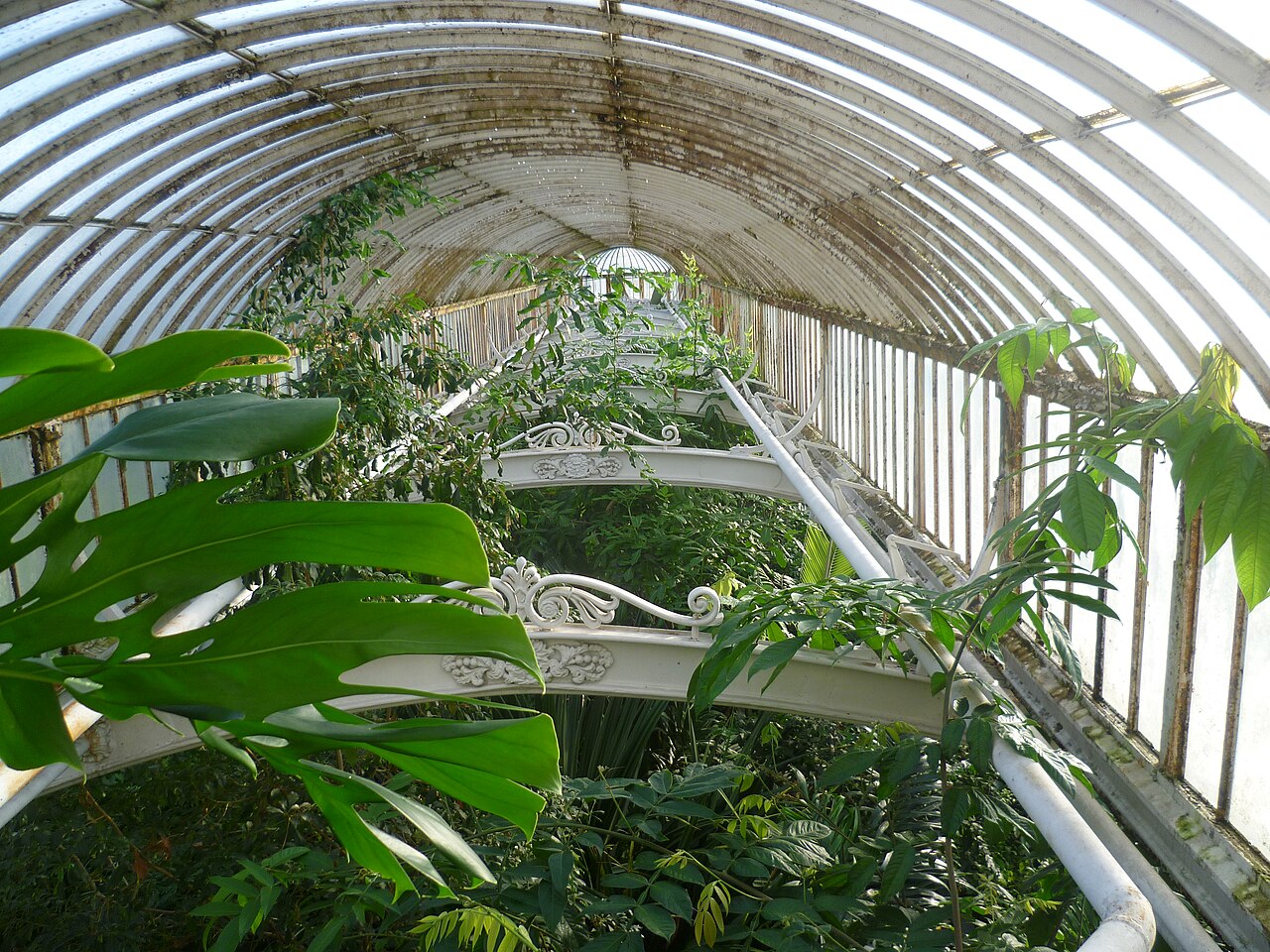
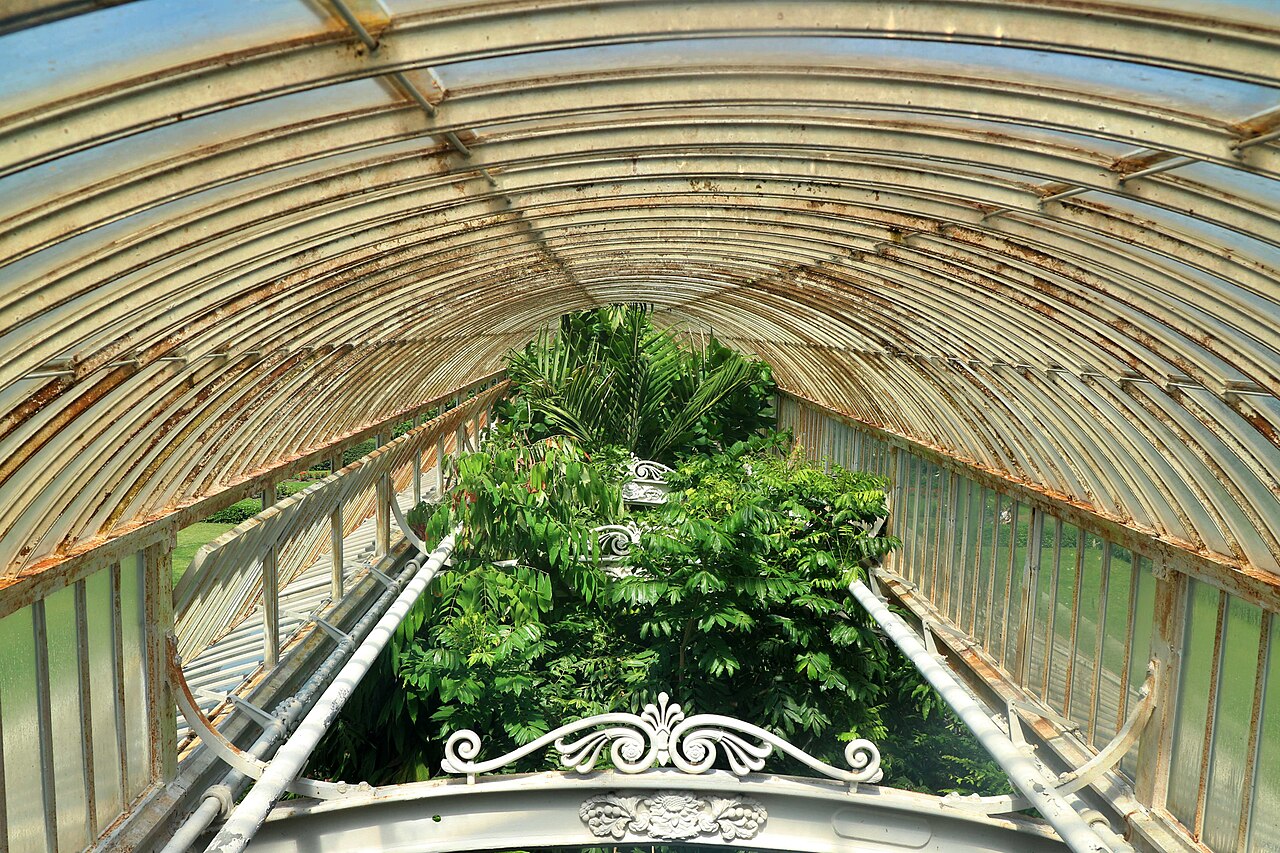
The Palm House is 362 feet (about 110 m) long, rising to 67 feet (about 20 m) at the centre and 33 feet in the wings. The central block is laid out like a nave with aisles, ends in apses and has an interior gallery; glazed barrel vaults mark the entrances at the middle of each long side. Its listing describes it as one of the boldest surviving pieces of nineteenth-century functionalism.
To curve the metal, the builders borrowed techniques from shipbuilding, and the building is often likened to an upturned hull. It was the first large-scale structural use of wrought iron. The envelope holds some 16,000 panes of glass, some of them curved.
Inside, the climate is kept tropical: a 1980s gas boiler guarantees at least 18 °C, vents open above 28 °C and misting keeps humidity above 75%. The renovation will bring air and water source heat pumps and replace about 16,500 panes with high-performance sealed glazing.
Plant collections
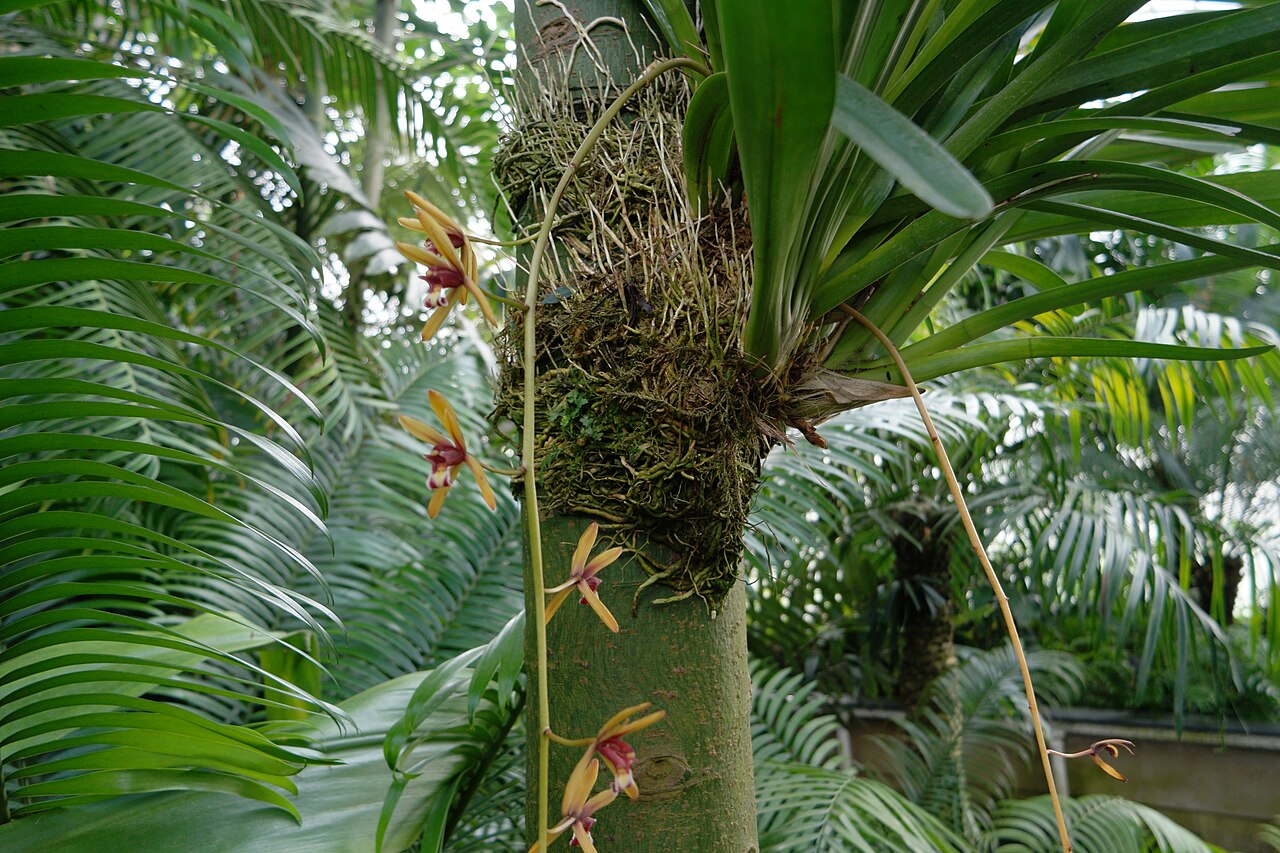
The Palm House shelters a rainforest of around 1,300 plants representing more than 1,000 species, many from threatened habitats. Its elder statesman is an Encephalartos altensteinii, a South African cycad that reached Kew in 1775 and is regarded as the oldest pot plant in the world; it moved into the Palm House in 1848. Two Dioon spinulosum and a Brownea × crawfordii have grown here since 1889.
The collection highlights useful and rare plants: rubber, oil palm and cacao, the Madagascar periwinkle used in some cancer treatments, the Tahina spectabilis palm that flowers once and then dies, and the café marron of Rodrigues, rediscovered in 1979 after being thought extinct. Ahead of the works, horticulturists have been propagating specimens by cuttings and air layering since 2024 and moving them to a temporary glasshouse built behind the building.
Visiting
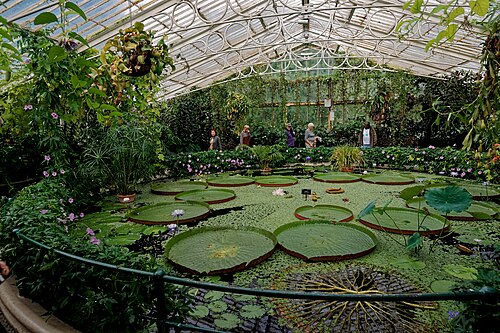
The Palm House stands near Victoria Gate, one of the entrances to Kew Gardens, and is mirrored in the pond in front of it. The Waterlily House, built in 1852 for the giant Victoria amazonica, is close by and is included in the renovation.
An hour allows an unhurried walk through the nave and wings. With the glasshouse closing in February 2027, reopening empty in summer and then closing for several years from autumn 2027, it is worth checking the state of the works before a visit, along with access to Kew's other major glasshouses, the Temperate House and the Princess of Wales Conservatory.
51.48° N, 0.29° W
Greenhouses nearby
Architecture nearby
More greenhouses — United Kingdom
Do you have a good photo of this greenhouse? Suggest it for this page →
Sources (6)
Affiliate links — booking through Verrière helps fund our research, at no extra cost to you.