The Pavilions, Sheffield Botanical Gardens
Sheffield, South Yorkshire
Entry updated on October 3, 2026
- Year
- 1836–1838 · restored 2003
- Architect
- Benjamin Broomhead Taylor (competition judged by Joseph Paxton)
- Style
- Classical fronts with Corinthian pilasters, cast-iron and glass domes, ridge-and-furrow linking houses
- Dimensions
- Three domed pavilions; central house of 7 × 3 bays
- Status
- Open to the public
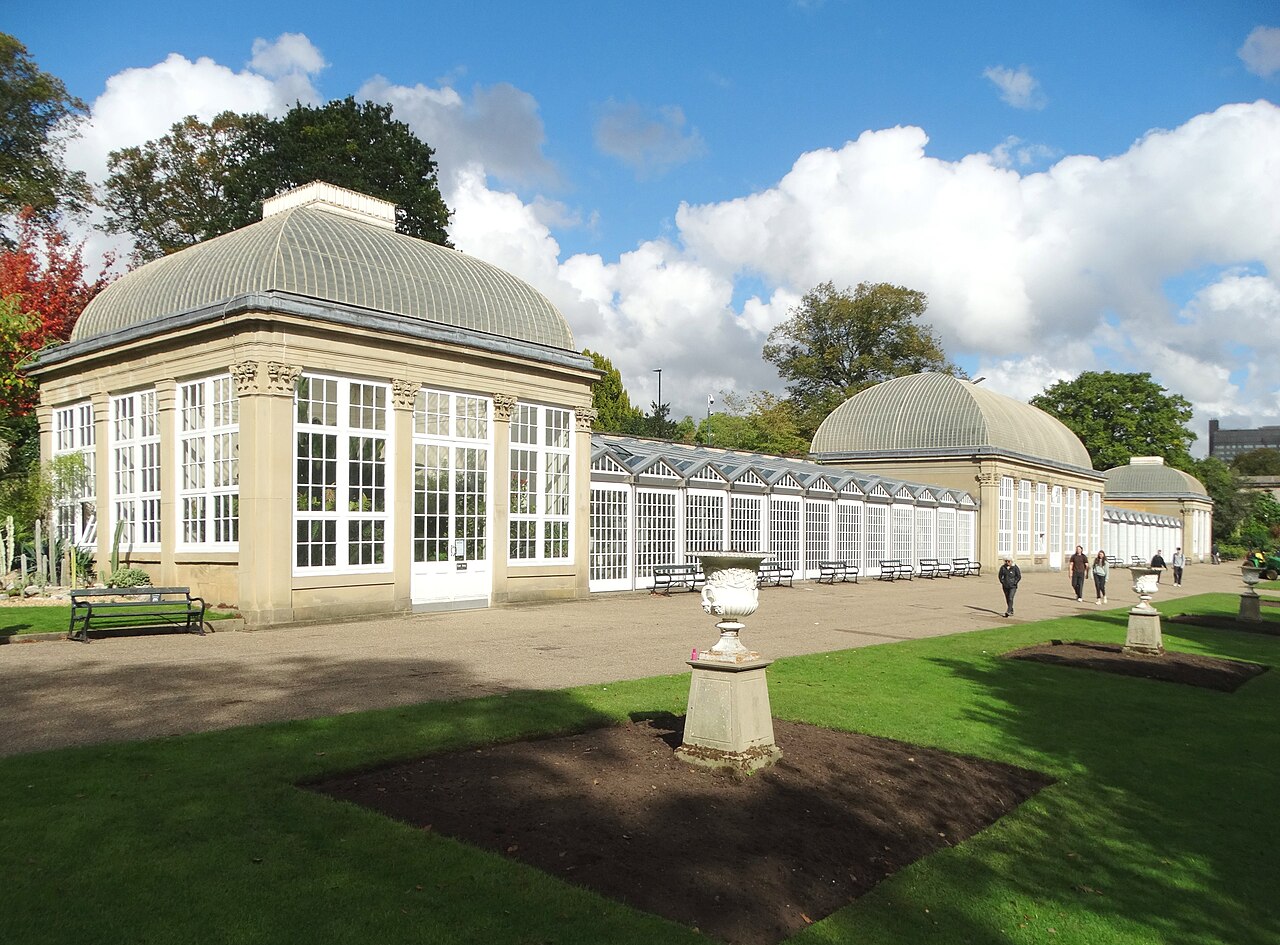
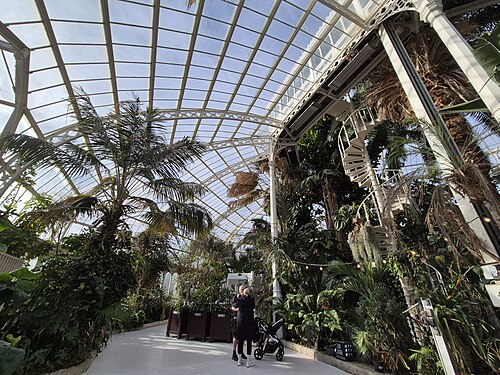
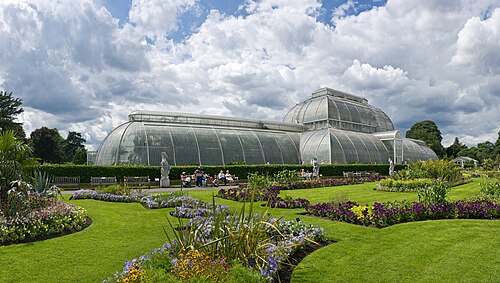
Opened with Sheffield's botanical garden in 1836 (1837–38 according to their listing), these three domed pavilions were designed by the local architect Benjamin Broomhead Taylor, who won a competition judged by Joseph Paxton. Their classical stone fronts, articulated by Corinthian pilasters, carry cast-iron and glass domes, now joined by glazed linking houses rebuilt in steel. Listed Grade II* and restored with Heritage Lottery Fund support, they reopened in September 2003 and display plants from the world's warm temperate regions, from Australia to South Africa.
Affiliate links — booking through Verrière helps fund our research, at no extra cost to you.
History
1 min
The Sheffield Botanical and Horticultural Society was formed in 1833 and raised £7,500 by selling shares to give the town a botanical garden. Laid out by Robert Marnock, the garden opened on 29 June 1836, and some 12,000 people came to the opening celebrations that summer. The glasshouses went to a local architect, Benjamin Broomhead Taylor, who won a competition judged by Joseph Paxton, then head gardener at Chatsworth, hence the nickname 'Paxton Pavilions' that has stuck to them. The garden dates them to 1836, whereas their listing gives 1837–38.
The range was extended in the 1850s, but sections that had fallen derelict were pulled down and by 1902 only the three domed pavilions remained. A concrete colonnade was added around 1935, with further changes in the mid twentieth century. Run by the Sheffield Town Trust from the late nineteenth century, the garden was taken over on a 99-year lease by the city on 18 December 1951, and the pavilions were listed at Grade II* on 1 May 1952.
The restoration funded by the Heritage Lottery Fund involved dismantling the ironwork of the domes for repair off site and rebuilding the linking houses in steel. The Prince of Wales reopened the restored pavilions in September 2003.
Architecture and engineering
1 min
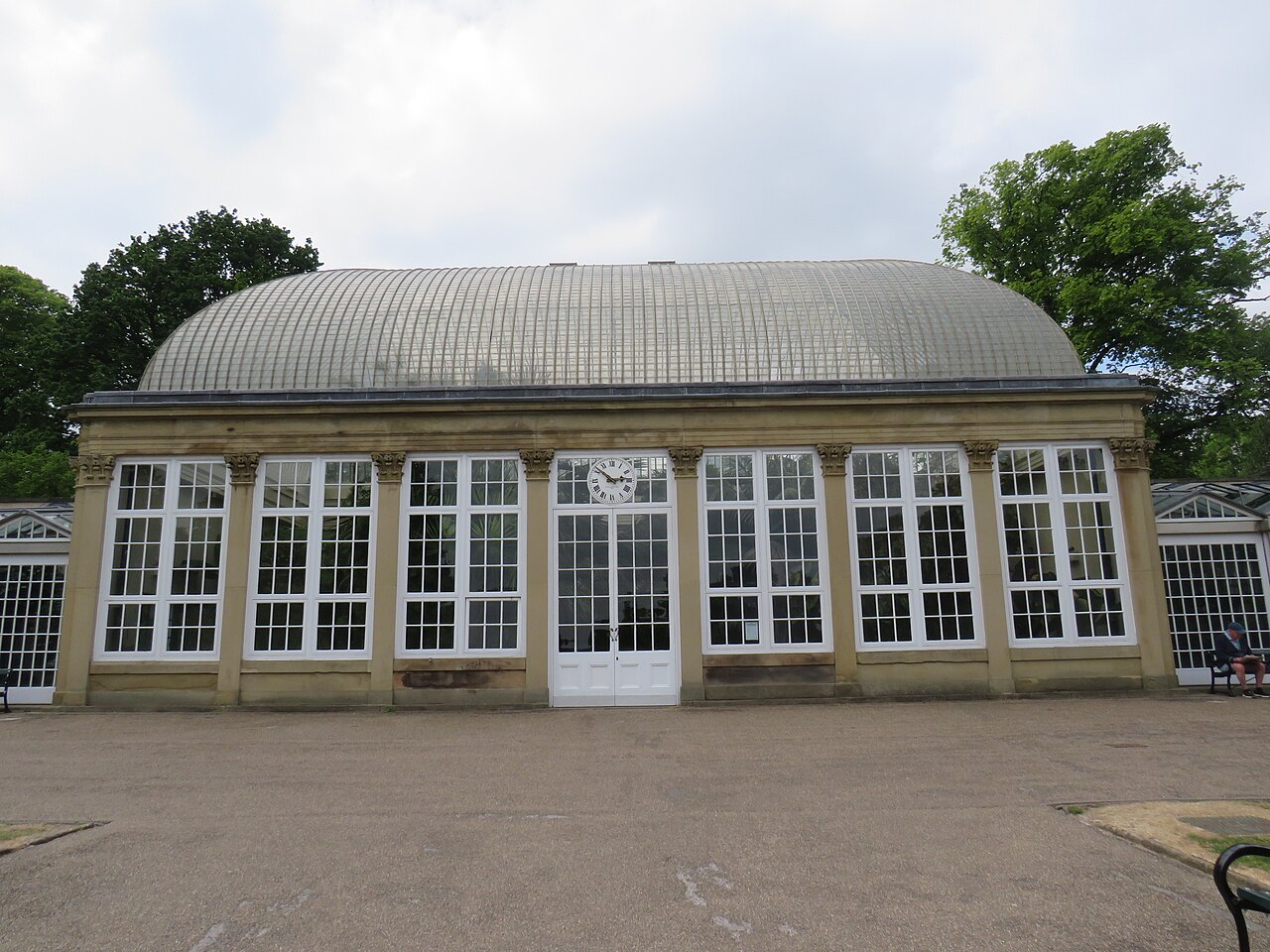
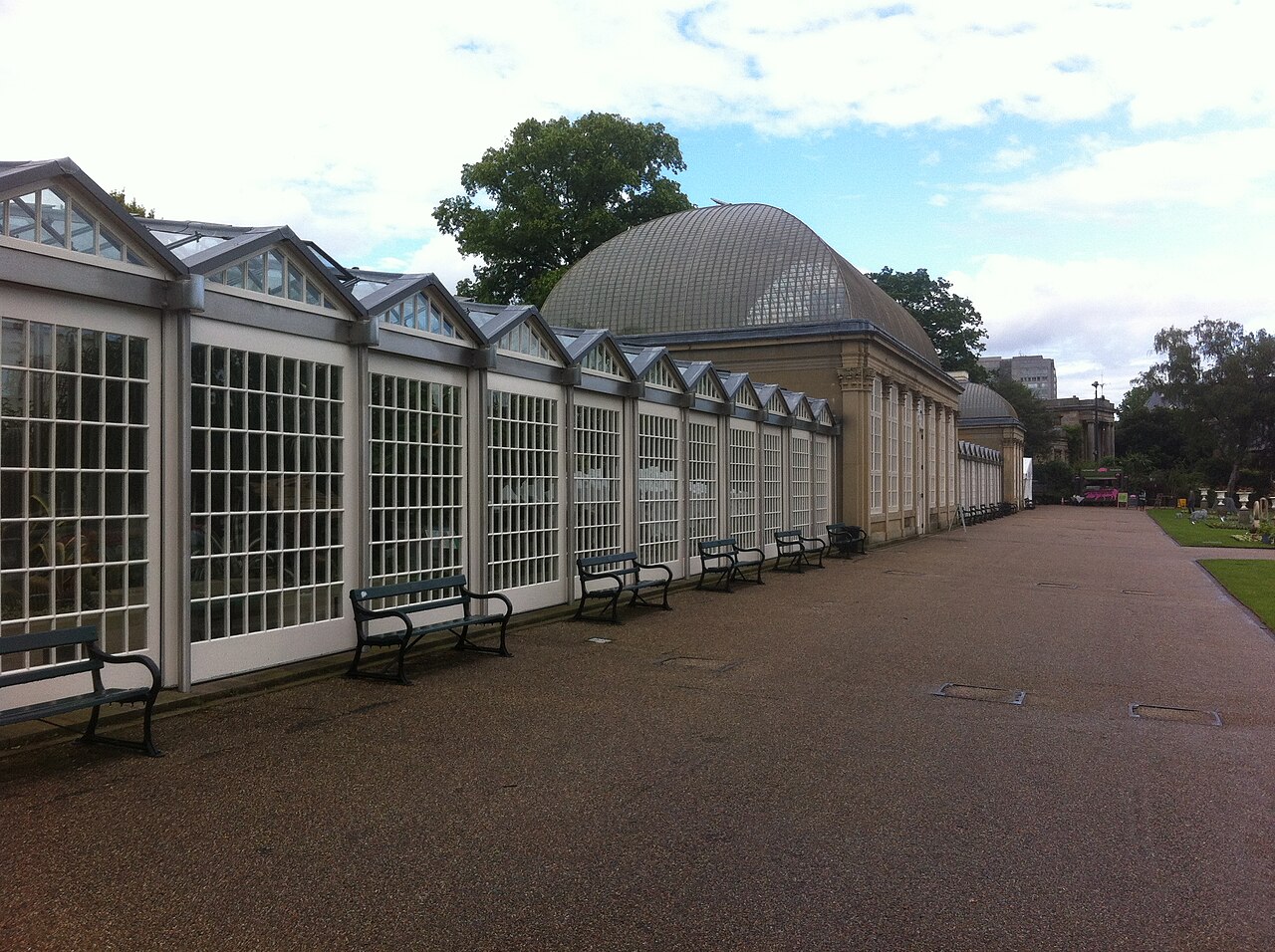
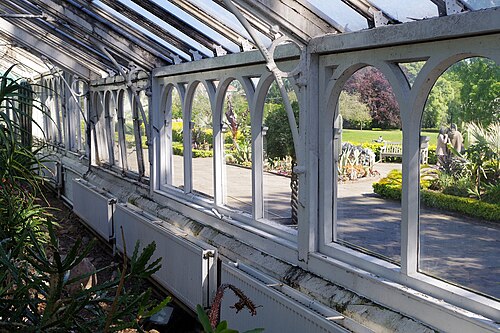
The three pavilions, each listed separately, combine masonry and glass. The central one, as described in its listing, has a front of ashlar and render with a plinth, Corinthian pilasters and an entablature; single-storey, it is seven bays by three, with glazed central doors under a cross casement, flanked on each side by three similar casements. Above, a cast-iron frame carries a glazed square-domed roof. The three buildings were originally linked by colonnades; today ridge-and-furrow glasshouses, rebuilt in steel during the restoration, join them together.
The beds inside are edged with stone from the Stoke Hall quarries at Grindleford, and the floors are laid with sawn stone slabs from the Crossland Hill quarries near Huddersfield. A boiler and controlled ventilation keep the minimum temperature at 10 °C. Plants are watered by hand with rainwater collected from the roofs and stored in large underground tanks in front of the pavilions.
Plant collections
1 min
The plants come from the warm temperate regions of the world and are arranged by origin. The east dome holds bananas such as Musa basjoo and Musella lasiocarpa. The east linking house gathers Asian plants, including tender camellias, common jasmine and Hibiscus rosa-sinensis, together with Mediterranean species such as the olive. The central dome is devoted to Australia, with acacias, banksias, callistemons and Doryanthes excelsa. The west linking house brings together tree ferns (Dicksonia, Cyathea), South American plants, cacti and succulents, and the west dome is given over to South Africa, with Protea cynaroides, Veltheimia bracteata and several strelitzias.
When the houses were replanted in 2003, a team from the Royal Botanic Garden Edinburgh joined staff and volunteers to fill the beds with frost-tender plants.
Visiting
1 min
The pavilions stand on the north-west side of Sheffield Botanical Gardens, a 19-acre (7.7-hectare) garden off Ecclesall Road, south-west of Sheffield city centre. An hour is enough for the glasshouses, but Robert Marnock's garden rewards a longer stay: it holds, among others, the national collections of Sarcococca, Weigela and the closely related genus Diervilla. Spring and summer suit the outdoor garden best, while the pavilions offer temperate shelter in any season. The Winter Garden in the city centre, Sheffield's other great glasshouse, is about two kilometres away.
53.37° N, 1.50° W
Greenhouses nearby
More greenhouses — United Kingdom
Do you have a good photo of this greenhouse? Suggest it for this page →