Great Conservatory, Syon Park
Syon Park, Brentford (London)
Entry updated on October 3, 2026
- Year
- 1826–1830 · restored 1986–87
- Architect
- Charles Fowler, with Richard Forrest (head gardener to the Duke of Northumberland)
- Style
- Palladian-inspired neoclassical, cast iron, glass and Bath stone
- Dimensions
- Front about 70 m (230 ft) long; dome 11.6 m (38 ft) across
- Status
- Open to the public seasonally (March to October)
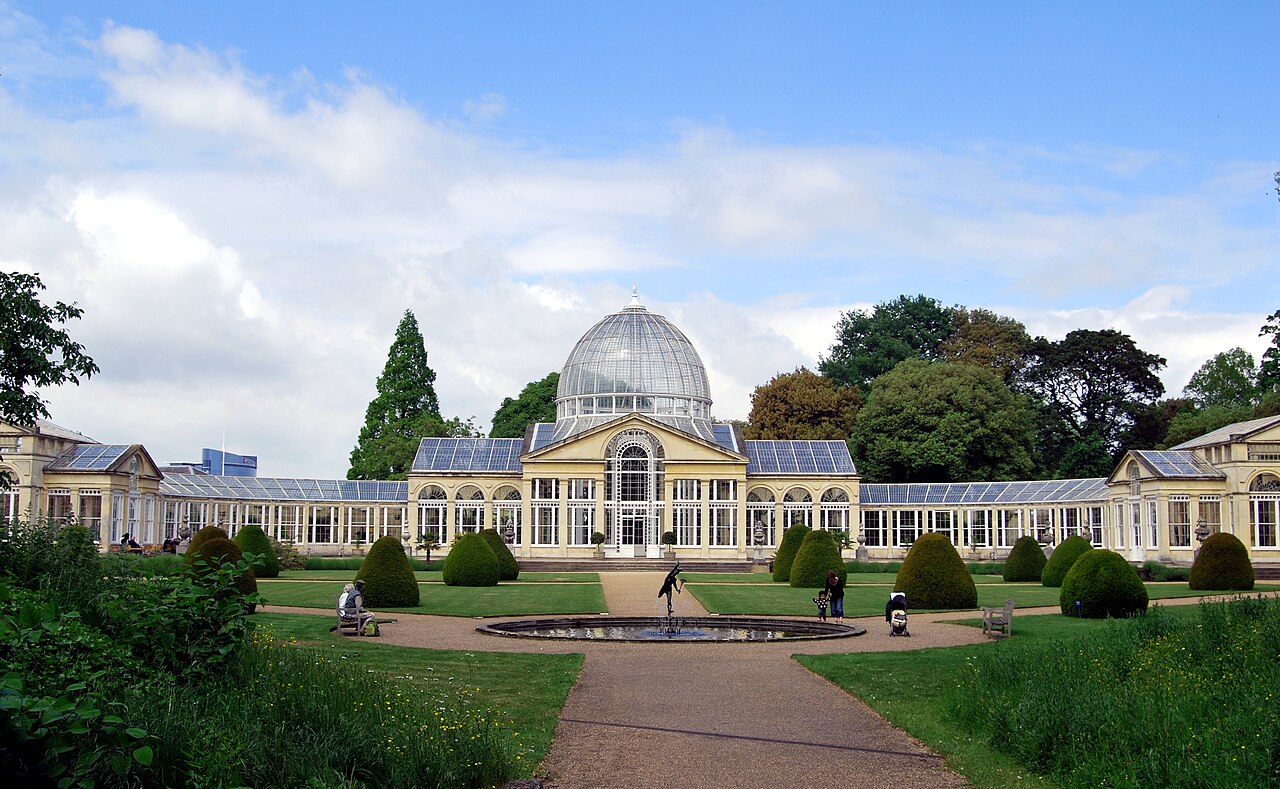
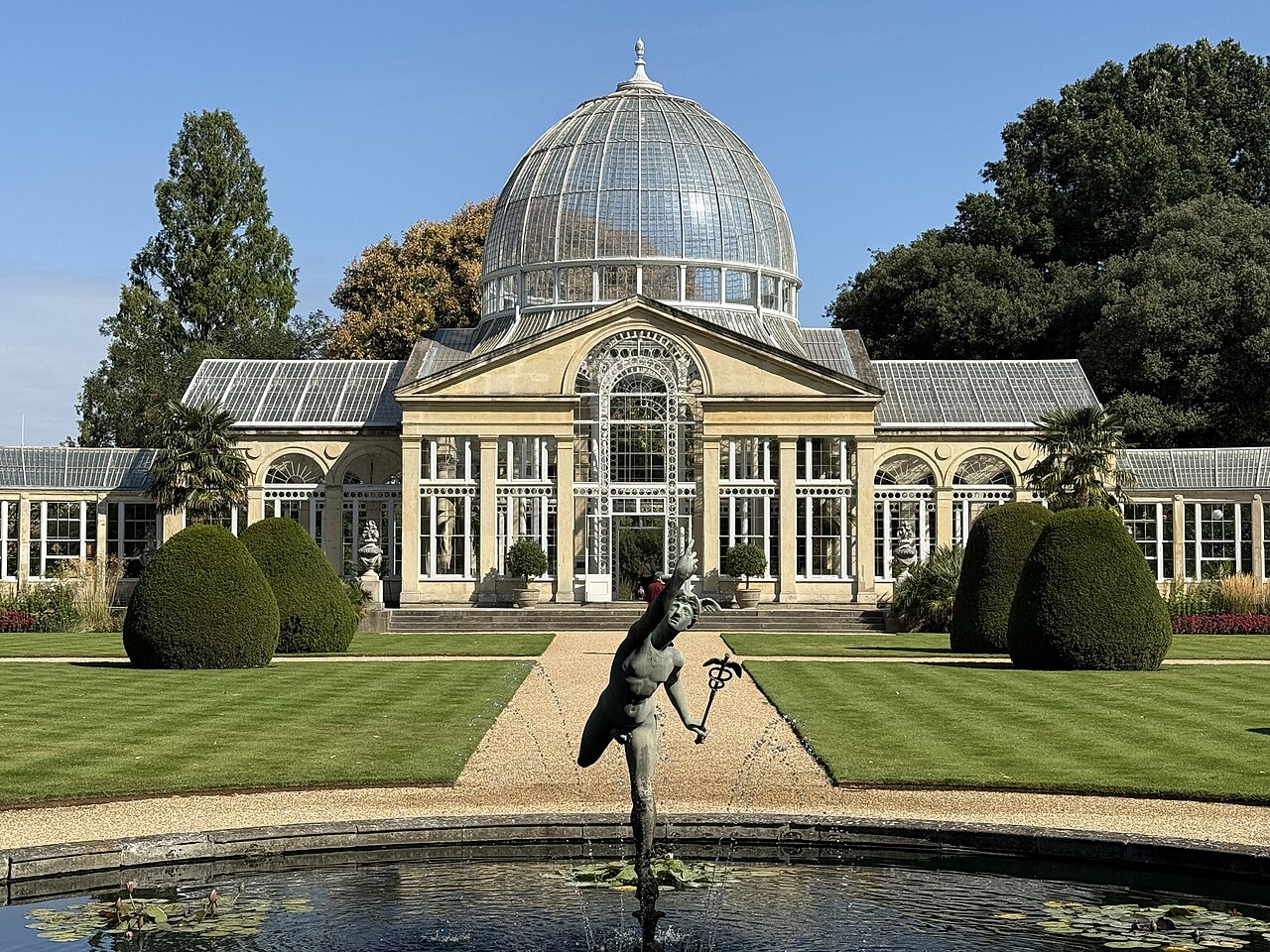
Commissioned in 1826 by the 3rd Duke of Northumberland and completed around 1830, the Great Conservatory at Syon Park was designed by the architect Charles Fowler together with the Duke's head gardener, Richard Forrest. Its neoclassical Bath stone front frames a largely glazed cast-iron structure: a central block under a parabolic dome, flanked by two quadrant wings that end in pavilions. Listed Grade I, it was restored in 1986–87; no longer heated, it still holds plants and opens seasonally together with the house and gardens.
Affiliate links — booking through Verrière helps fund our research, at no extra cost to you.
History
1 min
The Great Conservatory was commissioned in 1826 by Hugh Percy, 3rd Duke of Northumberland, for his Syon estate on the Thames west of London. He turned to Charles Fowler, an architect known for large industrial buildings and quick to adopt new metalworking techniques; the official listing also credits the Duke's head gardener, Richard Forrest, with the design. Dates differ between sources: Wikidata gives a design of 1828 and completion in 1830, the Wikipedia article on the park says 1826, and the listing places the building 'circa 1830 and before 1838'.
The conservatory attracted notice from the start. Its listing draws on the Gardener's Magazine and the Architectural Magazine and calls it the first metallic horticultural structure of any importance, while the Conservatory Heritage Society holds that it influenced later designers, among them Joseph Paxton when he conceived the Crystal Palace in Hyde Park.
Listed at Grade I, the highest grade, on 15 June 1951, the building underwent a thorough restoration in 1986–87. It is no longer heated at all, but the estate regards it as a major historic structure that survives in remarkably sound condition.
Architecture and engineering
1 min
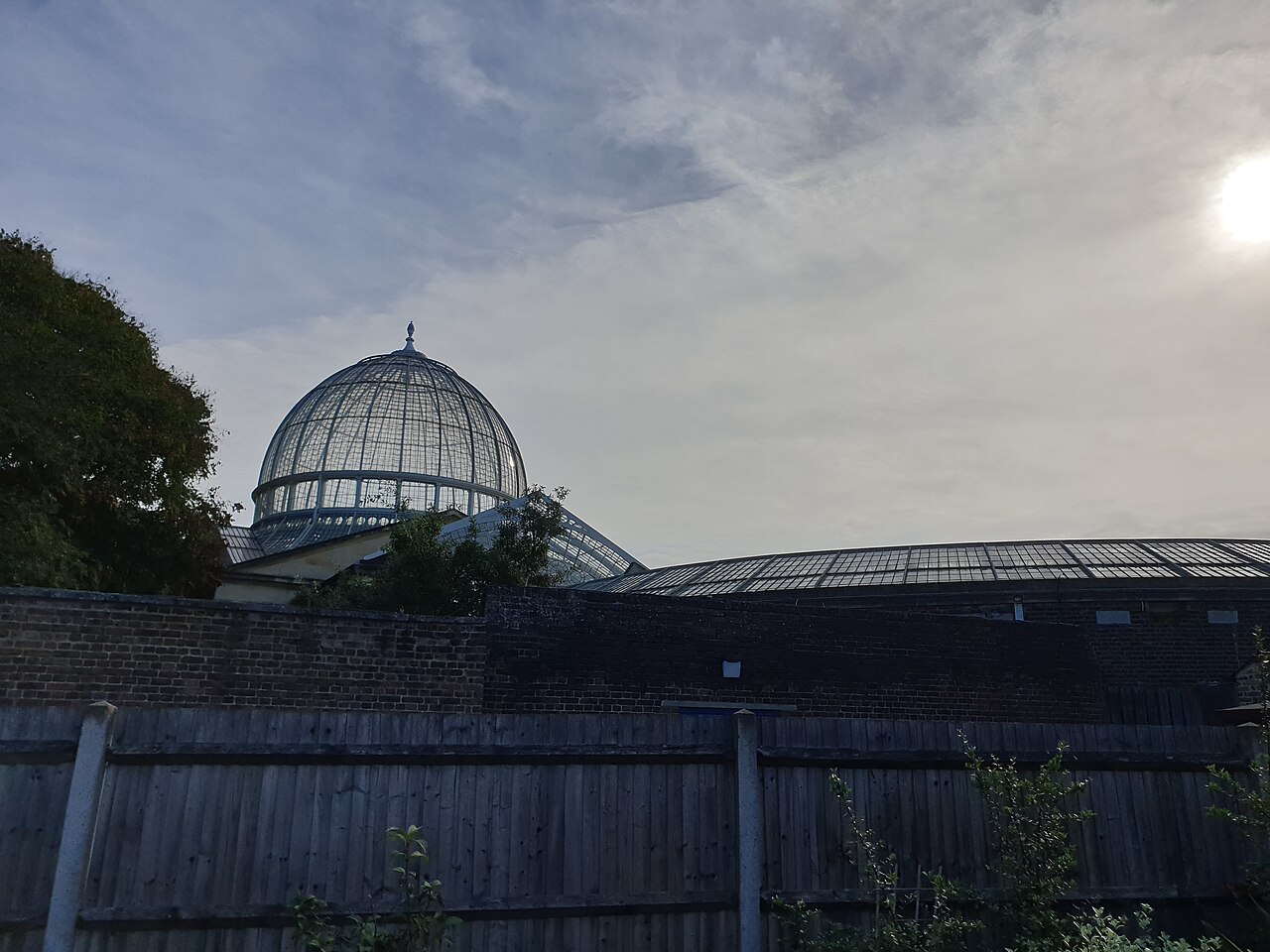
Fowler paired a delicate frame with a neoclassical elevation on a Palladian model, in the estate's own description. The plan is curved: a pedimented central block, crowned by a parabolic dome that rises well above the roofline, extends into two quadrant wings ending in pedimented pavilions. The front runs to 230 feet (about 70 m) and the glazed dome is 38 feet (about 11.6 m) across, according to the Conservatory Heritage Society.
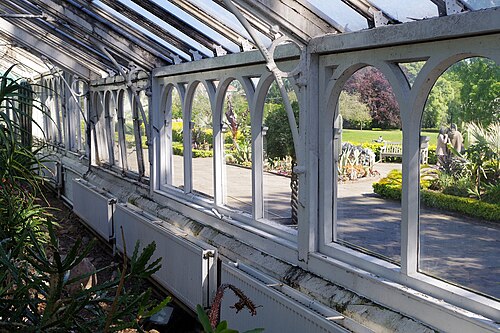
The solid parts are faced in Bath stone and nearly everything else is glass. The frame and columns are cast iron, and the Conservatory Heritage Society also notes the use of gunmetal, a copper alloy, alongside stone and glass. Metal made it possible to open up very large areas of glazing on a remarkably slender structure. The interior has been altered but keeps original details, including capitals of the so-called 'Tower of the Winds' type. Paint analysis has shown that the frame was first primed with an anti-corrosive coat and then finished in an off-white, stone-like colour.
Plant collections
1 min
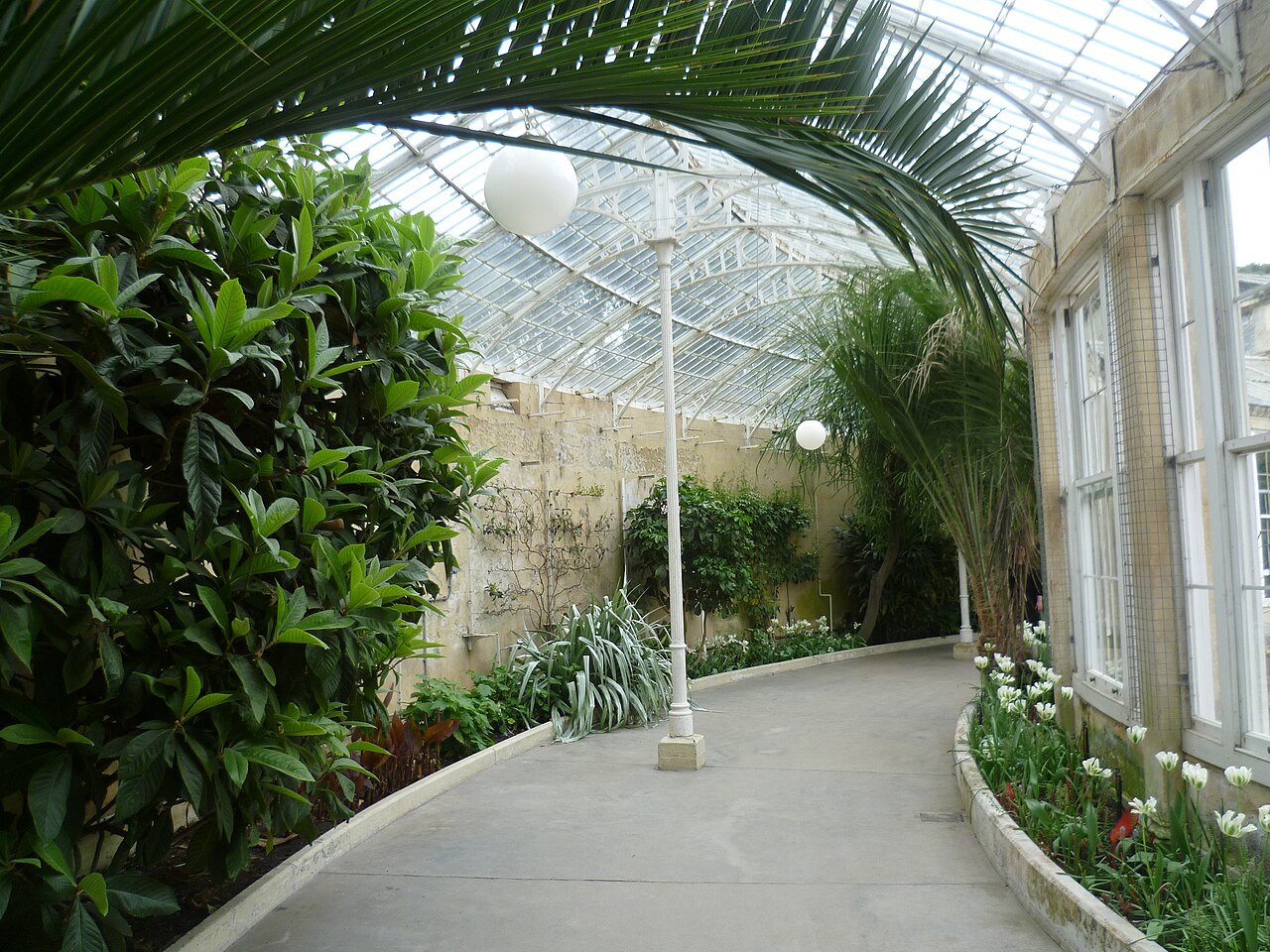
From the outset the conservatory was intended for the Duke's collection of rare and tropical plants. The estate lists 'Cape' plants from South Africa, 'New Holland' plants from Australia and camellias from China, raised in the extensive growing houses of a nursery built at the same period before going on display. By the 1880s palms and giant bamboos had grown all the way up to the top of the dome.
The Conservatory Heritage Society still describes it as a working conservatory with a display of exotic trees and flowers, while the estate points out that the building is now entirely unheated.
Visiting
1 min
The Great Conservatory stands in the gardens of Syon Park at Brentford, in the London Borough of Hounslow, on the bank of the Thames that faces Kew Gardens. House, gardens and conservatory are open to visitors from March to October. Half a day leaves time for Syon House and for the hundred acres of parkland laid out by Lancelot 'Capability' Brown in the eighteenth century around two lakes; the estate traces six centuries of garden history on the site. The great glasshouses of Kew, across the river, make a natural complement.
51.48° N, 0.31° W
Greenhouses nearby
More greenhouses — United Kingdom
Do you have a good photo of this greenhouse? Suggest it for this page →