The RainForest
Cleveland Metroparks Zoo, Cleveland

Sources checked October 2026
- Year
- 1992
- Style
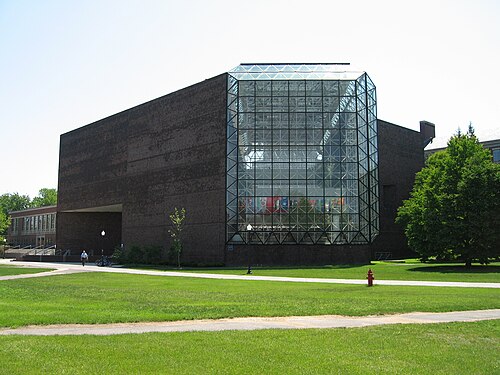
- Large two-level glass and granite pavilion
- Dimensions
- more than 2 acres (≈ 8,100 m²) before works; 140,000 sq ft (≈ 13,000 m²) planned for the completed project
- Status
- Open since 22 October 2026 as Primate Forest, after the building was renovated and enlarged (closed from September 2024 until then)
Opened in 1992, The RainForest at the Cleveland Metroparks Zoo occupied a large glass-and-granite building spanning more than two acres over two levels, one of the largest covered tropical environments in the United States at the time it was built. Right at the entrance, a 7.6-meter waterfall and a wall of warm, humid air plunged visitors into an atmosphere held at 27°C year-round. More than 10,000 plants and 600 animals from Australasia, Africa, and the Americas coexisted there, spread between a 'lowland forest' and an 'upland forest' linked by walkways. The exhibit also included a simulated tropical storm with thunder and lightning effects, as well as an educational weather station. Closed in September 2024, the building was renovated and enlarged as part of the 'Primate Forest' project: its first phase opened on 22 October 2026 and holds hundreds of animals of more than 60 species, from Bornean orangutans to giant anteaters and capybaras.
Affiliate links — booking through Verrière helps fund our research, at no extra cost to you.
History
Cleveland Metroparks Zoo traces its origins to September 15, 1882, when Jeptha Wade donated land on the city's east side for a herd of deer. The collections moved to Brookside Park in 1916, operations passed to the metropolitan park district in 1970, and the zoo took its present name in 1975. The RainForest opened in 1992 after an investment of about $30 million and soon became one of the zoo's most popular exhibits.
For more than three decades the two-level building presented plants and animals from the tropical forests of Africa, Asia and the Americas. In 2024 the zoo announced its closure: the last day of opening was September 9, 2024, and construction began the next day. The building was not demolished but renovated, enlarged and turned into a new indoor destination called Primate Forest, whose completed project will reach 140,000 square feet (about 13,000 m²). During the works most of the animals stayed at the zoo, some moved to other habitats on site.
The first phase, which cost about $60 million, covered the renovation of more than 63,000 square feet of existing structure and more than 33,500 square feet of new construction. It opened on 22 October 2026 with the Tropical Forest, the expanded Orangutan Forest and the new CrossCountry Mortgage Forest Home entrance. A later phase will add a Gorilla Forest, with the whole project to be completed by 2032, the zoo's 150th anniversary.
Architecture and engineering
The RainForest is housed in a large glass-and-granite building just outside the zoo's main entrance. Its roughly two acres (about 8,100 m²) of floor space were spread over two levels, the ground floor known as the Lower Forest and the upper floor as the Upper Forest, and the whole interior was heated year-round to about 27 °C (80 °F).
Visitors were greeted by a 25-foot (7.6 m) waterfall and a rush of warm, humid air. Several times a day, depending on the season, a simulated tropical thunderstorm darkened the halls for a few minutes with flashes of lightning and rolling thunder. The building also contained a free-flight indoor aviary, a research hut and a discovery centre. Primate Forest, opened in October 2026, kept this structure and extended it, adding a two-storey entrance, the CrossCountry Mortgage Forest Home, and an outdoor habitat for the orangutans.
Plant collections
Before it closed, The RainForest held more than 10,000 plants and over 600 animals. Bornean orangutans formed its core, alongside ocelots, clouded leopards, Asian small-clawed otters, François' langurs, fishing cats and two-toed sloths. A colony of straw-coloured fruit bats and Rodrigues flying foxes flew freely, and the reptiles included dwarf crocodiles. The indoor aviary housed more than 50 birds of 15 species.
Primate Forest, opened in October 2026, holds hundreds of animals of more than 60 species, among them Bornean orangutans, Asian small-clawed otters, a clouded leopard, giant anteaters and capybaras; the orangutans have a larger indoor and outdoor habitat, and the Gorilla Forest, planned for a later phase, will house the zoo's gorilla troop.
Visiting
The RainForest, closed in September 2024, has given way to Primate Forest, which opened on 22 October 2026 and is included with general admission to the zoo; allow 60 to 90 minutes for a visit. A same-day entry time, booked with the QR code displayed in the zoo, is temporarily required to manage crowds (as of 29 October 2026). The building stands near the main entrance of Cleveland Metroparks Zoo in Brookside Park. The zoo also offers other indoor spaces, such as the Primate, Cat & Aquatics building, home to gorillas and lemurs, and Australian Adventure, where koalas can be seen year-round.
41.45° N, 81.71° W
Greenhouses nearby
Architecture nearby
More greenhouses — United States
Do you have a good photo of this greenhouse? Suggest it for this page →
Sources (7)
- clevelandmetroparks.com/zoo/zoo-locations/the-rainforest
- clevelandmetroparks.com/zoo/zoo-locations/current-project-primate-forest
- clevelandmetroparks.com/zoo/tickets-attractions/attractions
- case.edu/ech/articles/c/cleveland-metroparks-zoo
- en.wikipedia.org/wiki/Cleveland_Metroparks_Zoo
- clevelandmetroparks.com/zoo/zoo-locations/primate-forest
- clevelandmetroparks.com/news-press/boo-at-the-zoo-returns-to-cleveland-metroparks-zoo-for-
Affiliate links — booking through Verrière helps fund our research, at no extra cost to you.