Reconstructed Victorian Glasshouse Range, Myddelton House Gardens
Enfield, London

Sources checked October 2026
- Year
- Reconstruction; restored in 2011 according to the park
- Style
- Modern reconstruction of a Victorian kitchen-garden glasshouse range
- Status
- Open to the public with the gardens; only some sections of the glasshouses, according to the operator
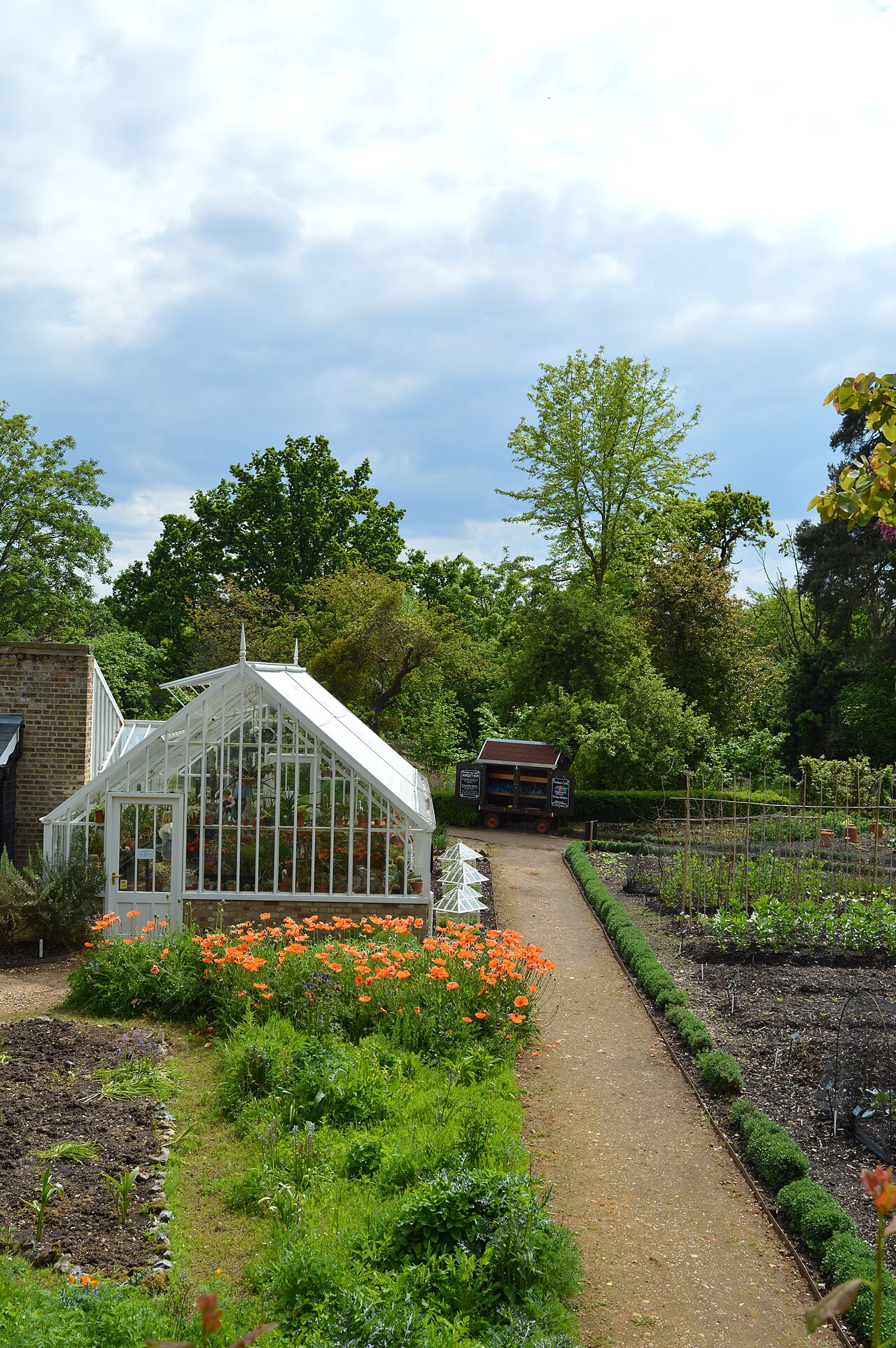
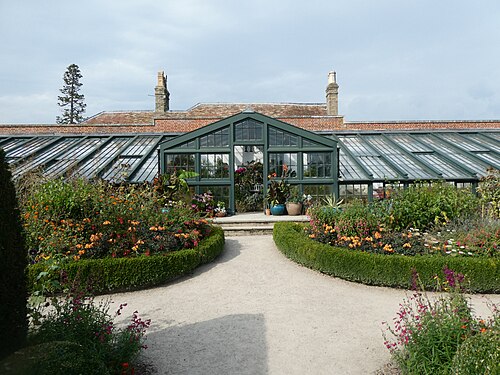
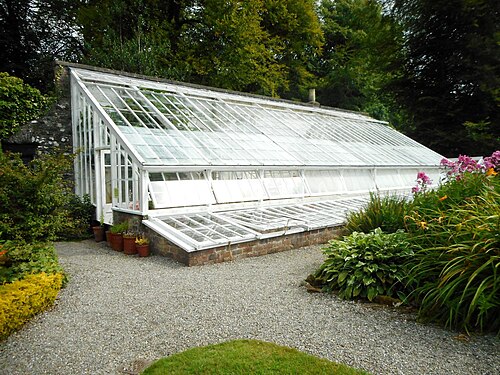
In the restored kitchen garden of Myddelton House Gardens, the former estate of the plantsman E. A. Bowles at Enfield, north London, a range of Victorian-style glasshouses has been rebuilt from footings uncovered during the restoration of the garden. The sunken Peach House stands on its original foundations. Four climatic zones hold cacti, air plants and fruit that needs humidity, along with a vine house whose roots stay outside. The gardens are open daily; the glasshouses can be visited in sections.
Affiliate links — booking through Verrière helps fund our research, at no extra cost to you.
History
The kitchen garden at Myddelton House, in the south-east corner of the grounds where the plantsman Edward Augustus Bowles (1865–1954) spent his life, was always the working side of the garden. After his death the house and gardens passed to the Royal Free Hospital School of Medicine and the University of London School of Pharmacy, which kept the kitchen garden; the Lee Valley Regional Park Authority (LVRPA) bought the estate in 1968. The nineteenth-century glasshouses did not survive: Historic England's register entry says they were demolished in the 1960s.
When a Heritage Lottery Fund project restored the kitchen garden from 2009 (it reopened to the public on 1 April 2011), the complete footings of the Peach House and of a large range once attached to the potting shed came to light. The Peach House was rebuilt on its footings, which were left on show. A one-page park leaflet of 2020 states that the kitchen garden and the Victorian glasshouse were restored in 2011.
Architecture and engineering
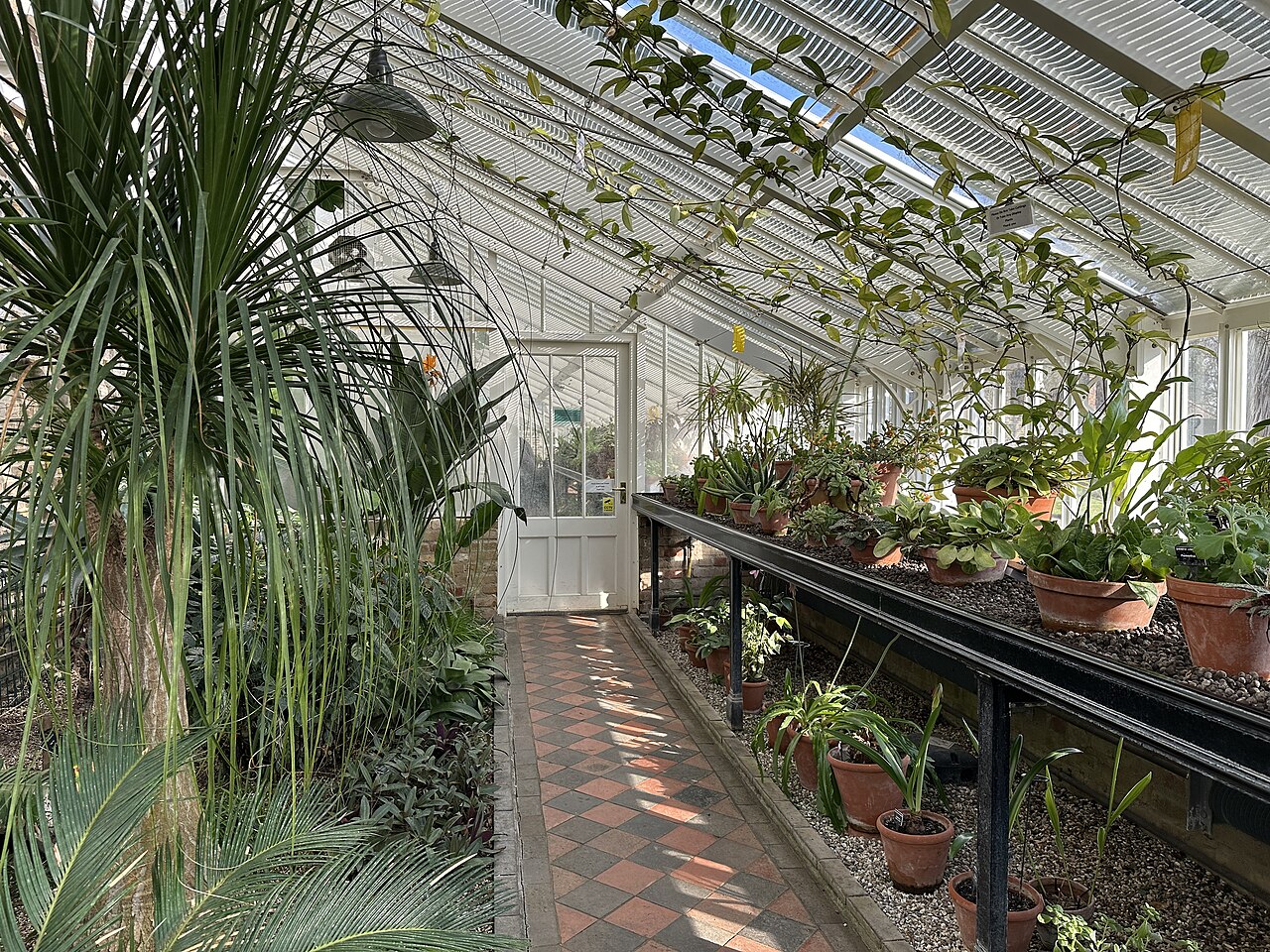
The present range is not a surviving nineteenth-century building but a reconstruction: the operator describes a Victorian glasshouse that has been "reconstructed". It follows the original footings and repeats arrangements that the official site lists: four climatic zones; a vine house whose gauged arches let the roots of the vines stay outside while the stems grow within; and a sunken house, the Peach House, suited to fruit that needs a humid atmosphere and once used for melons and cucumbers. The original footings of the Peach House were reused and can be seen again.
The whole sits inside the walled kitchen garden, together with a restored potting shed (works photographed in October 2010), refurbished cold frames and a restored trellis wall, below the Tulip Terrace. The Historic England register entry, written before the reconstruction, records that the nineteenth-century glasshouses had gone and that the old kitchen garden then served as a garden of medicinal plants.
Plant collections
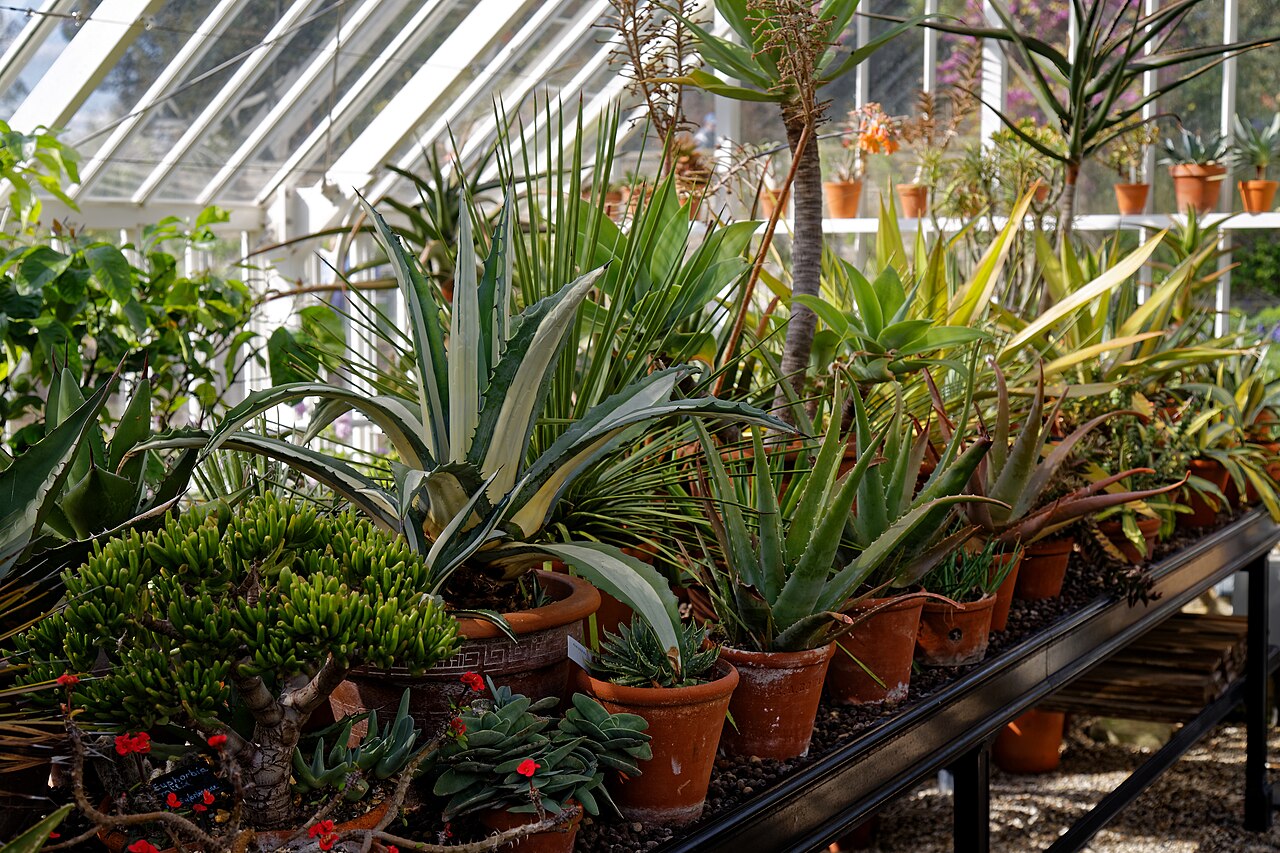
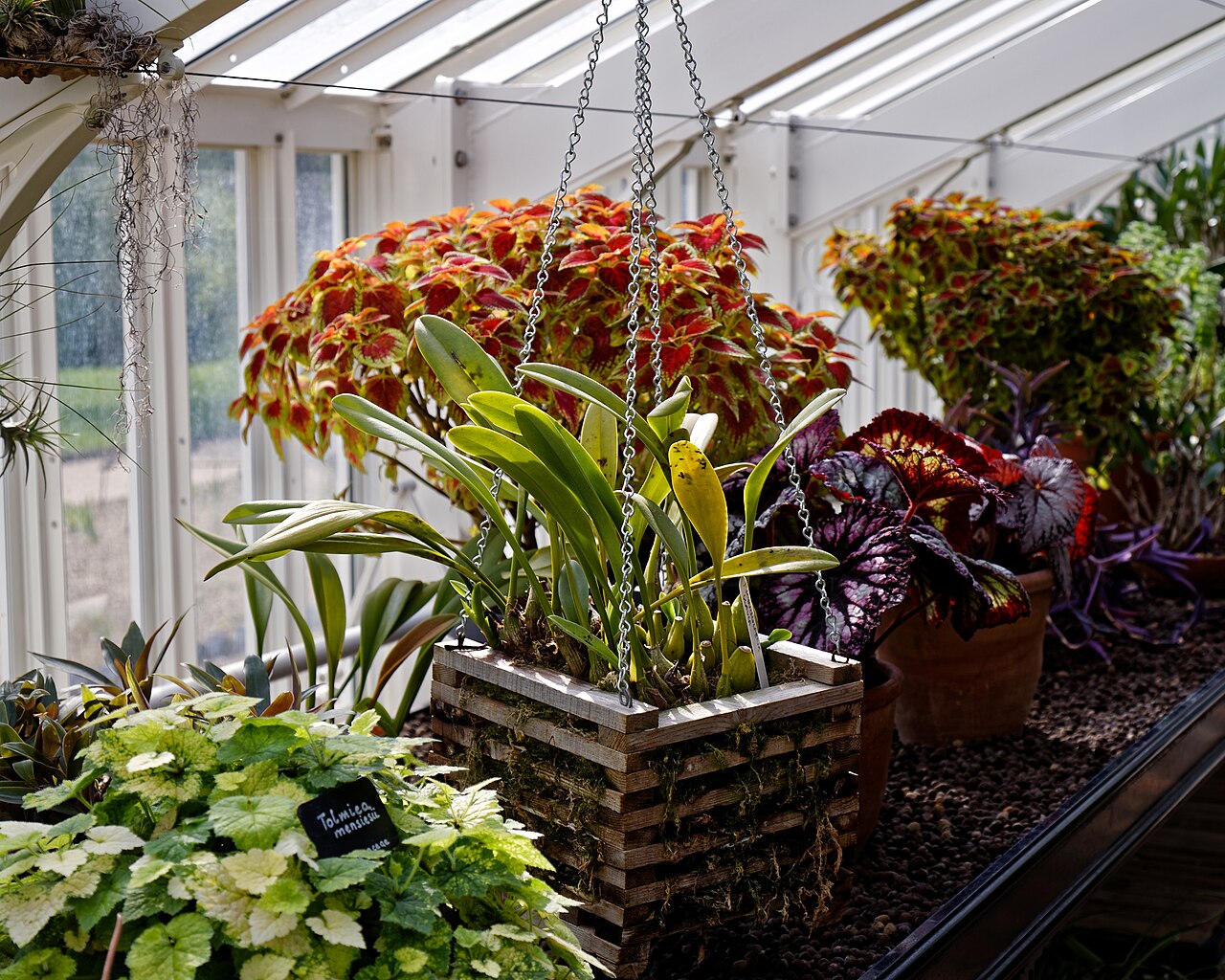
The operator describes four climatic zones holding exotic plants from around the world: cacti from arid habitats, air plants that take their moisture from the atmosphere, and, in the Peach House, fruit that thrives in humid air. The neighbouring kitchen garden grows heritage vegetables and fruit trees, with Bowles crocuses in the cold frames.
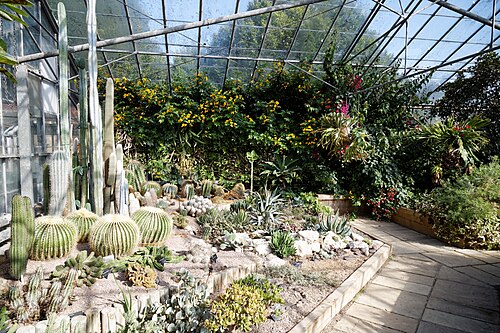
Photographs on Wikimedia Commons show potted succulents inside.
Visiting
The glasshouses stand in the kitchen garden, in the south-east corner of the grounds, below the Tulip Terrace. The eight-acre garden developed by Bowles takes an hour or two to see: rose garden, rockery, the section he called the 'Lunatic Asylum' where he gathered plants with contorted forms, the pond, a museum and the Bowles Tea Room. The sources stress late winter (snowdrops, crocuses) and spring (tulips, wisteria in May); the glasshouses can be seen all year, though only in sections.
Entry to the gardens is free and the site is open daily. The neighbouring Forty Hall estate and Capel Manor Gardens, both flagged by the operator, combine easily with a visit; Turkey Street station is a fifteen-minute walk.
51.67° N, 0.06° W
Greenhouses nearby
More greenhouses — United Kingdom
Do you have a good photo of this greenhouse? Suggest it for this page →
Sources (8)
- visitleevalley.org.uk/myddelton-house-gardens
- programme.openhouse.org.uk/listings/12651
- visitleevalley.org.uk/_files/ugd/3bff42_7a4736823c46412f85788e930cded1b8.pdf
- leevalleypark.org.uk/_files/ugd/3bff42_1847694826c3415d884a8c473bacacc6.pdf
- historicengland.org.uk/listing/the-list/list-entry/1000243
- londongardenstrust.org/features/myddelton.htm
- en.wikipedia.org/wiki/Myddelton_House
- commons.wikimedia.org/wiki/Category:Myddelton_House
Affiliate links — booking through Verrière helps fund our research, at no extra cost to you.