Blackburn Pavilion (tropical bird pavilion, former 1883 reptile house), London Zoo
Regent's Park, London

Sources checked October 2026
- Year
- 1882-1883 · renovated 2008
- Architect
- Charles Brown Trollope (original building)
- Style
- Victorian classical pavilion in red brick and sandstone, main hall with an iron roof frame, polycarbonate and glass roof panels
- Dimensions
- About 1,040 m² of total exhibit space according to ZooLex
- Status
- Open to the public, within the zoo
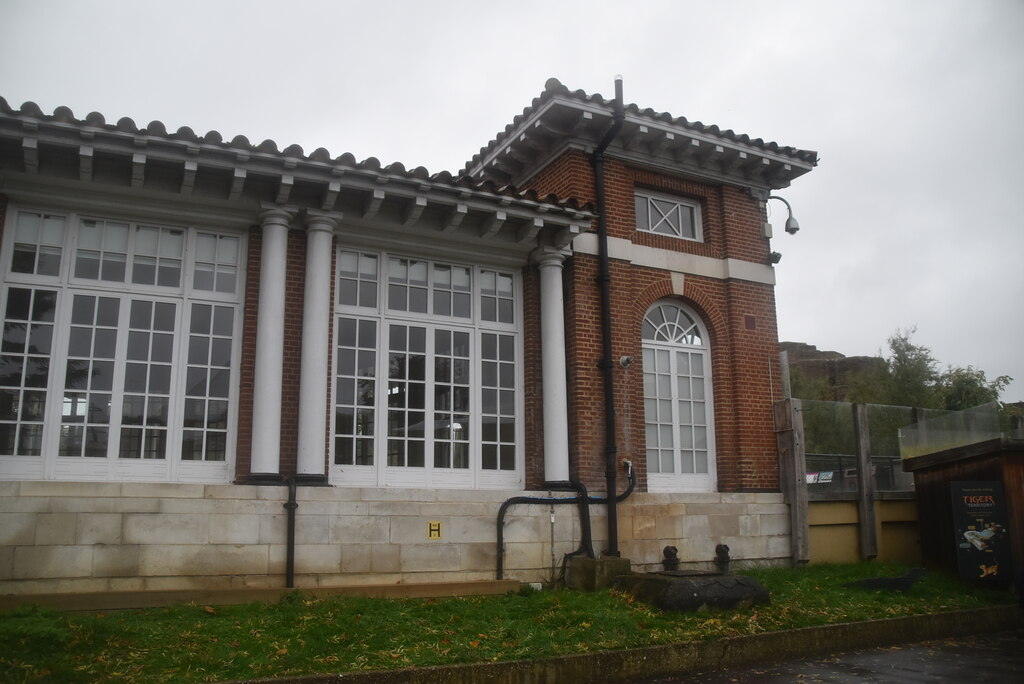
Built in 1882-1883 to a design by Charles Brown Trollope to replace London Zoo's first reptile house, this red-brick pavilion was converted into an aviary in 1927-1928, then restored in 2008 and renamed the Blackburn Pavilion. A boardwalk crosses a tropical forest planted with small trees, palms and ferns, with a waterfall, pools and free-flying birds, before a cloud-forest-type atrium for hummingbirds. The roof alternates polycarbonate panels with glazed panels to let UV light through, according to the ZooLex sheet.
Affiliate links — booking through Verrière helps fund our research, at no extra cost to you.
History
The Blackburn Pavilion was designed by Charles Brown Trollope and built in 1882-1883 to replace London Zoo's first reptile house, which the zoo dates to 1849. ZooLex adds that the building was funded by the sale of Jumbo the elephant to P. T. Barnum. Its red-brick exterior is in a classical style then popular for garden pavilions. Inside, three ponds sunk into the floor of the main hall, the largest of which housed crocodiles, were heated by hot-water pipes under the floor; frogs and toads lived in the cooler entrance porch.
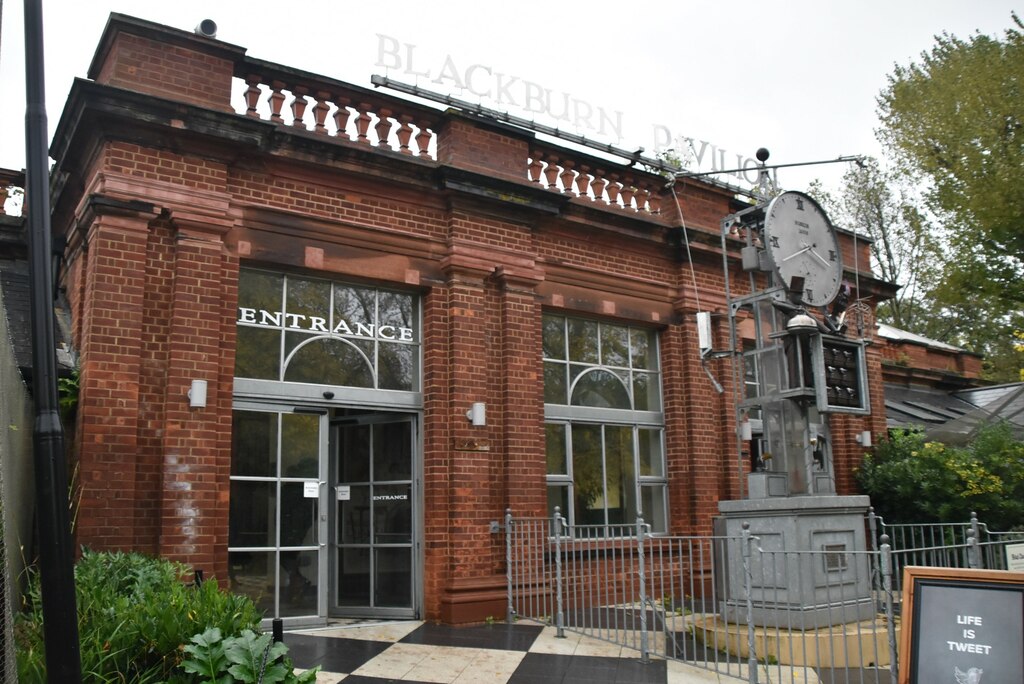
Superseded by a new reptile house in 1926, the building was adapted for birds in 1927-1928 with the help of David Seth-Smith, the curator of mammals and birds. The 2006-2008 restoration, whose design began in September 2006 and construction in April 2007, reopened the original porch and restored the inner iron roof frame; the pavilion opened to the public on 20 March 2008. The cost is given as 2.5 million pounds by the BBC and the zoo, and 2 million by ZooLex. The zoo links the name to the Blackburn family, who supported it in the 1990s, whereas an Evening Standard article cites the philanthropist Sir David Blackburn, who is said to have underwritten the restoration. In front of the pavilion, an automaton clock designed by Tim Hunkin springs into life every half hour.
Architecture and engineering
The pavilion is a red-brick and sandstone building, which ZooLex describes as a Victorian-inspired redevelopment; the renovation restored the original entrance area and the inner iron roof frame. On the roof, the sources complement each other without quite agreeing: ZooLex mentions polycarbonate panels interspersed with glazed panels to let through the UV light the plants need, whereas an Evening Standard article speaks of a glass roof that floods the hall with light. The roof is therefore only partly glazed, on a masonry building, which makes it a borderline case among the catalogue's glasshouses.
A lobby with a Victorian chequered floor leads into the main hall, where seven floor-to-ceiling aviaries flank a tropical forest crossed by a boardwalk, with a waterfall and pools. The route ends in a circular, cloud-forest-type atrium with six catch-up and release aviaries for sunbirds and hummingbirds. A building management system controls the climate. Eight lightweight aviaries extend the complex outdoors. ZooLex gives 1,042 m² of total exhibit space, without making clear how it divides between indoors and outdoors.
Plant collections
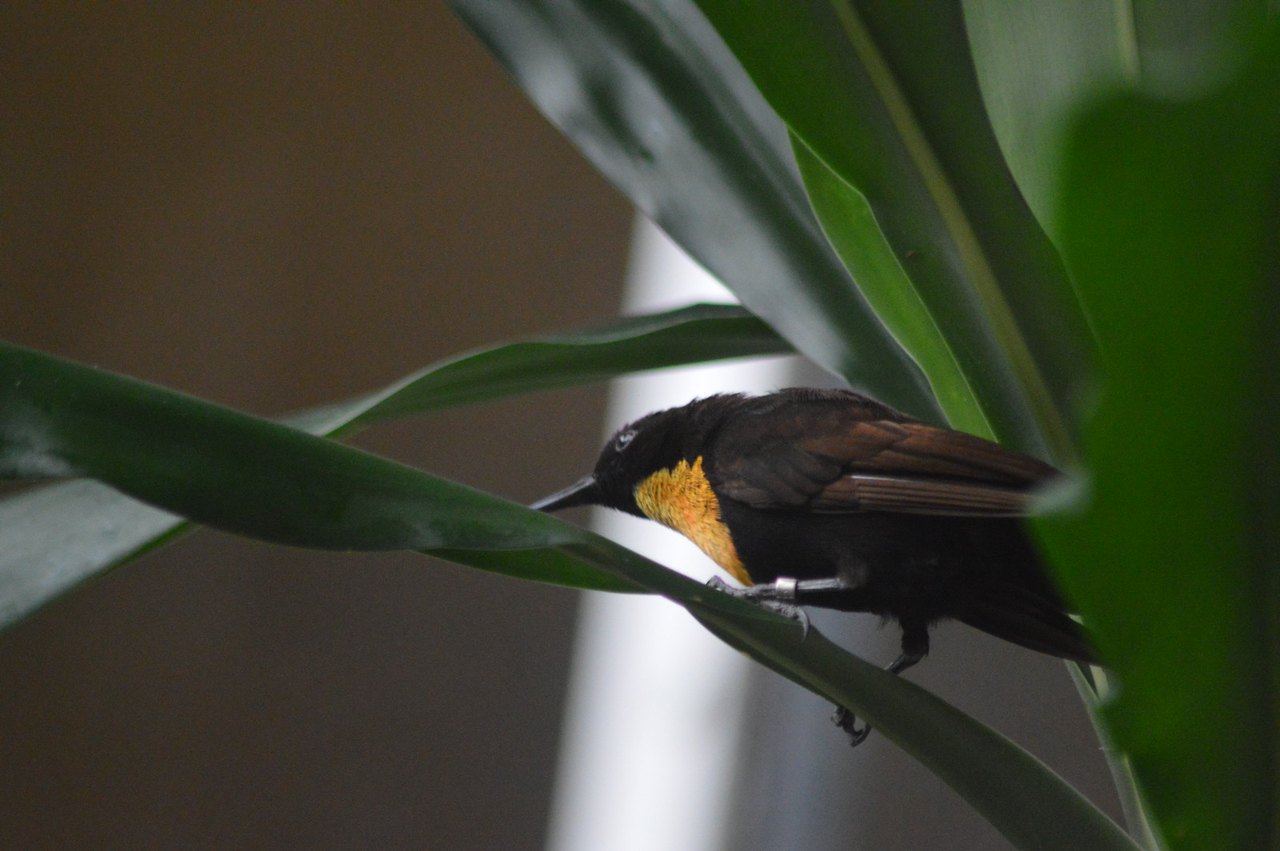
The zoo now advertises more than 50 bird species in the pavilion; ZooLex counted 39 at the opening, in nine orders, and the BBC mentioned up to 200 tropical birds and the UK's only collection of hummingbirds in 2008. The zoo highlights the Socorro dove, extinct in the wild and bred in captivity (first successful breeding in 2006), the Bali starling, the blue-crowned laughingthrush and the Victoria crowned pigeon; toucans and the Congo peafowl also appear on the ZooLex sheet.
On the plant side, ZooLex cites a mix of small trees and palms, a tropical understorey, ground cover, ferns and climbers, with genera such as Aechmea, Billbergia, Tillandsia, Pellaea, Philodendron, Scindapsus and Zebrina, and lady palms in terracotta pots. The hummingbird aviaries receive red and orange nectar-producing flowers; four evergreen magnolias stand at the entrance, and the aquatic plants grow in removable containers.
Visiting
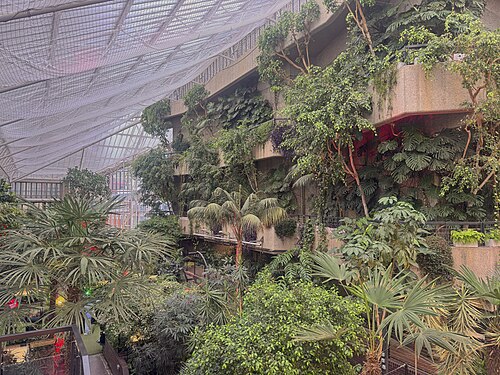
The pavilion stands inside London Zoo, on the edge of Regent's Park. In a post of 14 September 2026 the zoo, which covers 36 acres, recommends it in autumn as a place to warm up among birdsong and advises timing the visit to the clock, which chimes every half hour. In the same grounds it also cites Butterfly Paradise, a South American-inspired walk-through, and Rainforest Life, presented as London's only living rainforest: these are separate structures, not catalogued here. After the visit the zoo suggests strolling through Regent's Park, climbing Primrose Hill or following the canal to Camden Market. The catalogue's Barbican Conservatory lies about 4 km away.
51.53° N, 0.15° W
Greenhouses nearby
More greenhouses — United Kingdom
Do you have a good photo of this greenhouse? Suggest it for this page →
Sources (7)
- londonzoo.org/whats-here/habitats/blackburn-pavilion
- londonzoo.org/zoo-stories/history-of-london-zoo/blackburn-pavilion
- londonzoo.org/zoo-stories/blog/seven-reasons-visit-london-zoo-autumn
- zoolex.org/gallery/show/1081/
- news.bbc.co.uk/2/hi/uk_news/england/london/7306169.stm
- standard.co.uk/hp/front/zoo-unveils-ps2-5m-tropical-bird-house-for-rare-species-6661282.ht
- en.wikipedia.org/wiki/London_Zoo
Affiliate links — booking through Verrière helps fund our research, at no extra cost to you.