Orchid Range, Duke Farms
Hillsborough, New Jersey
Entry updated on October 3, 2026
- Year
- 1899–1901
- Architect
- Kendall Taylor & Stevens (Boston)
- Style
- Turn-of-the-century ornamental glass-and-steel conservatory
- Dimensions
- Two main conservatory houses and nine propagation houses
- Status
- Open to the public during the estate's seasonal hours; renovated in 2012 (LEED Platinum)
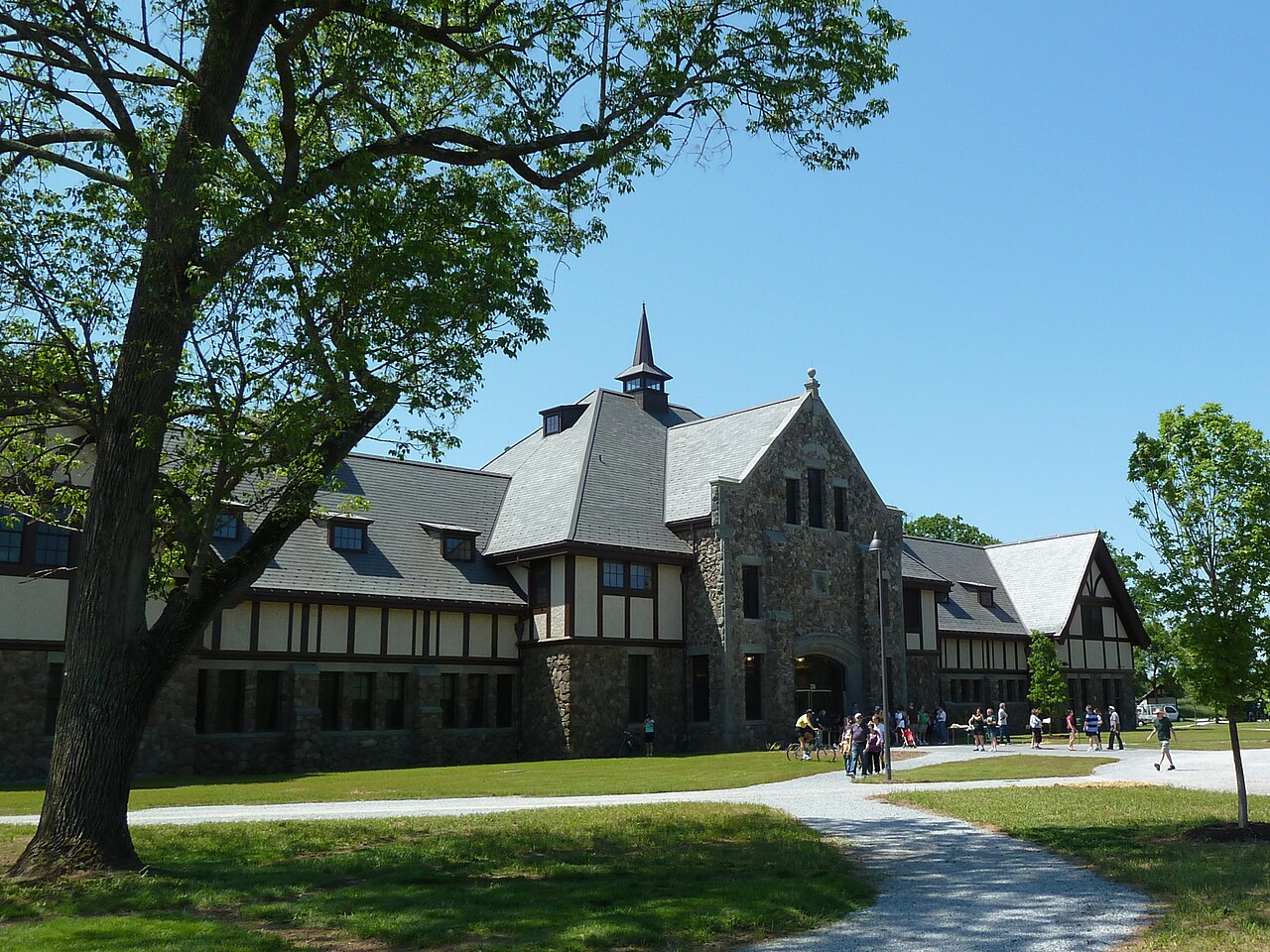
Designed in 1899 by the Boston firm Kendall Taylor & Stevens and completed in 1901, the Orchid Range was the first ornamental building at Duke Farms, the estate that tobacco magnate James Buchanan Duke was assembling beside the Raritan River. Its two main glass-and-steel houses, one tropical and one subtropical, backed by nine propagation houses, once held palms, potted trees, ferns and orchids. Renovated in 2012 and certified LEED Platinum, the range is now devoted entirely to orchids.
Affiliate links — booking through Verrière helps fund our research, at no extra cost to you.
History
1 min
James Buchanan Duke, founder of the American Tobacco Company and of Duke Power, began buying land beside the Raritan River in what was then rural New Jersey in 1893. To turn it into a great estate he engaged architects, engineers and landscape designers, among them Buckenham & Miller, James Leal Greenleaf and Ellen Biddle Shipman; the property eventually held 45 buildings, 9 lakes and 18 miles of roads.
The first ornamental building at Duke Farms was the conservatory now called the Orchid Range, designed in 1899 by the Boston firm Kendall Taylor & Stevens and completed in 1901. It was used to grow palms, potted trees, ferns and orchids.
When James B. Duke died in 1925, his twelve-year-old daughter Doris became its owner, and she went on to embellish and enlarge it. A keen horticulturist, she originated the hybrid Phalaenopsis Doris, registered at Duke Farms in 1940. From 1958 she created Duke Gardens, eleven themed gardens under glass, partly housed in a large greenhouse built in 1909–1917 to designs by Horace Trumbauer; they were open to the public from 1964 until 25 May 2008.
After they closed, the Doris Duke Charitable Foundation undertook a renovation of the estate reported at $45 million. Duke Farms opened to the public on 19 May 2012 as a centre for environmental stewardship, and the Orchid Range, renovated that same year, now welcomes visitors.
Architecture and engineering
1 min
The Orchid Range combines two main glass-and-steel conservatory houses, one tropical and one subtropical, with nine propagation houses: eleven structures in all. The estate's website credits the design to the Boston architectural firm Kendall Taylor & Stevens, while Wikipedia describes it as a Lord & Burnham conservatory of about 1900, which may refer to the maker of the structure.
Inside, temperatures range from 50 to 85 °F (roughly 10 to 29 °C) from one section to another, giving each group of orchids suitable conditions.
The 2012 renovation aimed to improve the building's energy efficiency and environmental performance: both main houses achieved LEED Platinum certification, the highest level of the American green-building standard. The sources consulted give neither the dimensions of the houses nor details of the technical systems installed at that time.
Plant collections
1 min
Once filled with palms, potted trees, ferns and orchids, the conservatory is now devoted exclusively to orchids. It holds nearly 2,000 plants belonging to about 1,300 varieties of tropical and subtropical species; Duke Farms' plant collections as a whole exceed 4,000 plants.
The collection carries on the estate's horticultural history. Phalaenopsis Doris, the hybrid originated by Doris Duke and registered at Duke Farms in 1940, was bred to bear larger flowers and to be easier to grow, a sign of the owner's interest in these plants.
The different sections, kept at different temperatures, allow orchids from warm climates to be shown alongside others from cooler habitats.
Visiting
1 min
The Orchid Range stands on the Duke Farms estate in Hillsborough, Somerset County. It is reached from the Farm Barn orientation centre along a fully paved path of less than a mile (about 1.6 km), and it opens during the estate's seasonal operating hours.
Allow half an hour to an hour for the conservatory itself, and much longer to explore part of the roughly 943 acres (382 ha) open to the public, with its lakes, meadows and woods. A visit thus combines a historic building, a specialist collection and a vast designed landscape.
40.54° N, 74.62° W
Greenhouses nearby
More greenhouses — United States
Do you have a good photo of this greenhouse? Suggest it for this page →