Floors Castle Walled Garden glasshouses
Floors Castle, near Kelso (Scottish Borders), Scotland

Sources checked October 2026
- Year
- 1857
- Style
- Victorian walled-garden glasshouses, including a vinery range of 1857 according to the castle
- Status
- Open to the public with the castle's gardens ticket (Royal Horticultural Society partner garden); an autumn-winter gardens ticket is offered until Easter 2027
The walled garden of Floors Castle, seat of the Dukes of Roxburghe near Kelso, was moved in 1857 to the west of the castle. An 80 m glass Tropical Corridor there once linked seven hothouses, dismantled in the early 20th century; the Historic Environment Scotland garden inventory describes the glasshouses as demolished. The castle nevertheless presents glasshouses of the 1850s today, including the original 1857 vinery range, where grapes, figs and peaches are grown by traditional methods alongside tropical plants and tomatoes. The sources do not agree on what survives of the Victorian ensemble.
Affiliate links — booking through Verrière helps fund our research, at no extra cost to you.
History
Floors Castle, seat of the Dukes of Roxburghe near Kelso, was begun in 1721 by William Adam and remodelled by William Henry Playfair between 1837 and 1847, according to the castle's website. Part of the estate was given over to gardening: a four-acre kitchen garden and a three-acre flower garden, the Queen's Garden. In 1857 they were moved to their present site, west of the castle, replacing an earlier enclosure. According to the Historic Environment Scotland (HES) inventory, the garden replaced two earlier walled gardens, one of which, south-west of the castle, was short-lived. The head gardener Hector Rose, who oversaw the move, was responsible for the first plantings in the glasshouses.
Queen Victoria visited the estate in August 1867. The Queen's House, at the east end of the garden, was reportedly built ahead of her visit as a vantage point over the glasshouses. These then formed an extensive, boiler-heated ensemble, including an 80 m glass 'Tropical Corridor' that connected seven hothouses set at right angles. The ensemble declined in the early 20th century and the hothouses were dismantled; the Millennium Parterre terrace now occupies the corridor's site, and the HES record, amended in 2011, describes the glasshouses as demolished.
The castle nonetheless presents glasshouses of the 1850s today, including the original 1857 vinery range. The two accounts do not match and neither says what survives of the Victorian ensemble. The garden has been maintained since the late 1970s as part of the visitor attraction.
Architecture and engineering
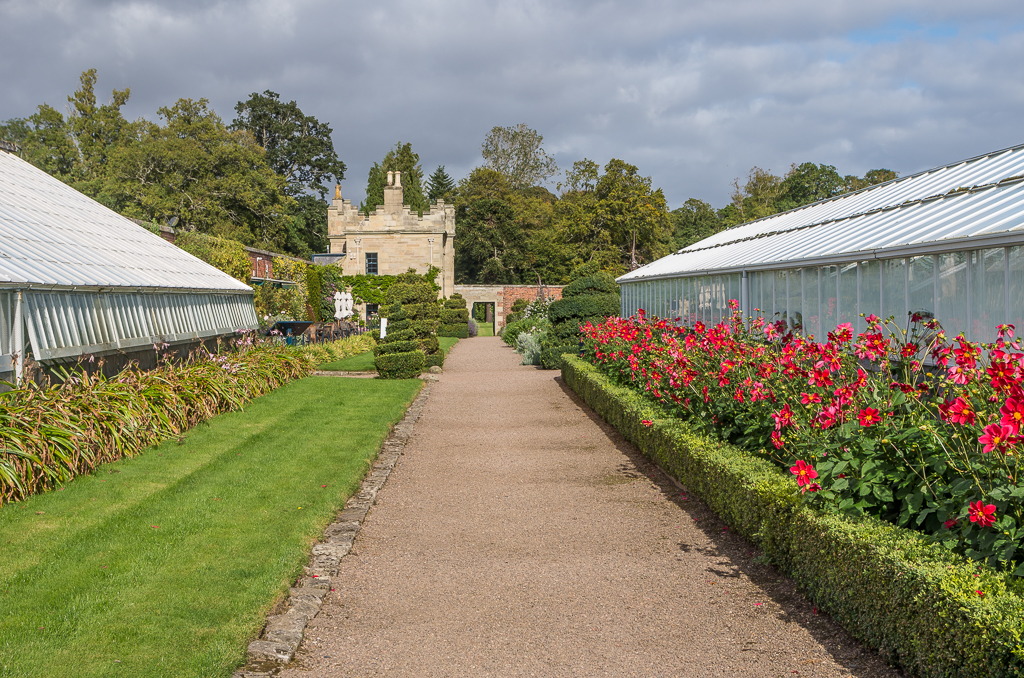
The walled garden covers 4 acres according to the castle. Built in 1857 of brick and stone according to the HES inventory, it keeps its original path layout. A range of bothies and stores runs along the north wall, the two-storey, crenellated Head Gardener's House stands on the north side, and the Queen's House closes the east end.
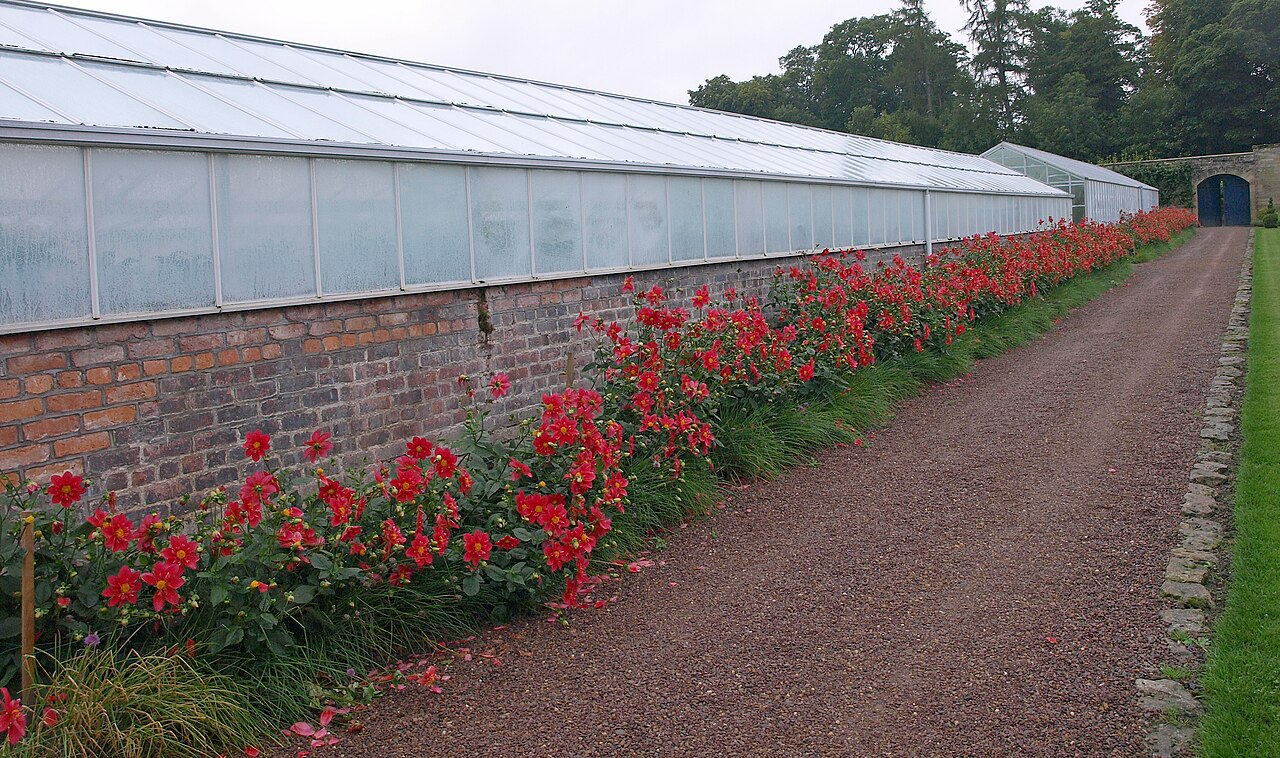
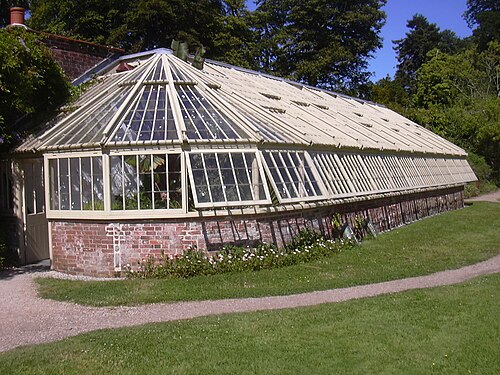
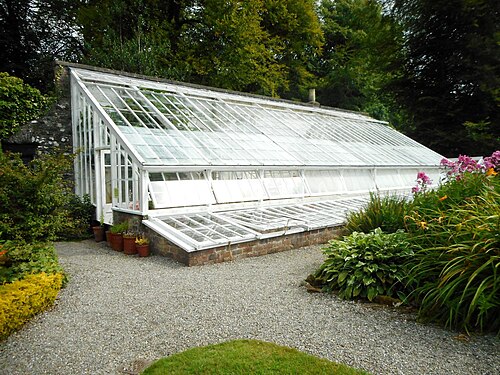
The Victorian glasshouses formed a large boiler-heated installation. Its axis was the Tropical Corridor, an 80 m glass gallery lined with exotic and rare plants, from which seven hothouses extended at right angles. That ensemble has gone. For the present glasshouses, the castle says they date from the 1850s and that the Victorian tradition of growing tender plants and fruit continues in them; the Royal Horticultural Society lists a glasshouse open to the public, and a photograph from 2020 shows one of them with the Head Gardener's House in the background.
Plant collections
According to the castle, the glasshouses include the original 1857 vinery range, where grapes, figs and peaches are grown and maintained by traditional horticultural methods, along with tropical plants and tomatoes, which the website sums up as a 'tunnel of fruit'. The garden team describes a year-round routine: in winter the grapevines are pruned and cleaned and the peach trees trained by Victorian methods; in spring the glasshouses fill with seedlings, pricked-out plants and cuttings that will later furnish the borders; in summer tender plants such as dahlias and cannas go out into the garden. In October 2026 the chrysanthemums in a cold glasshouse were nearing flowering.
Fruit, herbs and vegetables from the garden are served in the estate's two cafés.
Visiting
The walled garden occupies 4 acres west of Floors Castle, which the Dukes of Roxburghe open to the public; it is also a Royal Horticultural Society partner garden. It has herbaceous borders (a silver-and-blue border, a hot border of fiery reds), the Tapestry Garden designed in 2016 by Angel Collins, the 2023 Shady Garden devoted to ferns, the kitchen garden and the glasshouses. Next door, the Millennium Garden holds the Queen's House.
The estate's cafés serve produce from the garden, and an autumn and winter gardens ticket is offered until Easter 2027. The castle itself and the riverside walk, which the castle presents as one of Scotland's finest surviving landscape views, round off the day.
55.60° N, 2.47° W
Greenhouses nearby
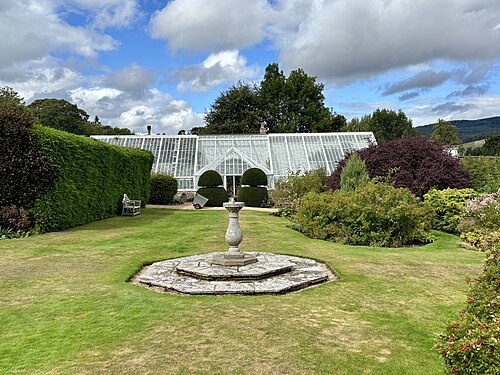
More greenhouses — United Kingdom
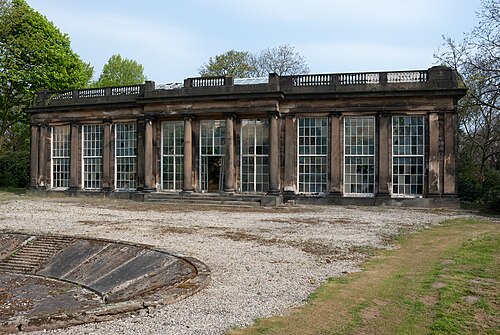
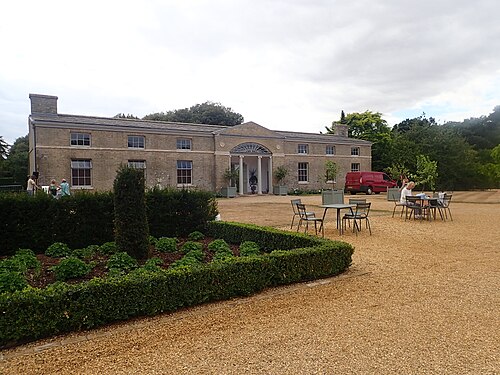
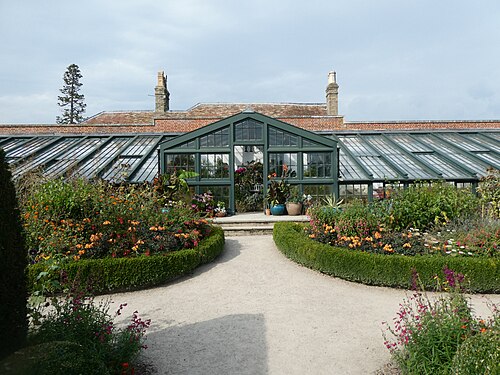
Do you have a good photo of this greenhouse? Suggest it for this page →
Sources (8)
- floorscastle.com/visit/gardens-grounds/walled-garden/
- floorscastle.com/blog/walled-garden-1721-1857/
- portal.historicenvironment.scot/designation/GDL00181
- floorscastle.com/blog/what-does-it-take-to-grow-the-gardens-at-floors-castle/
- floorscastle.com/blog/october-in-the-garden-2026/
- rhs.org.uk/gardens/GardenDetails/FLOORS-CASTLE-GROUNDS-GARDENS
- en.wikipedia.org/wiki/Floors_Castle
- geograph.org.uk/photo/6626765
Affiliate links — booking through Verrière helps fund our research, at no extra cost to you.