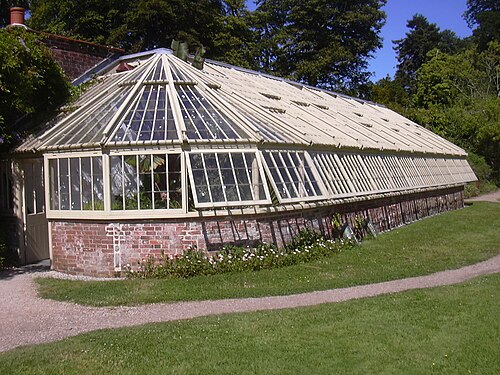
Kitchen Garden glasshouses (Vinery and Melon House), Kingston Lacy
Pamphill, near Wimborne Minster (Dorset), England

Sources checked October 2026
- Year
- 1876–1879
- Style
- Heated Victorian kitchen-garden glasshouses; vinery rebuilt on a new timber frame
- Status
- Open to the public (National Trust estate); kitchen garden and glasshouses under restoration since 2018
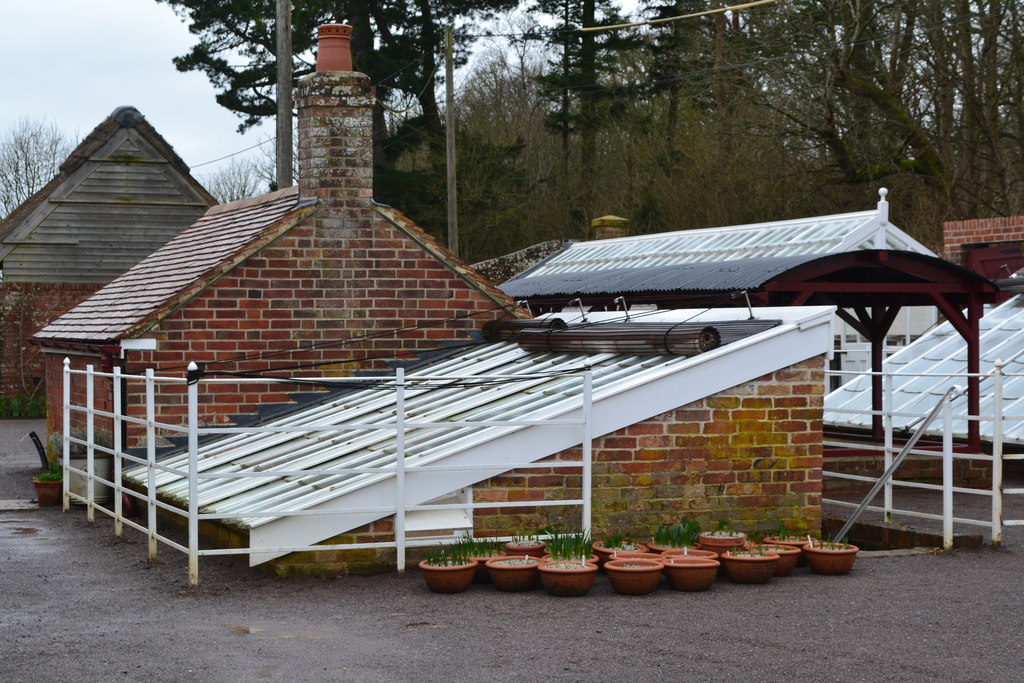
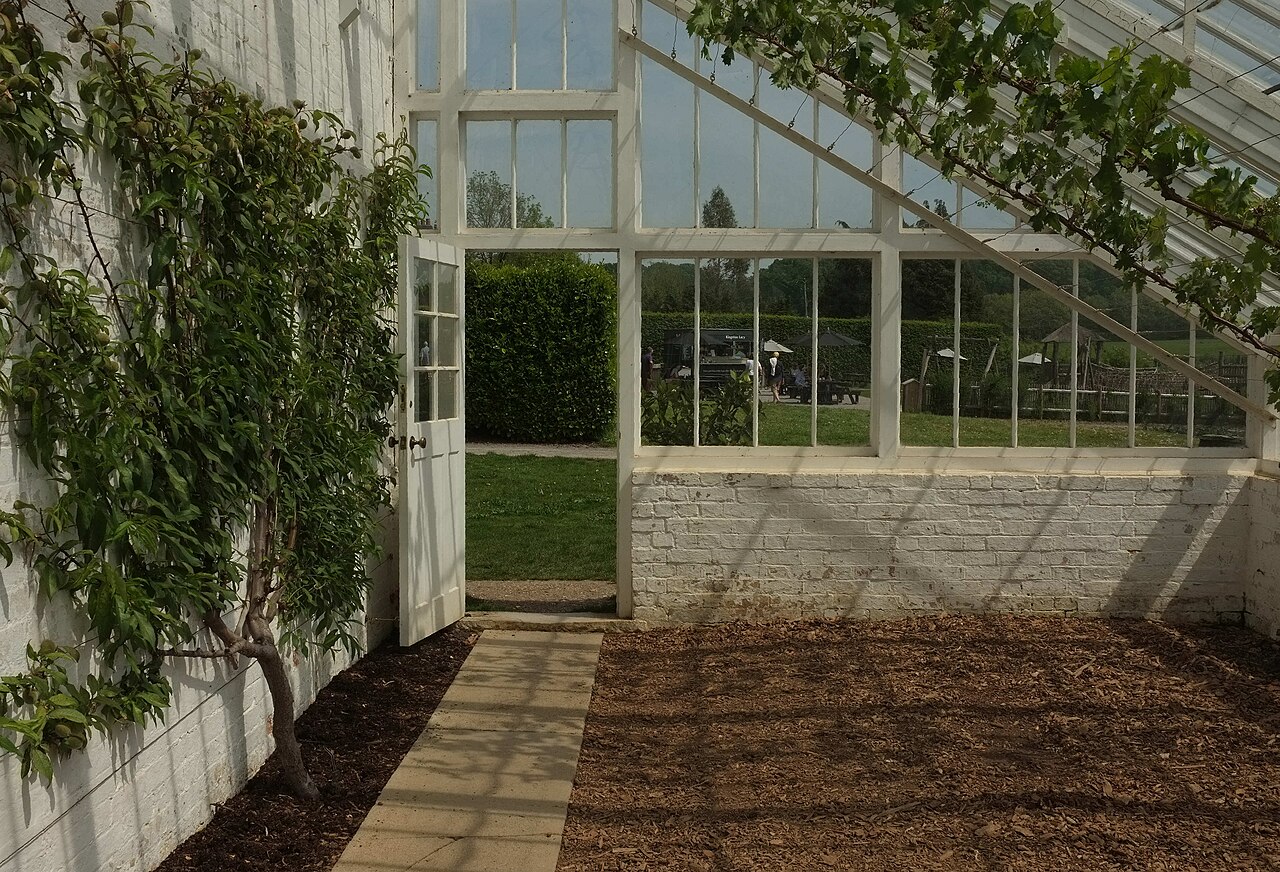
The Kingston Lacy kitchen garden in Dorset was built in 1876 for the Bankes family; the vinery belongs to a U-shaped range of glasshouses first built in 1879, alongside heated glasshouses for fruit, vegetables and exotic flowers. The garden declined by the 1960s and was completely overgrown when the National Trust received the estate. The vinery, taken down, has been rebuilt on a new timber frame using the original fixtures and fittings; it holds old vines, citrus and fan-trained peaches. The melon house produced melons in 2022 for the first time in decades.
Affiliate links — booking through Verrière helps fund our research, at no extra cost to you.
History
The Kingston Lacy kitchen garden is tied to Walter Ralph Bankes and his wife Henrietta. Walter, who inherited the estate in 1869 according to The Garden History Blog, took an interest in technology, and the kitchen garden, at some distance from the house, was fitted with the latest gadgets. According to the National Trust, it was built in 1876 at a cost of £2,740 (about £180,000 today); the vinery belonged to a U-shaped range of glasshouses first built in 1879, and the family grew fruit, vegetables, herbs and exotic flowers in heated glasshouses. Production peaked in the late 19th and early 20th centuries; in 1908-09, 71 apple, 52 pear and 19 plum varieties were planted.
Decline followed: the blog places the end of the garden at the First World War, with many glasshouses collapsing, while the National Trust says it had declined by the 1960s and was completely overgrown when it received the estate, in 1982 according to that page (1981 on its history page, after the death of Ralph Bankes). Some original features, including the ornamental show houses, were lost, others beyond repair. A restoration project was launched around 2009-2010. According to Smallholder, work on the vinery began in 2018 with the restoration of one wing, the other two being too far gone and demolished; the Trust writes that the vinery was taken down and rebuilt with a new timber frame, using fixtures and fittings from the original glasshouse. The pandemic disrupted the work for two years. In 2022 melons returned: the first crop in fifty years according to the Trust, in forty years according to Smallholder.
Architecture and engineering
According to the National Trust, the kitchen-garden glasshouses originally formed a U-shaped range, first built in 1879; the vinery, part of it, has been rebuilt with a new timber frame, reusing the fixtures and fittings of the original glasshouse. The blog describes the kitchen garden as fitted with the latest gadgets, and the Trust speaks of heated glasshouses.
Around the glasshouses, buildings used by the garden team more than a hundred years ago can be seen from the inside. The entrance gates have been restored with traditional craftsmanship and repainted in the grey-green Henrietta Bankes chose in 1912; they were made by a West Midlands ironworks that also produced anchors for the Titanic. Two thatched summerhouses have been recreated and the historic paths reinstated.
Plant collections
The rebuilt vinery houses old vines, citrus fruit and fan-trained peaches. The melon house is back in use: in 2022 the gardeners grew Blenheim Orange melons there, a heritage variety popular with the Victorians, using methods of the period; the same year the peaches did well alongside the original vines. A Trust photo caption mentions potted orange trees, geraniums and bird of paradise flowers in a heated glasshouse. Outside the glasshouses, the kitchen garden has a flower garden restored to its original design, dahlias in autumn, and an orchard planted in 2022 around a 100-metre arch that will be covered with roses and espaliered fruit trees. The produce supplies the Stables café; surplus is sold on site.
Visiting
The kitchen garden lies away from the house, across a lane beyond the Japanese Garden; the Trust says it is reached on foot through the Japanese Garden, a slightly longer walk than the rest of the garden. A kiosk serves drinks and light snacks, and there is a play area. Free guided garden tours in spring, summer and autumn cover the formal garden, the kitchen garden or both, with no booking needed. They combine well with the late 19th-century fernery and the seven-acre Japanese Garden created by Henrietta Bankes after 1910; dahlias bloom in the kitchen garden in autumn, and the blog mentions about six million snowdrops in late winter.
50.81° N, 2.03° W
Greenhouses nearby
More greenhouses — United Kingdom
Do you have a good photo of this greenhouse? Suggest it for this page →
Sources (8)
- nationaltrust.org.uk/visit/dorset/kingston-lacy/bringing-the-kitchen-garden-to-life-at-kin
- nationaltrust.org.uk/visit/dorset/kingston-lacy/the-garden-at-kingston-lacy
- nationaltrust.org.uk/visit/dorset/kingston-lacy
- nationaltrust.org.uk/visit/dorset/kingston-lacy/the-history-of-kingston-lacy
- thegardenhistory.blog/2022/03/26/kingston-lacy
- southwestfarmer.co.uk/news/23586833.national-trust-propertys-ornamental-gates-restored/
- strollingguides.co.uk/books/dorset/places/kingstonlacyhouse.php
- en.wikipedia.org/wiki/Kingston_Lacy
Affiliate links — booking through Verrière helps fund our research, at no extra cost to you.