Palais Rameau (circular horticultural greenhouse)
Lille, Hauts-de-France

Sources checked October 2026
- Year
- 1879
- Architect
- Auguste Mourcou and Henri Contamine
- Style
- Neo-Moorish (orientalist); circular cast-iron greenhouse under a glass rotunda
- Dimensions
- Palace of about 3,600 to 3,950 m²; 25 m high façade
- Status
- Park freely open by day; building open during events and guided visits, no regular opening hours
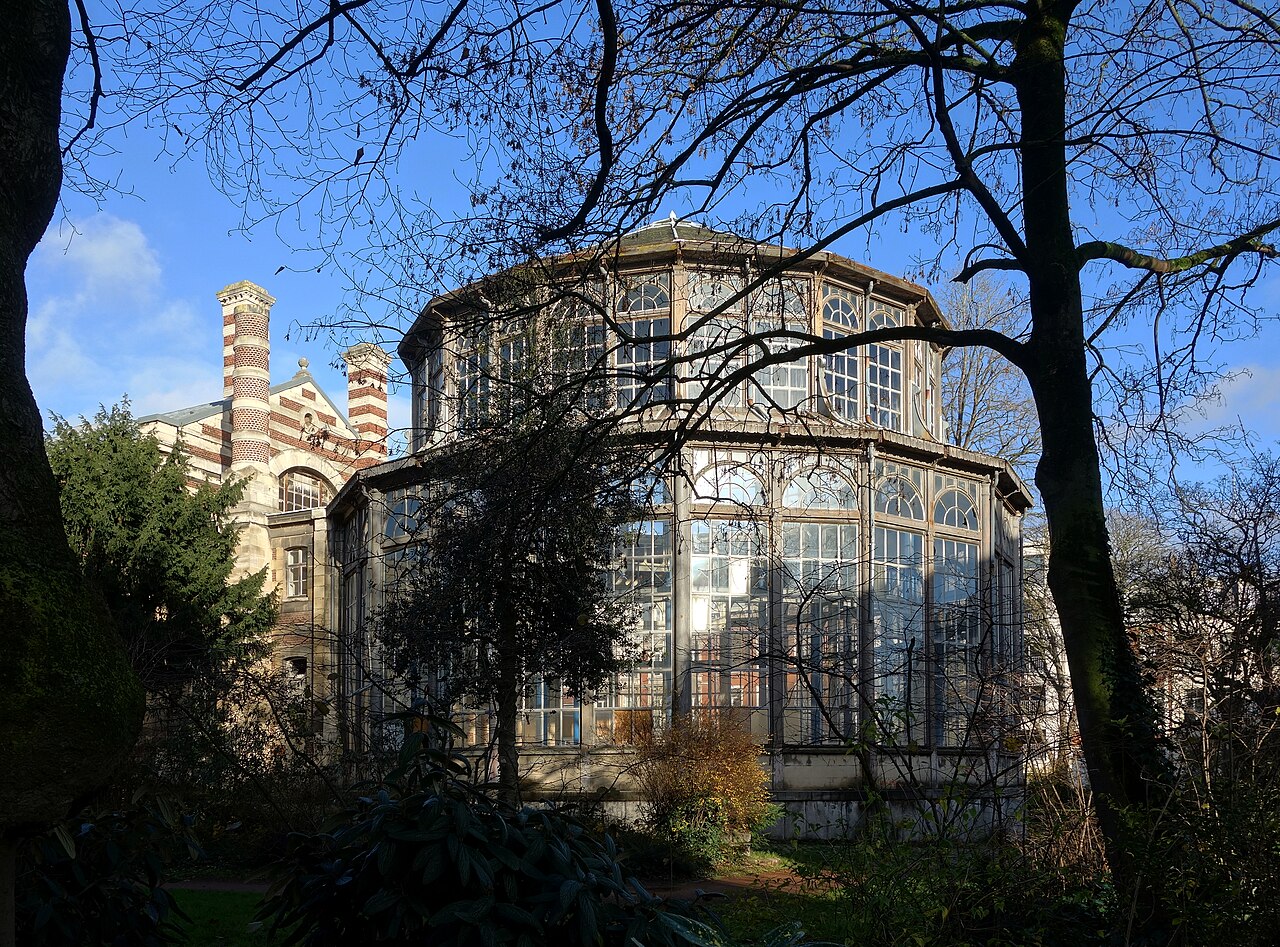
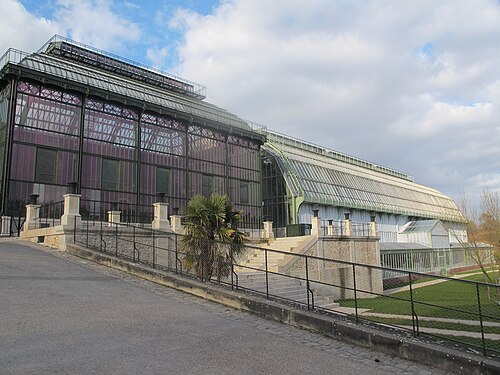
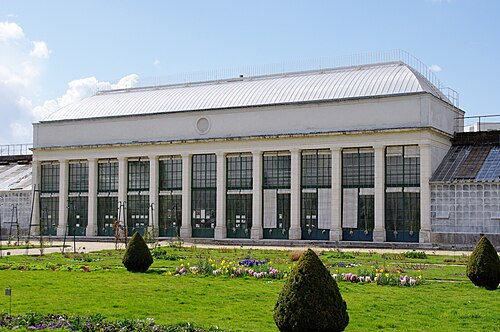
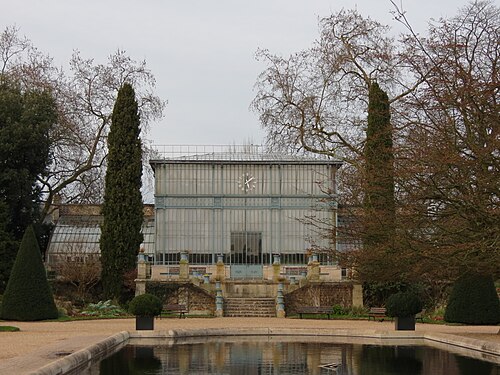
Opened in 1879 in Lille thanks to a bequest from Charles Rameau, president of the Lille horticultural society, the Palais Rameau pairs a neo-Moorish façade of brick and white stone, designed by the architects Auguste Mourcou and Henri Contamine, with a circular horticultural greenhouse in cast iron under a glass rotunda. Classified as a historic monument in 2002 together with its greenhouse, it hosted exhibitions, concerts and banquets before deteriorating. The engineering school Junia has rehabilitated it (works completed in 2024) as an urban agriculture demonstrator. The park is freely open by day; the interior opens for events and visits.
Affiliate links — booking through Verrière helps fund our research, at no extra cost to you.
History
The palace owes its existence to a bequest. Charles Rameau, president of the Lille horticultural society, left 300,000 francs to the city of Lille on condition that a building bearing his name host flower, fruit and art exhibitions as well as musical festivals. The bequest and the project are placed in 1878 (Wikipedia, Dezeen), the building work in 1875-1879 (Mérimée record) or in 1878-1881 (Wikipedia infobox). The opening took place in 1879, on 22 June according to Wikipedia. The plans are by the architects Auguste Mourcou and Henri Contamine.
After the flower shows came concerts, dog, cat and bird exhibitions, banquets, and the industrial arts exhibition of 1882, which had national resonance. In the twentieth century the building served for school examinations (1930-1960), sheltered prisoners returning from Germany in 1945 and, on 28 June 1948, hosted the trial of five Gestapo agents from La Madeleine. In 1953 the onion-shaped bulbs that crowned it were replaced by small pyramids. After more than a century of exhibitions and fairs the building deteriorated, despite a partial renovation in 2004, the year Lille was European Capital of Culture; the Solid'Art fair has been held there since 2015.
The garden and the caretaker's house were listed on 17 April 1984; the classification of 9 September 2002 covers the whole building together with its greenhouse. In 2021 the city and the engineering school Junia signed a 25-year lease to rehabilitate it. Three years of works, completed in 2024 for about 3 million euros with support from the Region and the ERDF, led to a reopening that the local press reported in February 2025.
Architecture and engineering
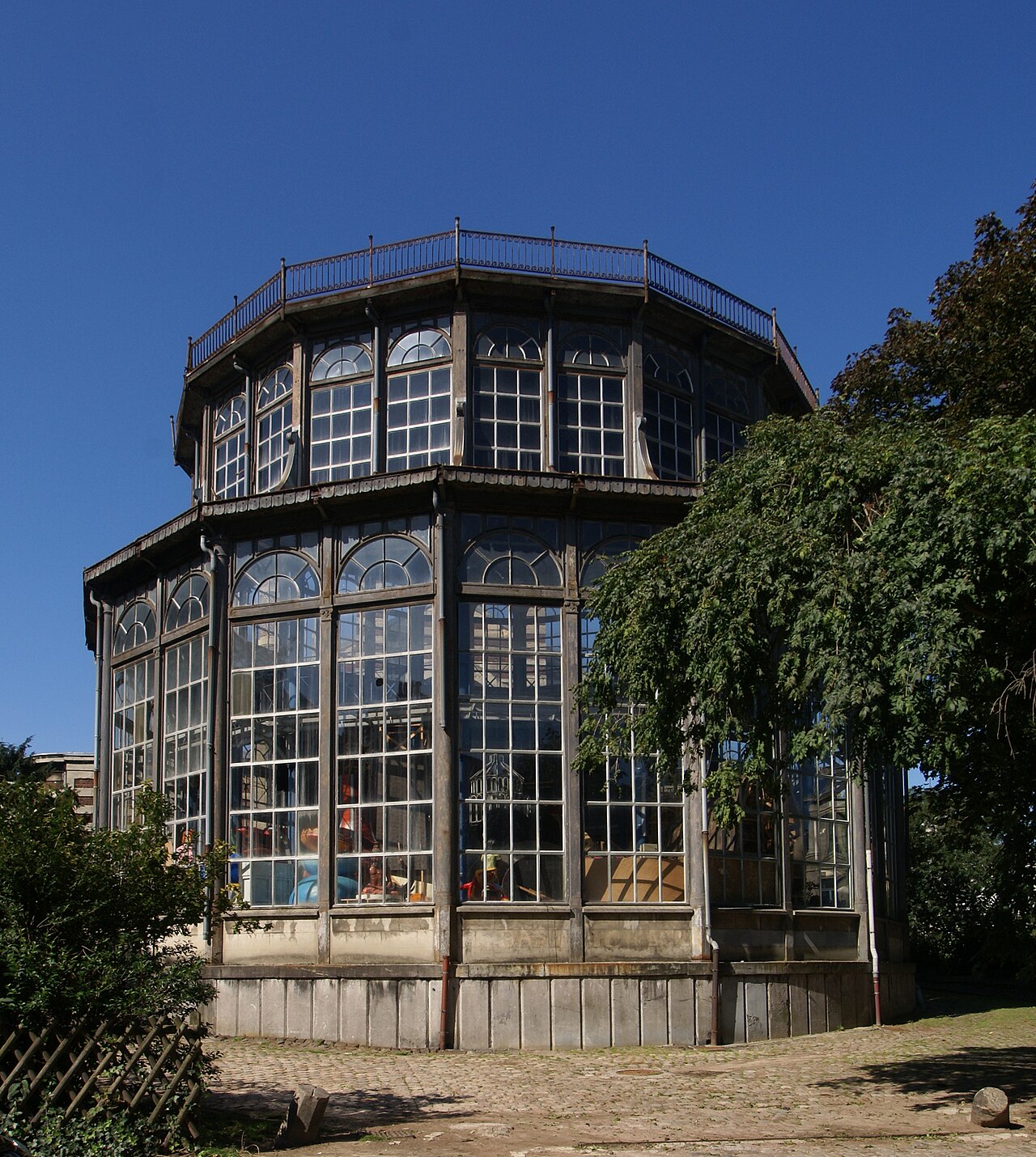
The palace is an exhibition pavilion whose style the Mérimée record calls discreetly neo-Moorish, while other sources speak of Neo-Byzantine or Romanesque-Byzantine influences. Its façade, 25 m high according to Wikipedia, alternates brick and white stone and carries two small towers. The sculpted decoration includes the bas-reliefs of the seasons by Cordonnier and the pediment by Albert d'Arc. The record stresses the metal structure, which gives the building an original place in nineteenth-century Lille's urban fabric.
A circular horticultural greenhouse in cast iron joins this façade; the press describes it as standing under a glass rotunda. The 2002 classification covers the building as a whole, with its greenhouse. The palace's floor area is between 3,600 and 3,950 m².
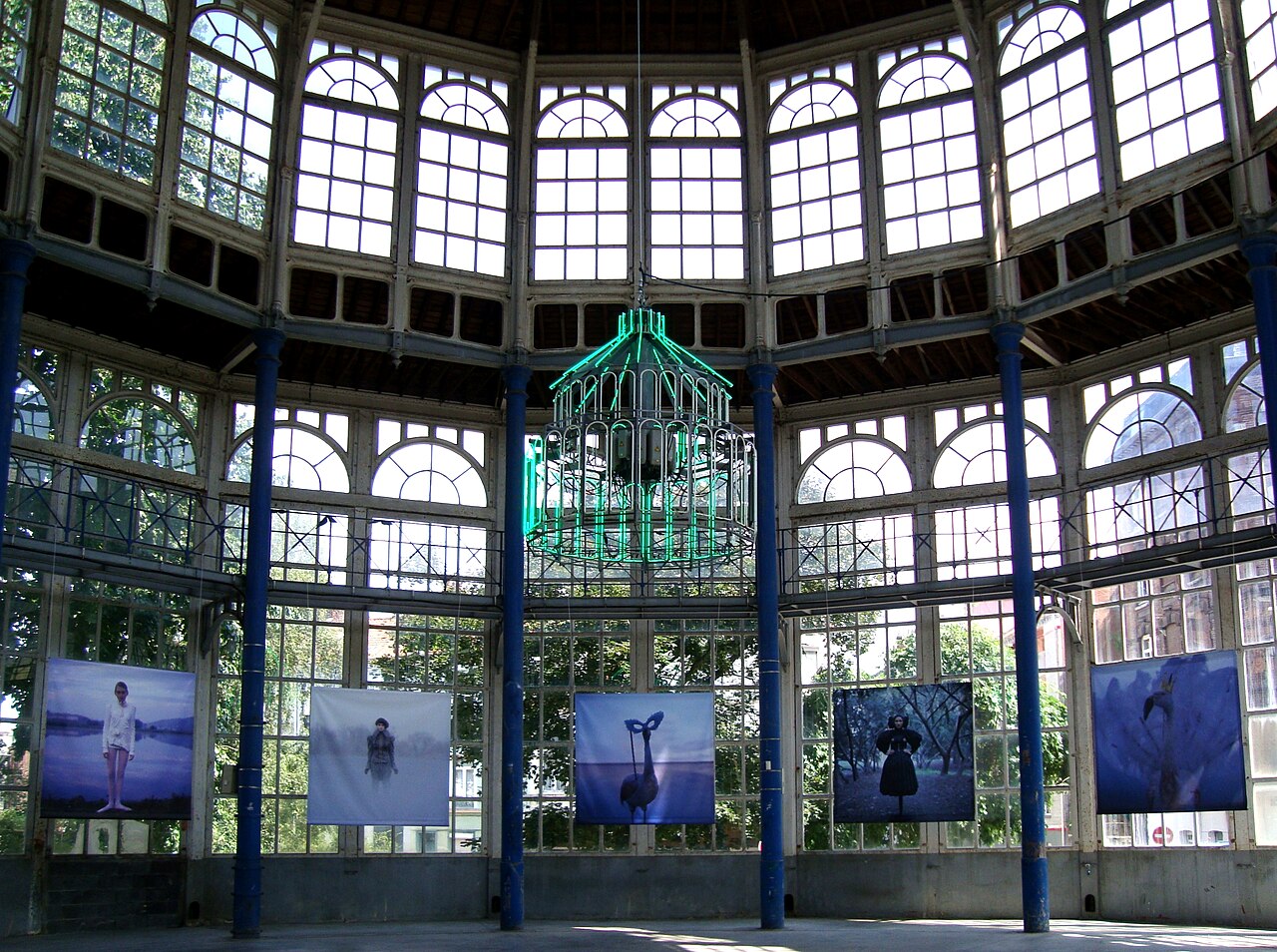
The renovation led by Atelier 9.81 and the heritage architects Perrot & Richard slots a modular timber frame into the protected metal shell; the frame is demountable, reversible and kept free of the historic walls. The green-painted ironwork remains visible and the central nave stays an exhibition space. The materials, largely bio-sourced, come from within 100 km, and the project holds BREEAM and BiodiverCity certification.
Plant collections
The palace was originally designed for the flower and fruit shows of the Lille horticultural society. Today the rotunda remains a greenhouse and a biodiversity hub, according to the project's presentation.
The current programme is that of a demonstrator for urban agriculture and food: controlled-environment production areas, formulation and processing laboratories, a sensory tasting space, a FoodLab and the SENSUUM laboratory. In the park of about 6,000 m², the landscape project provides a vegetable garden, low-water planting, wetlands and swales that irrigate with rainwater, and demonstration plots for research, following a permaculture approach. The audio trail "À fleur de Rameau" lets the sculptures, plants and architectural elements tell the story of the place.
Visiting
The palace stands at 39 boulevard Vauban, on the campus of the Université Catholique de Lille, served by the metro stations République - Beaux-Arts and Rihour. Its park of about 6,000 m² is freely open by day; the interior, with its nave and glazed rotunda, opens only at certain times: European Heritage Days in September, the Science Festival in October, and occasional guided tours.
Junia also offers an audio trail, "À fleur de Rameau" (12 audio clips), and paid private tours, by reservation, for groups of 10 to 25 people from Monday to Friday. No regular opening hours are published, so it is best to check Junia's calendar. About 2.5 km away as the crow flies, the equatorial greenhouse of the Jardin des plantes de Lille rounds off the day.
50.63° N, 3.05° E
Greenhouses nearby
More greenhouses — France
Do you have a good photo of this greenhouse? Suggest it for this page →
Sources (8)
- junia.com/palais-rameau/
- pop.culture.gouv.fr/notice/merimee/PA00107720
- fr.wikipedia.org/wiki/Palais_Rameau
- pss-archi.eu/immeubles/FR-59350-3308.html
- dezeen.com/?p=2264769
- urbannext.net/palais-rameau-a-sustainable-hub-for-education-research-and-innovation/
- pariszigzag.fr/?p=271322
- lebonbon.fr/lille/news/reouverture-palais-rameau/
Affiliate links — booking through Verrière helps fund our research, at no extra cost to you.