Endeavour Tropical House (former Sir Joseph Banks Conservatory), Lincoln Zoo
Newball, near Langworth, Lincoln (Lincolnshire)
No freely licensed photo of this greenhouse yet. Do you have one? Suggest it for this page →
Sources checked October 2026
- Year
- 1989 (re-erected in 2016-2017)
- Style
- Glazed tropical house with a raised central roof, dismantled and rebuilt
- Dimensions
- About 24 x 18 m (Lincolnshire Life); 460 m² per Wikipedia for the original house
- Status
- Open to the public, inside the zoo
Built in 1989 within The Lawn complex in the centre of Lincoln (the date given by Wikipedia), the tropical house dedicated to Sir Joseph Banks closed in 2014 and was due to be demolished. Woodside Wildlife Park, now Lincoln Zoo, took it down in August 2016 and rebuilt it near Langworth with new glazing and a new boiler. Reopened in 2017 as Endeavour, it follows the voyage of Banks and James Cook and houses Siamese crocodiles, tamarins, a coral reef and the zoo's butterfly house.
Affiliate links — booking through Verrière helps fund our research, at no extra cost to you.
History
The building began life as the Sir Joseph Banks tropical conservatory, put up in 1989 within The Lawn complex in Lincoln according to Wikipedia. It honoured the Lincolnshire naturalist who sailed with James Cook on his first Pacific voyage, from 1768. A Lincolnshire County Council page archived in 2014 describes it as a tropical conservatory commemorating the species Banks collected, with a water feature and an aquarium; the BBC adds exotic plants and koi carp. According to the zoo it closed in 2014 and fell into disrepair.
The Lawn complex, sold by the city council to the coffee firm Stokes, was to be redeveloped, with the conservatory demolished to make way for car parking. On 2 August 2016 Woodside Wildlife Park, an animal park east of the city, began taking it down piece by piece. Lincolnshire Life reports that Stokes allowed two weeks for the dismantling, during which roughly 16,000 bolts, 1,000 tonnes of soil and more than 300 tonnes of concrete were removed. The BBC adds that the council donated a plot of land to the Sir Joseph Banks Society to build a new conservatory.
Rebuilding, with new glazing and a new boiler, began in October 2016. Endeavour opened in 2017, and an event listing dated 1 April 2017 presents it as the big novelty of the Easter holidays. The park, which opened on 12 April 2001 as the Woodside Falconry and Conservation Centre, has been an EAZA member since 2016 and now trades as Lincoln Zoo.
Architecture and engineering
The structure is a glazed greenhouse on a rectangular plan. The building outline in OpenStreetMap measures roughly 19 x 25 m, consistent with the 24 x 18 m space quoted by Lincolnshire Life; Wikipedia gives 5,000 square feet (460 m²) for the original house. Photographs taken at The Lawn between 2008 and 2015 (Wikimedia Commons) show a fully glazed volume topped by a raised central roof, also glazed.
The move was a feat of metalwork: the zoo speaks of 16,000 nuts and bolts to be replaced during a winter build. It says it kept as much of the original construction and design as possible while using modern heating, and Lincolnshire Life specifies that the glazing and boiler are new.
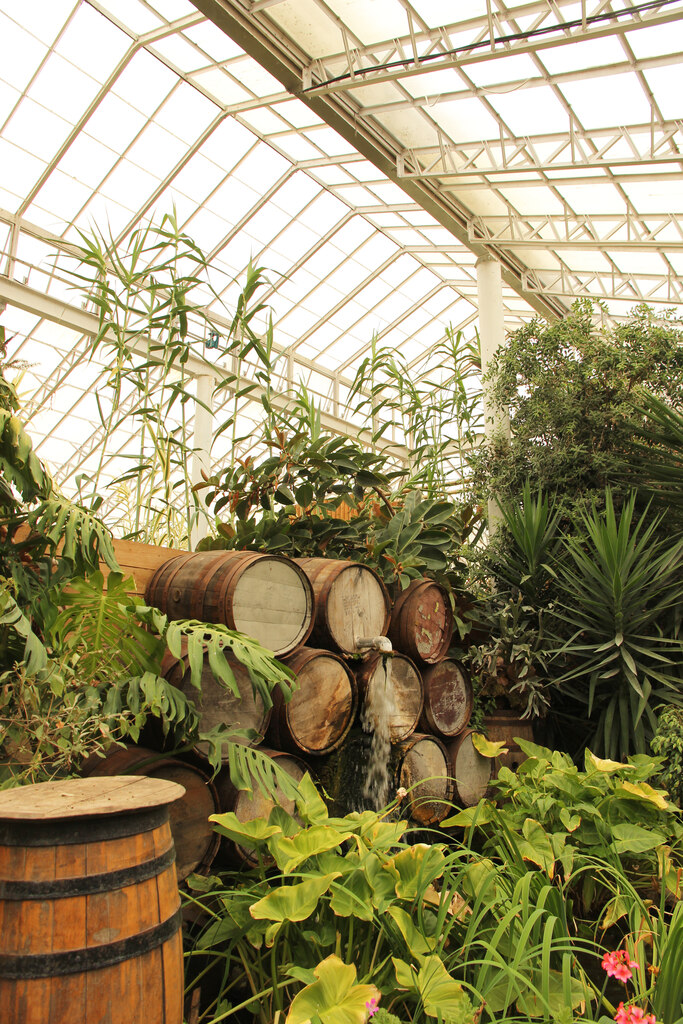
The interior was entirely rethought. According to Lincolnshire Life (2017), part of the route runs through an inner module of cabins and part through the open main space. At the centre, a pool designed for Siamese crocodiles has viewing windows at ground level. A Tahiti room holds two reef aquariums, one healthy and one bleached. The zoo adds that its butterfly house was moved into the building, which is now treated as one large exhibit.
Plant collections
The theme is a 'voyage of discovery' following Banks and Cook, which supplies the thread for four conservation topics the zoo highlights. The marine reef tackles plastics in the oceans and coral bleaching. South America is represented by two tamarin species (the Pied Tamarin and the Golden-Headed Lion Tamarin), both part of international breeding programmes. Indonesia is illustrated by the Siamese crocodile, the building's flagship species; behind it the zoo has deliberately planted, and contained, an invasive plant, Arundo donax, to evoke the biological invasions of New Zealand. The building also shows critically endangered Bali Starlings, as part of the Silent Forest campaign.
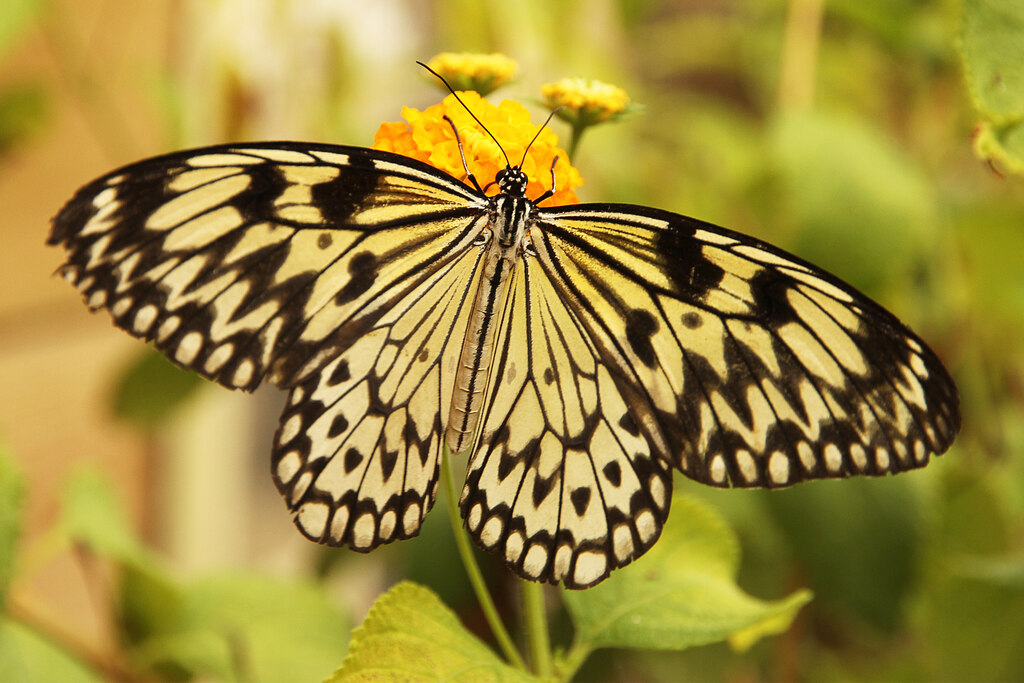
The butterfly house now shares the common space, and the zoo reports record breeding levels every year. The old butterfly house serves as a botanical nursery, multiplying nectar plants for the butterflies as well as flowers for the rest of the park. In its original form the Lincoln conservatory held exotic plants, a koi pond and an aquarium.
Visiting
The house is part of a visit to Lincoln Zoo, formerly Woodside Wildlife Park, at Newball near Langworth, east of the city. There is no separate entrance, and the zoo states that it opens every day except 25 December. The building, described as spacious and heated, is a useful shelter in bad weather. To round off the day, Humboldt penguins, which arrived in 2019, and red pandas are among the park's attractions. There is no point looking for the greenhouse at its old address: according to Wikipedia, a car park now occupies the Lawn site.
53.27° N, 0.38° W
Greenhouses nearby
More greenhouses — United Kingdom
Do you have a good photo of this greenhouse? Suggest it for this page →
Sources (8)
- lincolnzoo.co.uk/endeavour-build/
- lincolnzoo.co.uk/endeavour-tropical-house/
- lincolnzoo.co.uk/about-lincoln-zoo/
- lincolnshirelife.co.uk/heritage/experience-endeavours-journey-in-the-21st-century/
- bbc.com/news/uk-england-lincolnshire-36952847
- web.archive.org/web/20160803230736/http://thelincolnite.co.uk/2016/08/lincoln-wildlife-par
- en.wikipedia.org/wiki/Sir_Joseph_Banks_Conservatory
- web.archive.org/web/20140326171518/http://www.lincolnshire.gov.uk/VenueDetails.aspx?venuec
Affiliate links — booking through Verrière helps fund our research, at no extra cost to you.