Camellia House, Wollaton Hall
Nottingham, Nottinghamshire
Entry updated on October 5, 2026
- Year
- 1823
- Architect
- Sir Jeffry Wyatville
- Style
- Neoclassical cast-iron-framed glasshouse with Doric columns
- Dimensions
- 10 bays; 61 cast-iron columns
- Status
- In the Wollaton Hall gardens; glasshouse open to the public on occasion
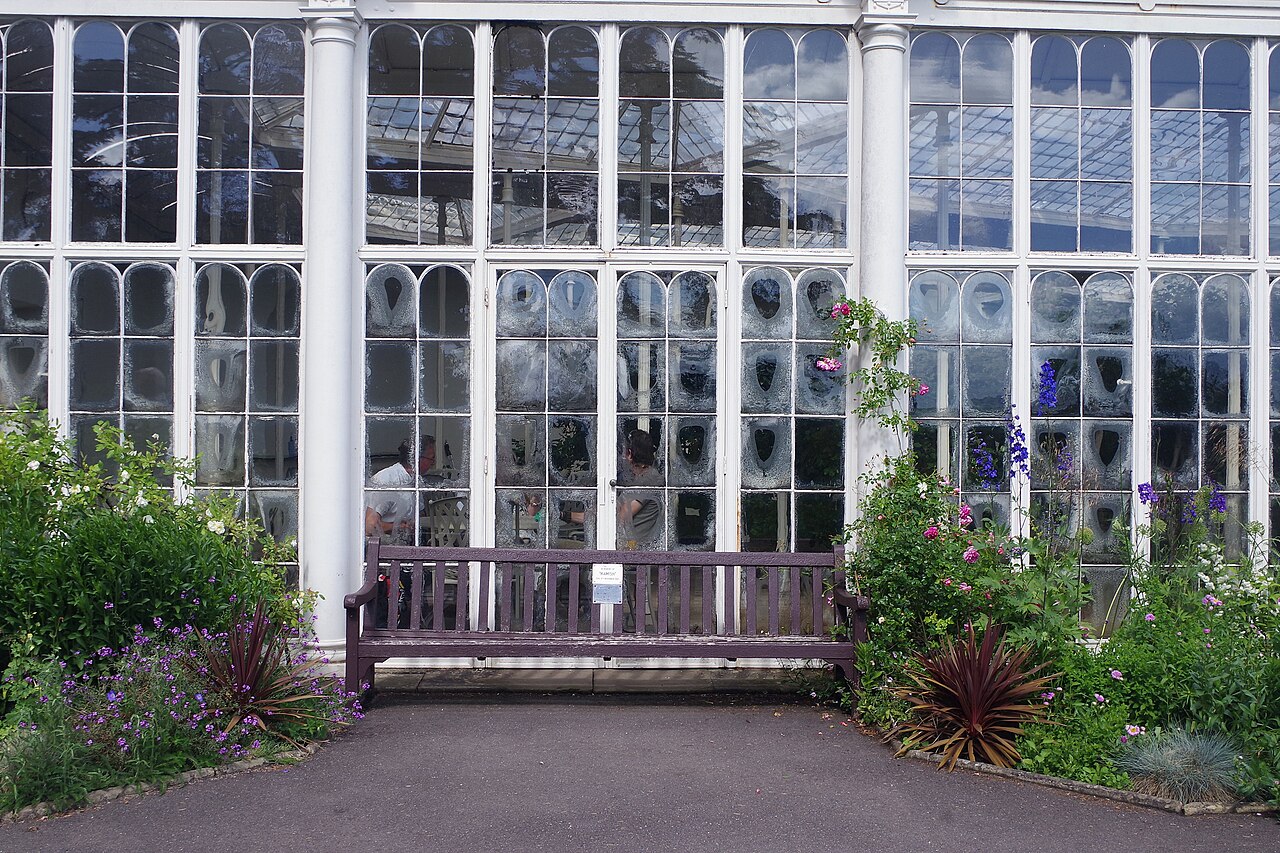
Built in 1823 for the Willoughby family, owners of Wollaton Hall, to a design by Sir Jeffry Wyatville, the Camellia House stands in the formal gardens behind the house. Its fully glazed walls are divided by cast-iron Doric columns that also serve as rainwater downpipes, and the estate describes it as the oldest cast-iron-framed glasshouse in Europe. Damaged by vandalism and closed to the public by 2004, it was restored over just under two years, to 2007, at a cost of about £1.1 million. It houses more than 25 camellias, some of them over a century old.
Affiliate links — booking through Verrière helps fund our research, at no extra cost to you.
History
1 min
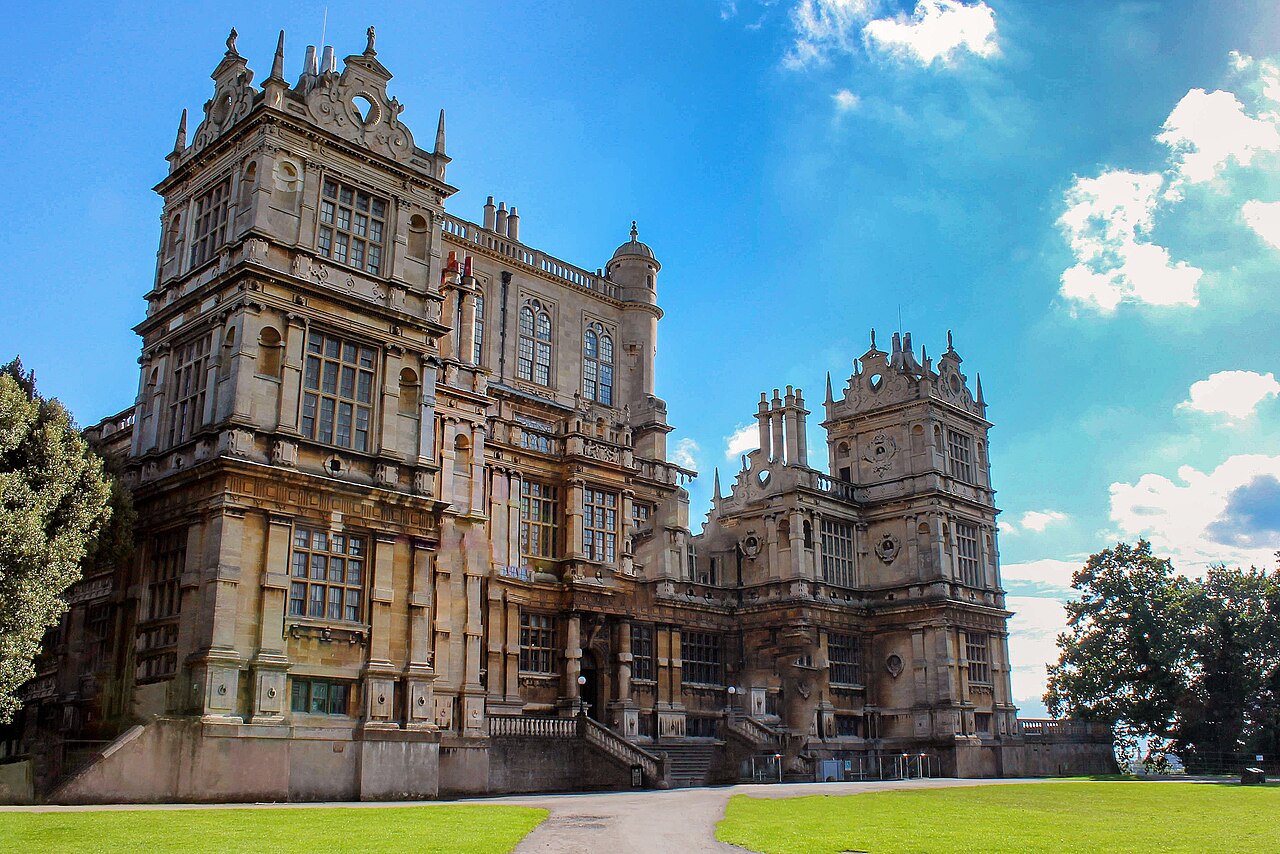
The Camellia House was built in 1823 for the Willoughby family, owners of Wollaton Hall, to house the camellias they collected. It was designed by Sir Jeffry Wyatville; according to the listing, the heating equipment may be by Harrison of Derby. The glasshouse stands about 100 metres south-west of the house, in the formal gardens laid out behind it.
The estate describes it as the oldest cast-iron-framed glasshouse in Europe and the only remaining one of its kind in the country; the Friends of Wollaton Park more cautiously call it one of the earliest cast-iron glasshouses in the country. Listed Grade II* since 12 July 1972, it is described in the listing as an early example both of a camellia house and of iron and glass construction.
In 1983 extensive repairs were needed after vandalism. The building nevertheless kept deteriorating and by 2004 it was closed to the public. A full restoration, carried out over just under two years and completed in 2007, cost about £1.1 million, with Purcell Miller Tritton as architects, The Morton Partnership as structural engineers and Dorothea Restorations as the ironwork contractor.
Architecture and engineering
1 min
The single-storey glasshouse has a polygonal plan of ten bays under an overall hipped roof. Its cast-iron frame carries fully glazed walls and roofs set against a rendered brick rear wall. On the front, the glazing is divided by cast-iron Doric columns topped with urns; the gutters drain down through the structural columns, which carry rainwater to an underground system.
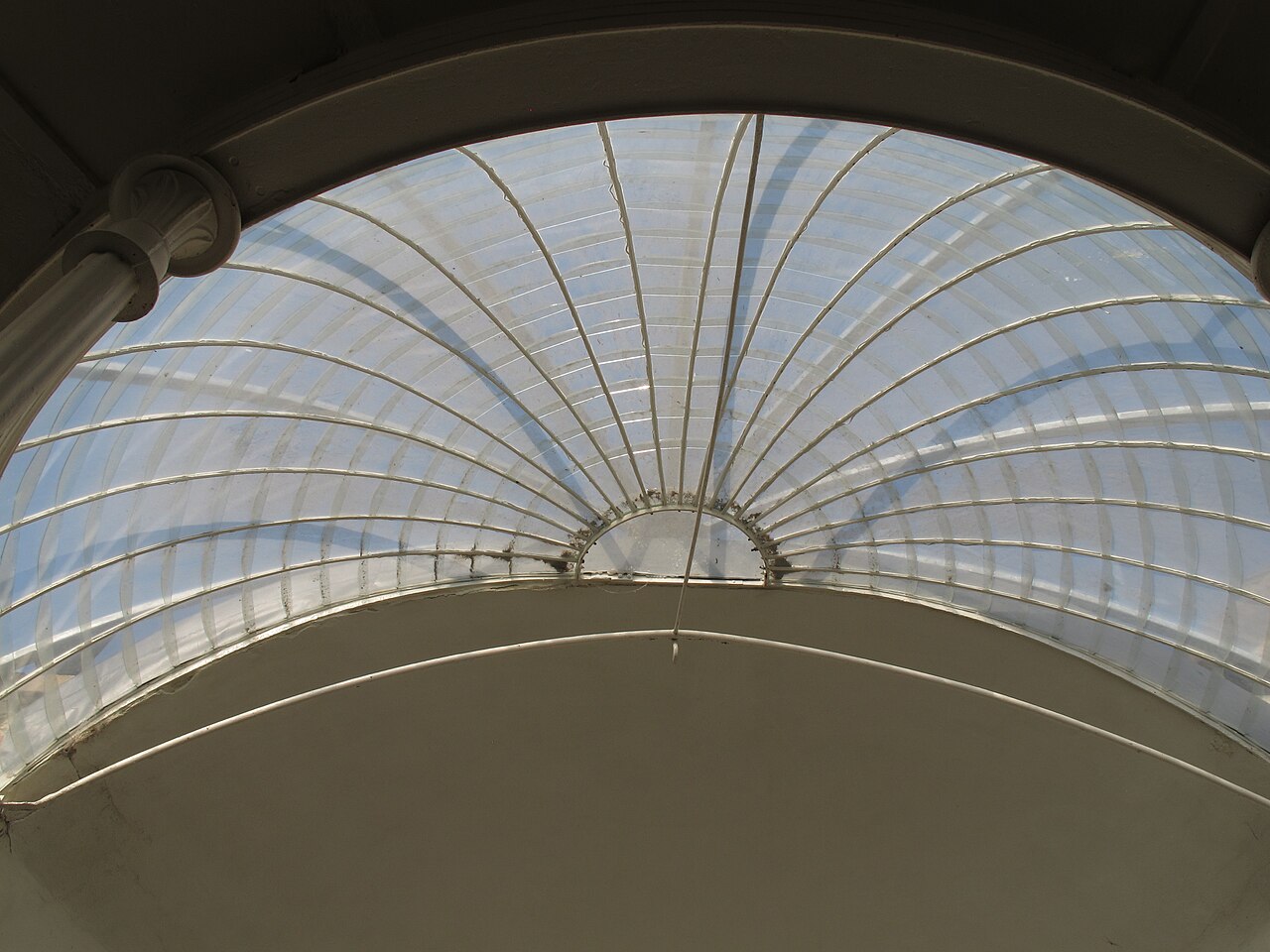
Inside, the space is divided into four quadrangles, each covered by a glazed pitched roof. The walkways that separate and surround them are lined with slender cast-iron columns with lotus-leaf capitals and covered by segmental vaults of sheet iron. At the back, a recess with a glazed half-dome is flanked by smaller niches and freestanding classical sculptures.
The whole comprises 61 columns and some 900 cast-iron, wrought-iron and glazing components, an assembly put back in order by the restoration completed in 2007.
Plant collections
1 min
Designed for the camellias collected by the Willoughbys, the glasshouse is still devoted to them. The Wollaton collection numbers more than 25 specimens, some of them over a hundred years old, and includes named varieties of Camellia japonica and of the hybrid Camellia × williamsii, which the Friends of Wollaton Park document in a gallery. Their flowering stretches from autumn to spring.
The Nottingham group of the Hardy Plant Society, an association of perennial-plant enthusiasts, holds planting plans of the glasshouse dating from 2004, the year it closed. In the rear recess, beneath the glazed half-dome, classical sculptures complete this planted setting.
Visiting
1 min
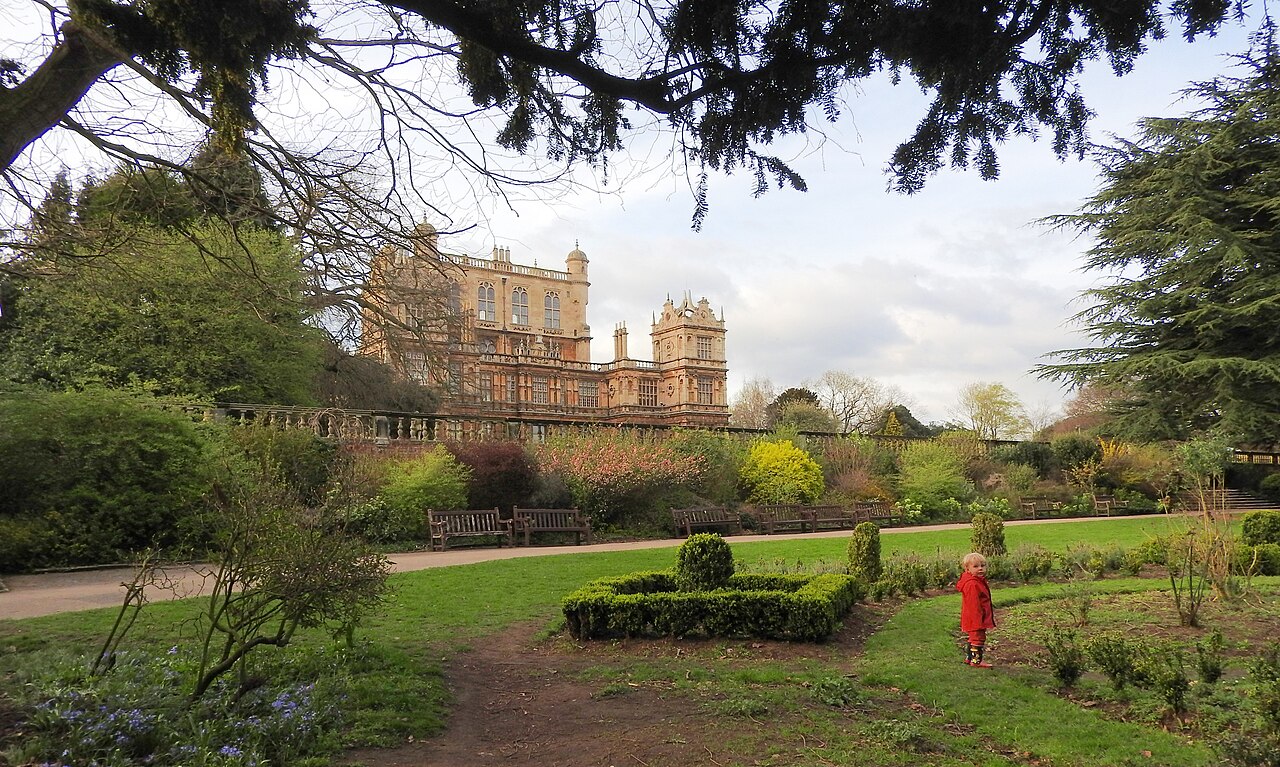
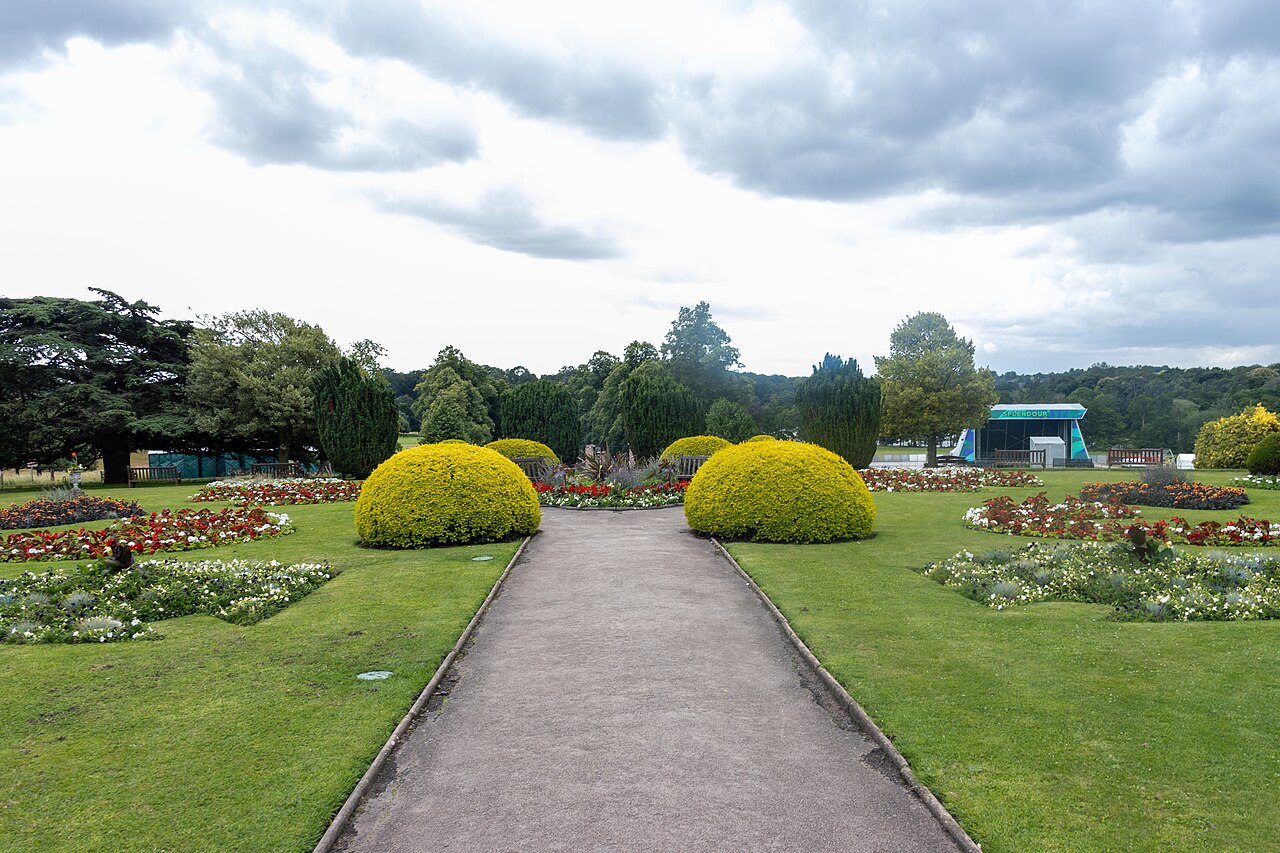
The Camellia House stands in the formal gardens behind Wollaton Hall, about 100 metres south-west of the house, among statues and a Doric temple. It opens to the public only on occasion, but its glazed front can be seen from the garden. The best period runs from autumn to spring, when the camellias are in flower. A visit combines with Wollaton Park, 500 acres (about 200 hectares) home to more than 90 red deer and 120 fallow deer, and with the hall itself. The park belongs to Nottingham City Council.
52.95° N, 1.21° W
Greenhouses nearby
More greenhouses — United Kingdom
Do you have a good photo of this greenhouse? Suggest it for this page →