Hot greenhouse (serre chaude) of the Serre de la Madone garden
Menton, Provence-Alpes-Côte d'Azur

Sources checked October 2026
- Year
- About 1930
- Architect
- Lawrence Johnston (garden designer)
- Style
- Masonry glasshouse with a two-pitch glass roof on an exposed metal frame
- Status
- Garden open to the public; restoration of the hot greenhouse listed among the works (press, August 2026), access to the interior not confirmed
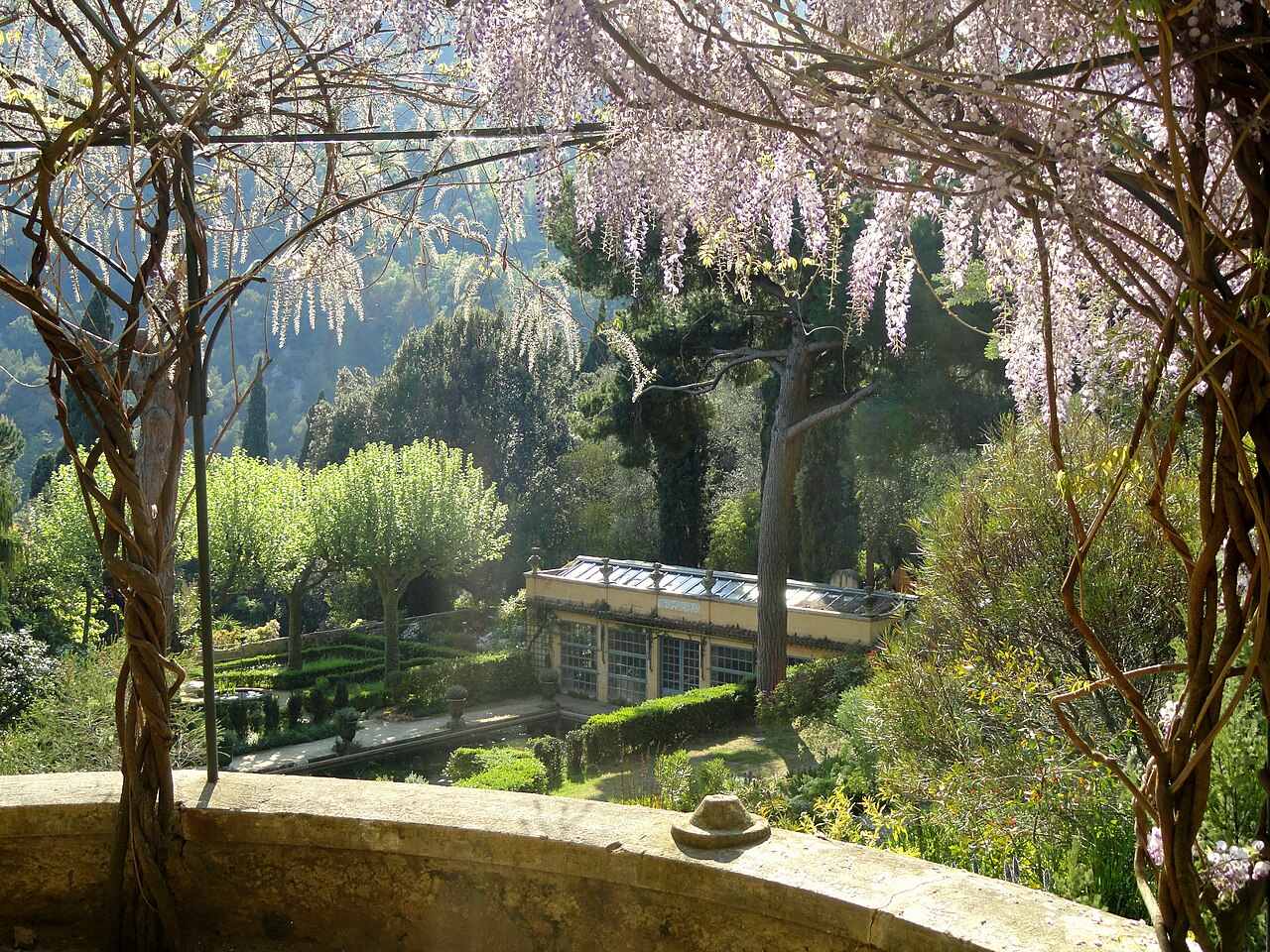
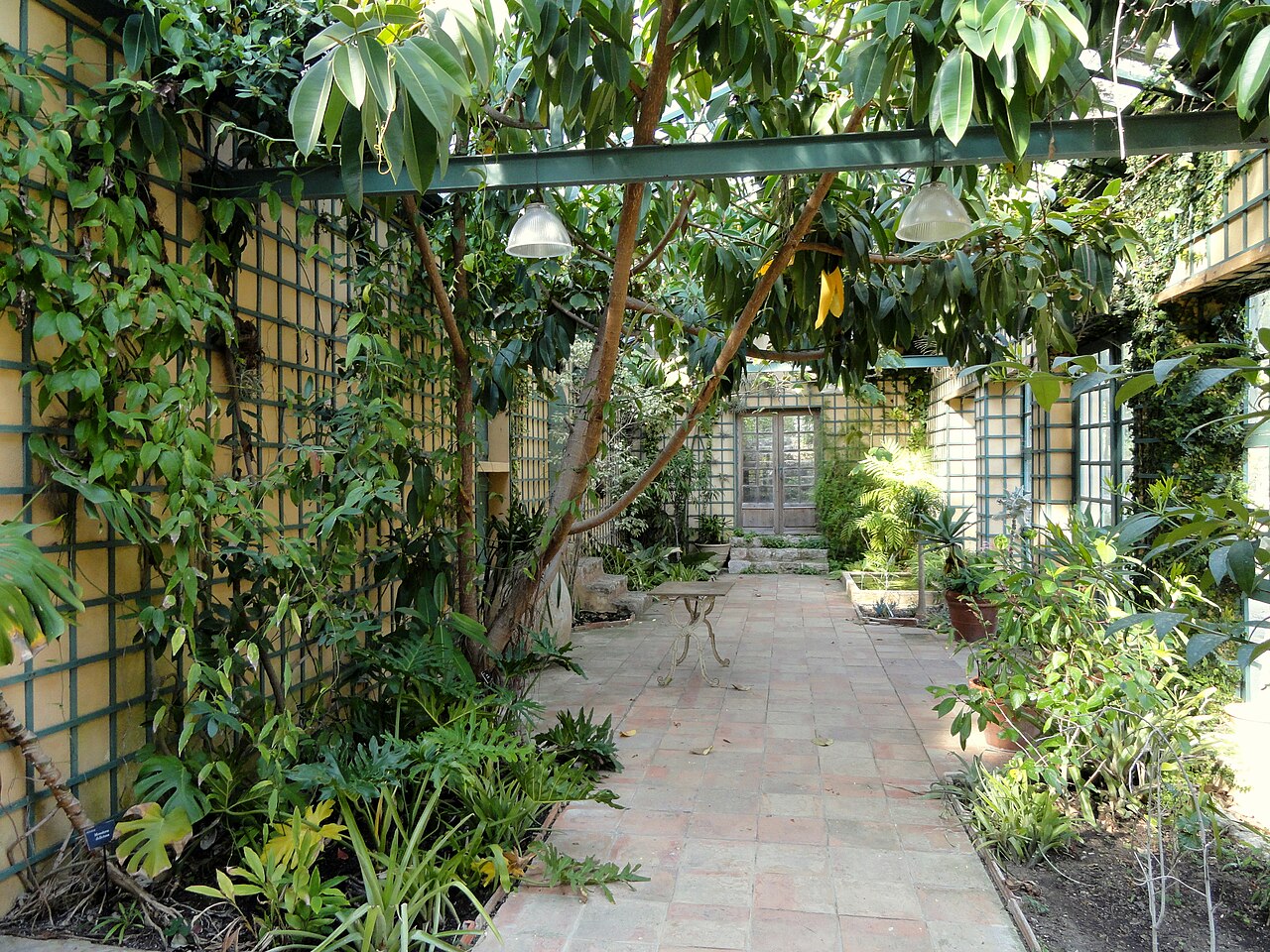
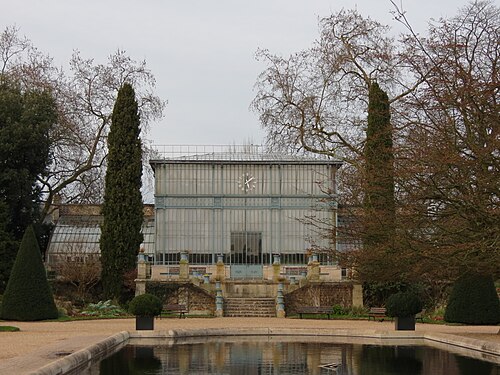
In the Serre de la Madone garden, created at Menton by Major Lawrence Johnston, a hot greenhouse was built around 1930 while the garden was being laid out for acclimatising plants. The heritage inventory describes a single-storey building with a regular façade, covered by a two-pitch glass roof on an exposed metal frame. Protected with the garden as a historic monument since 1990, it houses ficus and Chamaedorea, and epiphytes according to the 2026 press. Its restoration is among the works run by the City of Menton and the ASJEM association.
Affiliate links — booking through Verrière helps fund our research, at no extra cost to you.
History
The Serre de la Madone garden owes its existence to Major Lawrence Johnston, a British officer with a passion for botany. The Conservatoire du littoral dates his purchases of land from 1924 to 1939, in two stages, and the Mérimée heritage database sees an acclimatisation garden meant for plants brought back from the Far East or Africa; the same database, however, gives 1919 as the start of the creation.
The hot greenhouse belongs to this ensemble. The inventory of the Région Sud (survey of 2016, record updated in 2022) says it was built around 1930, while the acclimatisation garden was being laid out; the cold greenhouse, by contrast, was already complete in 1929 according to old photographs. Johnston died in 1958, the estate passed through several hands and decayed; its listing as a historic monument in 1990 stopped a housing development, and the Conservatoire du littoral bought it in 1999 together with the City of Menton, the Département and the EDF Foundation.
Restoration is now led by the ASJEM association with the City of Menton, under a co-management agreement signed in 2024. According to the City (April 2024), the second phase, planned from October 2024 to early 2025, was to deal with the hot greenhouse, the pergola, some terraces and the carriageway; in September 2025 the Monaco press included the rehabilitation of the heated greenhouse in a €3.2 million restoration programme, and in August 2026 its restoration was still named among the most important works.
Architecture and engineering
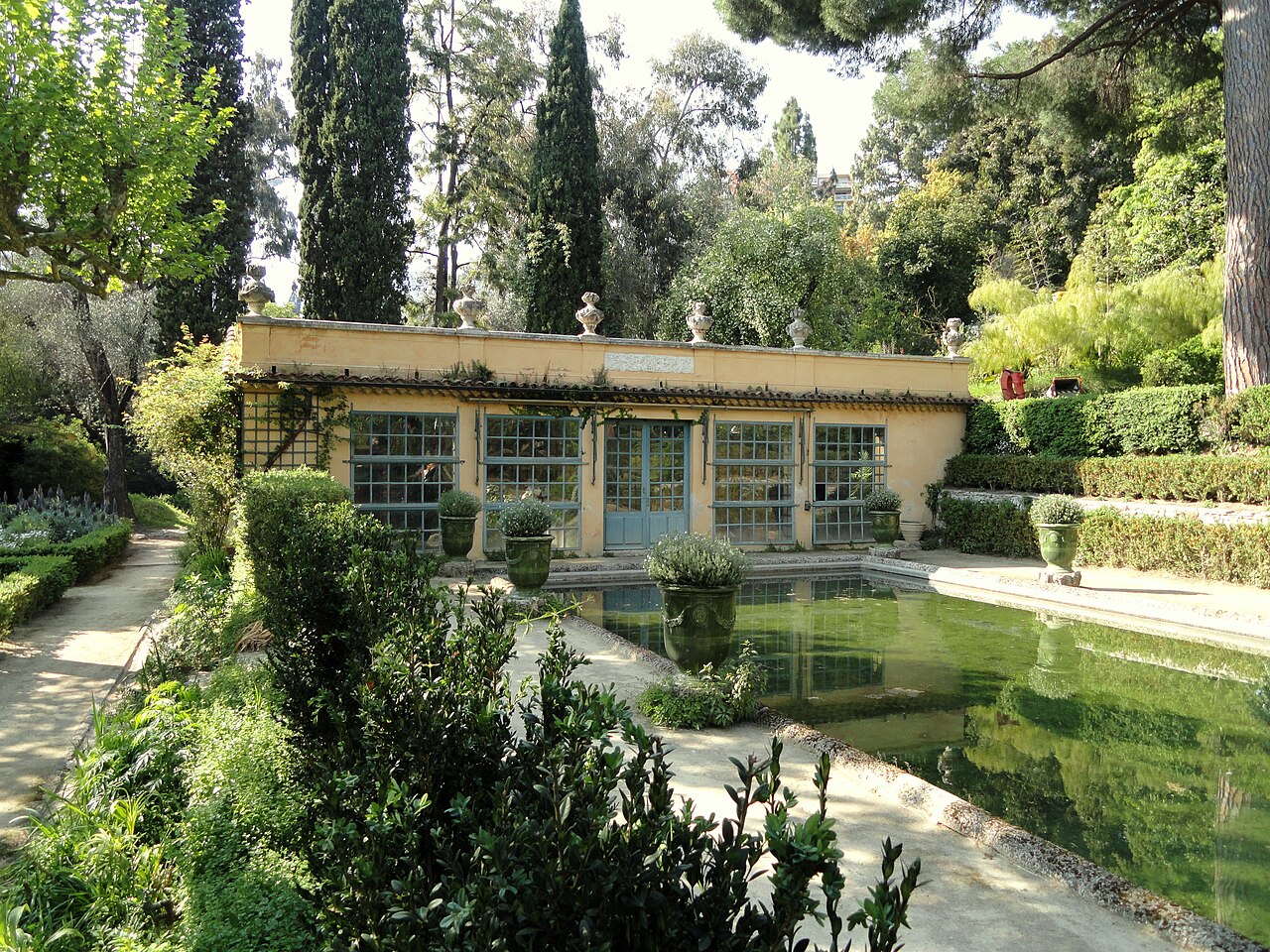
The inventory record describes a single-storey building with a regular elevation and no bays, covered by a glass roof in two long pitches whose metal frame is left exposed and whose gables are covered. The main structure is thought to be limestone rubble; the record stays cautious because the masonry is entirely hidden under a yellow render. Two isolated straight masonry staircases give access to the side elevations. No dimensions are recorded.
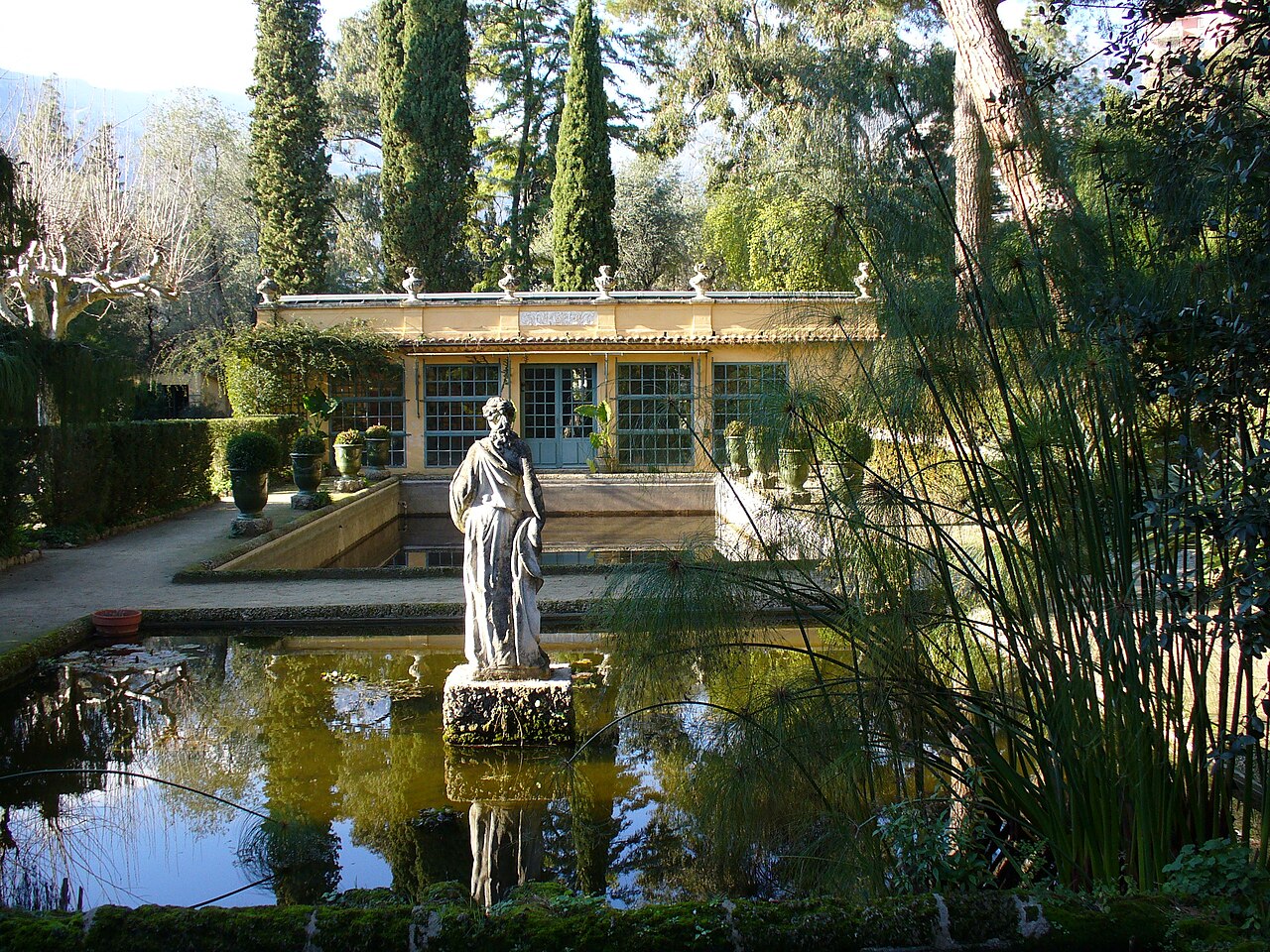
The decoration is careful for a working building: a white marble bas-relief with scrollwork is set above the central door, six stone vases stand on the crown of the main façade, and the rear gate is topped by a terracotta pot imitating a wicker basket, flanked by two stone statues of reclining children (putti). The record adds that this decoration may once have included stone spheres, now lost.
The cold greenhouse of the same garden, built in the same manner (rendered rubble, exposed metal frame), was roofed with a single-pitch glass roof that has since disappeared; the record describes its condition as altered remains. Two bas-reliefs, harvesting putti and a Virgin and Child, decorate its interior.
Plant collections
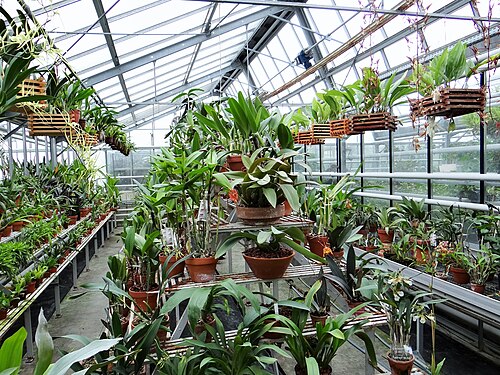
The Conservatoire du littoral reports ficus and Chamaedorea in the hot greenhouse. A press article of 25 August 2026 adds epiphytes, including orchids and tillandsias, which need particular growing conditions; it presents the restoration as a twofold task: saving the historic building and protecting these collections.
Elsewhere in the garden, the spaces created by Johnston hold cacti, ferns, papyrus, water lilies and floating ferns in the pools. The Conservatoire estimates that a third of the site is covered by exotic flora and the other two thirds by Mediterranean woodland broken up by terraces of former olive groves. A botanical database, Infobota, records the species present.
Visiting
The hot greenhouse stands in the Serre de la Madone garden, on the route de Gorbio above Menton; the visit involves many staircases. A visit account of May 2024, written before the works, publishes an interior view of the greenhouse; during the restoration, it is wise to check with the garden before coming. Guided tours are offered, free of charge during European Heritage Days in September (2026 programme). The garden is closed on Mondays and has been twinned since 2000 with Hidcote, a National Trust garden.
43.78° N, 7.48° E
Greenhouses nearby
More greenhouses — France
Do you have a good photo of this greenhouse? Suggest it for this page →
Sources (8)
- pop.culture.gouv.fr/notice/merimee/IA06004155
- pop.culture.gouv.fr/notice/merimee/IA06004156
- pop.culture.gouv.fr/notice/merimee/PA00080768
- conservatoire-du-littoral.fr/siteLittoral/330/28-serres-de-la-madone-06_alpes-maritimes.ht
- menton.fr/le-jardin-serre-de-la-madone-en-plein-chantier.html
- monacolife.net/french-riviera-garden-receives-e300000-heritage-lottery-prize/
- montecarloliving.com/fr/actualite/journees-europeennes-du-patrimoine-2026-menton-serre-de-
- provencelovers.fr/jardin-serre-de-la-madone-menton-visite-photos/
Affiliate links — booking through Verrière helps fund our research, at no extra cost to you.