Display House (Greenhouse), Oamaru Public Gardens
Oamaru, Otago

Sources checked October 2026
- Year
- 1928–1929
- Architect
- Ivan Steenson (builders Maynard and Armstrong)
- Style
- Utilitarian timber-framed glasshouse on a brick base
- Dimensions
- About 170 m²
- Status
- Open to the public; Category 2 historic place (1994)
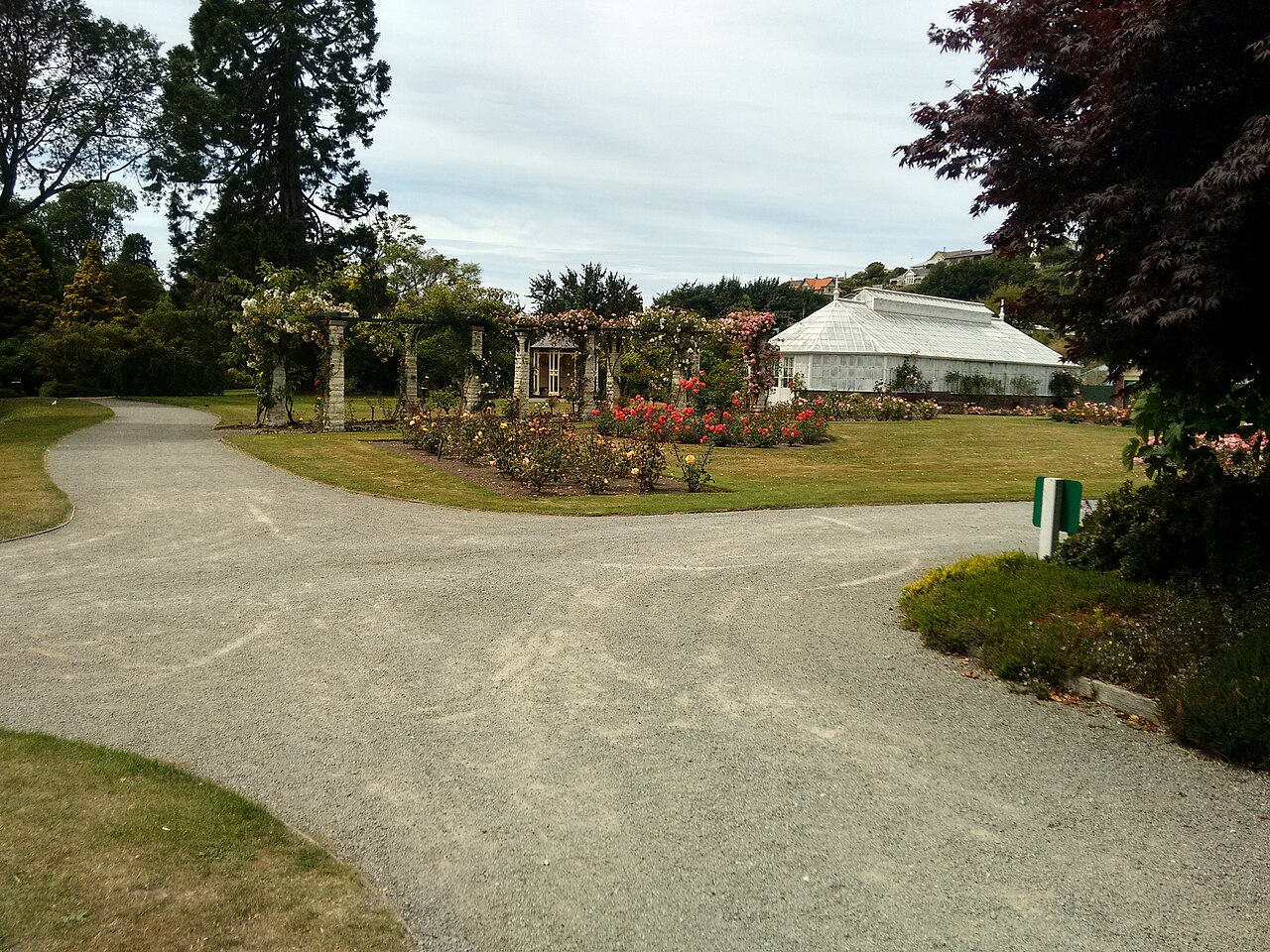
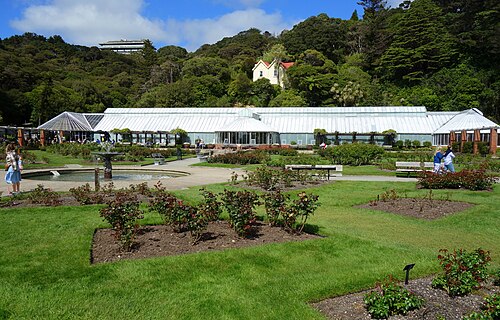
In the centre of the Oamaru Public Gardens, founded in 1876, this brick-based, timber-framed glasshouse was designed free of charge by local architect Ivan Steenson and built by Maynard and Armstrong with the proceeds of a 1928 fete. Opened in February 1929 to show the begonias that Oamaru's cool climate kept out of the open air, it was then held to be the largest display house in the country, at about 170 m². Listed as a Category 2 historic place in 1994, reglazed in toughened glass and reopened in November 2008, it still houses seasonal displays at the heart of the rose garden.
Affiliate links — booking through Verrière helps fund our research, at no extra cost to you.
History
The Oamaru Public Gardens, opened in 1876 on a 34-acre reserve set aside in the 1858 town survey, are among the oldest public gardens in New Zealand. The town's cool climate made it impossible to show frost-tender plants such as begonias without shelter. In March 1928 a large garden fete raised, according to Heritage New Zealand, close to £3,000, enough to pay as well for a paddling pool, a play area and an azalea garden. Oamaru architect Ivan Steenson drew up the plans and supervised the work free of charge; the contractors Maynard and Armstrong built the house, which cost £1,101 including plant pots and a heating system. Begun in 1928, it opened in February 1929, when Herb Familton handed the key to the mayor on behalf of the gardens' secretary. Curator John Tait called it the largest and most up-to-date true greenhouse in the Dominion, as distinct from a hothouse for tropical plants, and planned a changing display of specimen plants throughout the year. A visitor in 1939 praised its cyclamen, cinerarias and primulas. An extension was added on the east side at an unrecorded date.
Listed as a Category 2 historic place on 24 February 1994, the building was restored by the Waitaki District Council at a cost of NZ$120,000-130,000: about 1,400 panes were taken out, the timber frame checked and repaired, the building repainted and reglazed with toughened glass. Mayor Alex Familton, Herb's great-nephew, reopened it on 15 November 2008. In January 2024 the assessors of the New Zealand Gardens Trust, who renewed the gardens' five-star status as a Garden of National Significance until 2027, praised the ongoing restoration of the glasshouse.
Architecture and engineering
Heritage New Zealand describes a utilitarian building: a brick base carries a timber frame that supports the glazing. The roof combines faceted hipped gables topped by finials; the undated eastern extension also carries a finial at its peak. The Otago Daily Times gives an area of about 170 m², which made it, when it opened in 1929, the largest display house in the country. From the outset the equipment included a heating system, covered by the £1,101 cost, and the curator stressed that it was a true greenhouse rather than a hothouse for tropical plants.
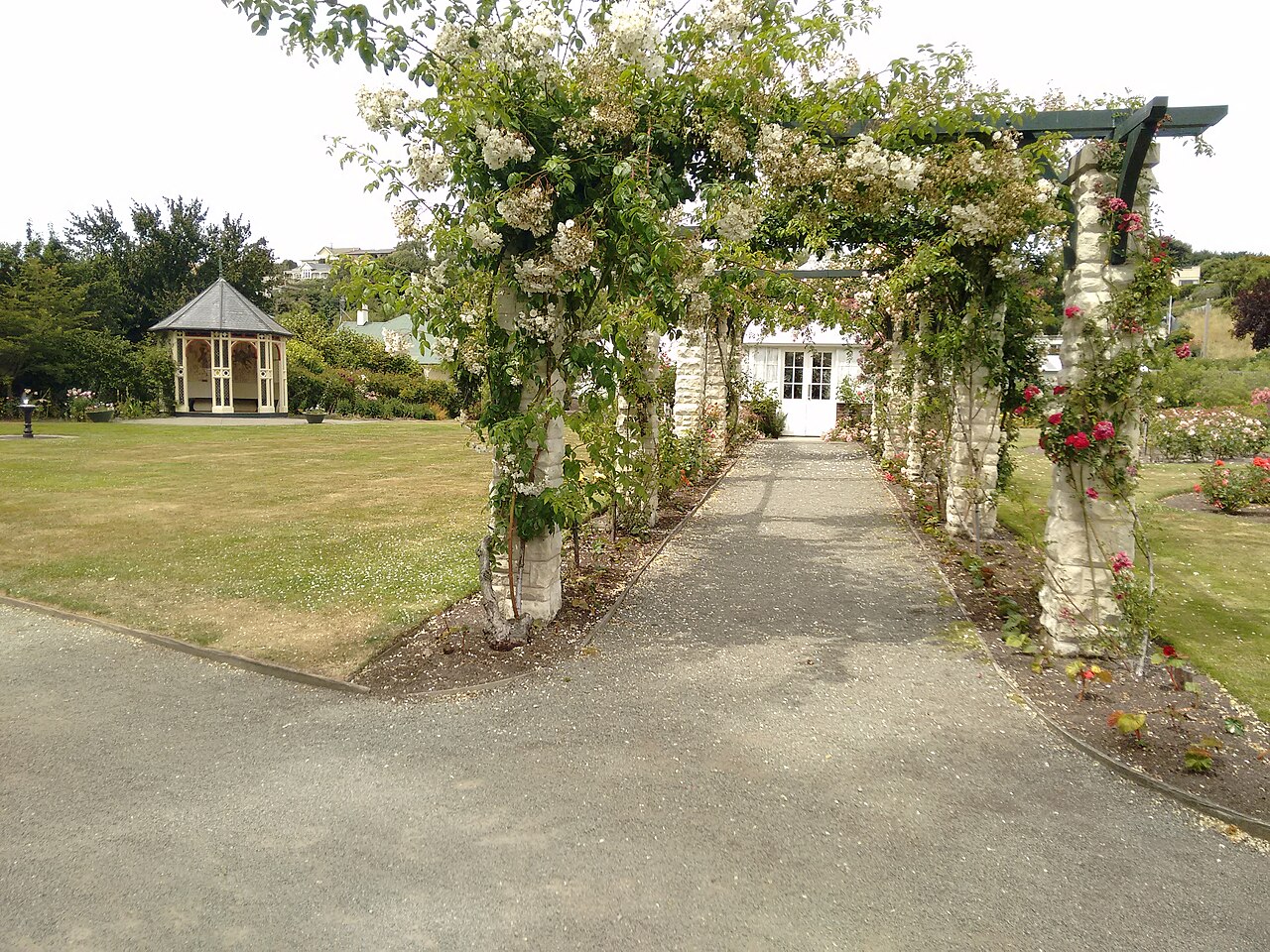
The restoration completed in 2008 kept this structure: nearly 1,400 panes were removed, the timber framing was checked and repaired where needed, the building repainted and then reglazed with toughened glass. The heritage register's report, dated 2016, notes that the building still housed seasonal displays in 2015, and the New Zealand Gardens Trust assessors referred in 2024 to a restoration still under way. On OpenStreetMap the building is mapped as a greenhouse operated by the Waitaki District Council, at the heart of the gardens and a few metres from the Elderslie Summer House, a listed pavilion with which it appears in the register's photographs.
Plant collections
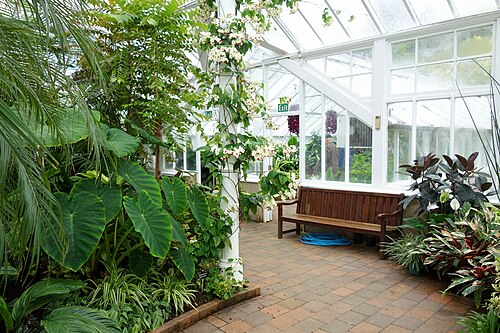
The house was built to show the begonias that Oamaru's climate would not allow in the open; the town was known for them, and the Otago Daily Times recalls that the house opened in 1929 to display tropical begonias. Curator John Tait wanted a changing display of potted plants renewed through the year; a visitor in 1939 described cyclamen, cinerarias and primulas, and suggested that cyclamen displays in September and October might draw more people. The district council today speaks of an array of exotic plant specimens without naming species, and Heritage New Zealand confirms that seasonal displays were continuing in 2015. Around the house, the rose garden scents the centre of the gardens; the fernery, cool and shaded, gathers New Zealand native species, and the Chinese garden, with its rockery, water features and sculptures, pays tribute to the district's early Chinese community.
Visiting
The house stands in the centre of the gardens, in the middle of the rose garden, between the Chelmer Street and Severn Street entrances. Allow half an hour for the house and the roses, and a good hour for the whole site: the Italian-marble Craig Fountain, erected in 1915 near the main entrance, the band rotunda of 1912-1913, Thomas J. Clapperton's Wonderland Statue, unveiled in 1927, the Japanese red bridge, the Chinese garden and the fernery; several of these are, like the house, on the heritage register. The southern spring and summer, the cyclamen and begonia seasons mentioned from the earliest years, remain the best times.
45.10° S, 170.96° E
Greenhouses nearby
More greenhouses — New Zealand
Do you have a good photo of this greenhouse? Suggest it for this page →
Sources (8)
- waitaki.govt.nz/Facilities/Parks-and-Recreation/Parks-playgrounds-and-reserves/Oamaru-Publ
- heritage.org.nz/list-details/7153/Greenhouse
- odt.co.nz/regions/north-otago/gardens-display-house-back-show
- waitaki.govt.nz/News/five-star-flower-power
- waitaki.govt.nz/Parks/Parks-and-Playgrounds/Display-House
- wikidata.org/wiki/Q79301427
- en.wikipedia.org/wiki/Oamaru
- openstreetmap.org/way/272785453
Affiliate links — booking through Verrière helps fund our research, at no extra cost to you.