Virginia Lake Winter Gardens (Rotokawau)
Whanganui, Manawatū-Whanganui
Entry updated on October 5, 2026
- Year
- 1940
- Style
- Moderne (streamlined Art Deco) rendered-masonry pavilions with a glasshouse
- Status
- Open to the public
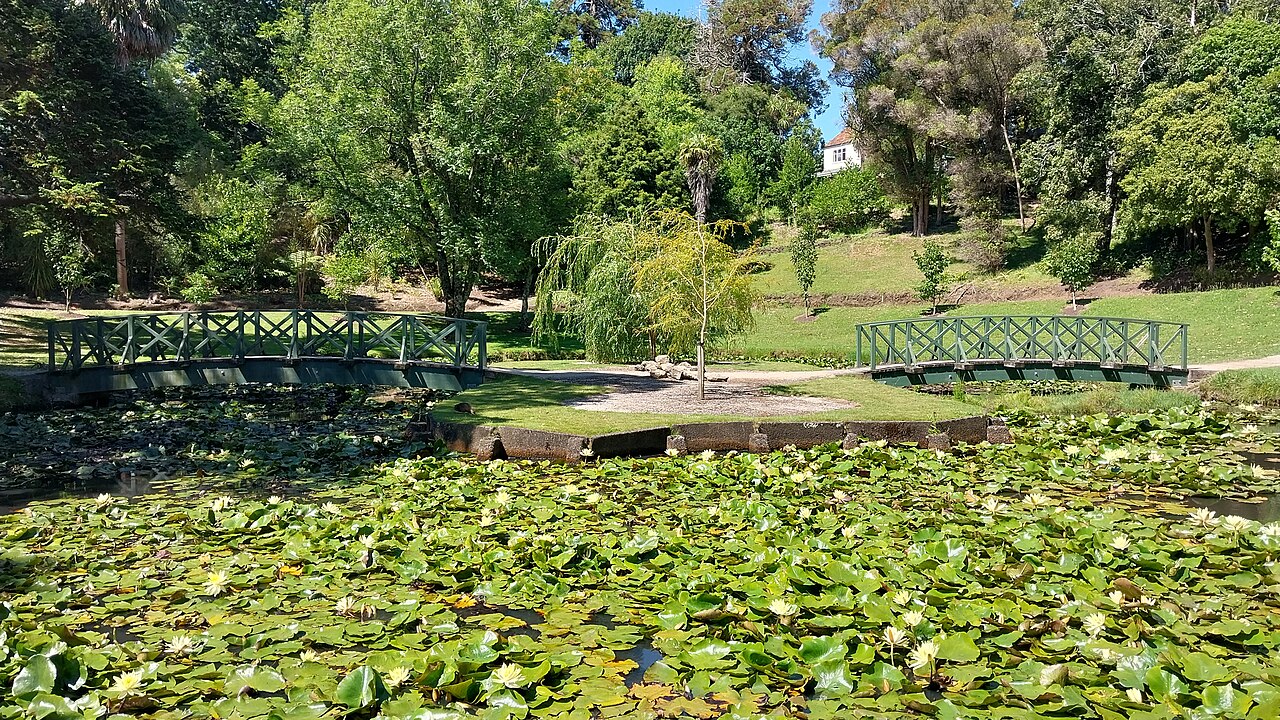
On the shore of Lake Rotokawau, a 4.5-hectare lake whose landscaped grounds opened to the public in 1914, a display house for tropical plants was built in 1940 to commemorate New Zealand's centennial (1840-1940). Its rendered-masonry entrance building, in the Moderne style, strings together flat-roofed pavilions, some rectangular and some curved, of different heights, while the glasshouse extends to the north. Listed as a Class B heritage item in the Whanganui District Plan, it shows tropical and subtropical plants alongside outdoor gardens replanted through the seasons.
Affiliate links — booking through Verrière helps fund our research, at no extra cost to you.
History
1 min
The lake that Māori call Rotokawau, after the kawau, a native shag, was an eeling reserve; tradition holds that it was formed by the tears of Tainui grieving for Turere, killed by his rival Ranginui. The settler Henry Shafto Harrison, who had acquired the land by ballot in London in 1839 and landed at Wanganui in 1841, renamed it Virginia Water after a lake in Surrey.
The borough council bought the lake in June 1874 as a water supply for the town. The first piped supply was drawn from it, but proved so unsatisfactory that Westmere Lake was soon tapped instead; once a new supply was commissioned in 1903, the site was left as a reserve. Pressed by residents of St John's Hill and their beautifying society, the council held a design competition in 1904, won by H. Sarjeant, E. A. Sarjeant and J. T. Stewart. The work took ten years and the grounds were officially opened on 21 March 1914.
In 1940 a display house intended to show a range of tropical plants was built beside the lake to commemorate New Zealand's centennial (1840-1940). Whanganui's built heritage inventory, compiled in 2012 by Ian Bowman and Nick Cable, lists it as Class B in the District Plan without naming an architect; the building belongs to the district council, which manages the reserve.
Architecture and engineering
1 min
The Winter Gardens combines a single-storey entrance building in cement-rendered masonry with a glasshouse that extends to the north. The entrance building is in the Moderne style, the pared-down offshoot of Art Deco: a series of flat-roofed pavilions, some rectangular and some curved, of varying heights, are joined one to another. The central main entrance is marked by inward-curving walls and a shallow curved canopy set below the parapet. The joinery is in steel and timber.
The heritage inventory highlights the elongated form, curved walls, parapets and streamlined detailing typical of the Moderne, and sees the building as an example of how readily the style adapted to different building types. Set beside the lake, it is a highly visible landmark. The same document notes that, as a masonry structure, it remains vulnerable to earthquake damage.
Plant collections
1 min
Designed in 1940 to show a range of tropical plants, the glasshouse still serves that purpose: it shelters tropical and subtropical plants from the outdoor climate and keeps colourful displays going all year. The district council describes it as an Art Deco-era conservatory surrounded by themed gardens.
Outside, the adjoining gardens receive formal and seasonal plantings that change through the year, and the courtyard has been refreshed in recent years with playful features. Around the lake the path passes rose and wisteria pergolas, and the statue of Tainui by Joan Morrell was moved closer to the water in 2022.
Visiting
1 min
The Winter Gardens stands in the Rotokawau Virginia Lake reserve at 110 Great North Road, in the suburb of St John's Hill. Half an hour is enough for the glasshouse and its adjoining gardens.
The visit extends naturally to the wooded loop of about twenty-five minutes around the lake, which passes ornamental bridges, a rotunda and the floating Higginbottom Fountain, installed in 1971 and lit in changing colours in the evening. A free-flight aviary, a café and a fenced playground sit next to the glasshouse, making the site a popular stop for families.
39.91° S, 175.03° E
Greenhouses nearby
More greenhouses — New Zealand
All greenhouses — New Zealand →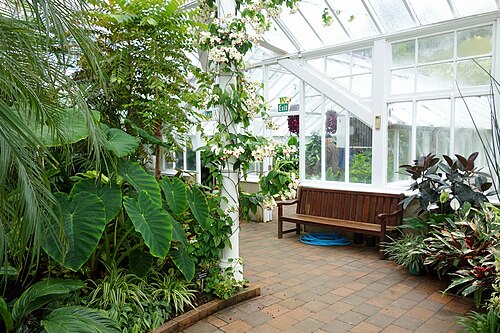
Do you have a good photo of this greenhouse? Suggest it for this page →
Sources (6)
- whanganui.govt.nz/Services/Parks-and-Reserves/Find-a-Park/Rotokawau-Virginia-Lake
- data.whanganui.govt.nz/wdc/HeritageSheets/92.pdf
- explorewhanganui.co.nz/winter-gardens-virginia-lake-whanganui/
- explorewhanganui.co.nz/virginia-lake-reserve-whanganui/
- en.wikipedia.org/wiki/Rotokawau_Virginia_Lake
- openstreetmap.org/way/370709868