Biosphere 2
Oracle, Arizona
Entry updated on October 3, 2026
- Year
- 1987–1991
- Architect
- Phil Hawes and Margaret Augustine; structure: Peter Jon Pearce (Pearce Structures)
- Style
- Sealed glass and tubular-steel enclosure with multiple biomes
- Dimensions
- 3.14 acres (≈12,700 m²) under glass; 7.2 million cu ft (≈204,000 m³); 6,500 windows
- Status
- Open to the public (self-guided tours); University of Arizona research facility
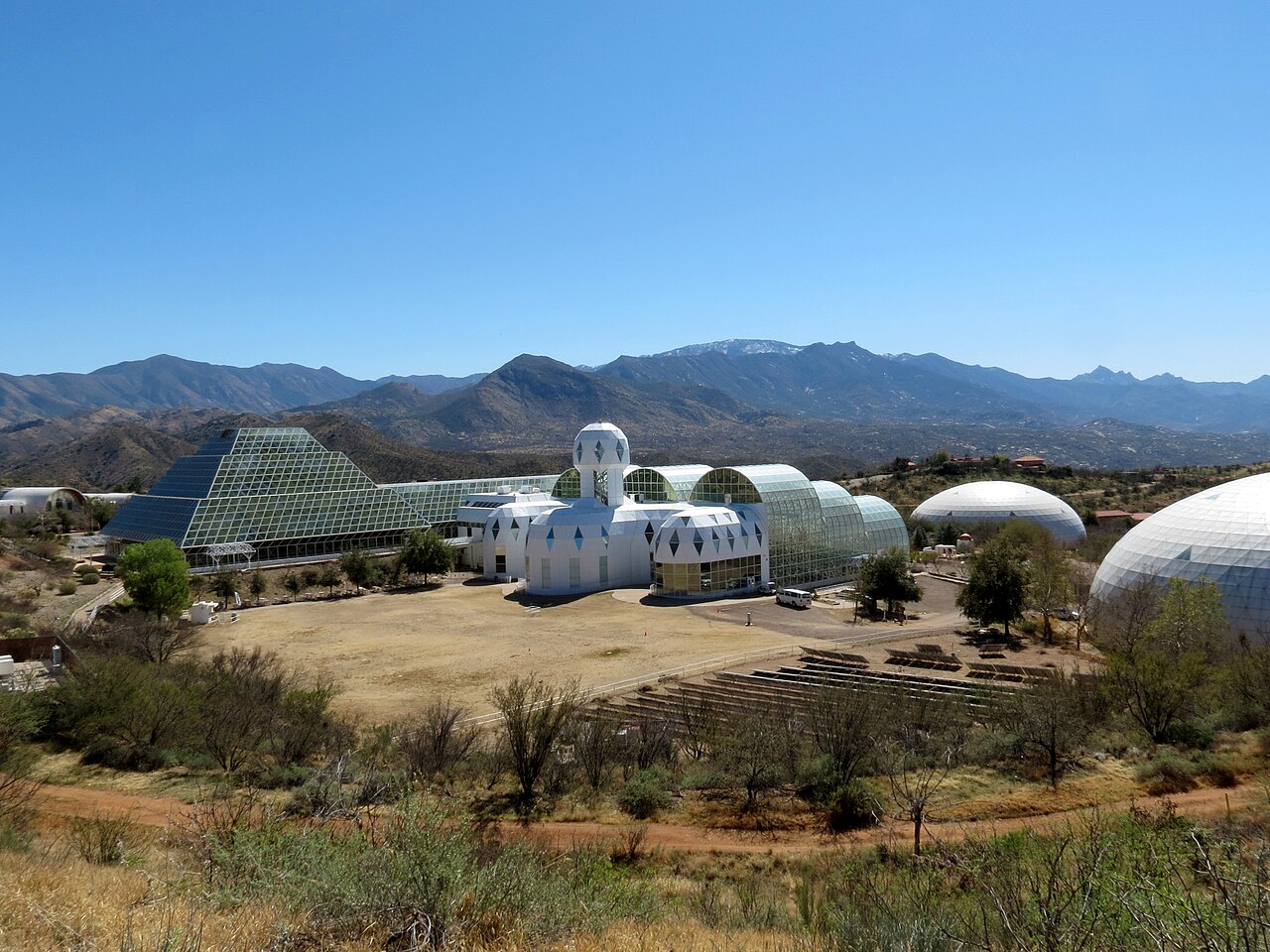
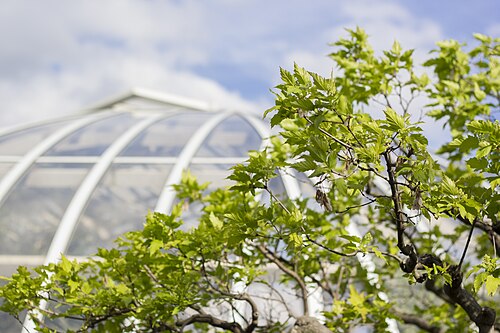
Built from 1987 to 1991 near Oracle, Arizona, with 150 million dollars from Ed Bass, Biosphere 2 encloses a miniature world of 3.14 acres under 6,500 windows and a steel structure designed by Peter Jon Pearce: rainforest, ocean with a reef, mangrove, savanna, fog desert and a farm. Eight people lived inside in a closed system from 26 September 1991 to 26 September 1993. Owned by the University of Arizona since 2011, the site has become an Earth-science laboratory open to visitors.
Affiliate links — booking through Verrière helps fund our research, at no extra cost to you.
History
1 min
Biosphere 2 was launched in 1984 by the billionaire Ed Bass and the systems ecologist John P. Allen, who had met in the 1970s at the Synergia Ranch in New Mexico. Bass provided 150 million dollars until 1991, and the company Space Biosphere Ventures managed construction from 1987 to 1991.
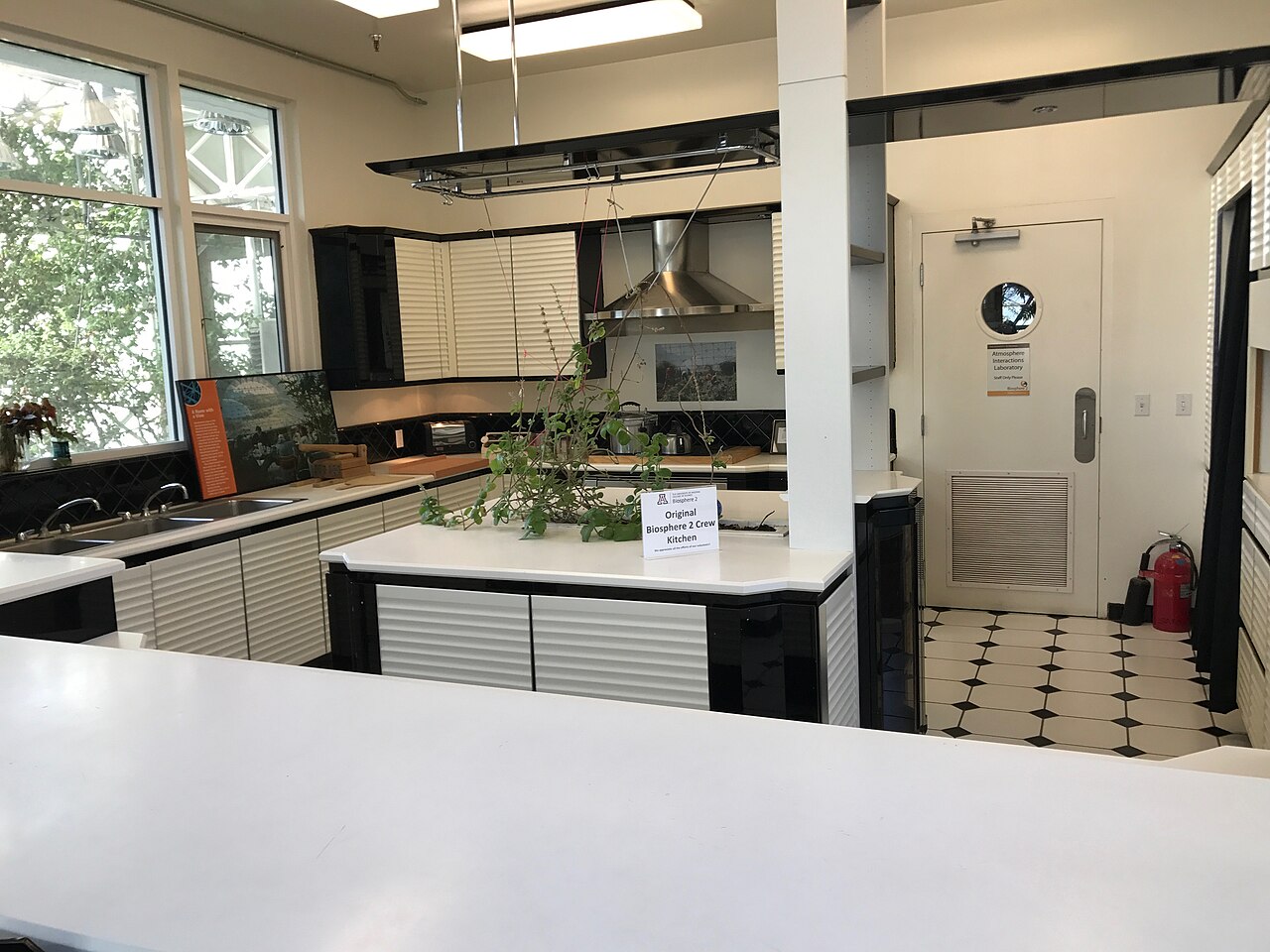
The first closed mission lasted exactly two years, from 26 September 1991 to 26 September 1993, with a crew of eight. The internal farm produced 83 per cent of their diet, but oxygen fell from 20.9 to 14.5 per cent within sixteen months, forcing oxygen injections in January and August 1993. A second mission, announced for ten months, began on 6 March 1994 and ended early on 6 September amid a management crisis; Space Biosphere Ventures was dissolved on 1 June 1994.
Columbia University ran the site from December 1995 to 2003. In 1996 it replaced closed operation with a flow-through system and manipulated carbon dioxide levels to study global warming, with students spending whole semesters on site. The University of Arizona took over research on 26 June 2007 and became full owner in 2011, the year the Philecology Foundation pledged 20 million dollars. Ed Bass donated a further 30 million in 2017.
Architecture and engineering
1 min
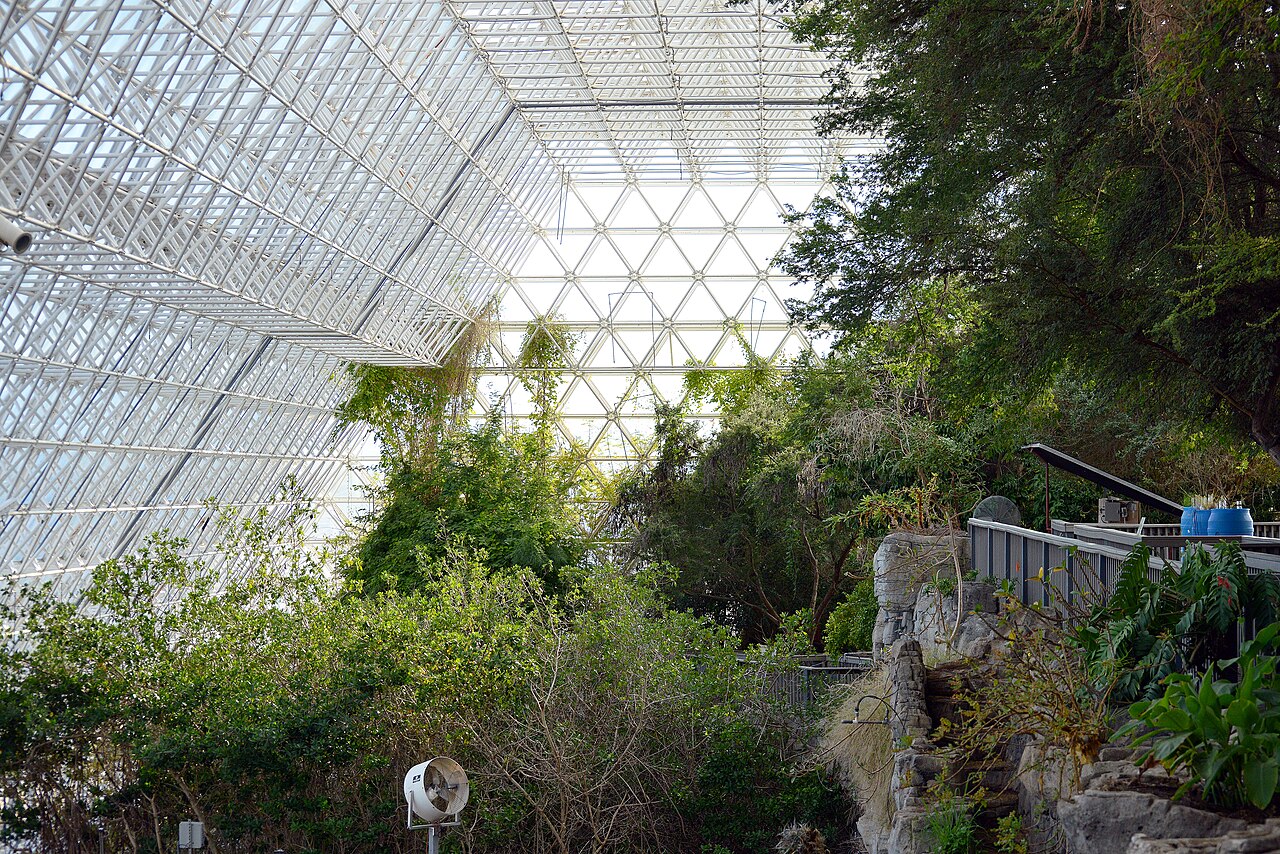
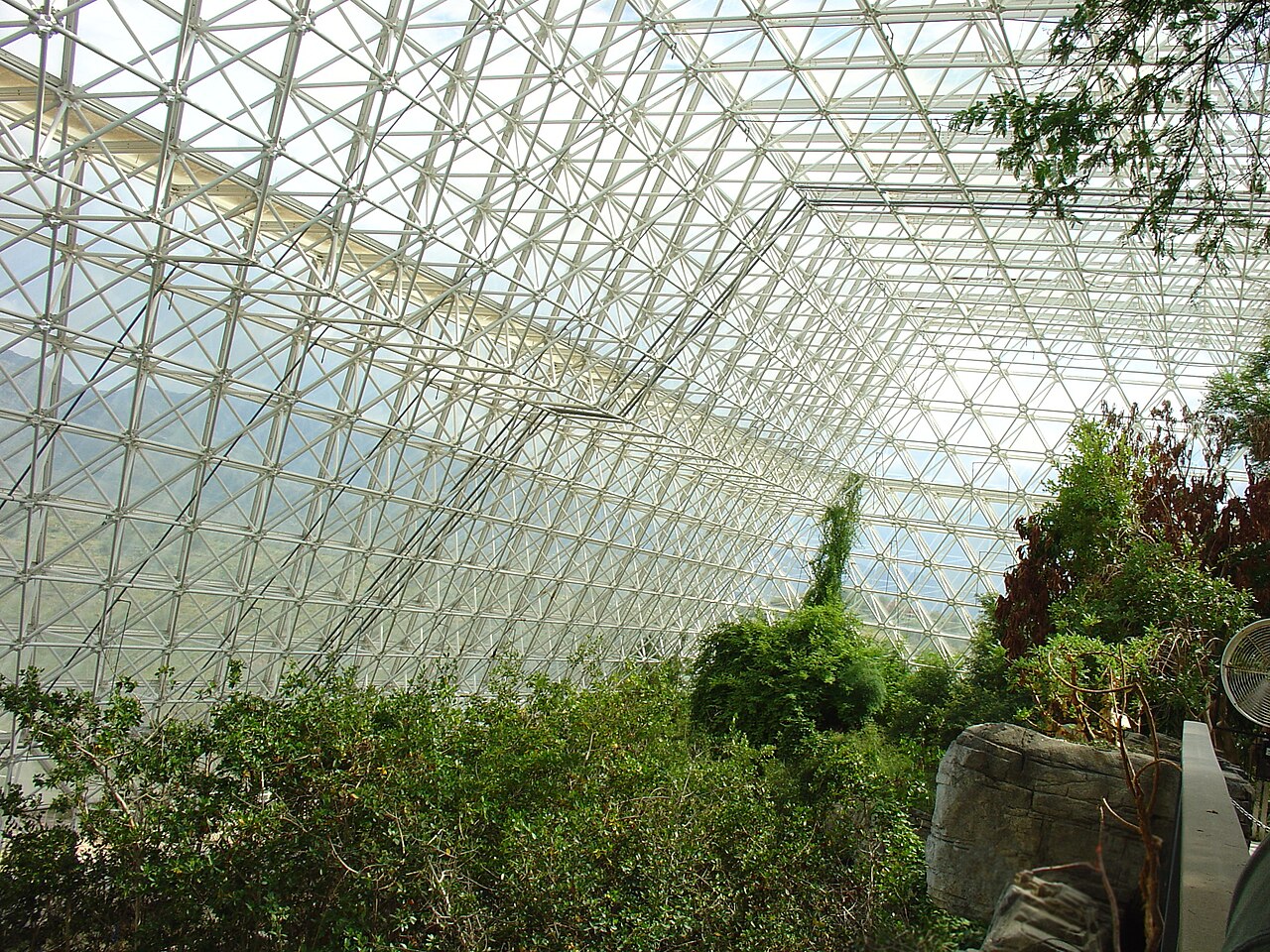
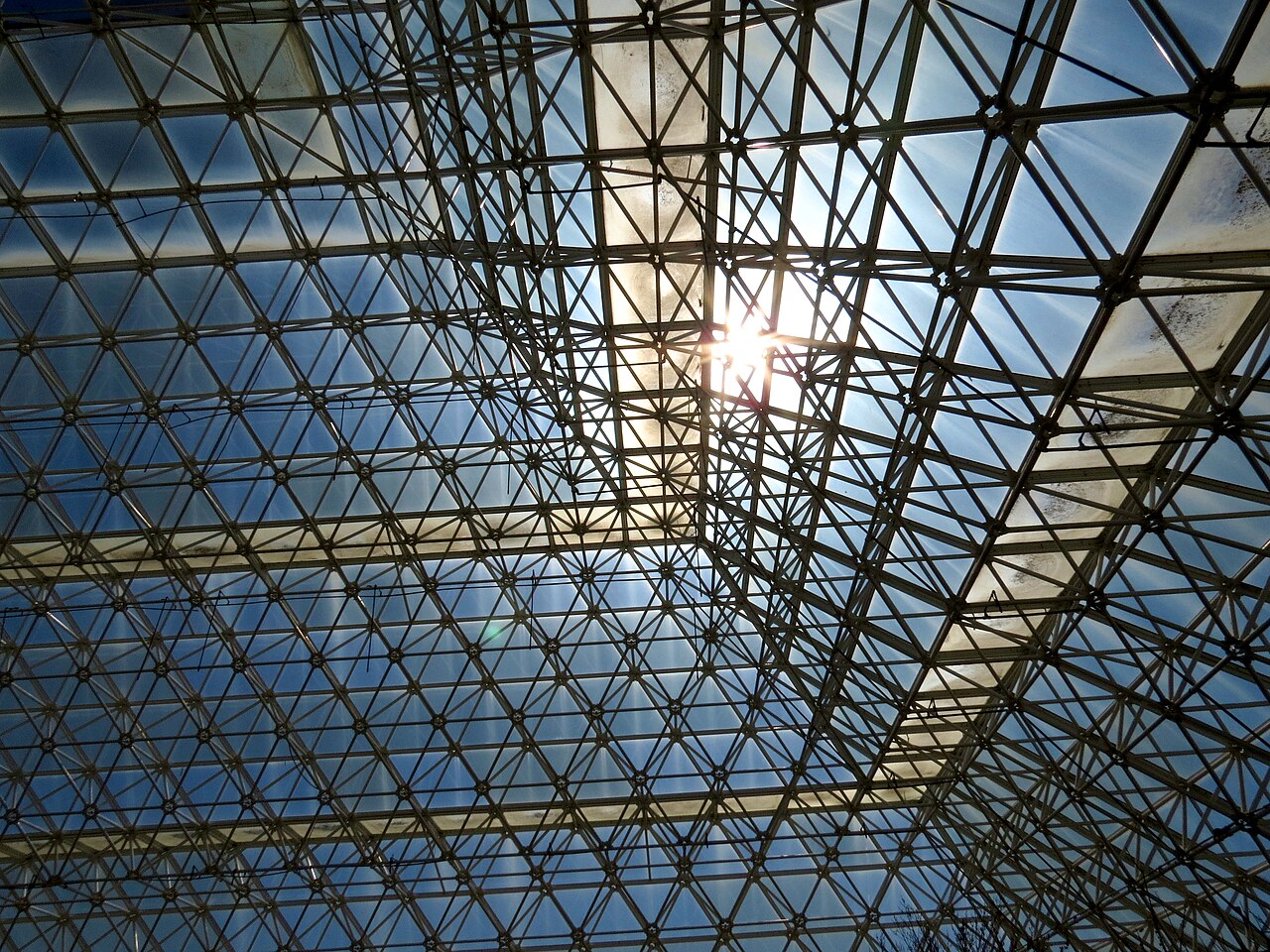
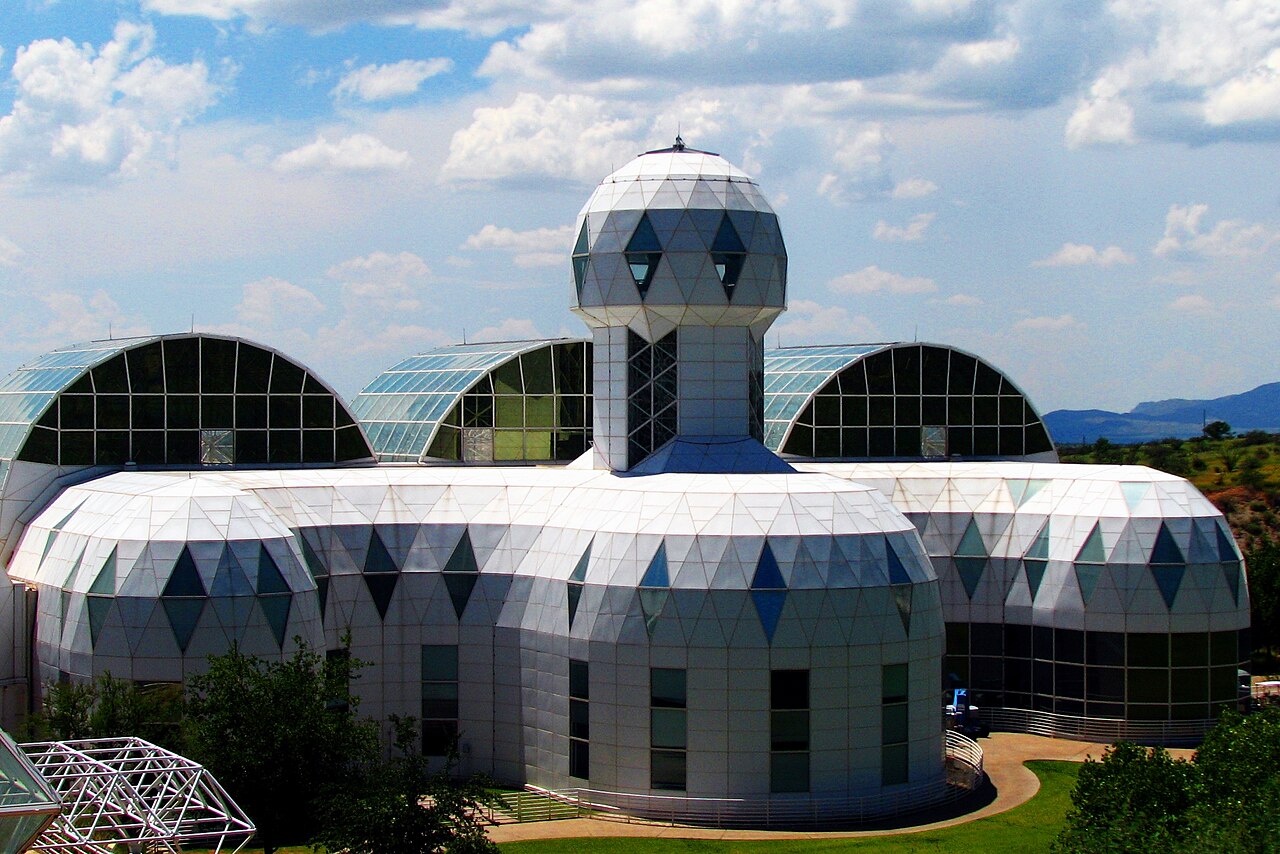
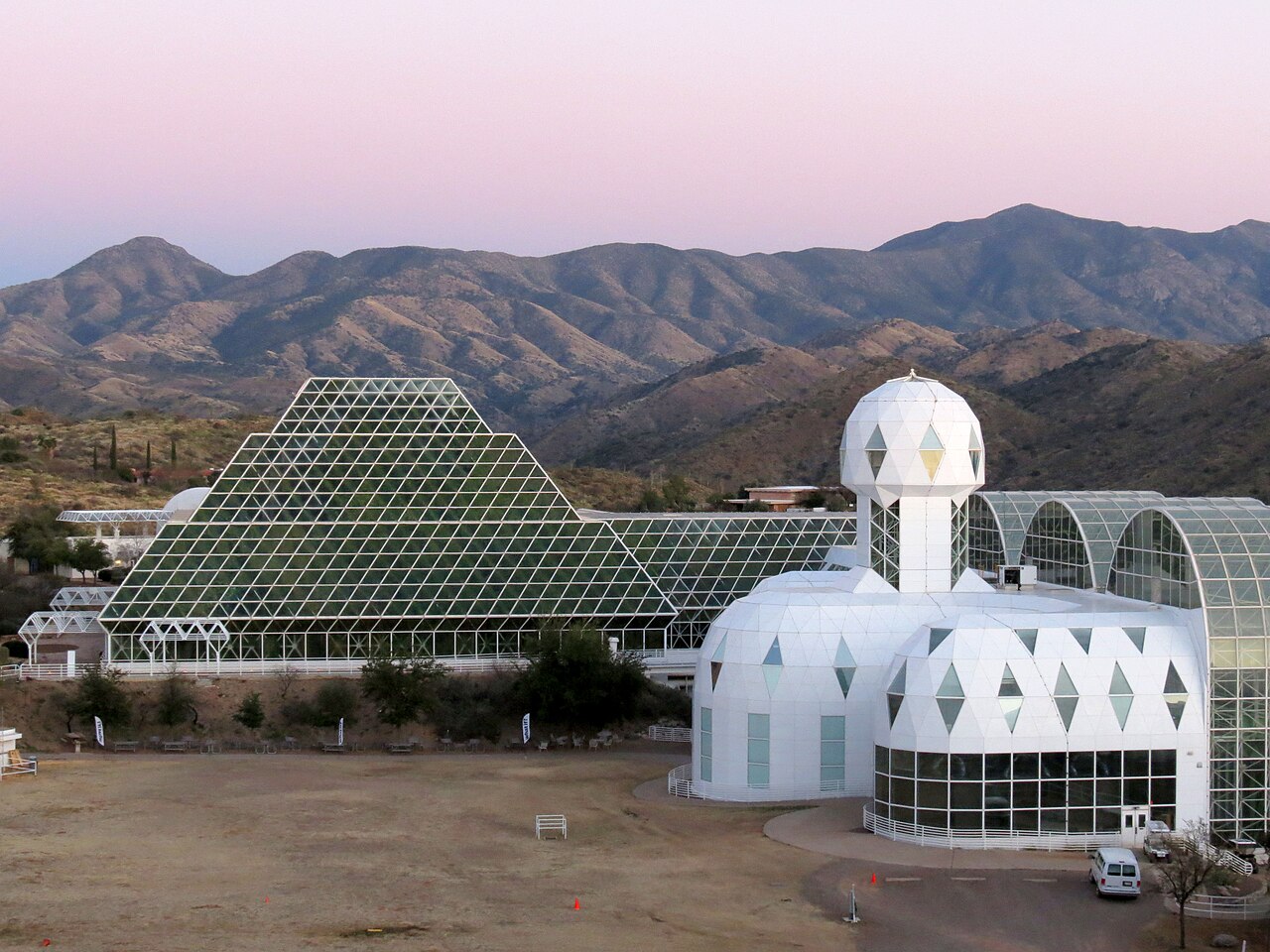
Phil Hawes, architect of record from 1985 to 1992, designed the complex with Margaret Augustine. The tubular-steel structure and high-performance glazed frames were designed by Peter Jon Pearce (Pearce Structures), and the sealing methods developed with William Dempster kept air leakage below 10 per cent a year. The envelope covers 3.14 acres (about 12,700 m²) and encloses some 7.2 million cubic feet (about 204,000 m³) under 6,500 windows.
Two large 'lungs', diaphragm structures of variable volume, regulate the pressure of the enclosed air. Outside the enclosure, an energy centre running on natural gas, with backup generators, ammonia chillers and cooling towers, maintains the interior climate.
The site lies at 1,164 m on a 40-acre campus. Newer installations have been added, notably the Landscape Evolution Observatory: three large artificial hillsides on steel frames, fitted with 1,800 sensors, which together form the world's largest weighing lysimeter.
Plant collections
1 min
Seven areas make up the whole: rainforest (about 1,900 m²), ocean with a reef (850 m²), mangrove wetlands (450 m²), savanna (1,300 m²), coastal fog desert (1,400 m²), agricultural system (2,500 m²) and human habitat. The rainforest was assembled from more than 400 species and 2,800 plants brought from Puerto Rico, Belize, Venezuela and Brazil, and some trees reach 74 to 80 feet. It now holds about a hundred plant species, with coffee and cocoa among the recent additions.
The ocean, a 35 × 20 m basin 7 m deep holding 2.6 million litres, was designed as a Caribbean reef and now houses some sixty fish along with urchins and anemones. The mangrove, planted with 542 mangroves, is divided into six sections running from a freshwater pond to fringing red mangrove. The desert, dense scrub at first, shifted towards Mediterranean woodland and later to more arid conditions.
Visiting
1 min
Biosphere 2 stands at 32540 S Biosphere Road near Oracle, Arizona, and belongs to the University of Arizona. Visits are self-guided, with an audio walking tour delivered through an app that tells the site's history, shows previously unpublished photographs and explains current research; interactive science exhibits line the route. Allow at least two hours for the biomes and grounds. The site received about 100,000 visitors a year in 2011; a virtual tour is also available online, and science camps welcome students and school groups.
32.58° N, 110.85° W
Greenhouses nearby
More greenhouses — United States
Do you have a good photo of this greenhouse? Suggest it for this page →