Desert Garden Conservatory, The Huntington
San Marino, California

Sources checked September 2026
- Year
- 1985
- Style
- Conservation greenhouse for cacti and succulents
- Dimensions
- 280 m² (3,000 sq ft), within a 4-hectare desert garden
- Status
- In operation
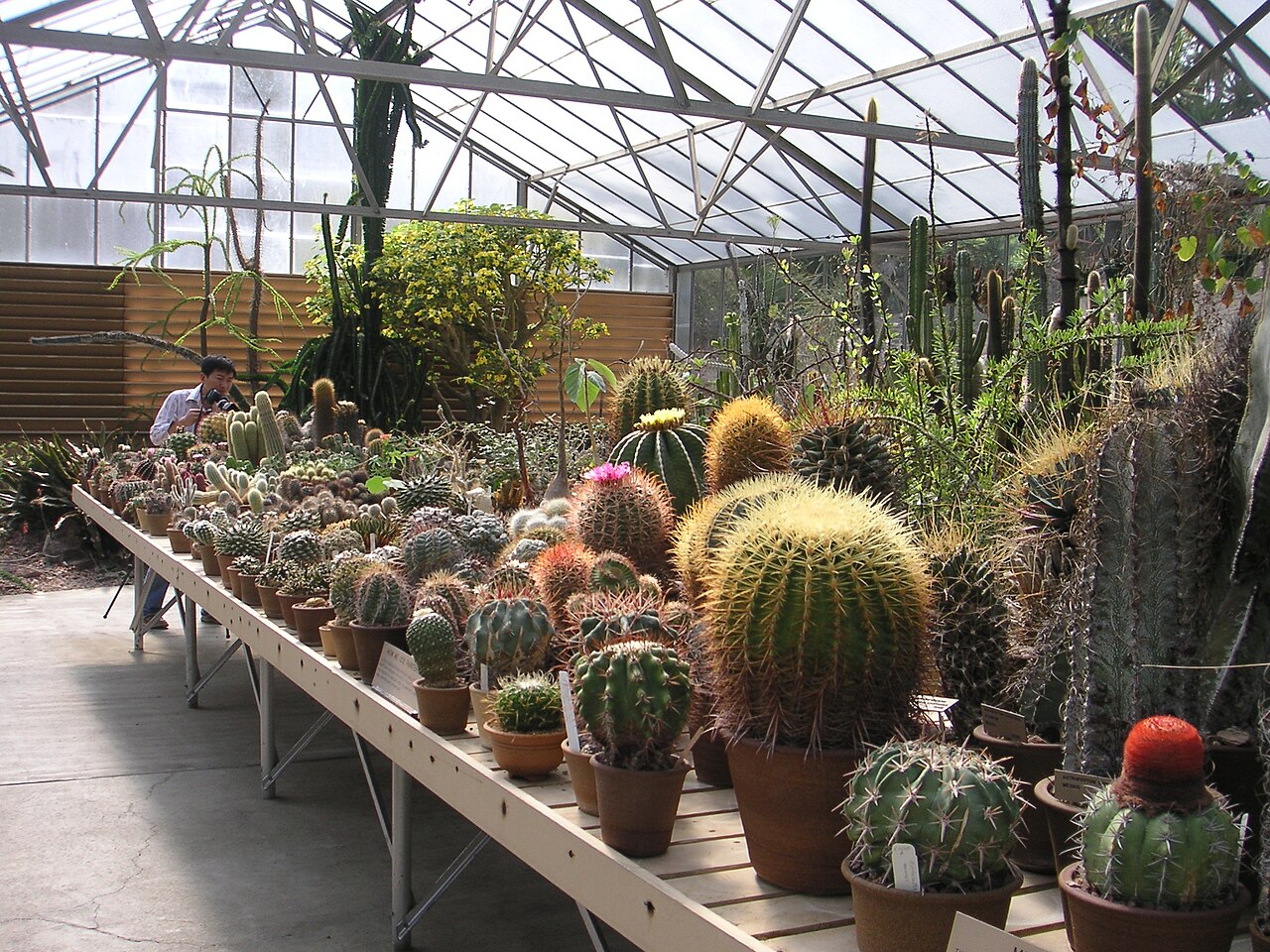
Opened in 1985 within The Huntington's Desert Garden in San Marino, this 3,000-square-foot conservation greenhouse holds more than 2,200 accessions representing 1,261 species and subspecies, 246 genera and at least 43 plant families, many of them rare or endangered. It houses succulents that the local climate does not allow to be grown outdoors, serves as a genetic reserve and research resource, and supplies the International Succulent Introductions programme, which releases some forty nursery-propagated succulents each year.
Affiliate links — booking through Verrière helps fund our research, at no extra cost to you.
History
The conservatory extends one of the oldest collections of desert plants in the world. The Huntington's Desert Garden began in 1907, when William Hertrich, Henry E. Huntington's first superintendent of grounds, started gathering specimens from local nurseries, private homes and public parks, and on collecting trips to the American Southwest and Mexico. Huntington initially disliked cacti; it was Hertrich who persuaded him to create the garden, at a time when xerophytes were little valued. The garden gradually rose to international standing, to the point that the Brazilian landscape architect Roberto Burle Marx called it the most extraordinary garden in the world.
The Desert Garden Conservatory opened in 1985 to house succulents whose needs cannot be met outdoors, even in the San Marino climate. It serves at once as a conservation facility, a research resource and a reserve of genetic diversity, at a time when a large share of the world's flora is under threat. It is closely tied to the International Succulent Introductions (ISI) programme, through which The Huntington distributes nursery-propagated plants rather than wild-collected ones; John N. Trager is curator of the collection. In 2020 the Desert Garden appeared on a US postage stamp in the American Gardens series.
Architecture and engineering
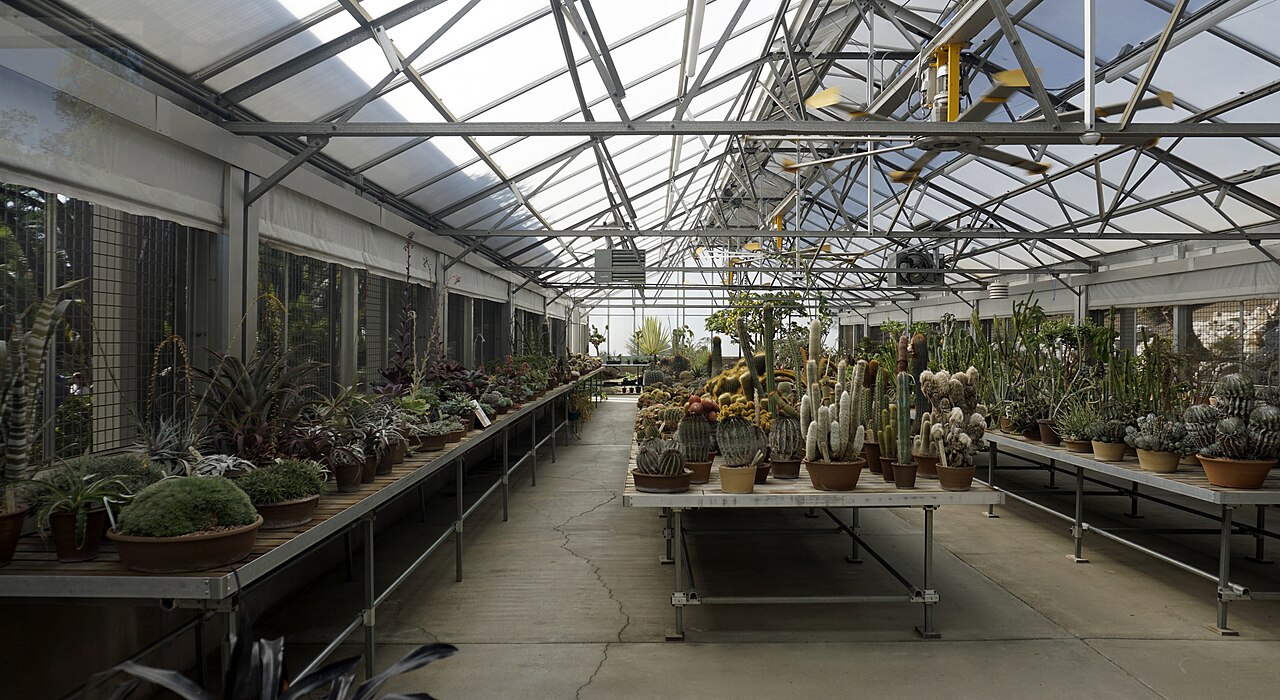
The conservatory covers about 3,000 square feet (roughly 280 m²) and sits within the Desert Garden, whose ten acres (4 ha) are laid out in some sixty planted beds on The Huntington's grounds at 1151 Oxford Road. It is a working growing house rather than a showpiece pavilion, designed to give a controlled environment to the most demanding or fragile species, those that the San Marino climate, favourable as it is to desert plants, cannot protect on its own.
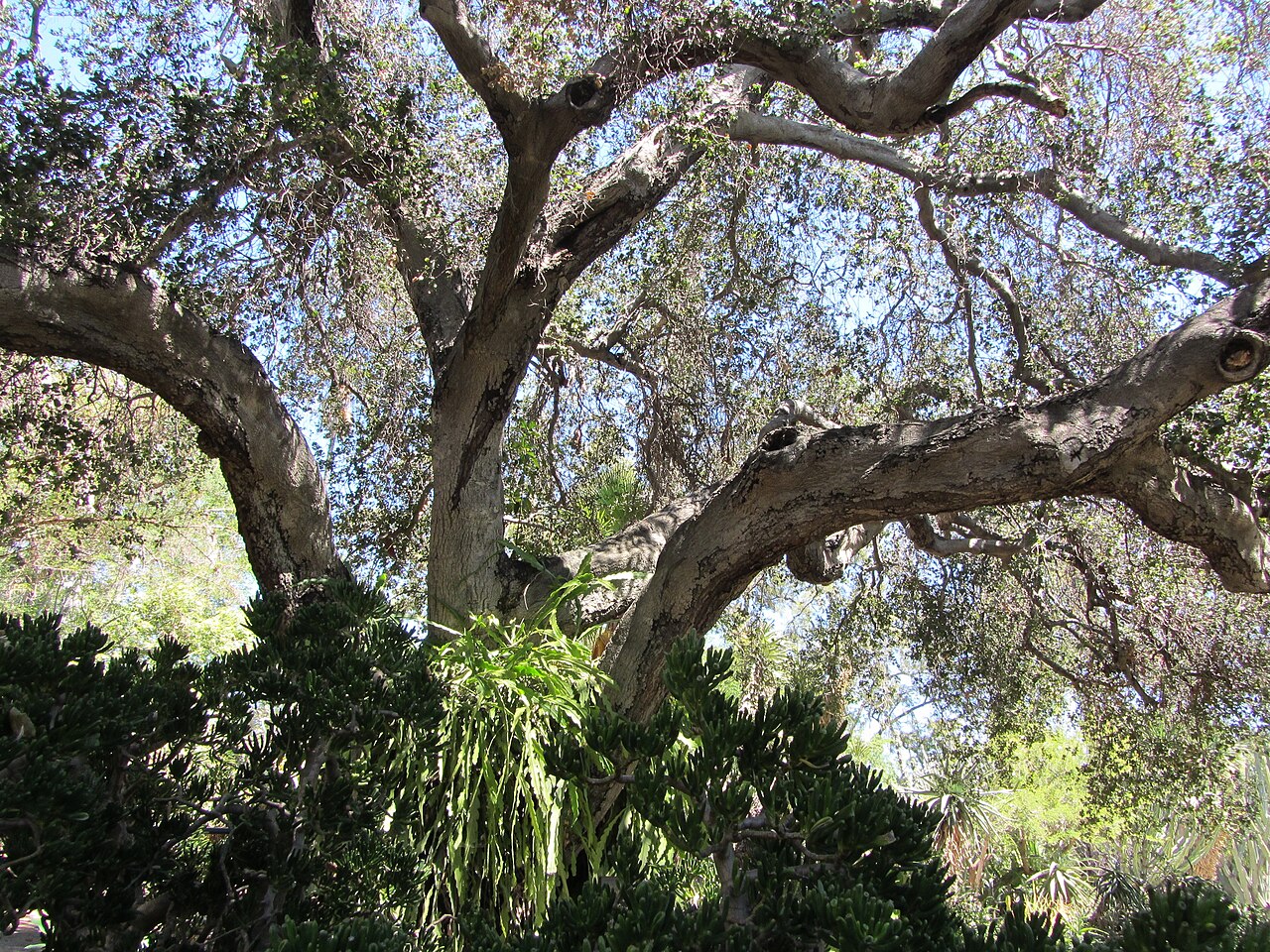
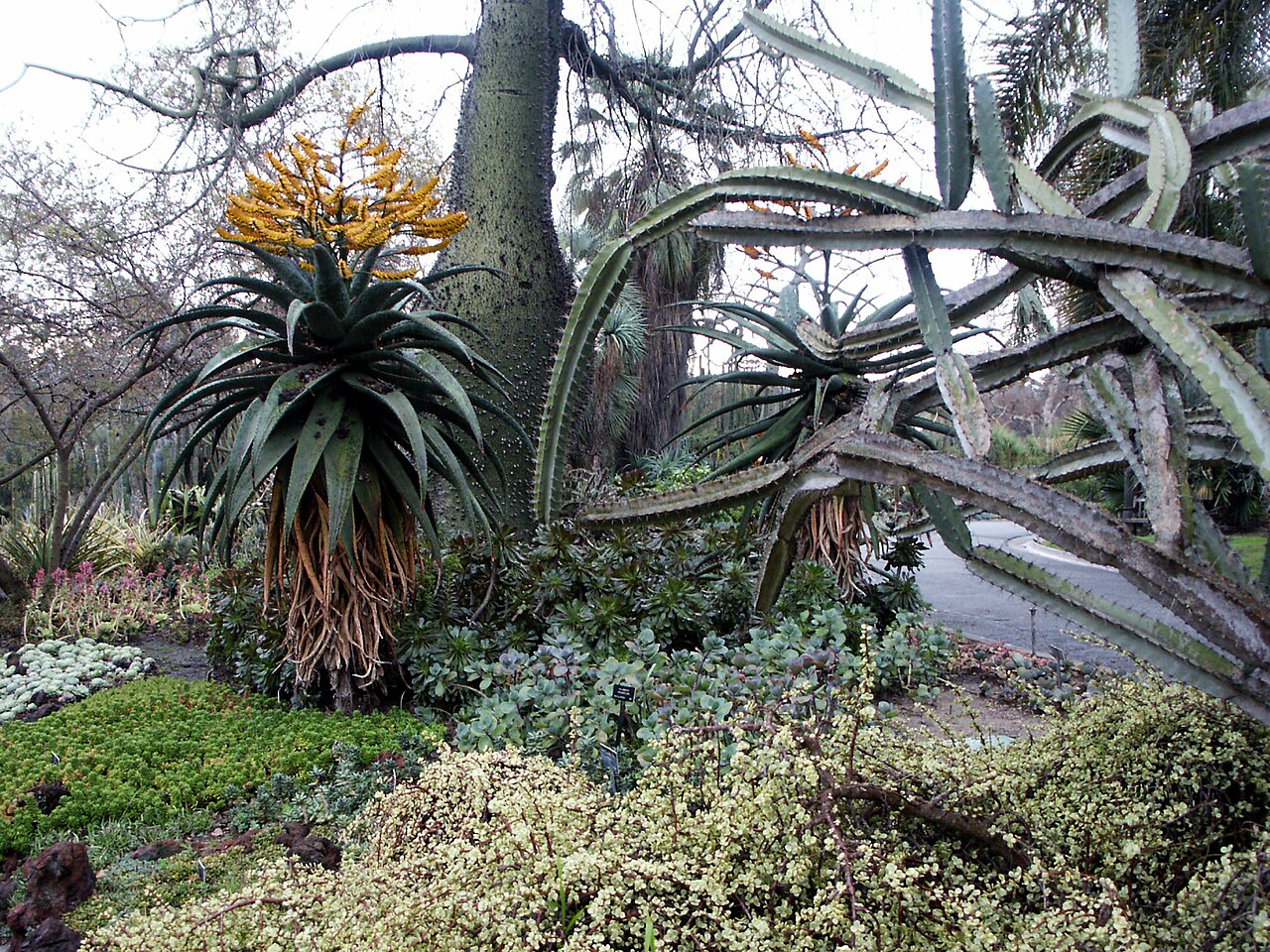
The modest size of the shelter reflects the nature of the collection: most of The Huntington's large cacti, agaves and aloes grow in open ground a few steps away, some of them reaching considerable size. The conservatory instead concentrates collection plants, often rare, each catalogued and tracked individually as an accession.
Plant collections
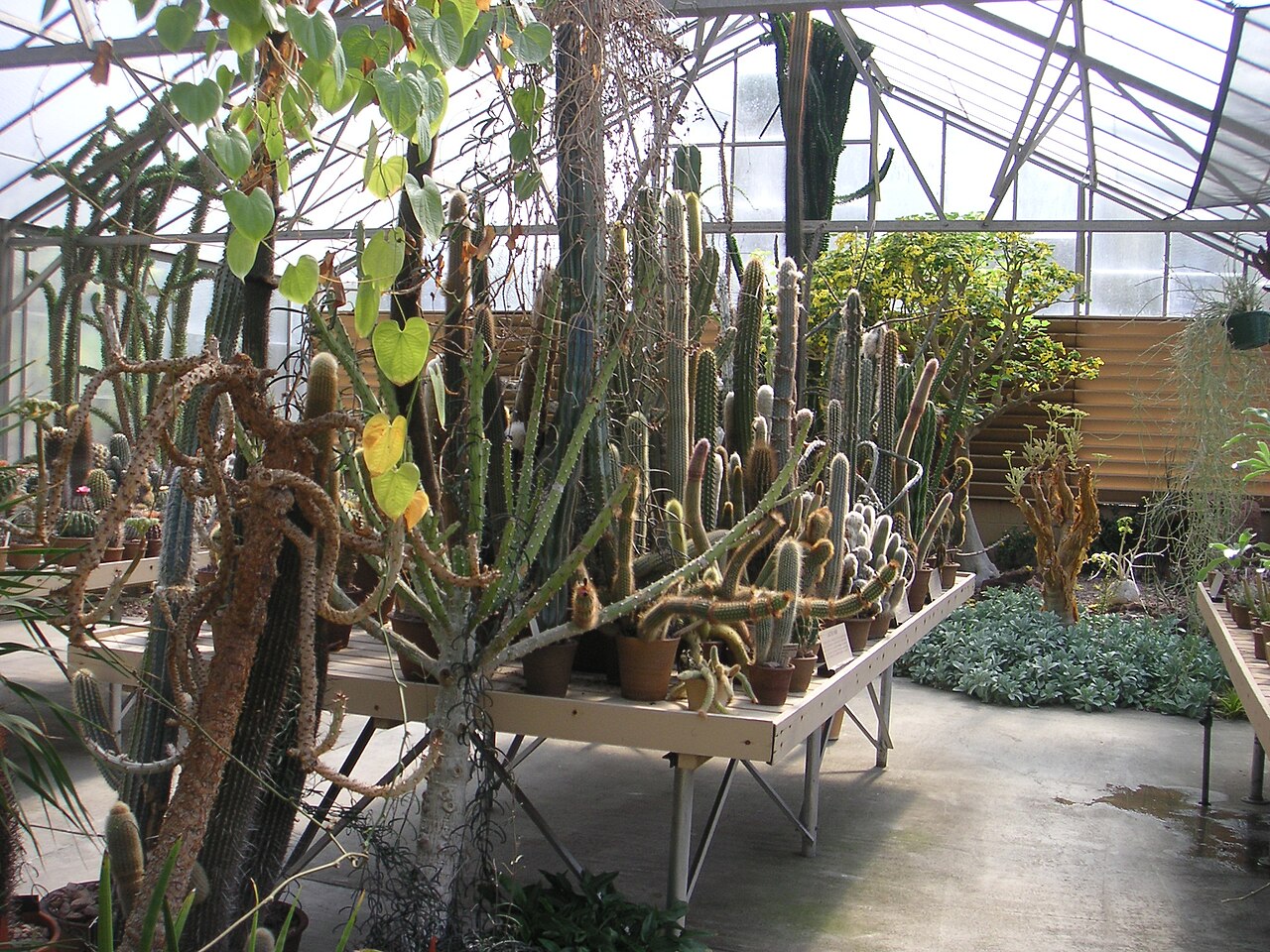
The conservatory holds more than 2,200 accessions, representing over 1,261 species and subspecies in 246 genera and more than 43 plant families. Cacti grow alongside Aizoaceae, Agavaceae, Crassulaceae and other succulent families from the southern United States, Mexico, Argentina, Bolivia, Chile, Brazil, the Canary Islands, Madagascar, Malawi and South Africa, many of them rare or endangered. Its oldest resident may be a Pachypodium horombense collected in Madagascar in 1928.
The collection also includes the Schick hybrids, derived mainly from Harry Johnson's Paramount hybrids of the 1930s and 1940s, which can flower several times between April and October. Through ISI, The Huntington releases some forty new succulents to growers each year, each identified by a release number: Aloe helenae, for instance, was distributed as ISI 2019-16, and Cyrtocarpa edulis entered horticulture through the programme in 2021.
Visiting
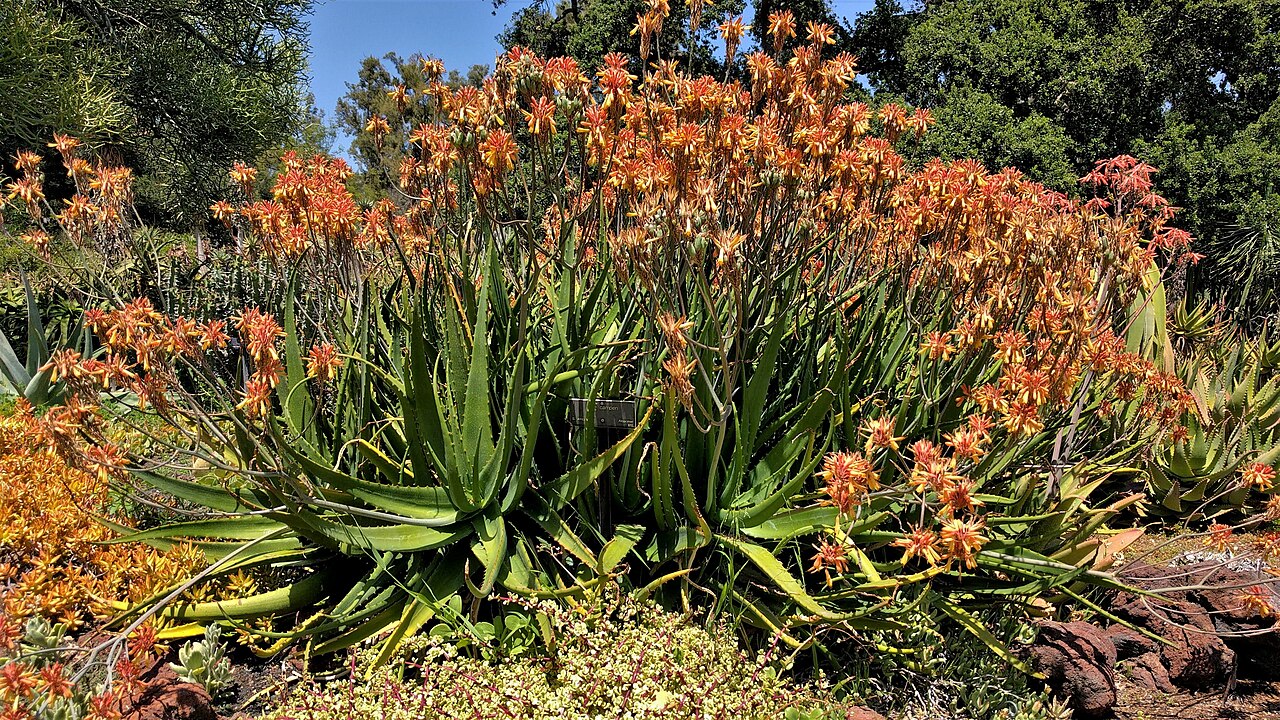
The conservatory is reached on a walk through the Desert Garden, which holds more than 5,000 species of arid-land plants, including over 500 golden barrel cacti (Echinocactus grusonii), the largest more than 85 years old, and around 200 aloe species in the upper garden. A twenty-ton Cereus xanthocarpus has grown there since 1905, and The Huntington claims the world's largest Yucca filifera. Near the lily ponds stands a Canary Islands dragon tree, the garden's oldest plant.
Winter is aloe season, with the red flower spikes of Aloe arborescens, while the puyas bloom in April and early May. A visit combines naturally with the Japanese and Chinese gardens and with the library and art galleries.
34.13° N, 118.11° W
Greenhouses nearby
Architecture nearby
More greenhouses — United States
Do you have a good photo of this greenhouse? Suggest it for this page →
Sources (8)
- huntington.org/desert-garden
- huntington.org/desert-garden-conservatory
- en.wikipedia.org/wiki/Desert_Garden_Conservatory
- es.wikipedia.org/wiki/Conservatorio_del_Jard%C3%ADn_del_Desierto
- en.wikipedia.org/wiki/Huntington_Desert_Garden
- en.wikipedia.org/wiki/Aloe_helenae
- en.wikipedia.org/wiki/Cyrtocarpa_edulis
- en.wikipedia.org/wiki/Huntington_Library
Affiliate links — booking through Verrière helps fund our research, at no extra cost to you.