Wolfstal Camellia House (Roßwein Camellia)
Roßwein (Wolfstal), Saxony

Sources checked October 2026
- Year
- 1961
- Style
- Glasshouse rebuilt in 1961 and reglazed in 1992
- Dimensions
- ≈ 16 m × 8 m (footprint measured on OpenStreetMap)
- Status
- Open to the public in season, at weekends, from late January to late March (2026: 24 January to 22 March); free entry, donations welcome
In the Wolfstal, reached on foot from Roßwein along the Freiberger Mulde, a greenhouse shelters the Roßwein 'Alba Plena' camellia, about 200 years old and presented by the local history society as the second oldest in Europe north of the Alps, after the one at Pillnitz. Count von Einsiedel bought the land in 1797 and had two greenhouses built there; the present house was torn down and rebuilt in 1961, then reglazed in 1992. The camellia has been a recognised cultural monument since 14 December 2000. Volunteers open the greenhouse to visitors at weekends, from late January to late March.
Affiliate links — booking through Verrière helps fund our research, at no extra cost to you.
History
In 1797 Count von Einsiedel bought a plot in the Wolfstal, near Roßwein, and had two greenhouses built there; according to a press article he made it his summer residence. As to how the camellia arrived, the local history society assumes that rare plants were given to the count by the Pillnitz palace nursery, since he frequented the court of Frederick Augustus III. According to the Seifersdorf chronicle, quoted by the same society, real processions of visitors were already making for the Wolfstal at flowering time in 1830, and the local press adds that Roßwein's gardeners' registers mention the plant as early as 1810.
Through changes of ownership, local people took turns to save the shrub: the master gardener Hartmann around 1850, then the carpenter Heller from 1956. The greenhouse was demolished and rebuilt in 1961; the neighbouring buildings housed a children's home and then a youth hostel from 1971 to 2000. In 1992 further works included new glazing but, for lack of money, not the side ventilation, which donations made possible in 2003.
Since 2000 the Roßwein local history society has looked after the plant with the town's help, the municipal nursery doing the day-to-day care. The camellia was recognised as a cultural monument on 14 December 2000; the Saxon register dates it to 'around 1850'. According to the local press in 2025, the land is privately owned and the town leases it each year.
Architecture and engineering
The present greenhouse dates from 1961, the year the previous one was demolished and rebuilt. It was reglazed in 1992; the side ventilation, left out at the time, was added only in 2003, thanks to donations, to regulate temperature and humidity. In its appeal for donations the society also mentions new soil for the beds, a roof repair and maintenance of hydraulic installations. According to the OpenStreetMap map, the building's footprint measures about 16 m by 8 m.
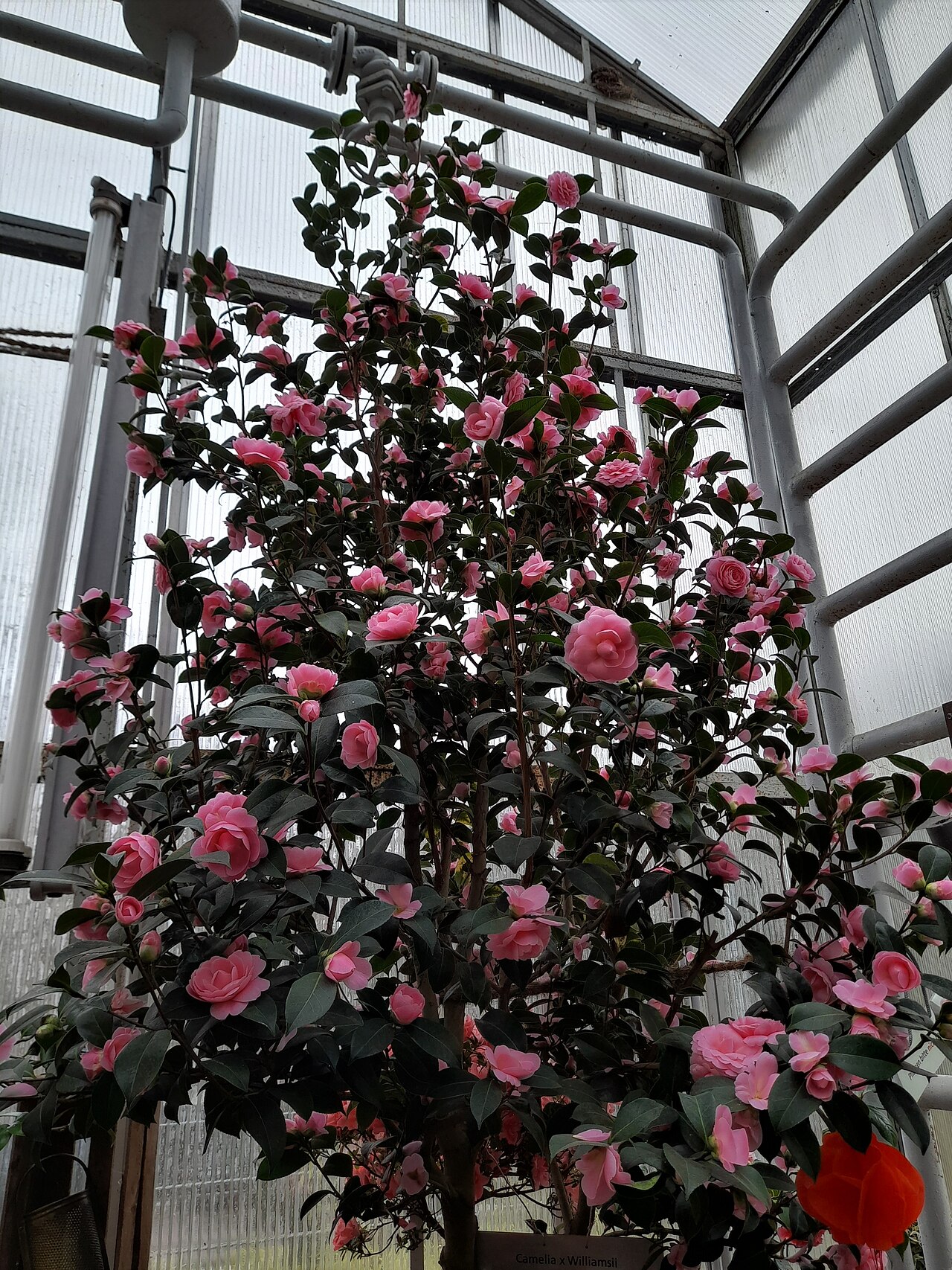
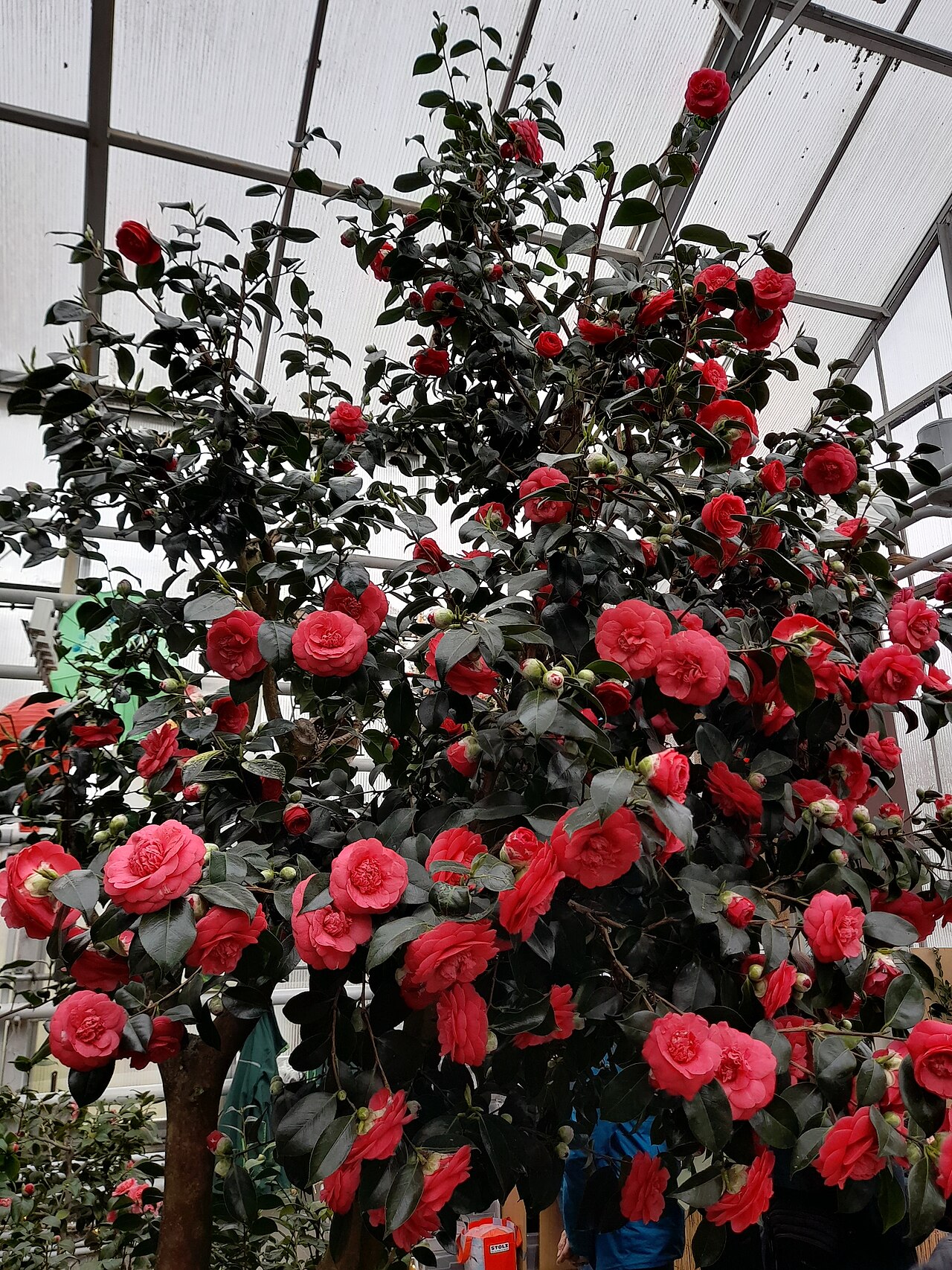
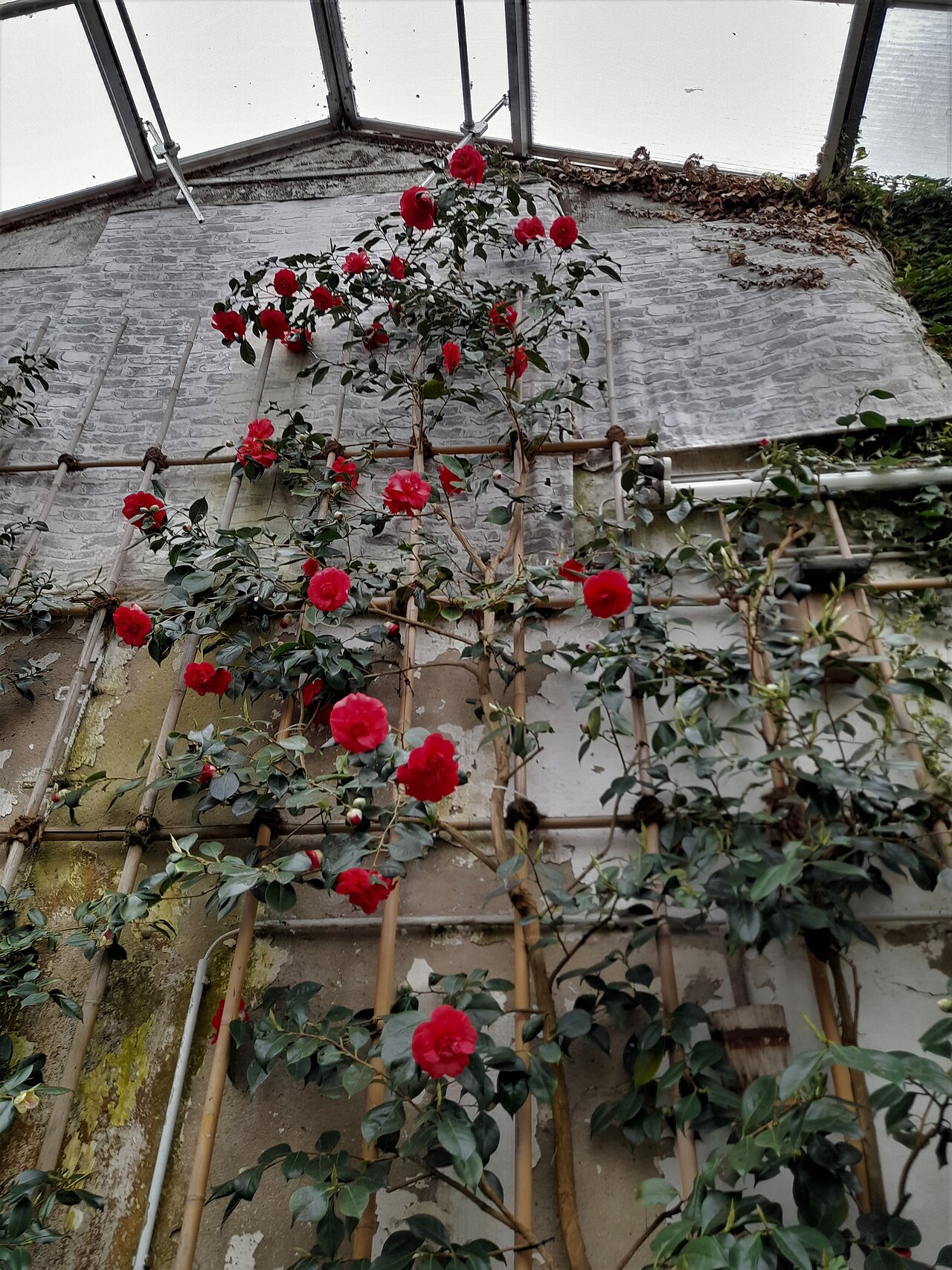
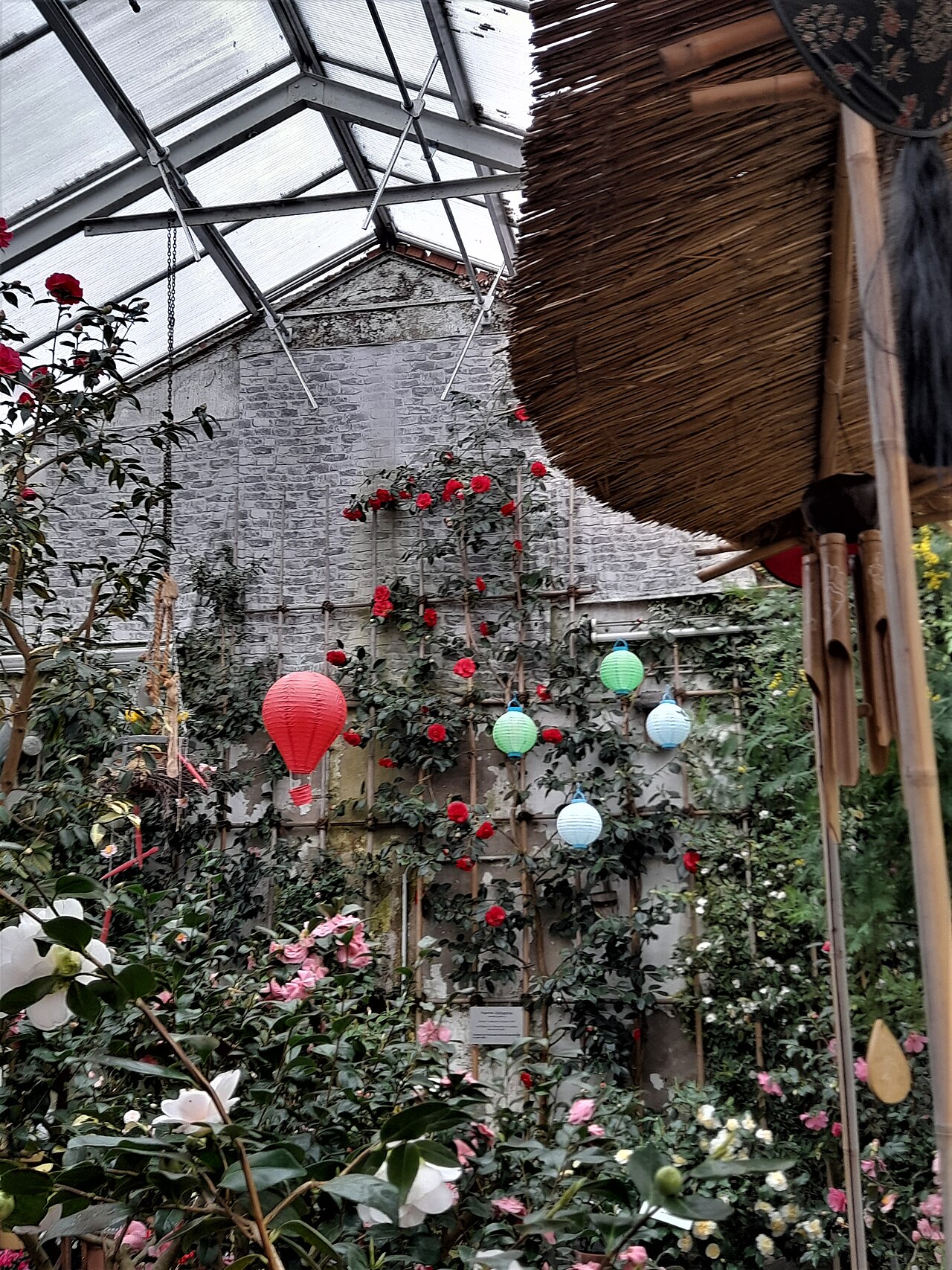
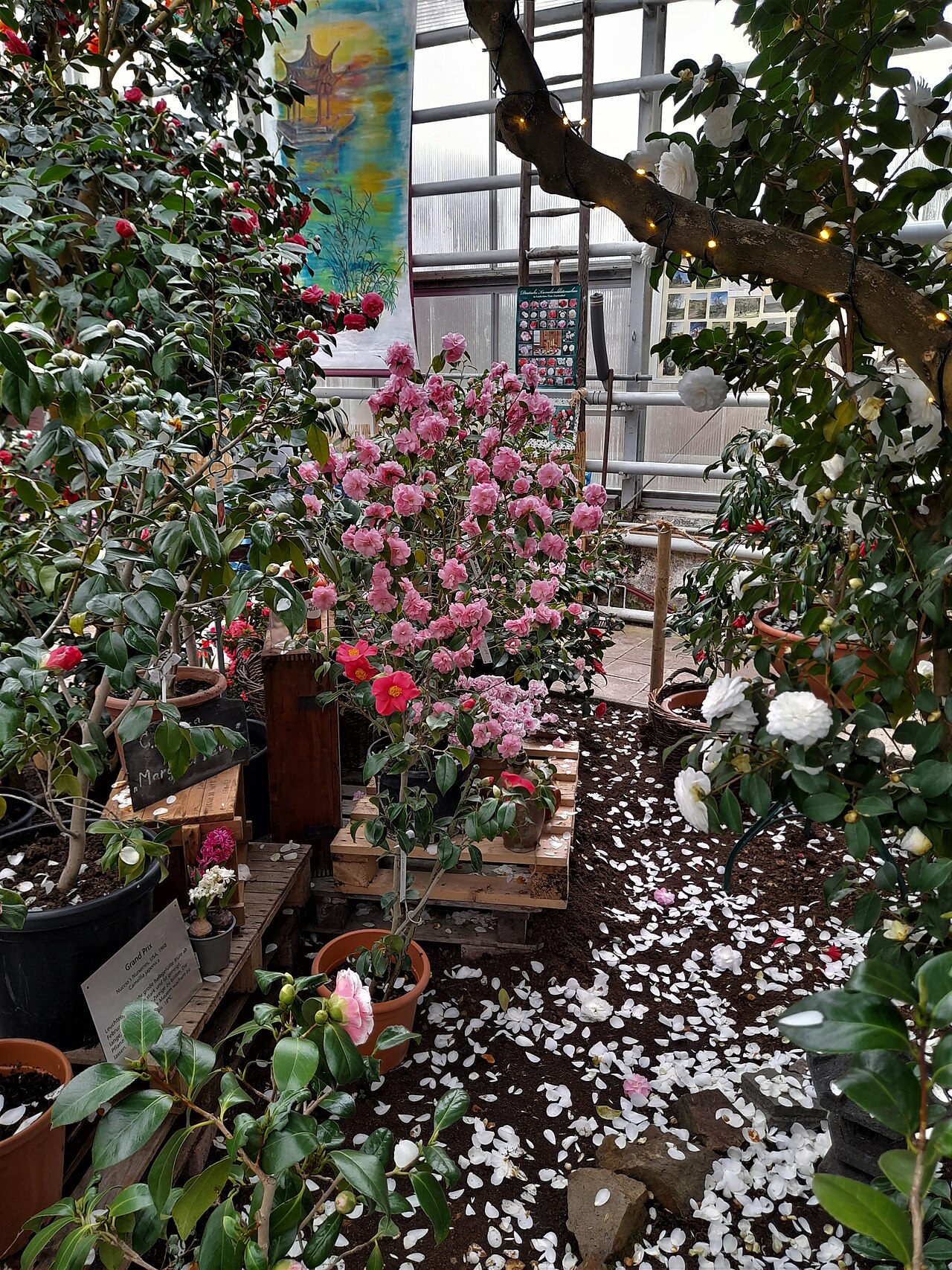
Free photographs on Wikimedia Commons show a simple volume with vertical sides and a low-pitched roof, covered in large translucent panels between light-coloured uprights; inside, the largest camellias grow under a structure of metal sections, and one specimen is trained against a wall. The society's texts speak of glazing without naming the material of the panels. The Saxon monuments register (no. 09206035) lists the camellia itself, not the building; a 'Kulturdenkmal' plaque is nevertheless fixed to the greenhouse.
Plant collections
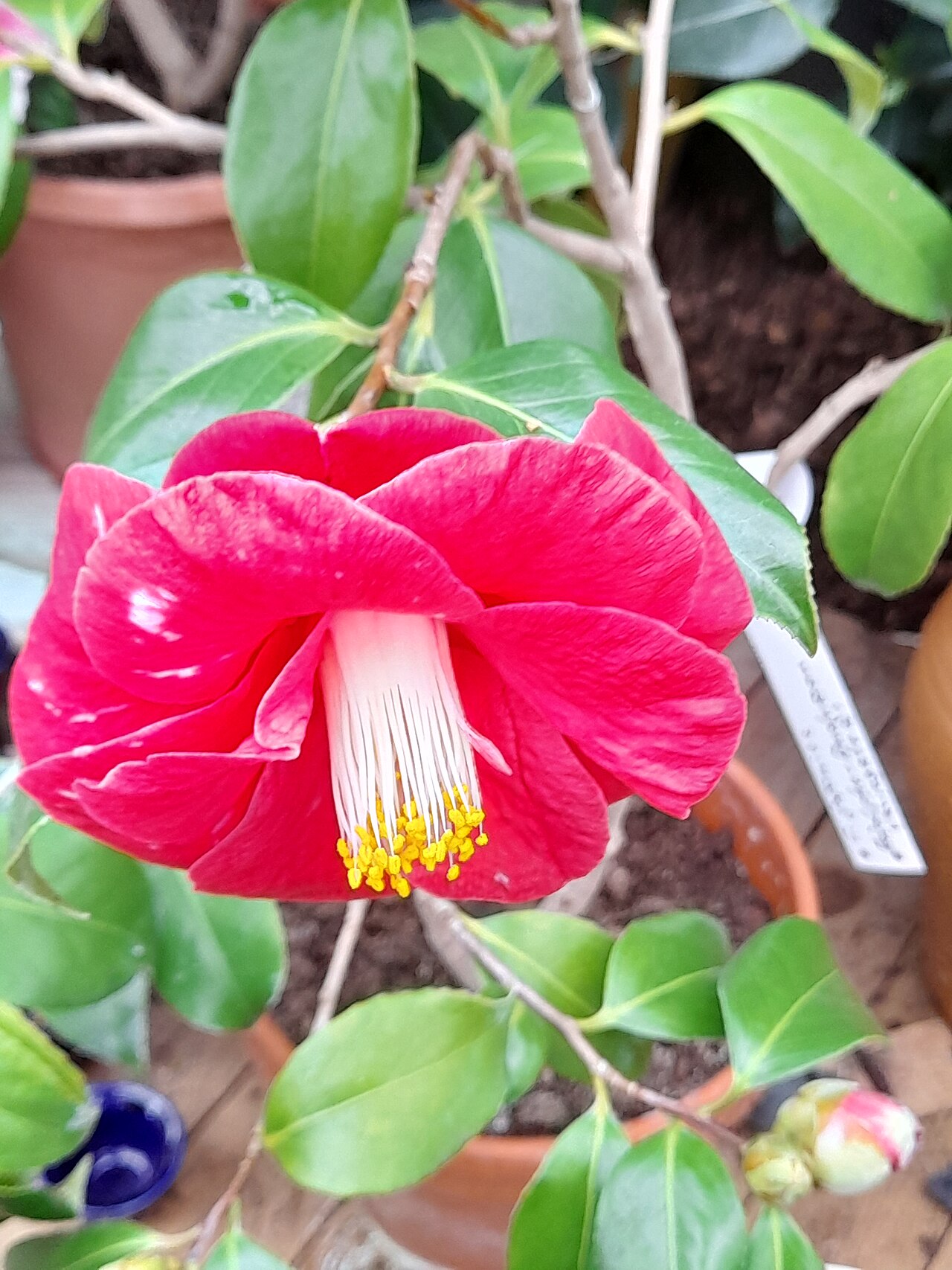
The 'Alba Plena' camellia (Camellia japonica), with double white flowers, is the soul of the greenhouse: the society gives it an age of about 200 years and presents it as the second oldest specimen in Europe north of the Alps, after the one at Pillnitz. The society's head sees in it the oldest double-flowered camellia north of the Alps, in contrast to the single flowers of the Pillnitz camellia; the Saxon register gives 'around 1850' for its part, and these dates do not agree.
Around it, sixteen much younger camellias, according to the local press, carry red and pink flowers. The greenhouse also shows exotic plants: a silver acacia on the society's German page, to which the English version adds a fig tree and palms. In 2025 the decoration included a water feature, a small bridge, azaleas and spring flowers, and the volunteers offered camellias, books and souvenirs for sale.
Visiting
The greenhouse stands in the Wolfstal, away from the road, and opens only for the flowering: in 2026, from 24 January to 22 March, on Saturdays and Sundays, run by volunteers. It is reached on foot from Roßwein by following the Freiberger Mulde towards Gleisberg, along the '100 Stufen' path that passes near 'Grafs Ruhe', or by car to the car park of the swimming pool in the Seifersdorf district, a few minutes' walk away.
Groups are received on Fridays by registration, and visitors with severely reduced mobility are asked to announce themselves so that a reserved space can be kept. A camellia party is traditionally held in early March. Roßwein is about fifty kilometres west of Dresden; according to the Königsbrück town page, it is one of four Saxon sites, with Pillnitz, Zuschendorf and Königsbrück, where camellias have been grown for more than two centuries.
51.07° N, 13.21° E
Greenhouses nearby
More greenhouses — Germany
Do you have a good photo of this greenhouse? Suggest it for this page →
Sources (8)
- rossweiner-heimatverein.de/kamelie/
- rossweiner-heimatverein.de/the-camelia-of-rosswein/
- rossweiner-heimatverein.de/oeffnungszeiten-kamelienhaus-2025/
- rosswein.de/tourismus/kamelie/
- tag24.de/sachsen/geheimtipp-kamelienhaus-ein-bluehendes-wunder-in-rosswein-3367969
- de.wikipedia.org/wiki/Liste_der_Kulturdenkmale_in_Seifersdorf_(Ro%C3%9Fwein)
- commons.wikimedia.org/wiki/Category:Kamelienhaus_Ro%C3%9Fwein
- openstreetmap.org/way/24939917
Affiliate links — booking through Verrière helps fund our research, at no extra cost to you.