Pillnitz Palmenhaus (Palm House)
Dresden, Saxony
Entry updated on October 3, 2026
- Year
- 1859–1861
- Style
- Mid-19th-century cast-iron and glass house: two wings and a central octagon
- Dimensions
- 93.70 m long; ≈660 m²; octagon 12 m high and 15 m wide
- Status
- Open to the public
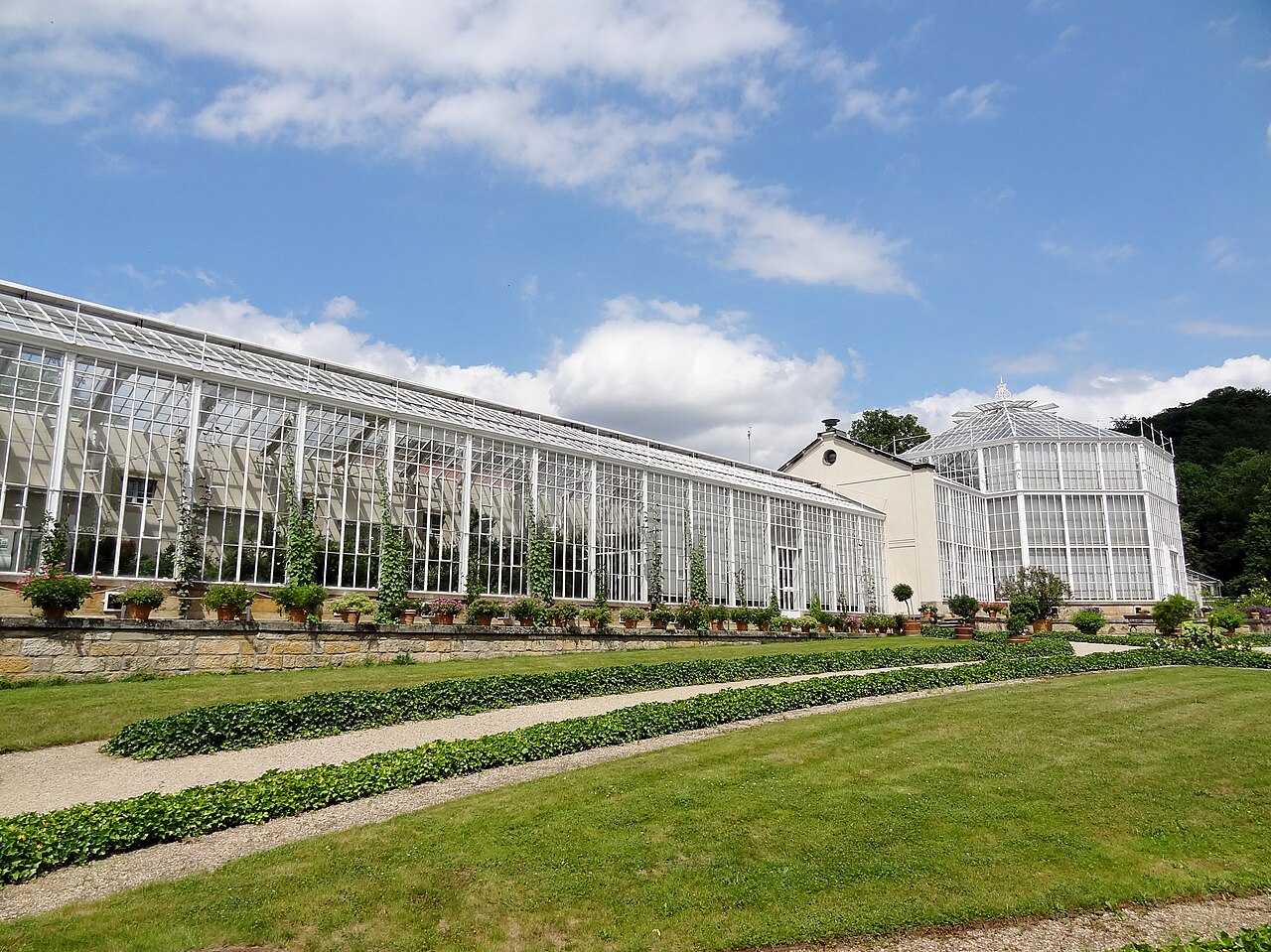
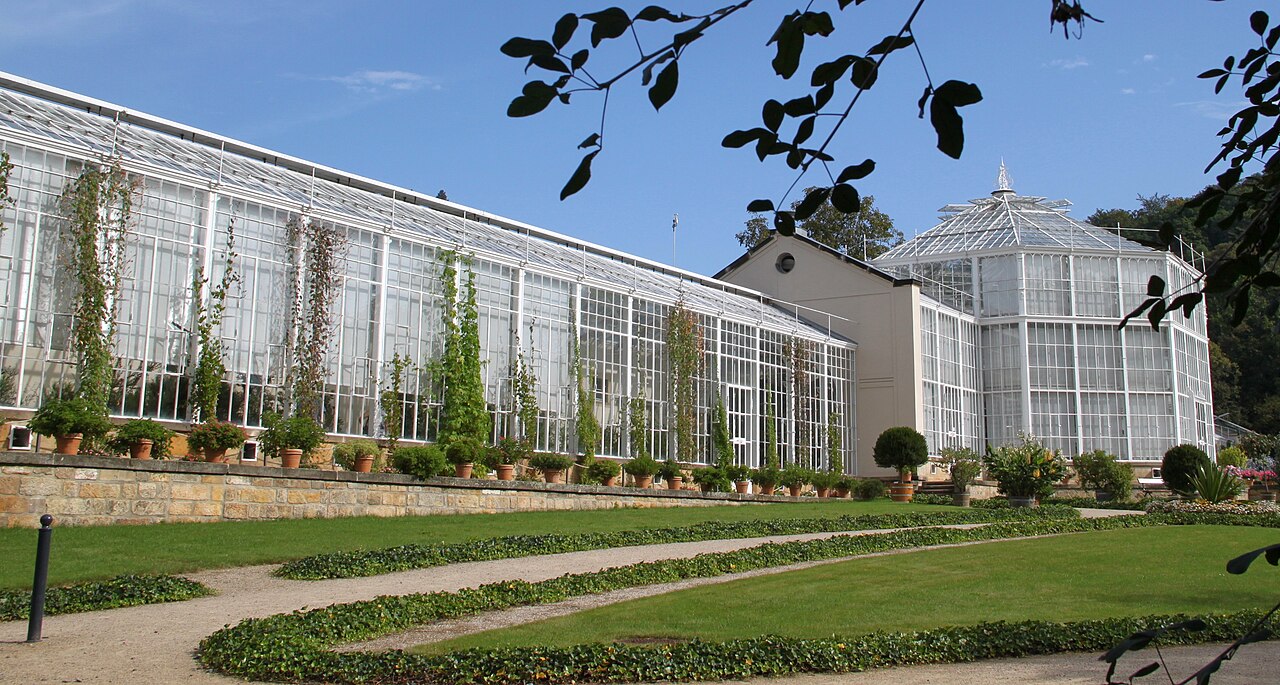
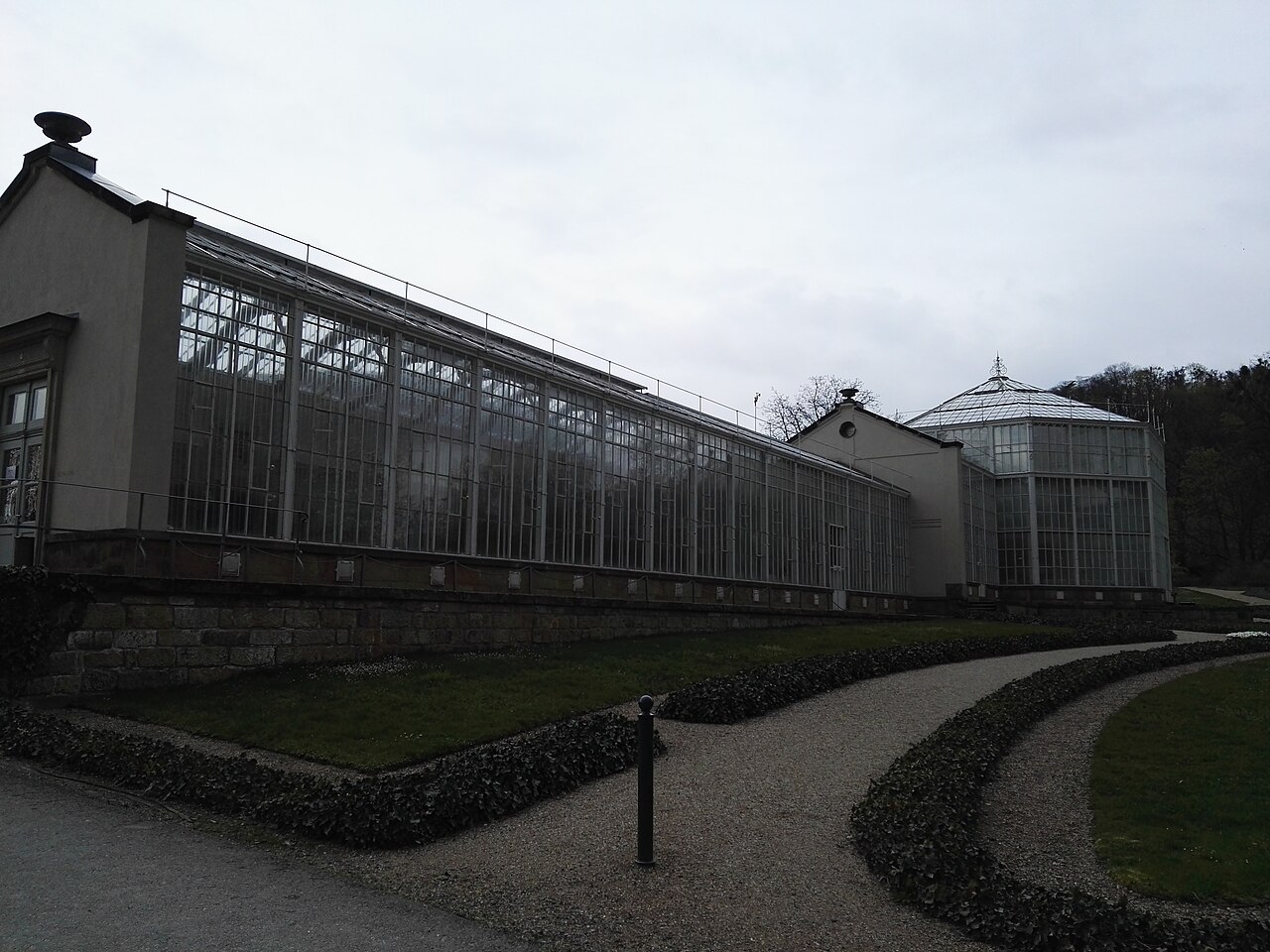
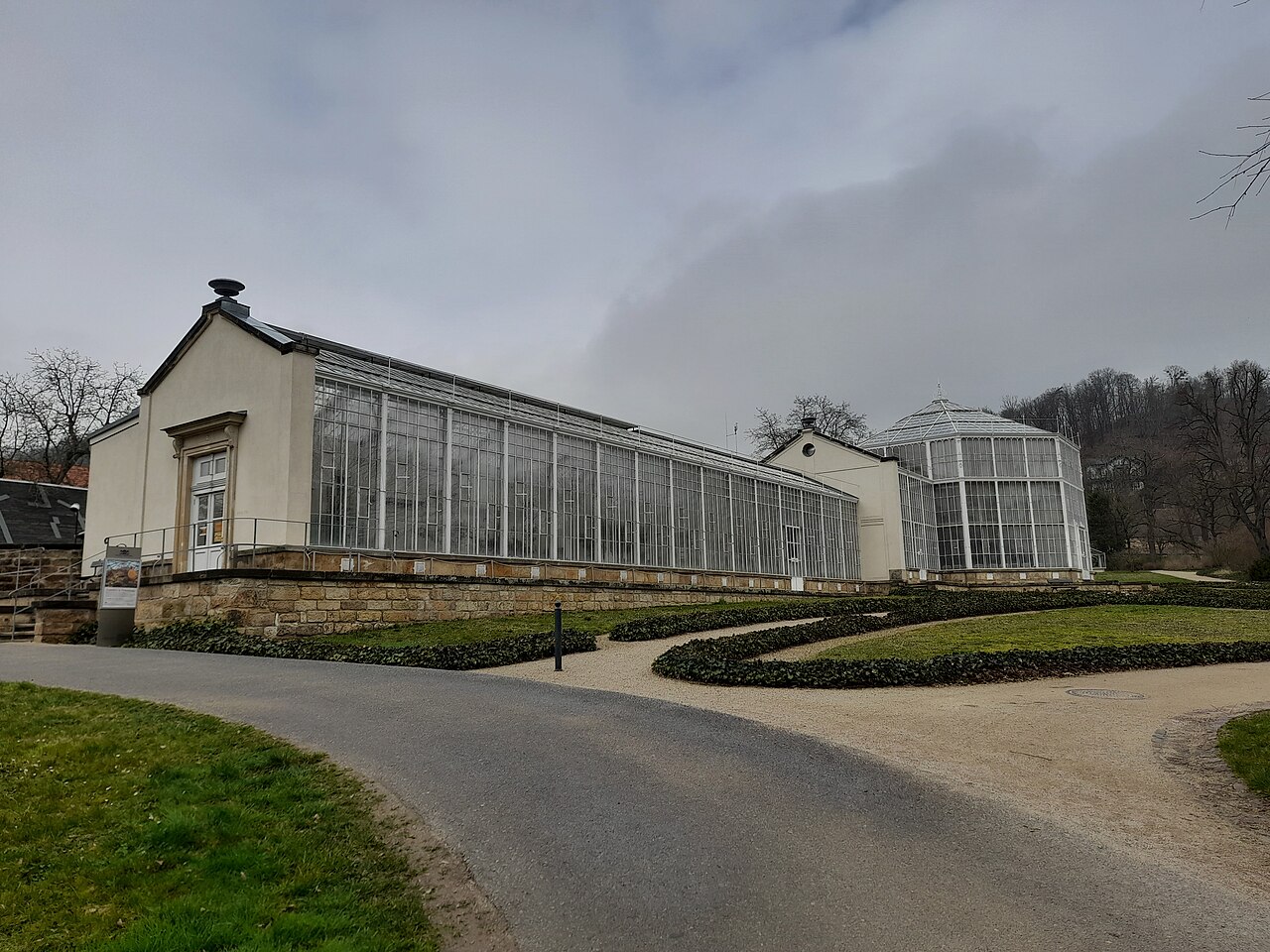
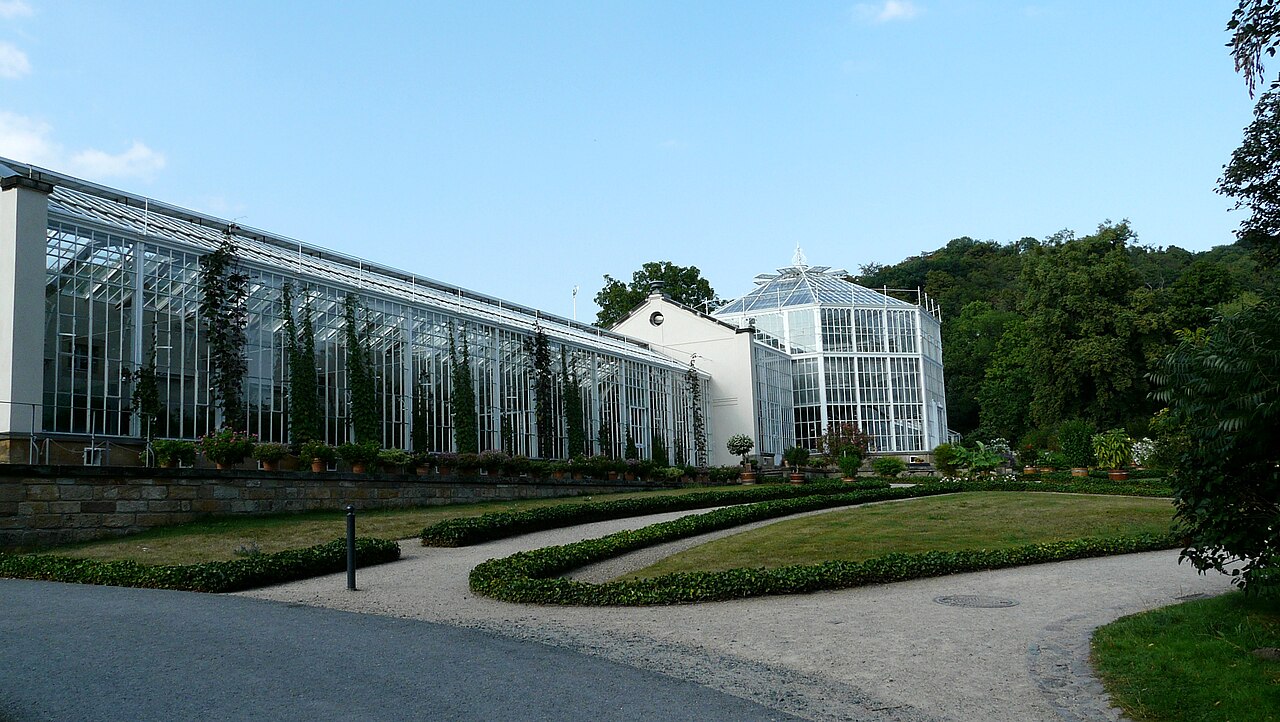
Built in 1859-1861 under King John of Saxony in the park of Pillnitz Palace on the Elbe, this 93.70-metre glasshouse was then considered the largest greenhouse in Germany made entirely of cast iron. Two wings flank a central octagon 12 metres high. Closed by the building authorities in 1969 and almost completely derelict by the 1980s, it was restored in several stages with as much of the historic fabric preserved as possible, and reopened in March 2009, the year of its 150th anniversary. It displays Cape flora, palms and Australian vegetation.
Affiliate links — booking through Verrière helps fund our research, at no extra cost to you.
History
1 min
In the park of Pillnitz Palace on the Elbe, a Dutch garden laid out in 1785 served as the centre of the estate's botanical school. The Palmenhaus replaced three older glasshouses there. According to the palace's website, German Wikipedia and the journal Bauhandwerk, it was built from 1859 under King John of Saxony: the south wing in 1859, the central block in 1860 and the north wing in 1861. The German orangery study group (Arbeitskreis Orangerien) gives a building period of 1849 to 1862 instead. The structure was then regarded as the largest greenhouse in Germany made entirely of cast iron; its cited models are the glasshouses of Birmingham (1830) and London's Crystal Palace (1851).
A reconstruction in 1951-1952 removed the inner glazing. By the 1960s the building was unsafe, and the authorities closed it in 1969. In the 1980s it was almost completely derelict, with shattered panes, trees growing through the roofs, and ivy and scrub covering the masonry. A first campaign, from 1991 to 1994, required more than half of the components to be recast. Work resumed in November 2007 under the Saxon state property agency (SIB), with more than two million euros from the Free State of Saxony. The house reopened at the end of March 2009 as a plant display house, in the year of its 150th anniversary.
Architecture and engineering
1 min
The Palmenhaus consists of three connected glasshouses with a total length of 93.70 metres and an area of about 660 m² (659 m² according to the Arbeitskreis Orangerien). Two wings flank an octagonal central hall 12 metres high and 15 metres wide. The structure, made of prefabricated elements, is entirely of cast iron, then a modern technique, and the sources compare it with the great iron-and-glass buildings of its time, such as the Crystal Palace and the Temperate House at Kew (1859-1863).
Inside, the house is divided into warm and cool sections suited to the floras on display. The restoration completed in 2009 favoured careful repair that spared as much of the historic fabric as possible; it followed an earlier campaign in which more than half of the elements had to be recast. Behind an inconspicuous grey door in the central hall, a two-storey exhibition traces the history of the building.
Plant collections
1 min
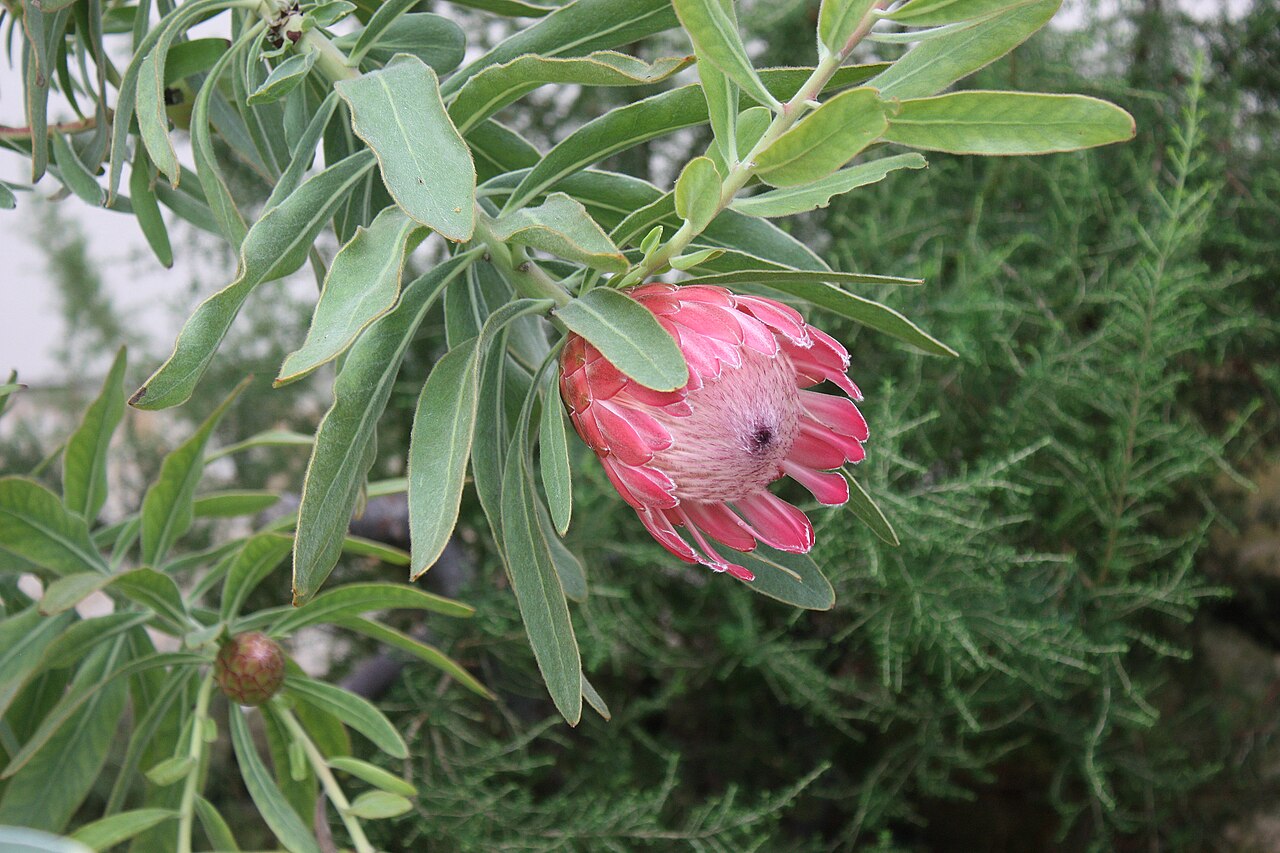
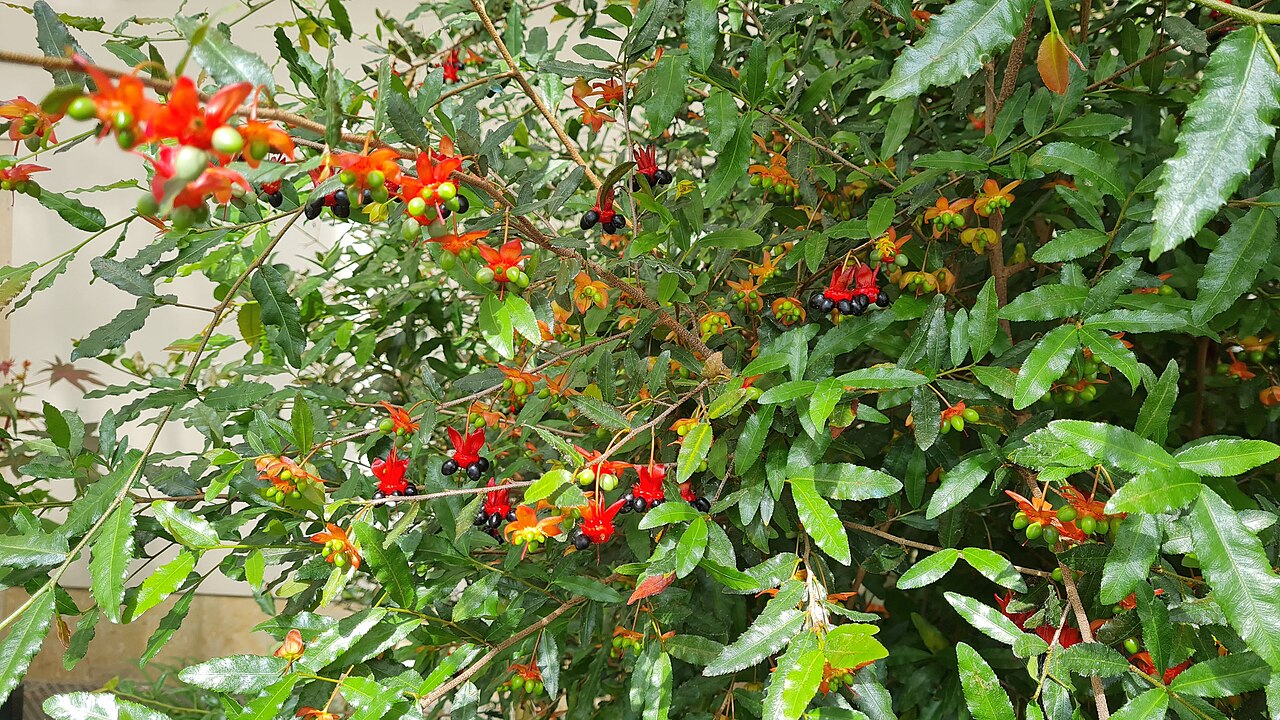
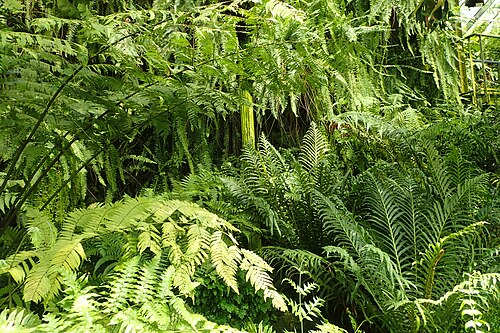
The plants are arranged in communities as they occur in their natural habitats. The south wing is devoted to plants from the Cape region of South Africa, divided between cool and warm sections; the central hall holds various species of palm; and the north wing is given over to Australian vegetation. Plants from New Zealand complete this ensemble focused on the southern hemisphere.
This choice continues the historic vocation of the house, whose collection already concentrated on the vegetation of South Africa, Australia and New Zealand. The Palmenhaus thus forms a counterpart to the park's other remarkable plants, above all the Japanese camellia planted at Pillnitz in 1801.
Visiting
1 min
The Palmenhaus stands in the park of Pillnitz Palace, in the Dresden district of the same name, on the Elbe. It is open all year round, which makes it a possible stop even in winter. In the central hall, the historical exhibition, designed as a graphic novel, brings together black-and-white photographs by the Dresden photographer Franz Zadnicek showing the glasshouse in ruins.
A visit combines well with the Pillnitz camellia, a Camellia japonica more than 230 years old and about 8.90 metres tall, protected in winter by a 13.2-metre, 54-tonne mobile glasshouse that runs on rails, and with the orangery, the former carousel building extended with two wings at the end of the 19th century.
51.01° N, 13.87° E
Greenhouses nearby
More greenhouses — Germany
Do you have a good photo of this greenhouse? Suggest it for this page →
Sources (6)
- schlosspillnitz.de/de/schloss-park/palmenhaus/
- schlosspillnitz.de/de/schloss-park/geschichte/
- de.wikipedia.org/wiki/Schloss_Pillnitz
- bauhandwerk.de/artikel/bhw_Wiedereroeffnet_Palmenhaus_im_Park_Schloss_Pillnitz-134639.html
- orangeriekultur.de/pages/orangerien/orangerien-und-glashaeuser-in-deutschland/sachsen/palm
- openstreetmap.org/way/25047266