Chemnitz Botanical Garden glasshouses (Botanischer Garten Chemnitz)
Chemnitz, Saxony

Sources checked October 2026
- Year
- 1998-2002
- Style
- Display glasshouses: Tropenhaus (2002), Kalthaus (1997-1998) and a cactus house
- Dimensions
- Tropenhaus about 500 m²; cactus and succulent house about 120 m²
- Status
- Open to the public, free admission
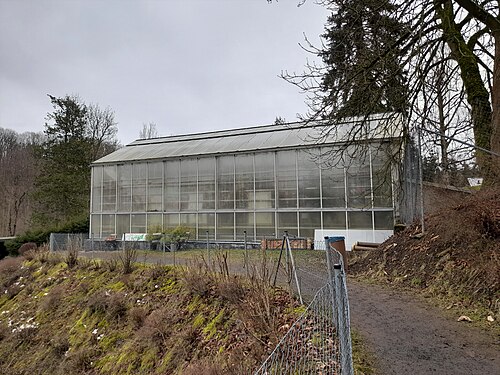
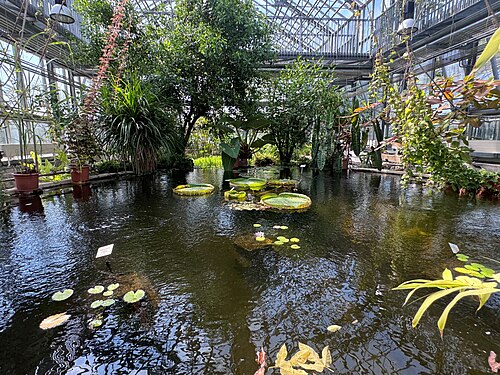
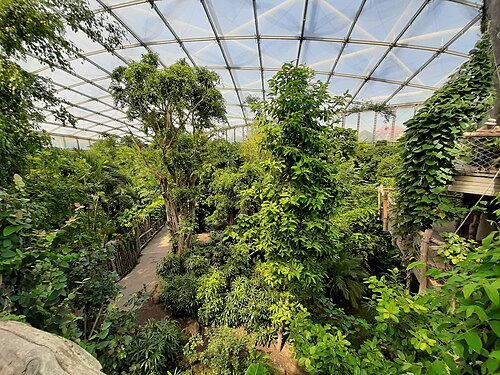
Chemnitz's municipal botanical garden, which began in 1898 as a school garden, has several display glasshouses that can be visited free of charge. The Tropenhaus, inaugurated in 2002, covers about 500 m² and shows some 800 wild and useful tropical species, among them banana, coffee, rice and cassava. A neighbouring Kalthaus (1997-1998) holds Mediterranean plants, citrus, tea and a small collection of carnivorous plants. A 120 m² installation sets Mexican cacti beside succulents from southern Africa and Madagascar.
Affiliate links — booking through Verrière helps fund our research, at no extra cost to you.
History
The glasshouses grew out of a school garden. Chemnitz's Botanischer Schulgarten was founded in 1898 to plans by garden director Otto Werner and school director Paul Säurich, on a single hectare; the garden's friends' association dates the opening to 1901. In 1933 an orchard raised the area to 1.75 hectares, and the city records a small greenhouse being put up at the same date. Damaged in the war, the garden was restored in the 1950s, as the "Station Junger Naturforscher" (young naturalists' station).
The friends' association states that in 1977 a former Gemüsehaus (vegetable house) was converted into what is now the succulent and tropical house. From 1989 a botanical garden proper for Central European flora was added to the station; in 1991 a school biology centre and a nature conservation centre came into being, and the three parts were merged in 1996 under the name "Botanischer Garten Chemnitz, Schulbiologie- und Naturschutzzentrum".
The Kalthaus dates from 1997-1998: for the institution's centenary in 1998 the city records the opening of a new glasshouse devoted to succulents and Mediterranean plants. The Tropenhaus was inaugurated in 2002.
Architecture and engineering
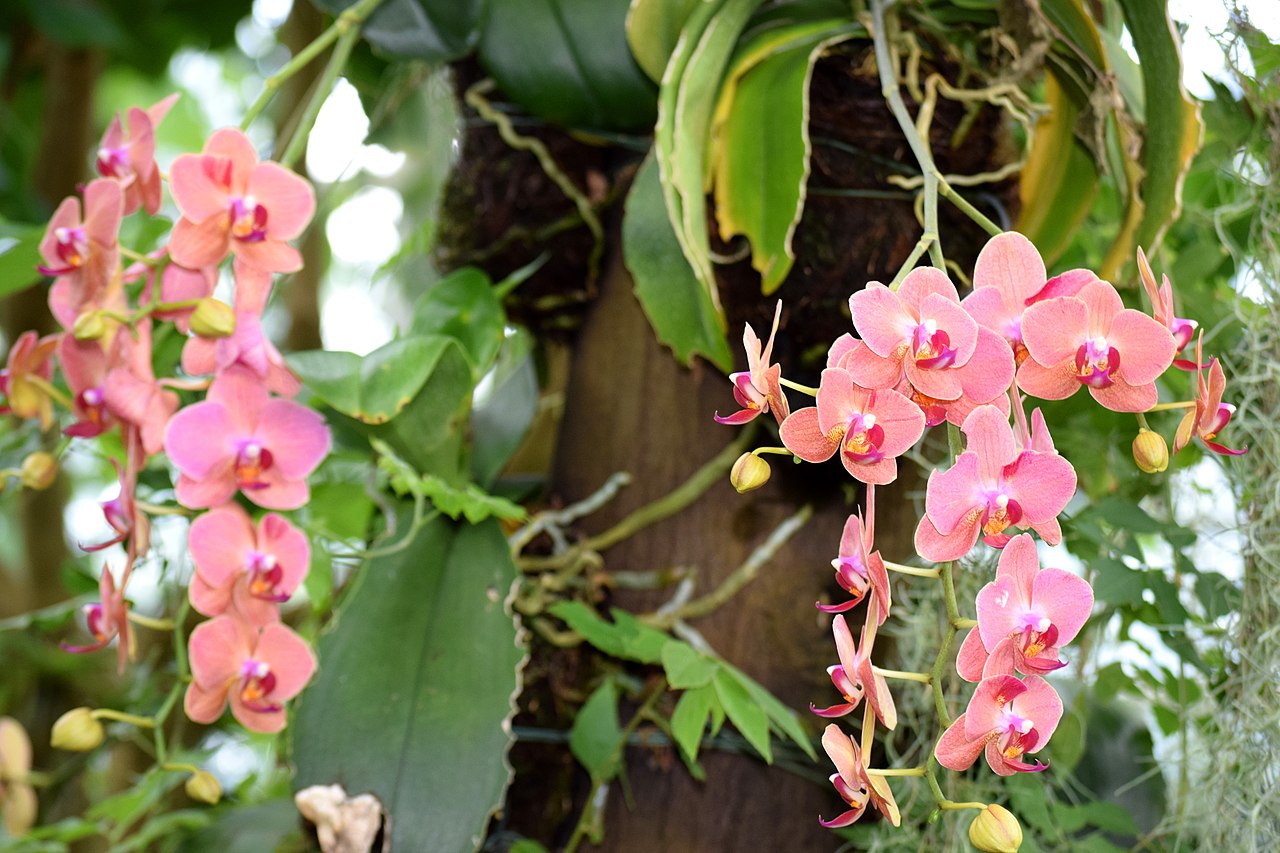
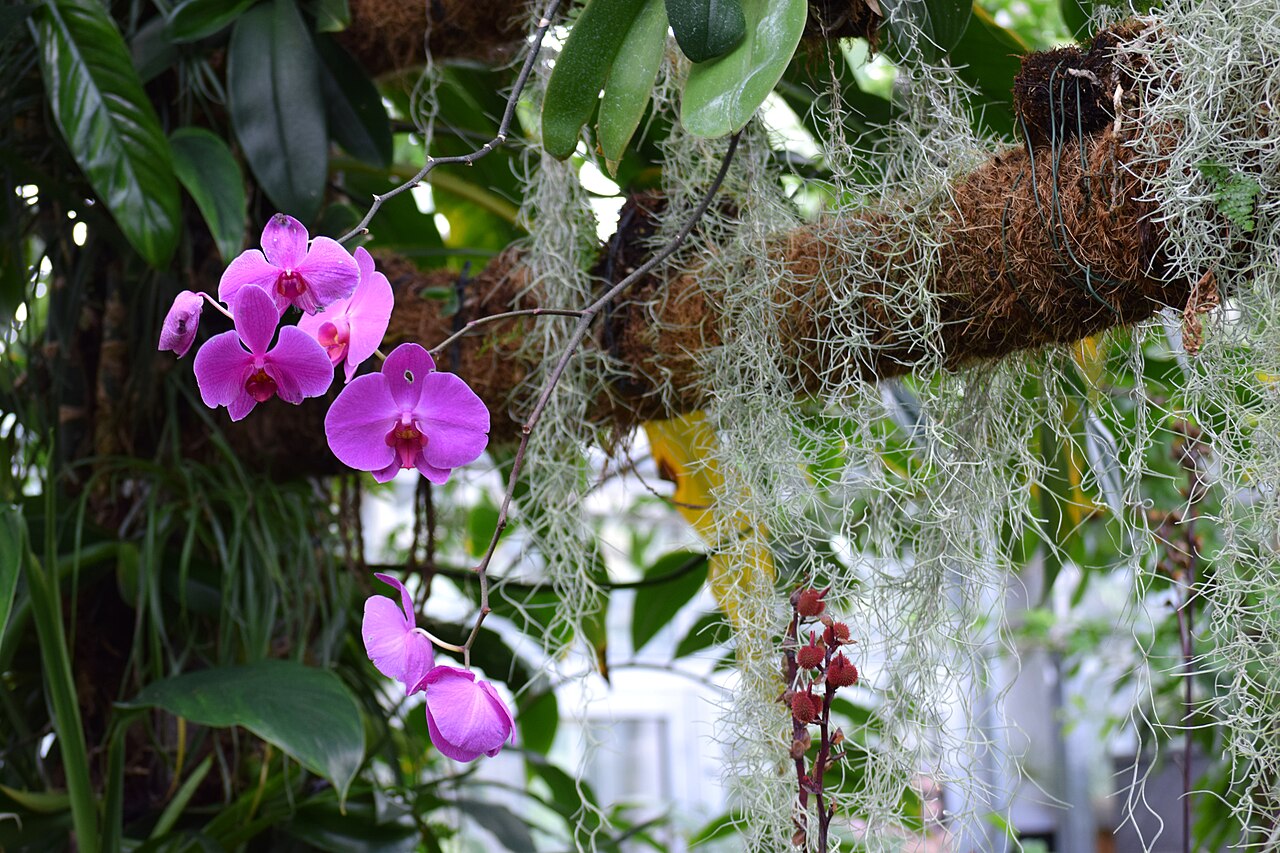
The city speaks of "Gewächshäuser" and a "Pflanzenwelt unter Glas" (plant world under glass). Three units stand out. The Warmhaus, or Tropenhaus, is a 500 m² display glasshouse; the cooler Kalthaus is its neighbour, and the city places in it a display case reserved for tropical and subtropical orchids, for which the Tropenhaus is too warm. The third installation, of 120 m², is arranged in two zones: cacti and succulents from Mexico at the centre, succulents from southern Africa and Madagascar around the edges, so that convergent plant forms can be compared at a glance.
According to a Saxon tourism portal, the greenhouses are accessible to wheelchair users.
Plant collections
According to the city, the Tropenhaus shows 800 species of wild and useful plants from tropical regions, a page that also mentions Central and South America. A collection of useful plants keeps about a hundred varieties on permanent display: pineapple, banana, coffee, cola trees, rattan palms and taro, along with millets, rice and cassava, papaya, custard apples, chilli, cardamom, pepper and vanilla.
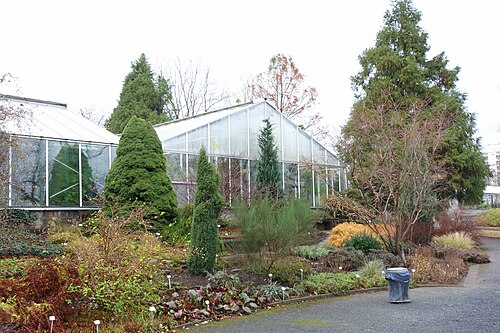
In the Kalthaus, about a hundred species evoke the Mediterranean world, among them rock roses, viper's bugloss, rosemary, oleander, cork oak, olive and lavender, joined by subtropical useful plants such as orange, tea, loquat and sisal agave. A small collection of carnivorous plants brings together sundews, butterworts, pitcher plants and the Venus flytrap.
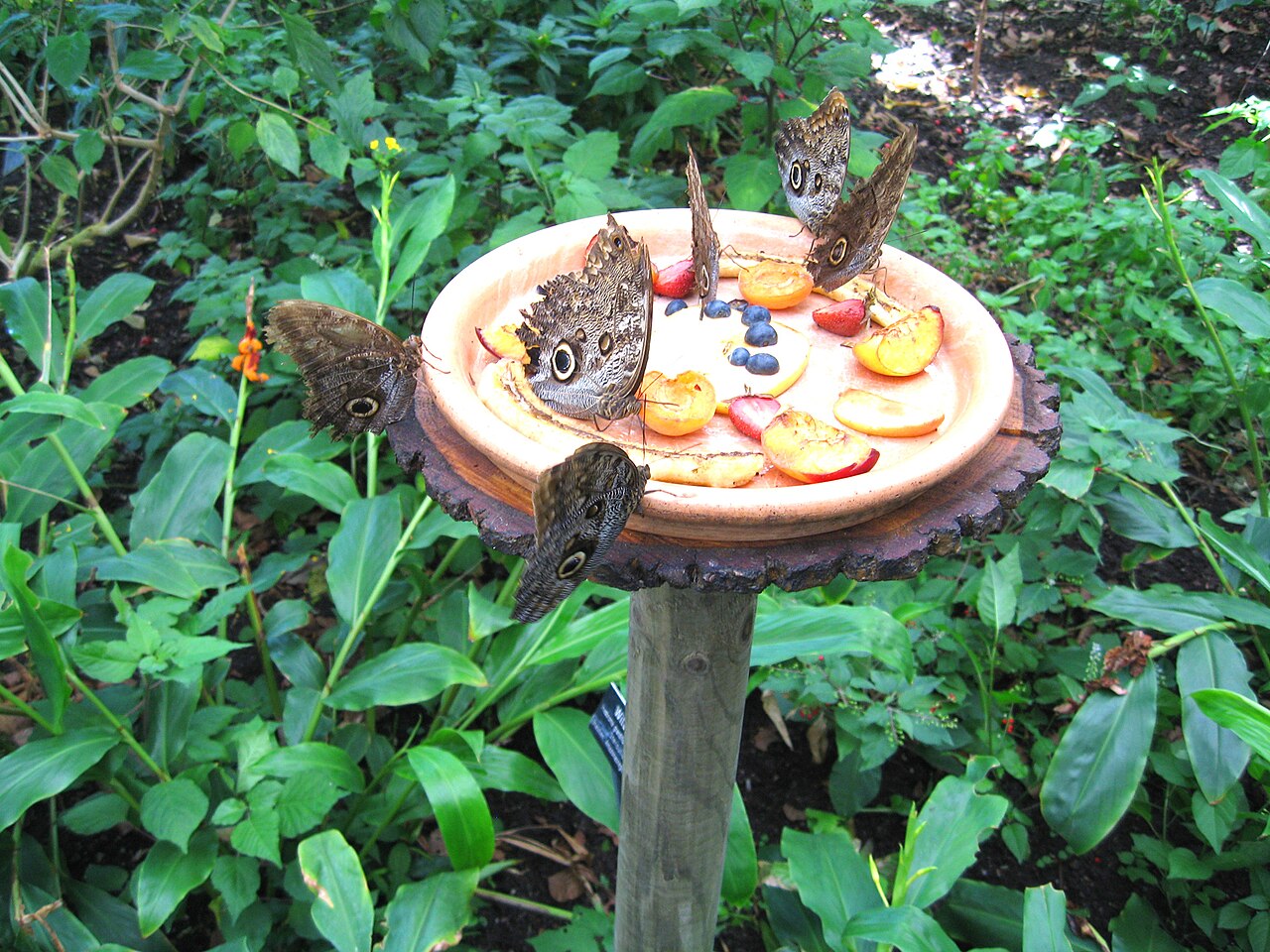
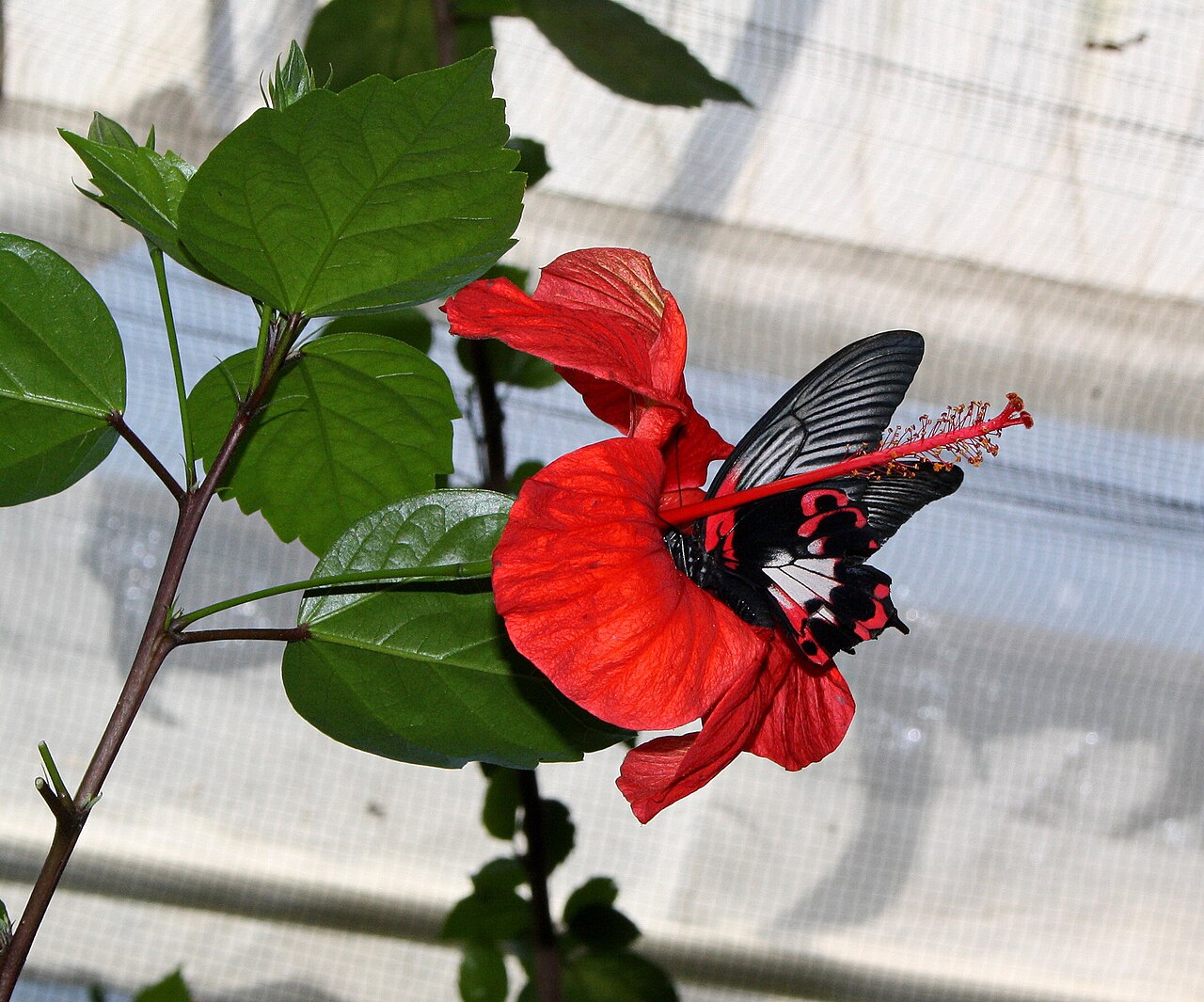
The 120 m² house gathers Mexican cacti with succulents from southern Africa and Madagascar. A photo caption on a tourism portal mentions a butterfly show in the Tropenhaus.
Visiting
The glasshouses stand in the municipal botanical garden on Leipziger Straße, north-west of central Chemnitz; admission is free and the garden is open daily, with hours that change by season. The tour under glass continues naturally outdoors: about 2 hectares of traditional beds, Central European biotopes, enclosures for farm animals and birds, and the Aquarienhaus, which houses amphibians, reptiles, insects and fish.
The garden's friends' association keeps a calendar of events, from orchid shows to guided visits of the vivarium. The garden is also an educational hub: the city reports more than 1,000 events a year.
50.85° N, 12.89° E
Greenhouses nearby
More greenhouses — Germany
Do you have a good photo of this greenhouse? Suggest it for this page →
Sources (8)
- chemnitz.de/de/leben-in-chemnitz/freizeit/botanischer-garten
- chemnitz.de/de/leben-in-chemnitz/freizeit/botanischer-garten/planzenwelt-unter-glas
- chemnitz.de/de/leben-in-chemnitz/freizeit/botanischer-garten/geschichte
- botga-chemnitz.de/seite/682842/geschichte-des-botanischen-gartens.html
- de.wikipedia.org/wiki/Botanischer_Garten_Chemnitz
- en.wikipedia.org/wiki/Botanischer_Garten_Chemnitz
- sachsen-tourismus.de/poi/botanischer-garten-chemnitz-chemnitz
- openstreetmap.org/way/32083345
Affiliate links — booking through Verrière helps fund our research, at no extra cost to you.