Volunteer Park Conservatory
Seattle, Washington

Sources checked September 2026
- Year
- 1912
- Architect
- Hitchings & Company
- Style
- Victorian, inspired by London's Crystal Palace
- Dimensions
- 5 separate greenhouses, 3,426 panes of glass
- Status
- In operation
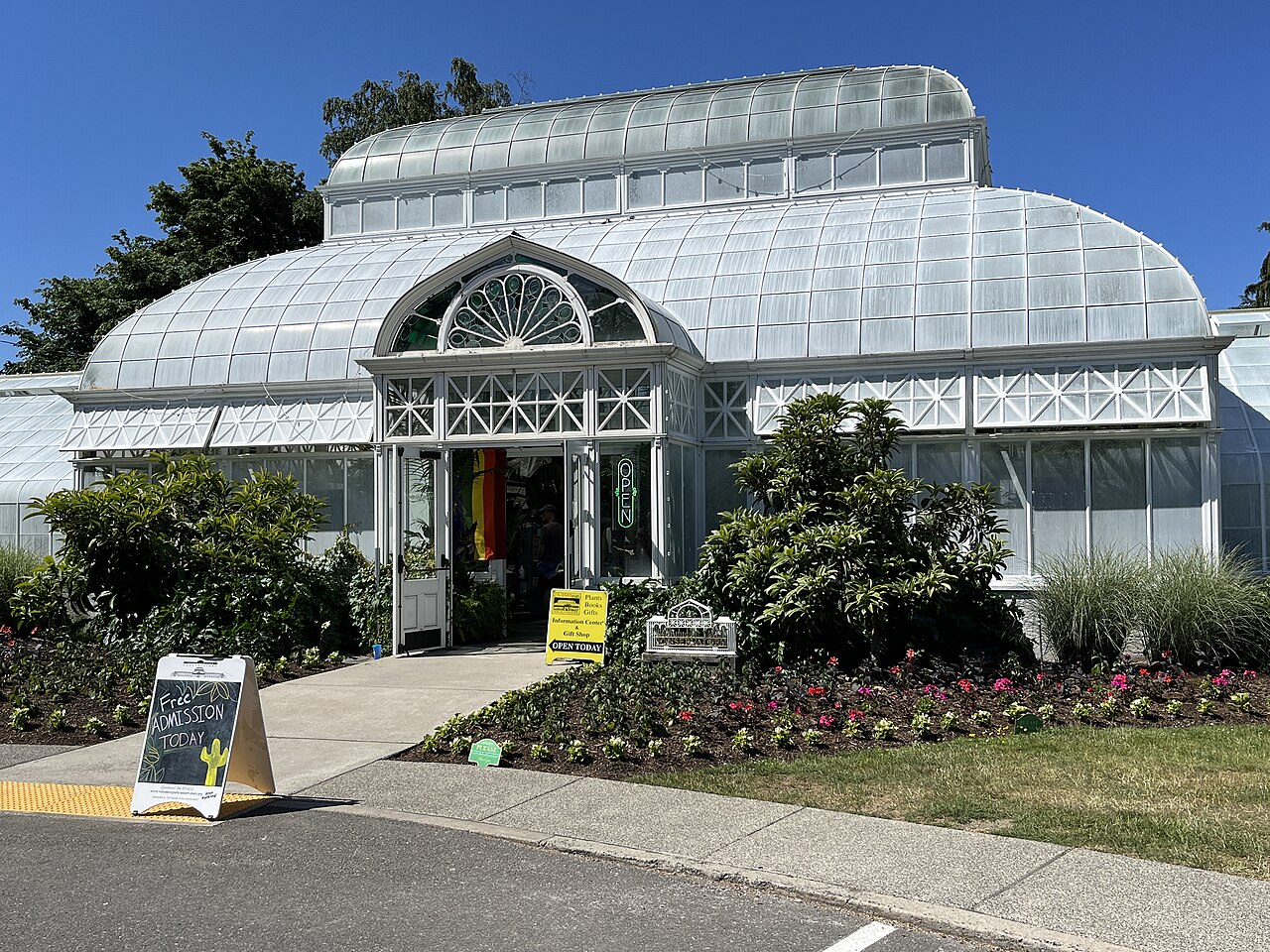
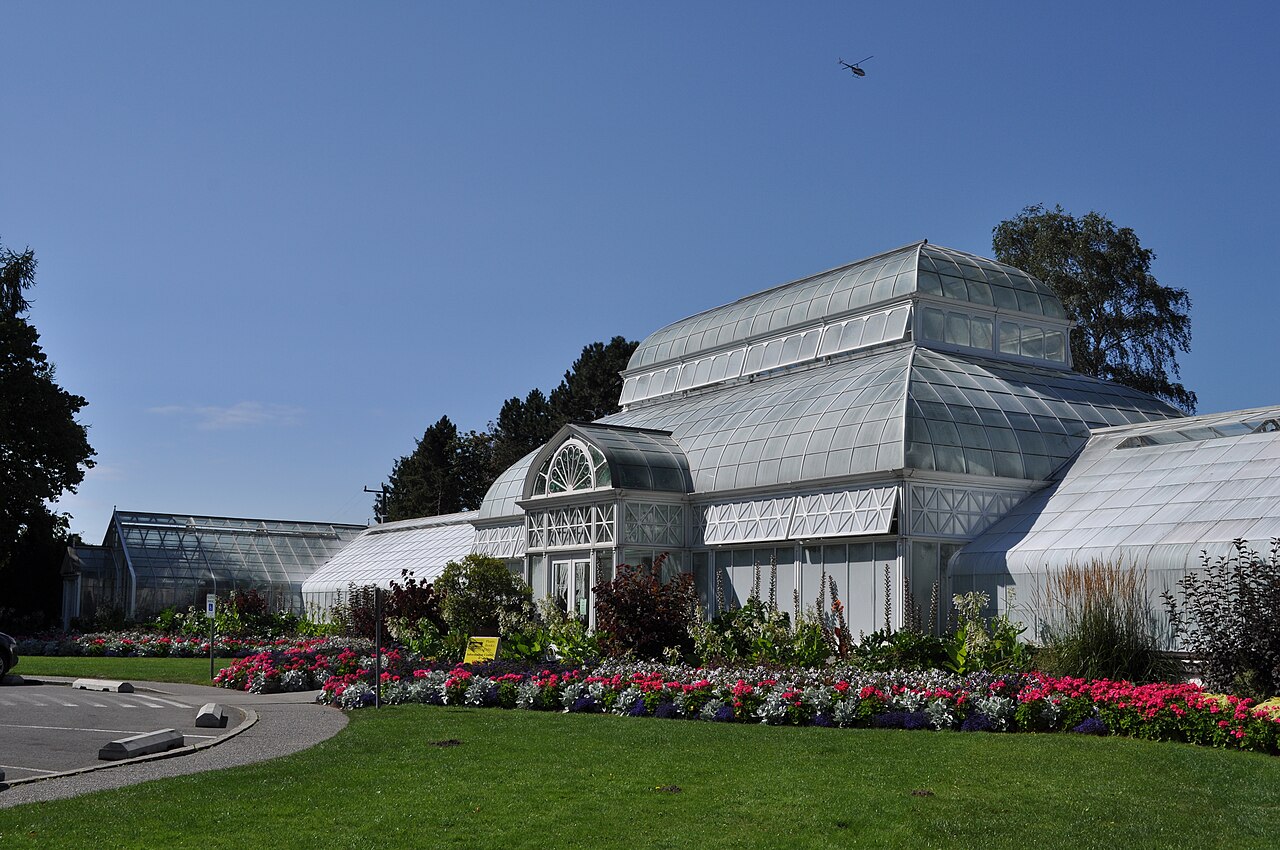
Shipped as a kit by the New York firm Hitchings Company and assembled by Seattle's parks department, this Victorian greenhouse opened in 1912 at the north end of Volunteer Park, on Capitol Hill. Its glass, wood and iron architecture, explicitly inspired by London's Crystal Palace, is divided into five houses devoted respectively to bromeliads, ferns, palms, seasonal plants and cacti. Listed as a city landmark, it also serves as a holding facility for exotic plants confiscated by federal fish and wildlife authorities. It draws more than 150,000 visitors a year.
Affiliate links — booking through Verrière helps fund our research, at no extra cost to you.
History
A Victorian-style glasshouse for Volunteer Park was first proposed in 1893, but it only took shape after the Olmsted Brothers were engaged to plan the park from 1904, with John Charles Olmsted as principal designer. The Hitchings Company of New York designed and fabricated the structure and shipped it across the country by rail; Seattle parks department staff assembled it on site, and it opened in 1912. Its steel skeleton still bears the stamp of Carnegie Steel of Pittsburgh.
A first restoration in the 1950s replaced the original swamp-cypress frames with more durable timber. By the early 1970s the building had deteriorated so badly that it closed for safety reasons. In 1977 the city committed $250,000 and a citizens' group raised the same amount again to renew glass, sashes and ironwork. The Friends of the Conservatory were founded in 1980 and have supported the building ever since. In the mid-1990s a phased restoration programme, planned over thirty years, began replacing wooden members with extruded aluminium. The east wing and the support greenhouses were renovated in 2012–2013 at a cost of $3.5 million, and an education wing, the Sharon Priebe Educational Wing, was later added. In 2004, local opposition had defeated a proposal to introduce an admission fee.
Architecture and engineering
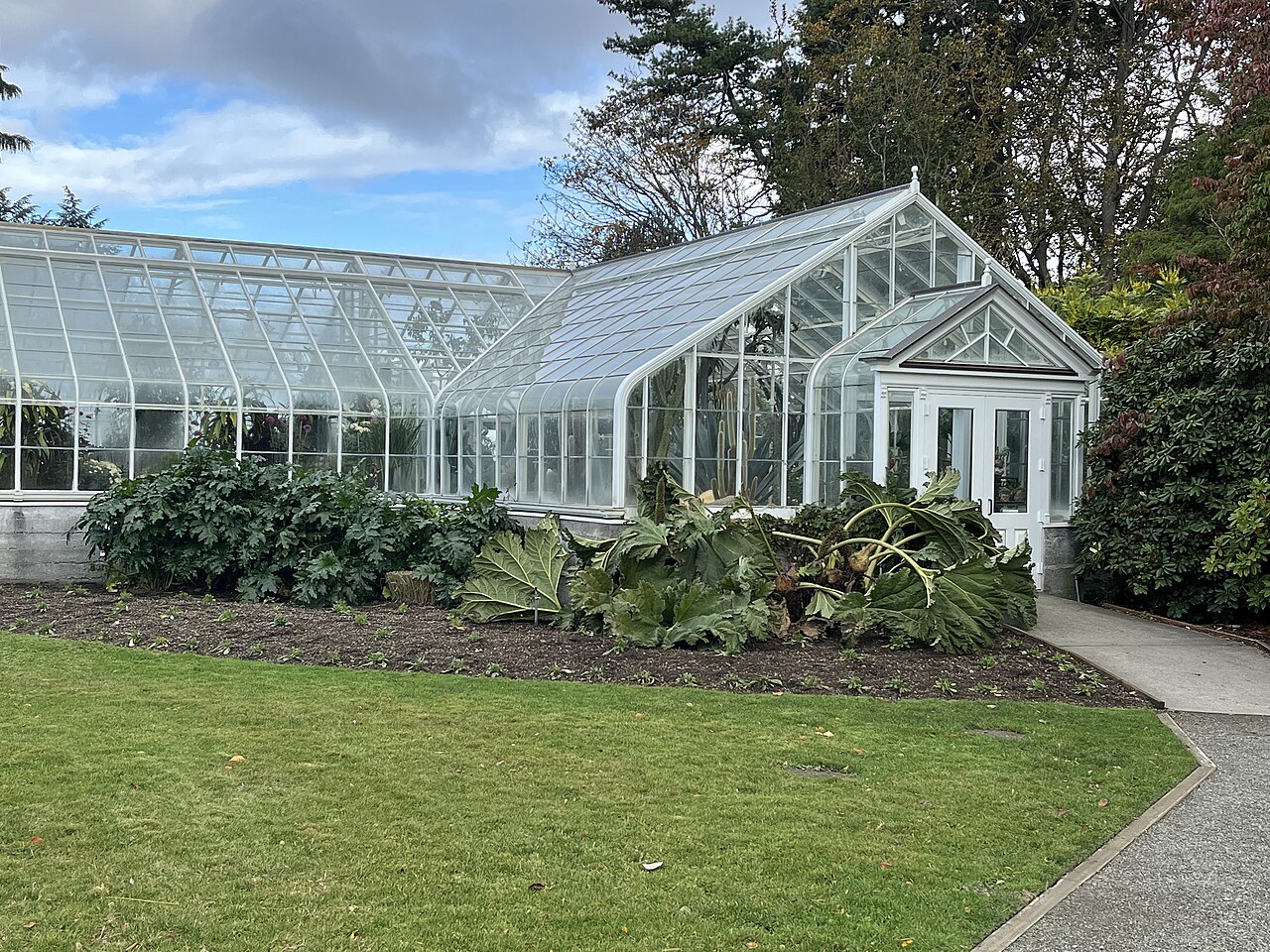
The conservatory is a good example of prefabricated Victorian construction: a design and frame supplied in parts by a specialist manufacturer and put together locally. Its form openly refers to London's Crystal Palace, echoing on a much smaller scale the idea of a central pavilion flanked by glazed wings.
Some 3,426 panes are set into a framework of wood and iron over a steel skeleton. Above the main entrance, a fan-shaped lunette in swamp cypress (Taxodium distichum), known as the peacock window, is one of the few original features to survive; it was restored in 2000. The building is divided into five separate houses, each with its own climate, linked in a continuous circuit. Successive restorations have replaced much of the timber with aluminium, which copes better with moisture, without altering the overall silhouette. The conservatory is a designated City of Seattle landmark.
Plant collections
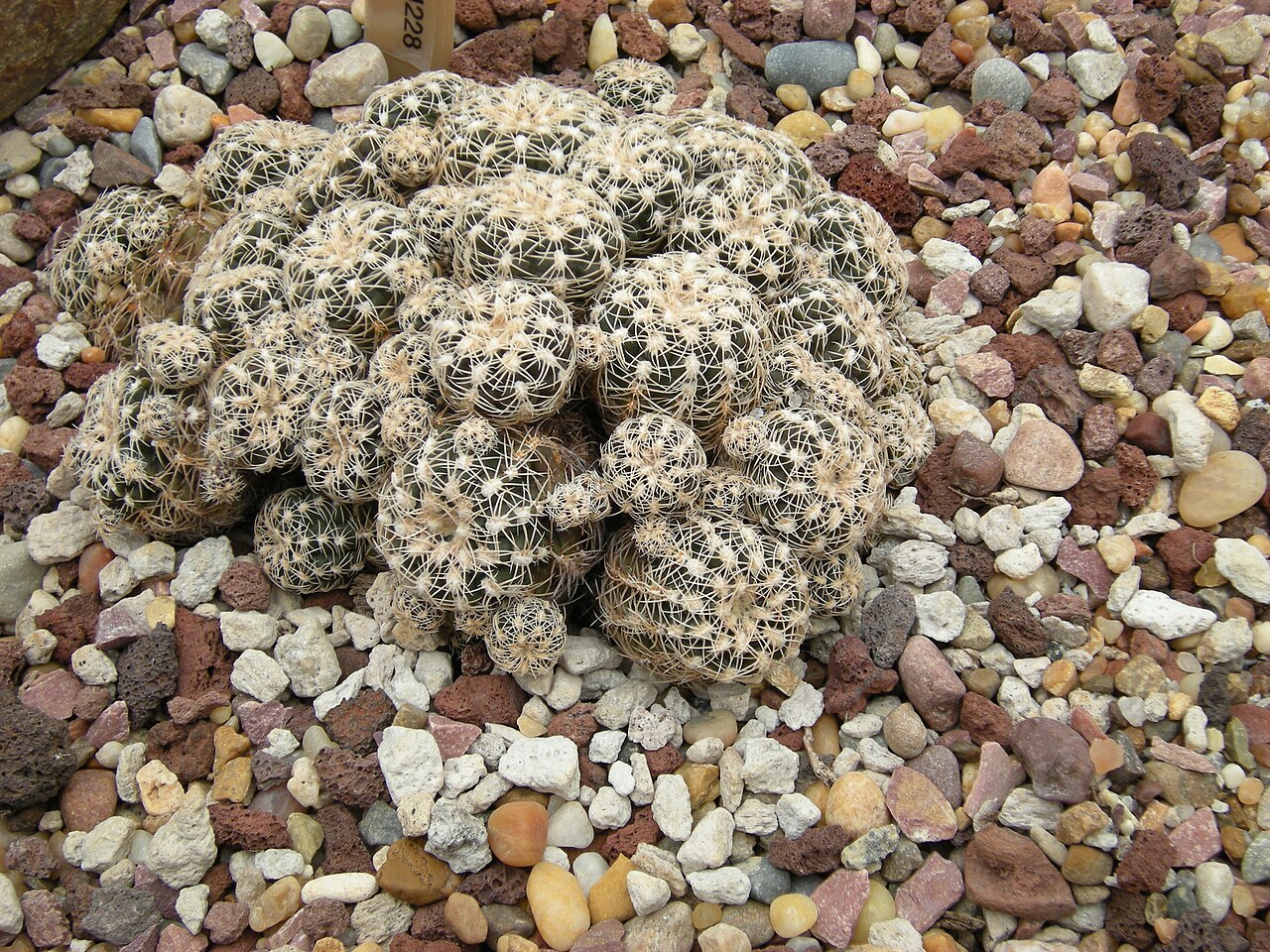
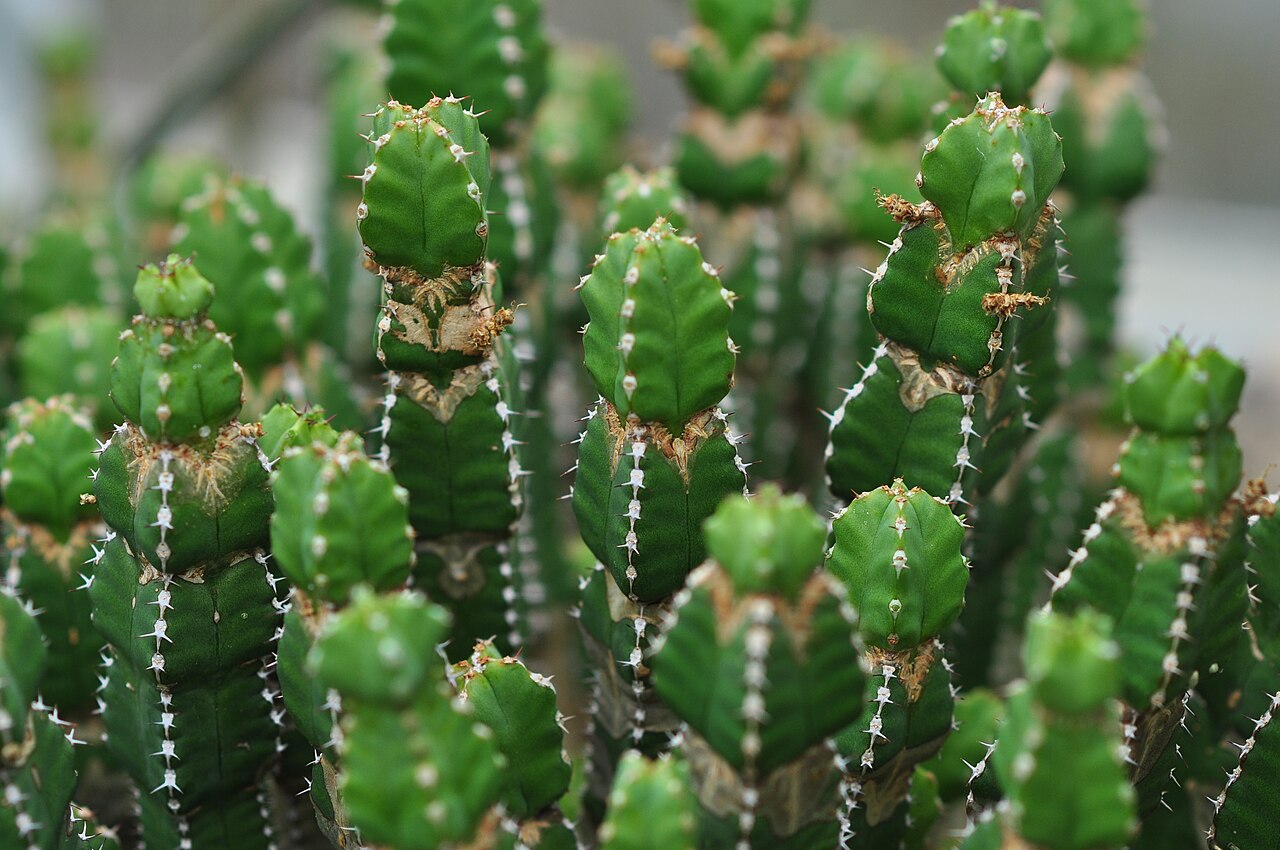
Each house has its own speciality. The Bromeliad House displays epiphytes mounted on an iron display tree carrying dozens of Tillandsia species, along with terrestrial bromeliads such as the pineapple. The Fern House combines ferns with cycads, passionflowers, hibiscus and a bog garden of carnivorous plants. The Palm House holds palms, bananas, birds of paradise, anthuriums, gingers and orchids; the orchid collection began with a gift from Anna H. Clise in 1921. The Cactus House gathers Opuntia, Pachypodium, Haworthia, agaves, aloes and euphorbias, while the Seasonal House is completely replanted six times a year with poinsettias, chrysanthemums, azaleas, hydrangeas and fuchsias.
The conservatory also serves as a repository for plants seized by federal authorities under CITES. A titan arum (Amorphophallus titanum) flowered here in 2005, 2008 and 2014.
Visiting
The conservatory stands at the north end of Volunteer Park on Capitol Hill, one of Seattle's Olmsted-designed parks, which also holds the Seattle Asian Art Museum and a historic water tower. The five houses can be seen in about forty-five minutes. Because the Seasonal House changes several times a year, repeat visits are rewarded; the end-of-year poinsettias are the best-known display, and orchid shows and sales are also held here. The Friends of the Conservatory also run family activities and small concerts inside the building.
47.63° N, 122.32° W
Greenhouses nearby
More greenhouses — United States
Do you have a good photo of this greenhouse? Suggest it for this page →
Affiliate links — booking through Verrière helps fund our research, at no extra cost to you.