Butterfly House, Whipsnade Zoo
Whipsnade, near Dunstable, Bedfordshire (England)
No freely licensed photo of this greenhouse yet. Do you have one? Suggest it for this page →
Sources checked October 2026
- Year
- 2015
- Architect
- Builders: SDC and Fordingbridge
- Style
- Chrysalis-shaped glulam timber dome with a twin-skin ETFE roof
- Dimensions
- About 10 m x 25 m (per one of the builders)
- Status
- Open to the public with the zoo (heated house)
At Whipsnade Zoo in Bedfordshire, the Butterfly House is a heated tropical house whose opening the zoo announced on 23 May 2015. Its glulam timber frame evokes a chrysalis, under a translucent twin-skin ETFE roof. The zoo presents more than 30 butterfly species from around the world, a Metamorphosis Zone where pupae can be seen emerging, and a pool of African dwarf crocodiles. Wikipedia gives 2016 for the opening, but the zoo's announcement and the builder SDC's completion date both point to May 2015.
Affiliate links — booking through Verrière helps fund our research, at no extra cost to you.
History
Whipsnade opened on 23 May 1931 on the site of a derelict farm, Hall Farm, bought by the Zoological Society of London. Its secretary at the time, Peter Chalmers Mitchell, wanted an "open zoo" with large paddocks and discreet barriers; a memorial to him now stands beside the path leading to the Aquarium and the Butterfly House.
The butterfly house is far more recent. The zoo's account announced "Our new Butterfly House is now open" on 23 May 2015, and the contractor SDC, which built the new entrance building, the butterfly house and the crocodile tank, gives May 2015 as its completion date. Wikipedia, however, says the Butterfly House opened in 2016; the zoo's announcement and the builder's date agree with each other, which favours 2015. No architect is named. Two firms present the project on their websites: SDC describes nine glulam arches 16 metres long, while Fordingbridge describes a chrysalis-shaped timber structure clad in ETFE.
According to Wikipedia, an aquarium opened in 2019 in the same building. The zoo itself presents the aquarium as the stage that comes just before the butterfly house.
Architecture and engineering
The Butterfly House takes the form of a timber dome. Fordingbridge sees the outline of a chrysalis in it, whereas SDC sees an echo of a butterfly wing, built from nine glulam arches each 16 metres long. According to Fordingbridge, the frame combines glulam and steel with insulated panel walls, and the footprint is about 10 by 25 metres; those dimensions appear only on the builder's page.
The roof is clad in twin-skin ETFE using the "Opal 60" technology, which the builder says keeps the tropical heat in while preserving a view of the park beyond. ETFE is a transparent polymer film, used here in two layers, so the covering is not glass.
Inside, visitors walk through on foot with no barrier between them and the butterflies, according to Wikipedia. The zoo describes a heated biome, among the largest of any UK zoo, where keepers record temperature and humidity and clean the display windows before the public arrives.
Plant collections
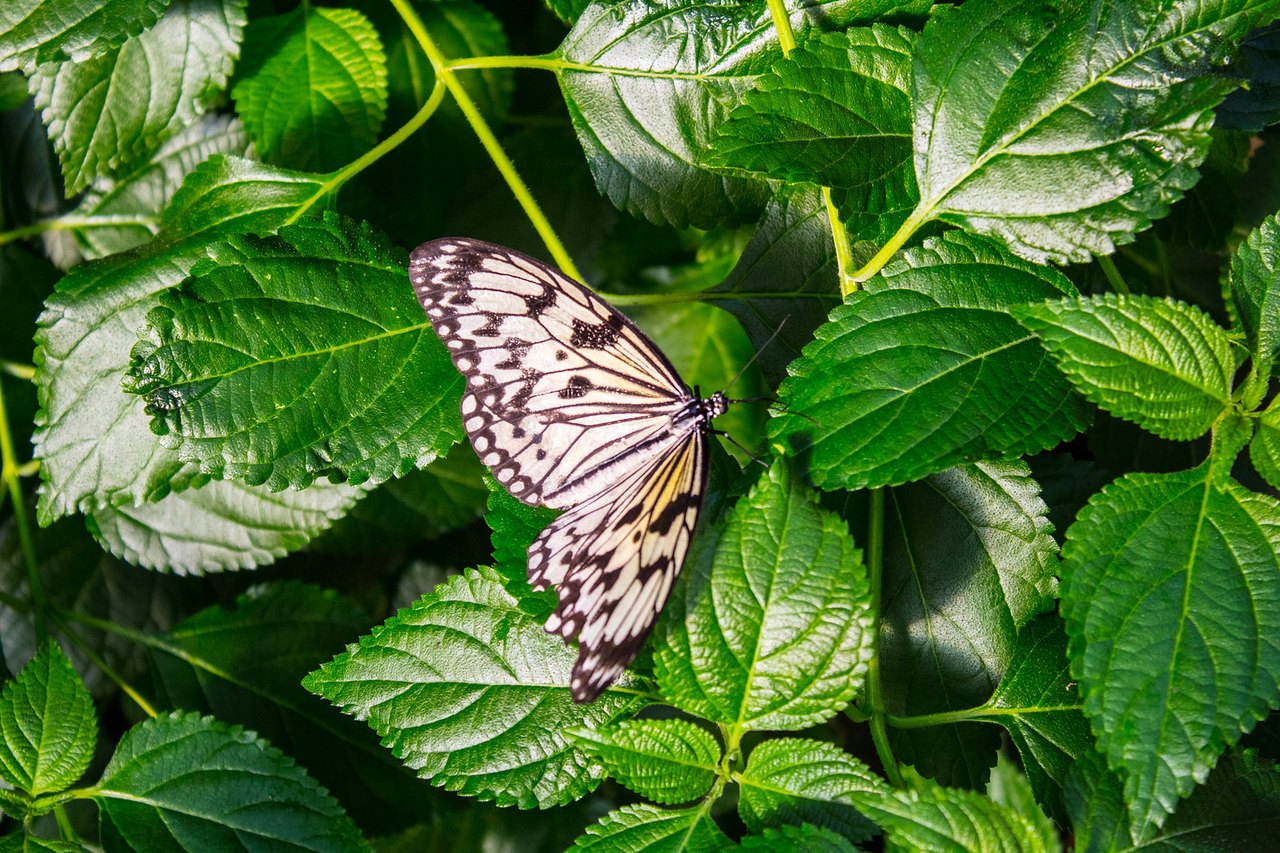
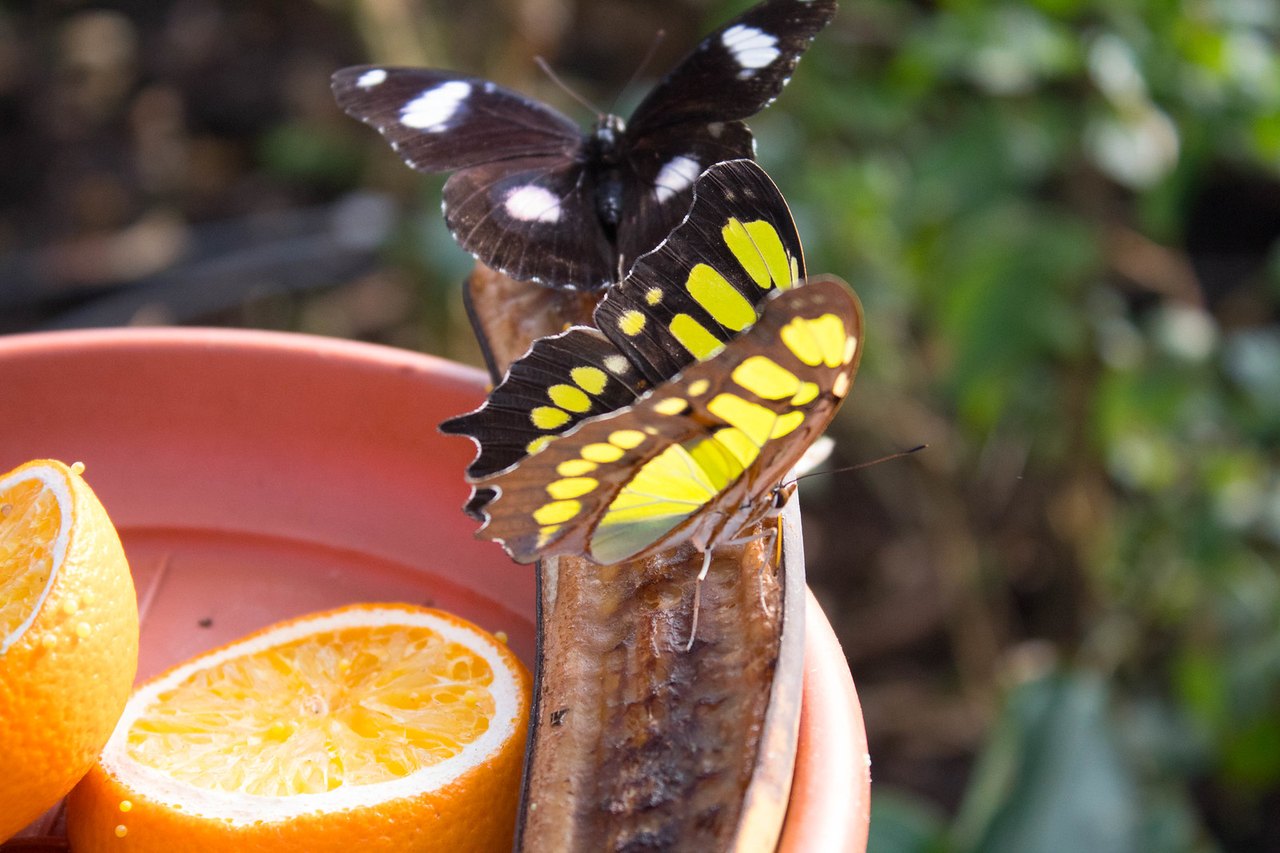
The zoo reports more than 30 butterfly species from around the world, with hundreds of individuals according to Fordingbridge, flying freely in the tropical hall. Daily talks explain the role of colour in a butterfly's life, from camouflage to mating. The interactive Metamorphosis Zone includes a puparium where live pupae can be seen emerging, with keepers on hand to explain how butterflies are raised. According to the keeper-experience page, the butterflies are fed fruit and sugar water.
The house also holds other animals: birds, including Victoria crowned pigeons according to Wikipedia, a vampire crab enclosure, and a pool of African dwarf crocodiles (called West African dwarf crocodiles by Wikipedia and SDC), which the zoo ranks among the smallest and rarest crocodiles. Plants are mentioned only in passing, among the keepers' watering duties.
Visiting
The Butterfly House was built during the same project as the zoo's new entrance building, and the zoo presents the Aquarium as the stage just before it; the memorial to Peter Chalmers Mitchell lines the path leading there. The zoo describes it as a heated house, a welcome refuge when autumn turns cold, and the keeper-experience page says it can be hot even in the morning, so light clothing makes sense. The building is small compared with the 240 hectares of the park, and the point is to combine it with the rest of the day, notably Passage through Asia, home to Przewalski's horse and Père David's deer. Daily talks on butterfly colours are advertised, and an hour-long "Keeper in the Butterfly House" experience runs before opening on selected Fridays.
51.85° N, 0.54° W
Greenhouses nearby
More greenhouses — United Kingdom
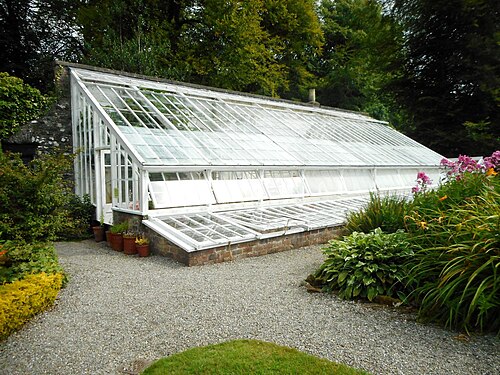
Do you have a good photo of this greenhouse? Suggest it for this page →
Sources (8)
- whipsnadezoo.org/whats-here/habitats/butterfly-house
- whipsnadezoo.org/plan-your-visit/zoo-experiences/keeper-in-the-butterfly-house-experience
- whipsnadezoo.org/zoo-stories/blog/13-things-you-didnt-know-about-whipsnade-zoo
- whipsnadezoo.org/zoo-stories/blog/explore-whipsnade-zoo-autumn
- fordingbridge.co.uk/casestudies/whipsnade-butterfly-house-zoo-canopies/
- sdc.co.uk/projects/whipsnade-zoo-main-entrance/
- en.wikipedia.org/wiki/Whipsnade_Zoo
- x.com/ZSLWhipsnadeZoo/status/602021225217564672
Affiliate links — booking through Verrière helps fund our research, at no extra cost to you.