Fukuoka Art Museum (福岡市美術館)
Fukuoka, Fukuoka Prefecture
Sources checked November 2026
- Year
- 1979
- Architect
- Kunio Maekawa
- Type
- Municipal art museum
- Access
- Open to the public (official website, November 2026)
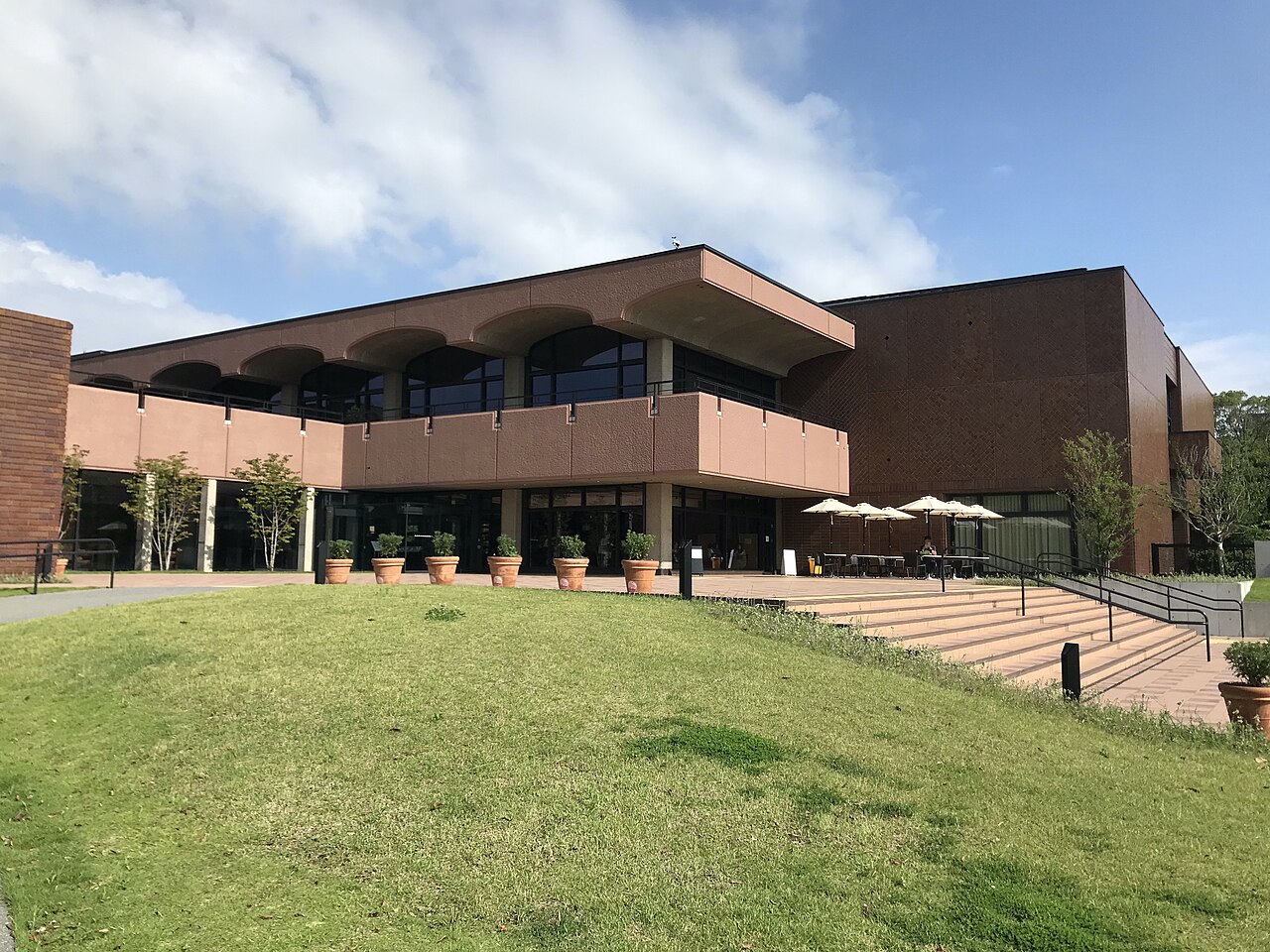
This art museum opened in 1979 in Ōhori Park, Fukuoka. It was designed by Kunio Maekawa, who had learned modern architecture from Le Corbusier. Its red-brown walls are faced with ceramic tiles fired in Tokoname and cast into the concrete. The galleries are laid out around a broad lobby and an esplanade, so visitors cross a large space before reaching the works. Renovated between 2016 and 2019 on the basis of Maekawa's design, the museum gained a new entrance on the park side.
Affiliate links — booking through Verrière helps fund our research, at no extra cost to you.
History
In January 1972, at his new-year press conference, the mayor of Fukuoka declared his intention to build an art museum. The site in Ōhori Park was chosen in January 1976, construction began in January 1978, and the museum opened to the public on 3 November 1979 with an inaugural exhibition on the modern art of India, China and Japan.
As the years passed, the ageing of the facilities led to a renovation project being launched in 2011. After nearly six years of preparation the museum closed on 1 September 2016 for major works that lasted about two and a half years. The project used the PFI method, which draws on private-sector funds and know-how to develop and run a public facility, and it began from the premise of carrying on Maekawa's design: the exhibition and storage areas, the lecture rooms and the visitor amenities were renewed, and a new approach opened on the west side. The museum reopened on 21 March 2019.
Architecture
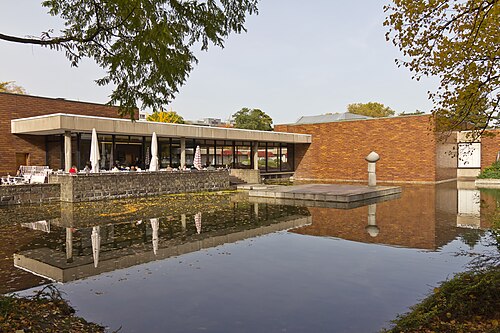
The museum stands beside a pond in Ōhori Park. It was designed by Kunio Maekawa (1905-1986), who had learned Western modern architecture under Le Corbusier and who designed public museums in various parts of Japan from the late 1960s onward; this is one of them.
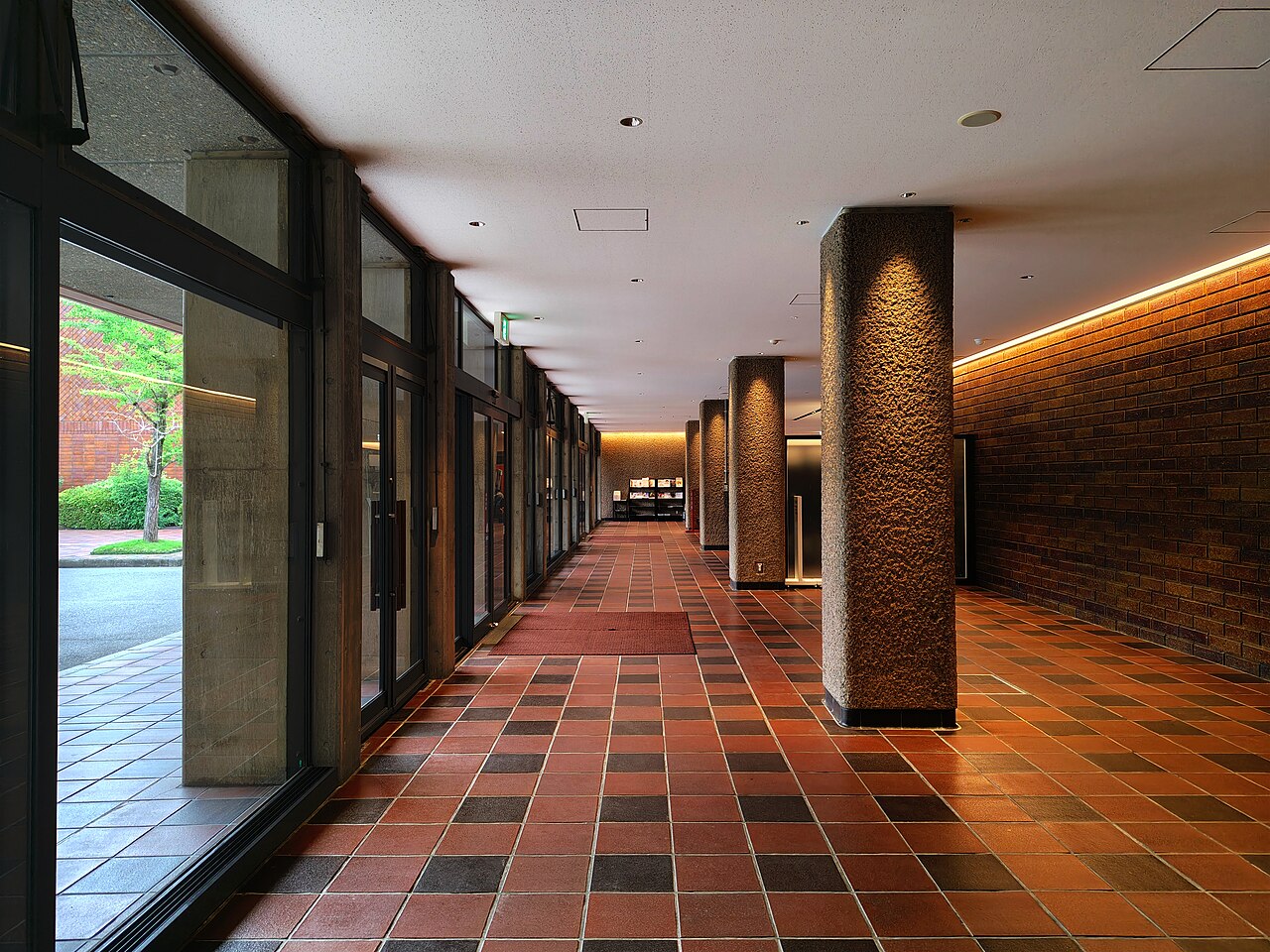
The exterior walls are red-brown. They are often called "brick-coloured", but they are faced with porcelain tiles in a complex range of shades, fired in the kilns of Tokoname, in Aichi Prefecture. They are laid by the embedded-tile method: fixed to the formwork before the concrete is poured, they become one with it, and the round holes on some tiles are the marks of that fixing. Low on the walls the tiles are laid horizontally; higher up, square tiles are set at 45 degrees.
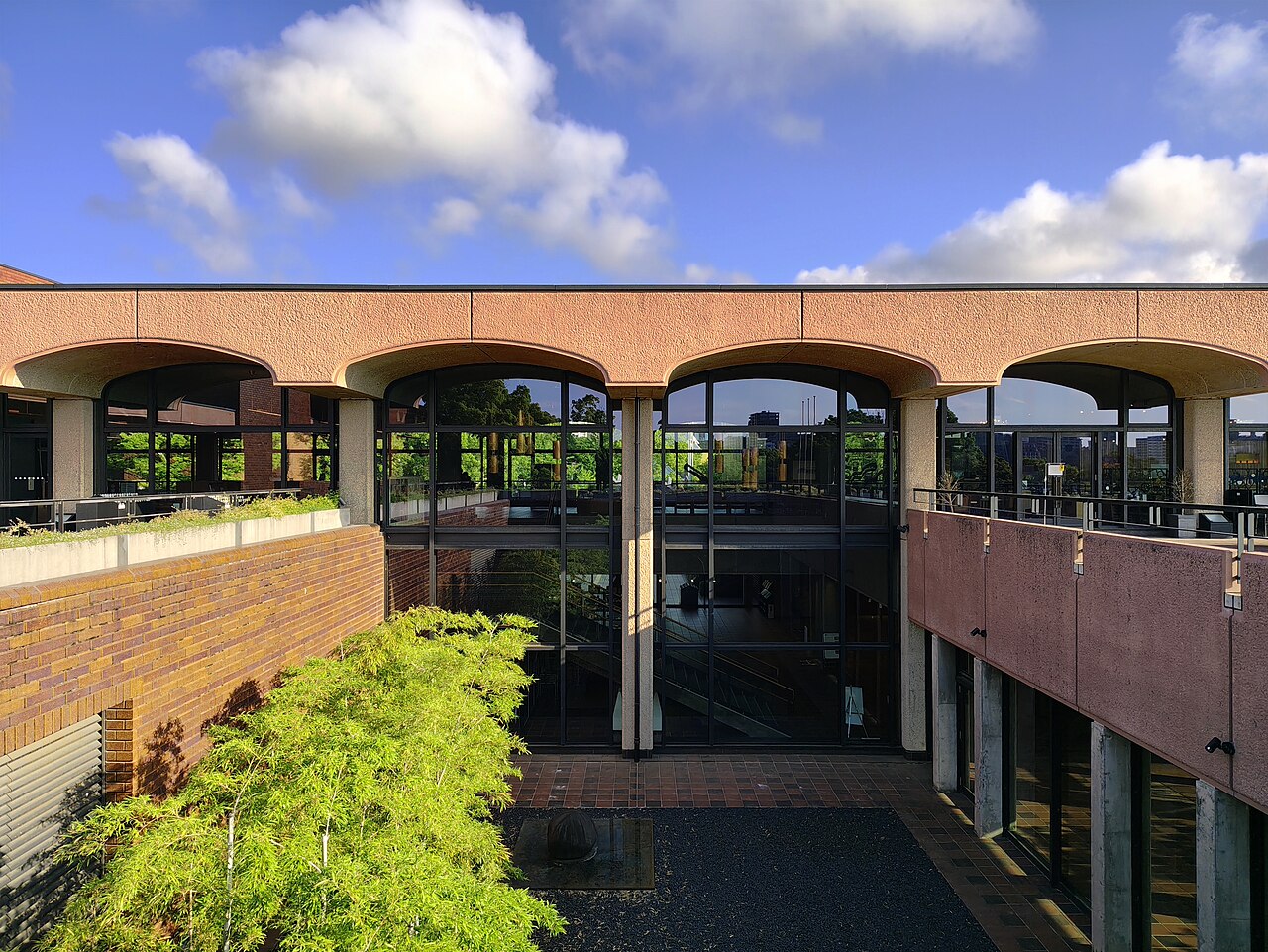
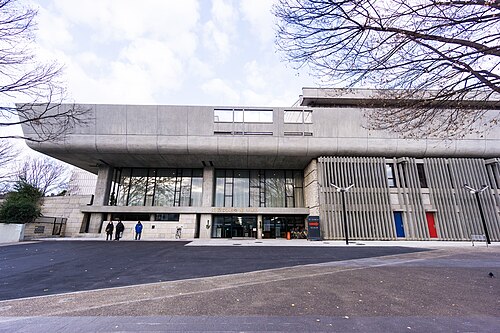
The galleries are arranged around a spacious lobby and a broad plaza called the esplanade, so that the galleries are not reached straight away. From the north, coming from the park, a wide, gently sloping flight of steps leads to the esplanade and then to the first-floor entrance; along the way the park gradually falls out of sight and sculptures come into view. From the south, a two-storey-high facade opens onto the ground floor, from which an internal staircase rises to the first-floor lobby, and the pre-modern art galleries, deep inside, are laid out like caves. From the large lobby, three routes lead to the galleries. This layout answers an intention of the architect: by crossing this large space before seeing the works, visitors detach themselves from everyday life and prepare for the experience of art.
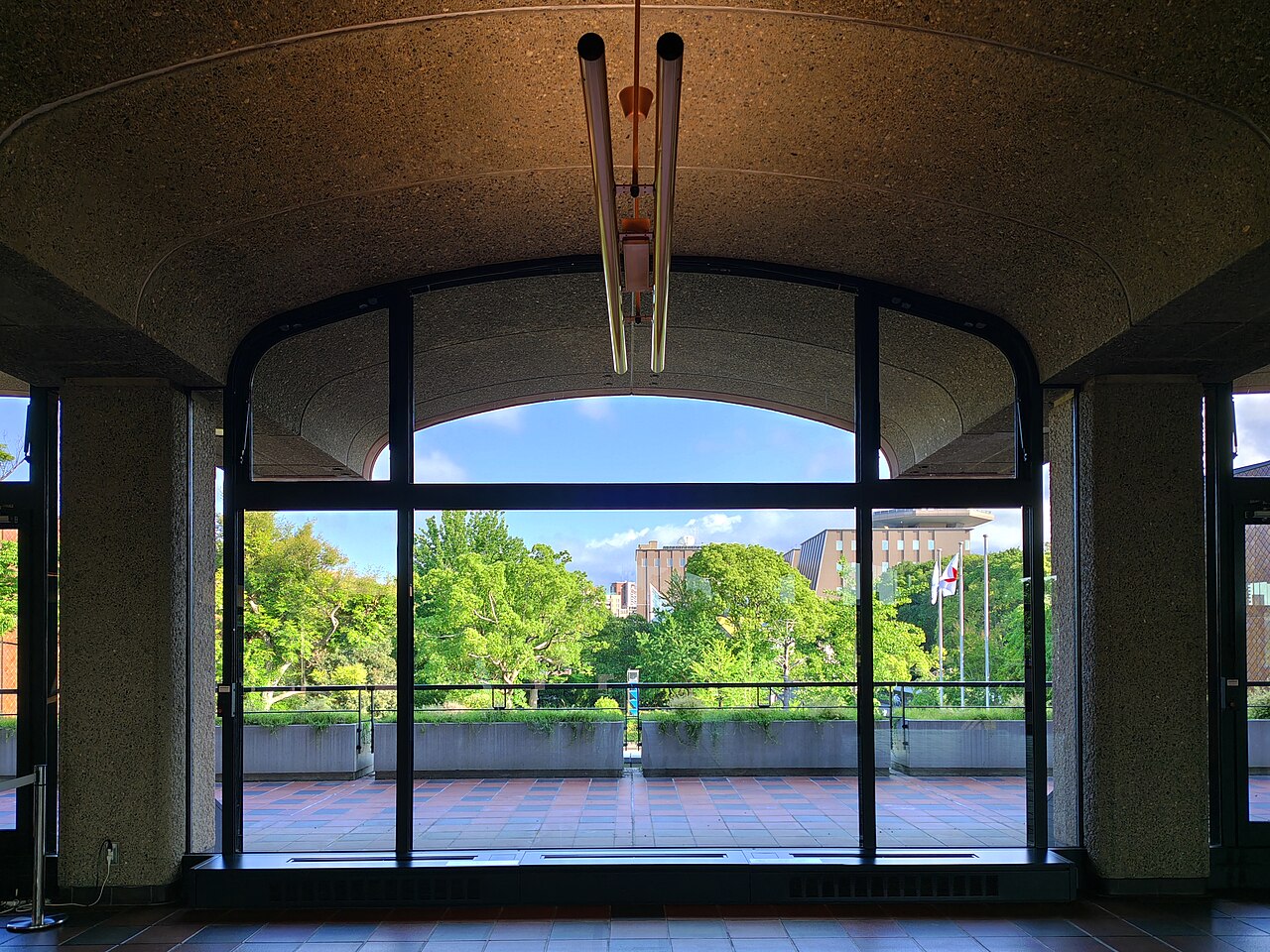
Inside, large glazed openings bring in the landscape, a void links the entrance lobbies of the ground and first floors, and a cylindrical vaulted ceiling is of bare, as-cast concrete; some concrete walls are bush-hammered. The four exhibition blocks are spread across the site and stay lower than the surrounding trees.
Use today
It is a municipal art museum. Its collections bring together pre-modern art and modern and contemporary art, with works from Japan, other parts of Asia, Europe and the Americas. The modern holdings include works by Dalí, Miró, Chagall, Warhol and Foujita; the pre-modern art rests on the treasures of the Kuroda family, former lords of the Fukuoka domain, on the Matsunaga collection of tea-ceremony utensils and on the Buddhist art of the former Tokoin Temple. An art studio and a lecture room host workshops and lectures.
Visiting
The museum is open from 9:30 a.m. to 5:30 p.m., with last admission at 5:00 p.m., and later on some evenings depending on the season. It is closed on Mondays; if the Monday is a national holiday or a substitute holiday, it is closed on the next weekday instead. It is also closed from 28 December to 4 January.
It stands in Ōhori Park, a ten-minute walk from Ōhori-kōen subway station.
Photos
33.58° N, 130.38° E
Greenhouses nearby
Architecture nearby
By the same architect
Sources (15)
- fukuoka-art-museum.jp/about/architecture/
- fukuoka-art-museum.jp/en/about/architecture/
- fukuoka-art-museum.jp/about/history/
- fukuoka-art-museum.jp/en/about/history/
- fukuoka-art-museum.jp/guide/
- fukuoka-art-museum.jp/en/guide/
- fukuoka-art-museum.jp/guide/access/
- fukuoka-art-museum.jp/en/guide/access/
- fukuoka-art-museum.jp/collection/about/
- fukuoka-art-museum.jp/en/collection/about/
- fukuoka-art-museum.jp/blog/84338/
- fukuoka-art-museum.jp/event/195221/
- fafnpo.jp/fukuoka-art-museum
- maekawa-assoc.co.jp/page/founder.htm
- ja.wikipedia.org/wiki/大濠公園
Affiliate links — booking through Verrière helps fund our research, at no extra cost to you.