Salvation Army floating shelter (Louise-Catherine barge)
Quai d'Austerlitz, Paris
Sources checked November 2026
- Year
- 1929-1930
- Architect
- Le Corbusier
- Type
- Floating shelter fitted into a reinforced-concrete lighter
- Access
- Under restoration (Fondation Le Corbusier site plan, 2024)
The Salvation Army entrusted Le Corbusier and Pierre Jeanneret with converting a 70-metre reinforced-concrete lighter into a refuge for 150 homeless Parisians. Raised in height to gain capacity, ventilation and natural light, it received a dormitory, a refectory, a kitchen and a roof terrace on the deck. Listed as a historic object in 2008, the vessel sank in 2018 and was lifted out of the water in 2020.
History
What is wrongly called a péniche (canal barge) began as a reinforced-concrete lighter with no navigation post, the Liège, built to haul coal from Rouen to Paris. The Salvation Army had Le Corbusier and Pierre Jeanneret fit it out, as its second commission to their office, after the Palais du Peuple dormitory and before the Cité de Refuge. The aim was to turn this 70 m by 8 m lighter, abandoned for years, into a refuge for 150 homeless people in Paris. The patron Winnaretta Singer, Princesse de Polignac, part-funded the venture and insisted on Le Corbusier, whom she admired deeply. A second patron, Madeleine Zillhardt, gave the vessel the name of her friend the painter Louise-Catherine Breslau. The work lasted from July 1929 to January 1930.
Moored at the Quai du Louvre, the floating shelter, which served as a winter refuge, left every summer up to 1940 to host holiday camps at Le Pecq or Charenton-le-Pont. In 1940 it moved to the Quai des Tuileries, then to the Quai Saint-Bernard from 1950 to 1980, and was finally moored at the Quai d'Austerlitz.
Despite the improvements made over the years, the boat eventually fell short of accommodation standards. After a last, unsuccessful attempt to turn it into housing for homeless women, the Salvation Army put it on sale in 2003; it was bought in 2006. In December 2008 it was classified as a historic monument under the objects category; it sank in February 2018. In August 2020 it changed hands, and in October it was taken out of the water.
Architecture
The vessel was raised in height, which increased the vessel's capacity and let in the air and natural light Le Corbusier was after. The programme called for a dormitory of bunk beds, a refectory, a kitchen, toilets, two flats for staff and a roof terrace on the deck, meant to take benches and planters, which the architect presented as "a hanging garden on top of the barge".
Inside, two rows of concrete posts poured in Eternit pipes served as pilotis and carried the deck; Le Corbusier was keen to put his five points of modern architecture into practice here. The space had three zones: a 64-bed dormitory at the stern, matching the one at the bow; and amidships 21 beds, the refectory and the technical rooms. Staff were housed at the two ends.
Quai d'Austerlitz, Paris
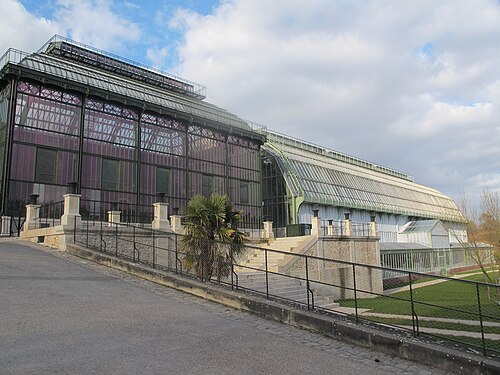
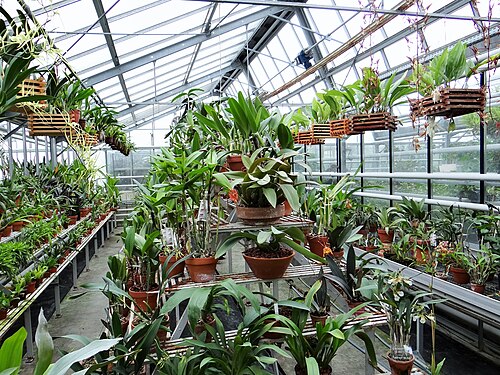
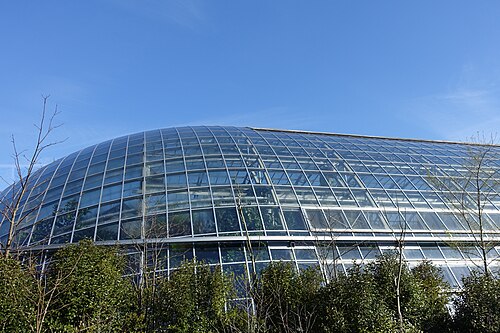
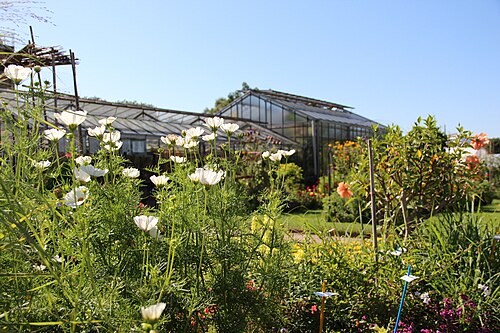
Greenhouses nearby
Architecture nearby
By the same architect
Sources (5)
- fondationlecorbusier.fr/oeuvre-architecture/realisations-armee-du-salut-asile-flottant-pen
- fondationlecorbusier.fr/en/work-architecture/achievements-floating-refuge-louise-catherine
- fondationlecorbusier.fr/wp-content/uploads/2024/05/plan-des-sites-le-corbusier-fr-2024-flc
- pop.culture.gouv.fr/notice/palissy/PM75004196
- dezeen.com/2018/02/16/le-corbusier-designed-barge-sinks-seine-paris-flooding-louise-cather