Villa Planta (Bündner Kunstmuseum), restoration and conversion
Chur (Graubünden)
Sources checked November 2026
- Year
- 1987-1990
- Architect
- Peter Zumthor
- Type
- Art museum in a 19th-century neoclassical villa, restored and converted
- Access
- Open to the public Tuesday to Sunday, 10 am to 5 pm, until 8 pm on Thursdays; closed on Mondays (official website, November 2026)
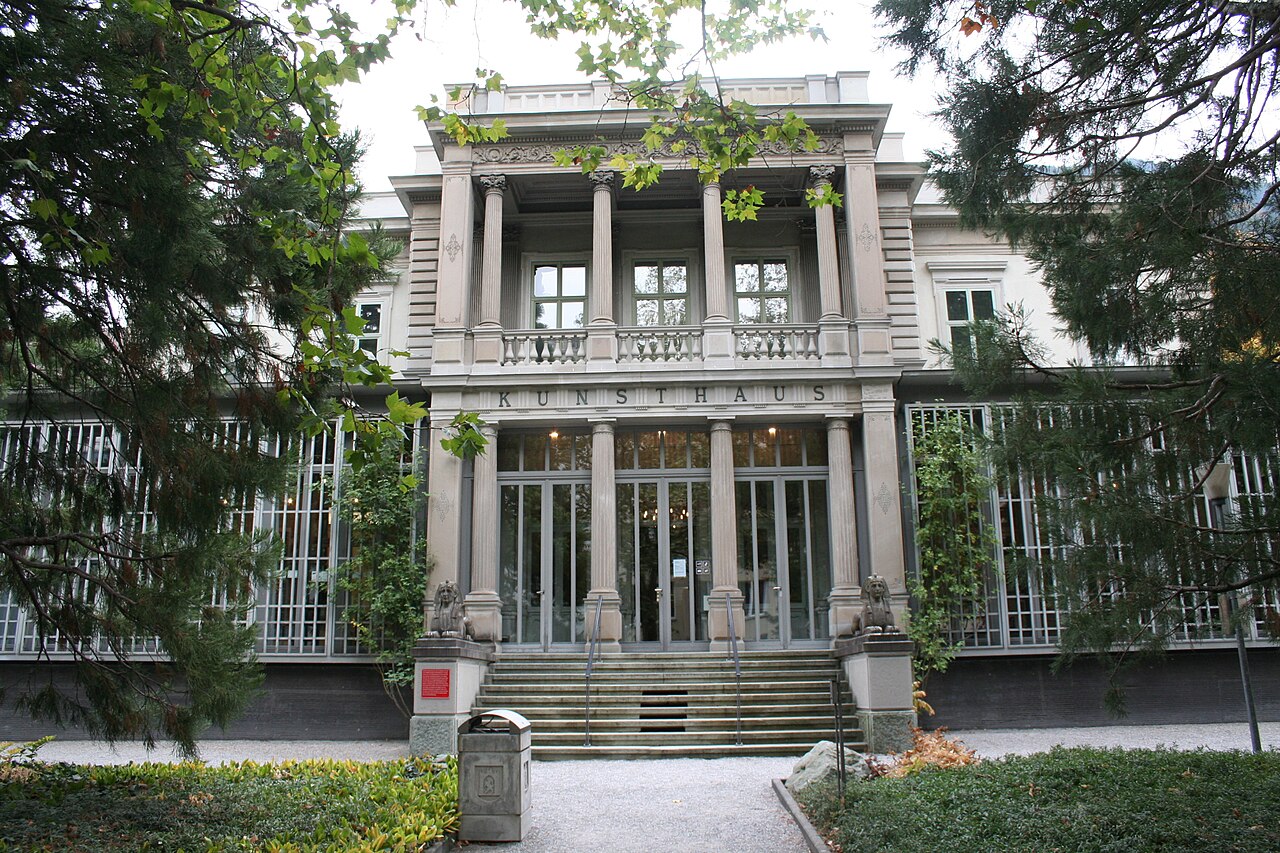
This neoclassical villa, begun in 1874 for the merchant Jacques Ambrosius von Planta, has housed the Graubünden art museum since 1919. From 1987 to 1990 its restoration and conversion were directed by an architects' partnership formed of Peter Calonder, Hans-Jörg Ruch and Peter Zumthor, which opened the basement to exhibitions, added a winter garden and fitted out the attic. An extension by Barozzi/Veiga is linked to it by an underground passage.
Affiliate links — booking through Verrière helps fund our research, at no extra cost to you.
History
The villa is named after the man who commissioned it, Jacques Ambrosius von Planta, a merchant who worked in Alexandria, Egypt. The architect Johannes Ludwig built it from 1874 as a private residence. Planta sold it in 1898 to the Rhaetian Railway, which leased it from 1919 to the Canton of Graubünden for cultural purposes; the art museum moved in that same year, and the canton bought the building in 1957.
Over the years the building's structure fell into an alarming state: renovation and rebuilding were considered, and there was even talk of demolishing the villa to put up a new building. In the end it was decided to restore it, and Graubünden voters granted the credit by a large majority. The restoration and conversion, begun in 1987, took nearly three years under the direction of the architects' partnership of Peter Zumthor, Peter Calonder and Hans-Jörg Ruch. The museum reopened with a festive inauguration at the start of 1990.
In 2011 an international architecture competition was launched to enlarge the museum; the Barcelona practice Estudio Barozzi/Veiga won it, and its extension is joined to the villa by an underground passage. The villa itself was overhauled from 2014 by Gredig Walser Architekten, working with the heritage conservation office: the basement exhibition rooms and the attic offices were improved, and the fire safety, security, heating, ventilation and air-conditioning systems were brought up to date.
Architecture
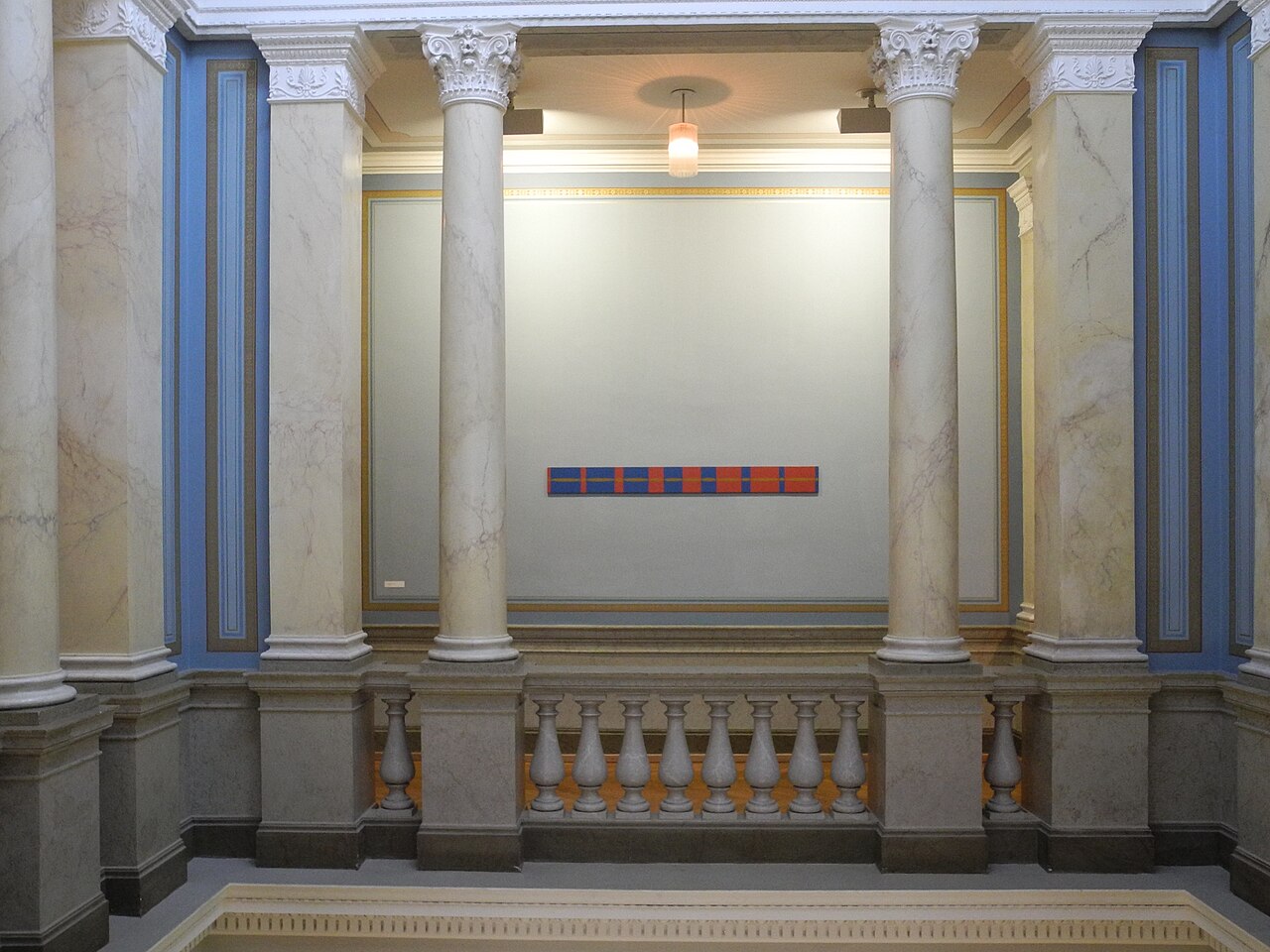
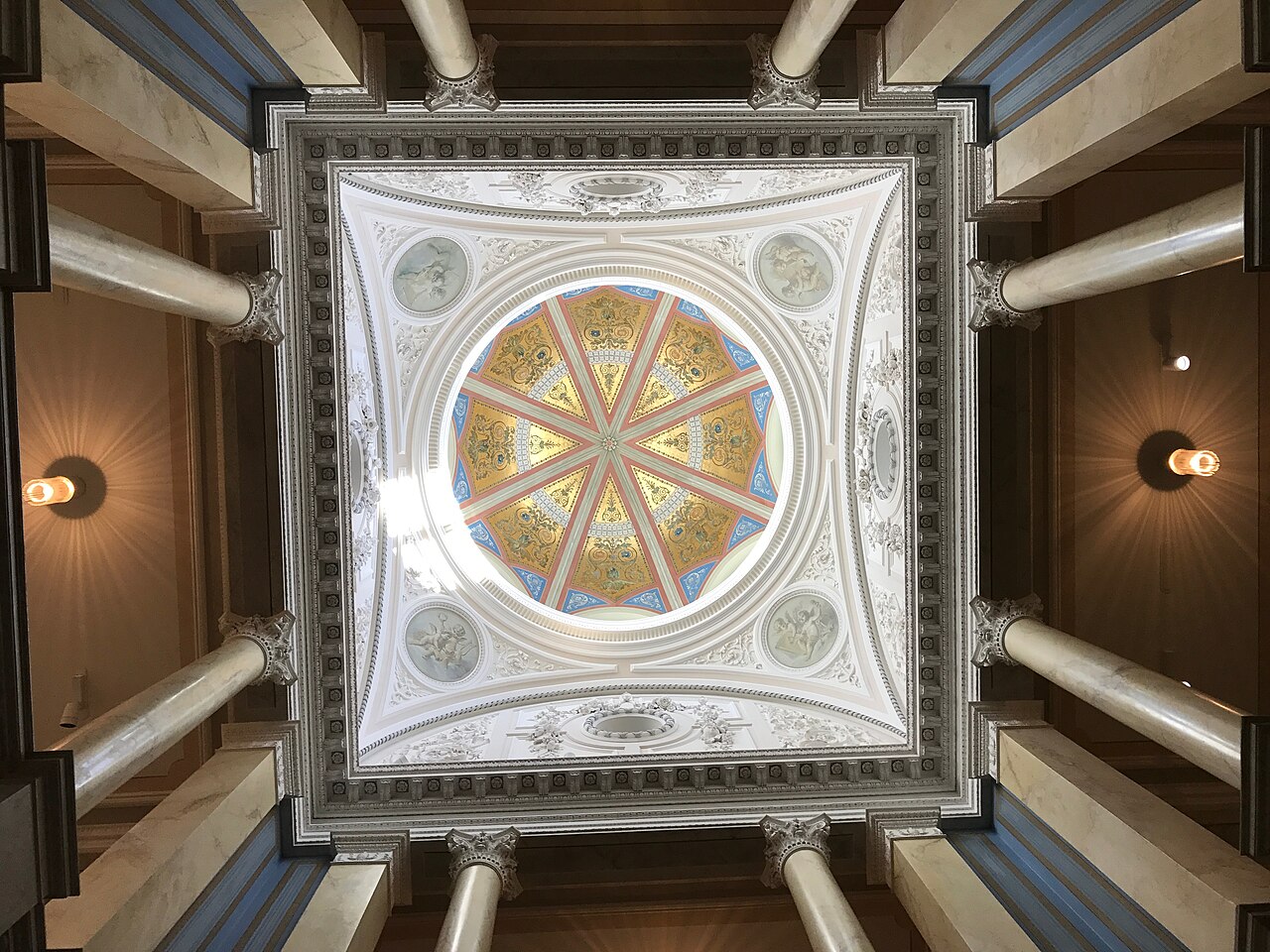
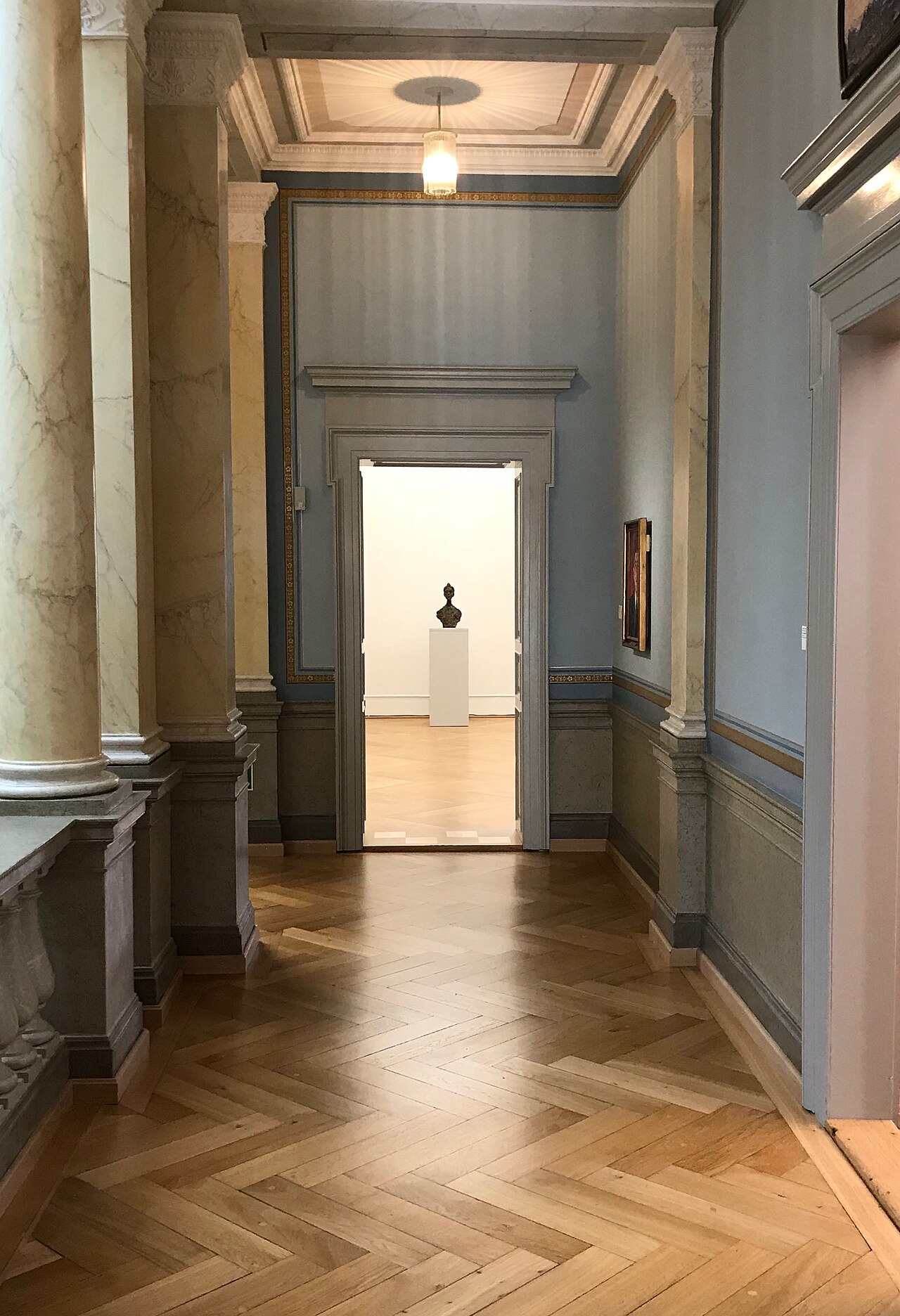
A Palladian villa with oriental touches, neoclassical in style, it presents a showpiece front whose portico rests on columns. Two sphinxes sit beside the staircase, Pompeian paintings decorate the former salon, and the dome carries gilded decoration in the Byzantine manner, all echoes of the client's business in Alexandria. The plan is almost square, on two levels, under a flat roof hidden behind an attic. The dome lights an atrium, a light well around which the reception rooms and private rooms are arranged. Inside, the decoration combines tiled and parquet floors, panelling, wallpaper, stucco and decorative painting.
The conversion of 1987-1990 brought the basement into use as exhibition space, added a winter garden with a delicate trellis in front of the west façade, and fitted out the attic for administration, the library and the museum's technical services. The showpiece front on Bahnhofstrasse then became the museum's main entrance.
Use today
The villa is part of the Bündner Kunstmuseum, the Graubünden art museum, whose collection is shown in the villa and in the extension. Begun in 1900 by the Graubünden art society (Bündner Kunstverein), the collection holds about 8,000 works from every field of the visual arts, from the 18th century to the present. The museum café occupies the former salon.
Visiting
The museum is open Tuesday to Sunday from 10 am to 5 pm, and until 8 pm on Thursdays; it is closed on Mondays. Special hours apply on public holidays.
It stands at Bahnhofstrasse 35, in the centre of Chur; the main entrance is round the corner on Grabenstrasse, and the railway station and bus station are five minutes away on foot. The building is accessible without obstacles: all rooms are wheelchair accessible and served by lifts.
Photos
46.85° N, 9.53° E
Greenhouses nearby
Architecture nearby
By the same architect
Sources (11)
- kunstmuseum.gr.ch/de/museum/Seiten/start.aspx
- kunstmuseum.gr.ch/en/museum/Seiten/start.aspx
- kunstmuseum.gr.ch/de/museum/Seiten/Architektur.aspx
- kunstmuseum.gr.ch/en/museum/Seiten/Architektur.aspx
- kunstmuseum.gr.ch/de/besuch/besucherinfo/Seiten/Oeffnungszeiten.aspx
- kunstmuseum.gr.ch/de/besuch/Seiten/start.aspx
- kunstmuseum.gr.ch/en/besuch/Seiten/start.aspx
- kunstmuseum.gr.ch/de/Sammlung/geschichte/Seiten/Geschichte.aspx
- gr.ch/DE/Medien/Mitteilungen/MMStaka/Dokumente2015/Flyer_VillaPlanta_BKM.PDF
- gr.ch/DE/institutionen/parlament/botschaften/Botschaften_20112012/Botschaft_16_2012_Web.pd
- kolumba.de/index.php?language=de&cat=14&art=59
Affiliate links — booking through Verrière helps fund our research, at no extra cost to you.