Protective Shelters over the Roman Remains in the Welschdörfli
Chur, Graubünden
Sources checked November 2026
- Year
- 1986
- Architect
- Peter Zumthor
- Type
- Archaeological shelters and small museum
- Access
- Visitable with a loan key (Chur Tourismus, November 2026)
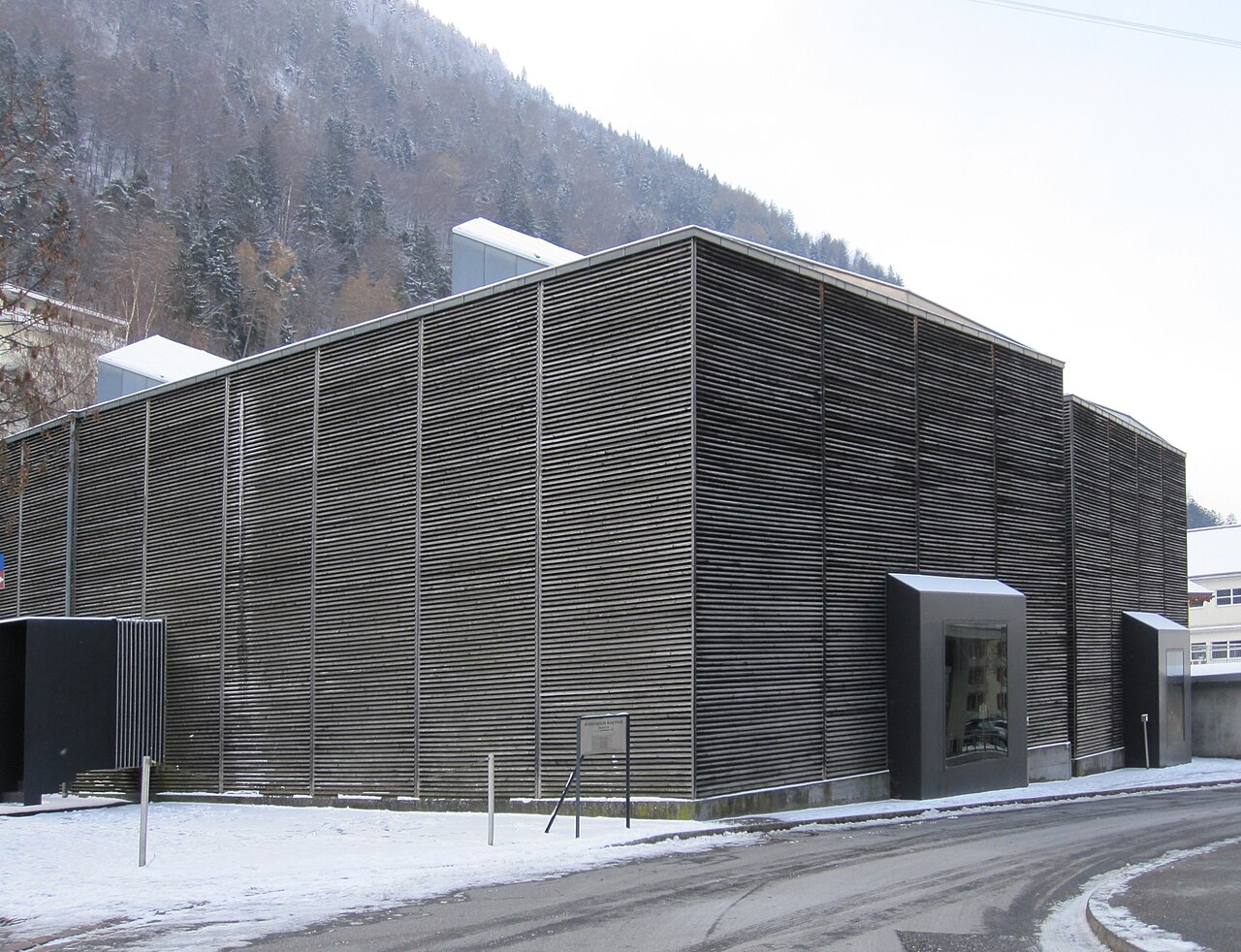
In Chur, shelters from 1986 by Peter Zumthor cover the remains of a Roman settlement uncovered in the Welschdörfli. Their three halls of timber lamellae echo the uneven outlines of the remains, admit light and air, and double as a small museum.
Affiliate links — booking through Verrière helps fund our research, at no extra cost to you.
History
In the Welschdörfli, the old-town district of Chur south of the Plessur, earthworks have turned up Roman finds since the 18th century. In the early 20th century the Rhaetian Museum carried out the first planned and documented excavations there; since the Archaeological Service of Graubünden was set up in 1967, it has been responsible for them.
Between 1970 and 1975, on the grounds of the Ackermann horticultural business, excavators uncovered the remains of buildings in an exceptional state of preservation, and the Confederation and the canton decided to safeguard them. Peter Zumthor, commissioned directly, designed in 1985 a shelter that would also be a museum; built in 1986, it has covered the remains ever since.
In 1987 the shelters received the Graubünden award for good buildings, as did two other works by Zumthor, the Räth house and the studio building in Haldenstein.
Architecture
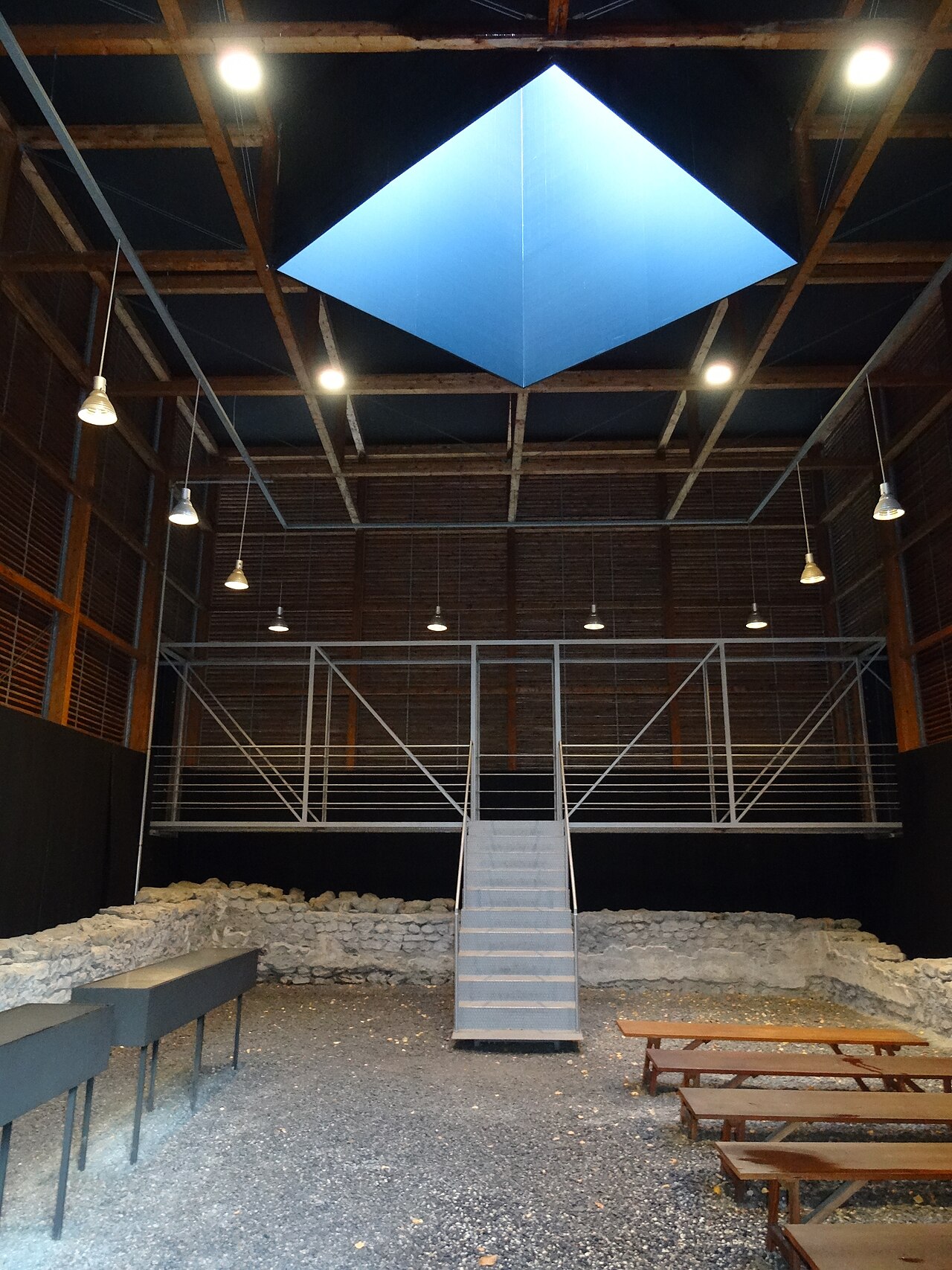
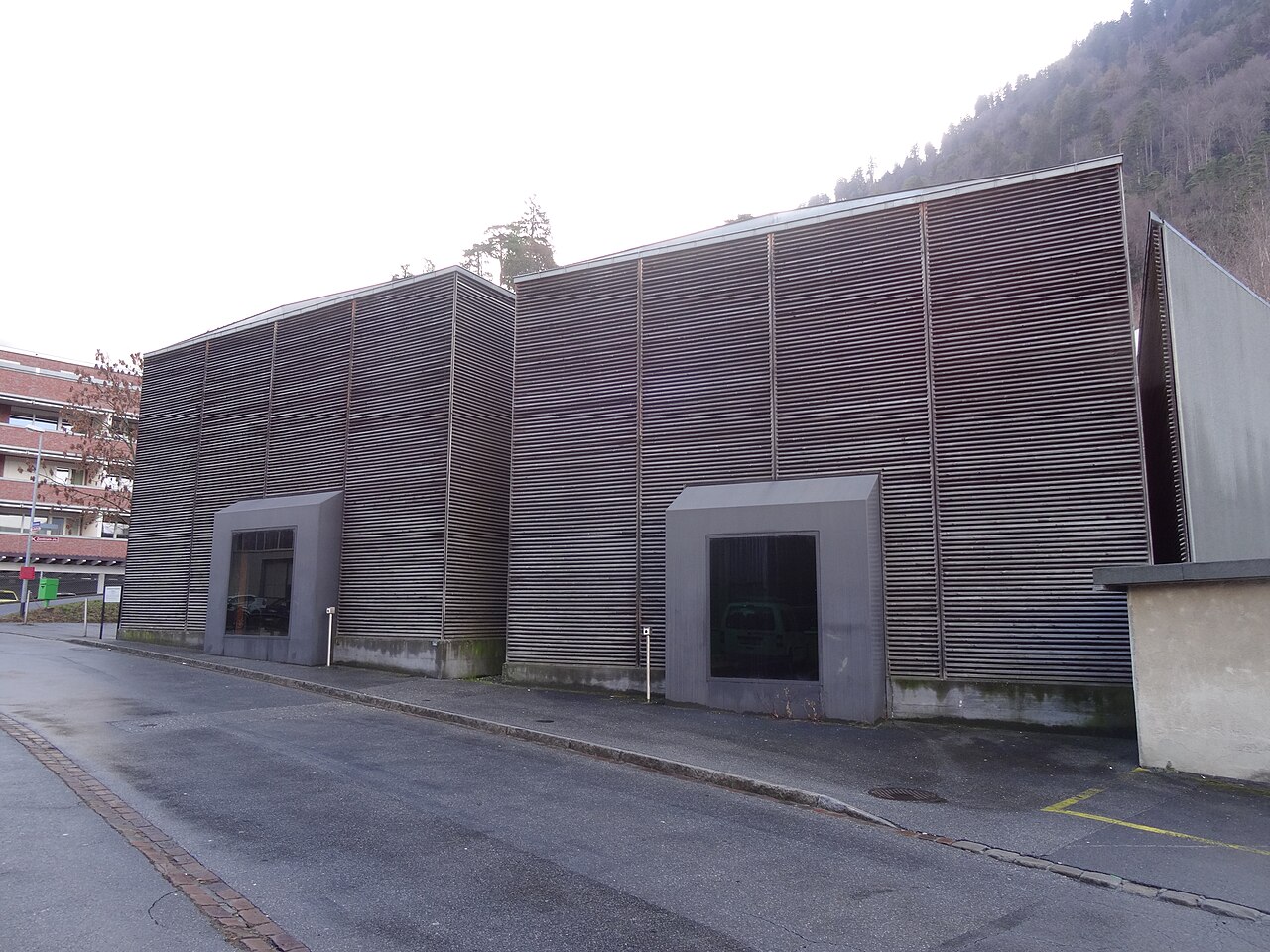
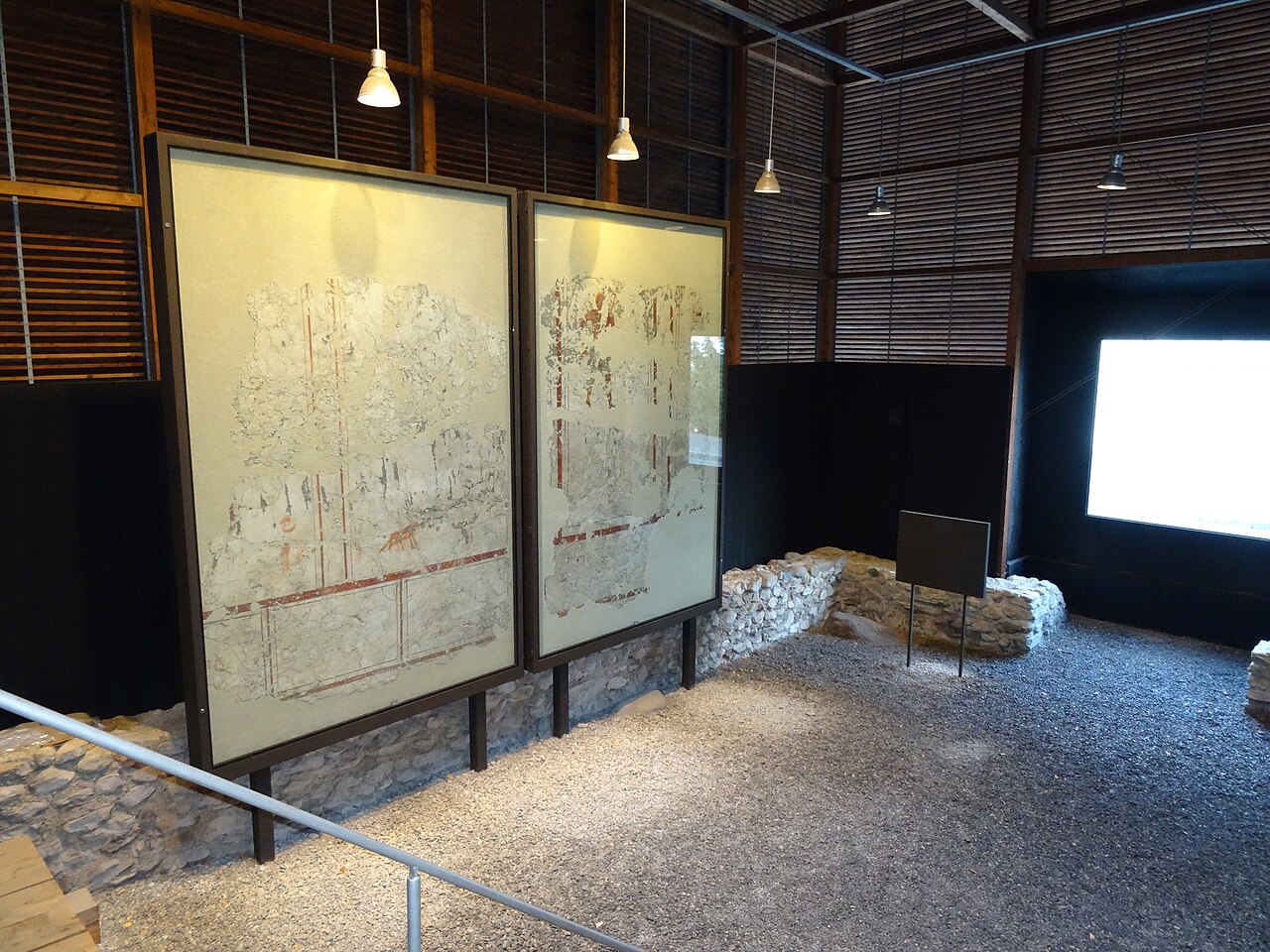
Peter Zumthor designed three halls that follow the irregular ground plans of the remains and wrap them in a protective shell. The three volumes share one height, that of the single-storey Roman houses, and the fine mesh of their lamellae hints at the size of the ancient complex. On a low concrete base, the timber shell is built of horizontal lamellae held by vertical posts, under a barely sloping sheet-metal roof. Made almost entirely of timber lamellae, it is open to the air, as the conservation of the remains requires, and also lets in light and allows views of the surrounding district. By day it nonetheless reads as a closed skin; at night, lighting that can be switched on from outside shines through it.
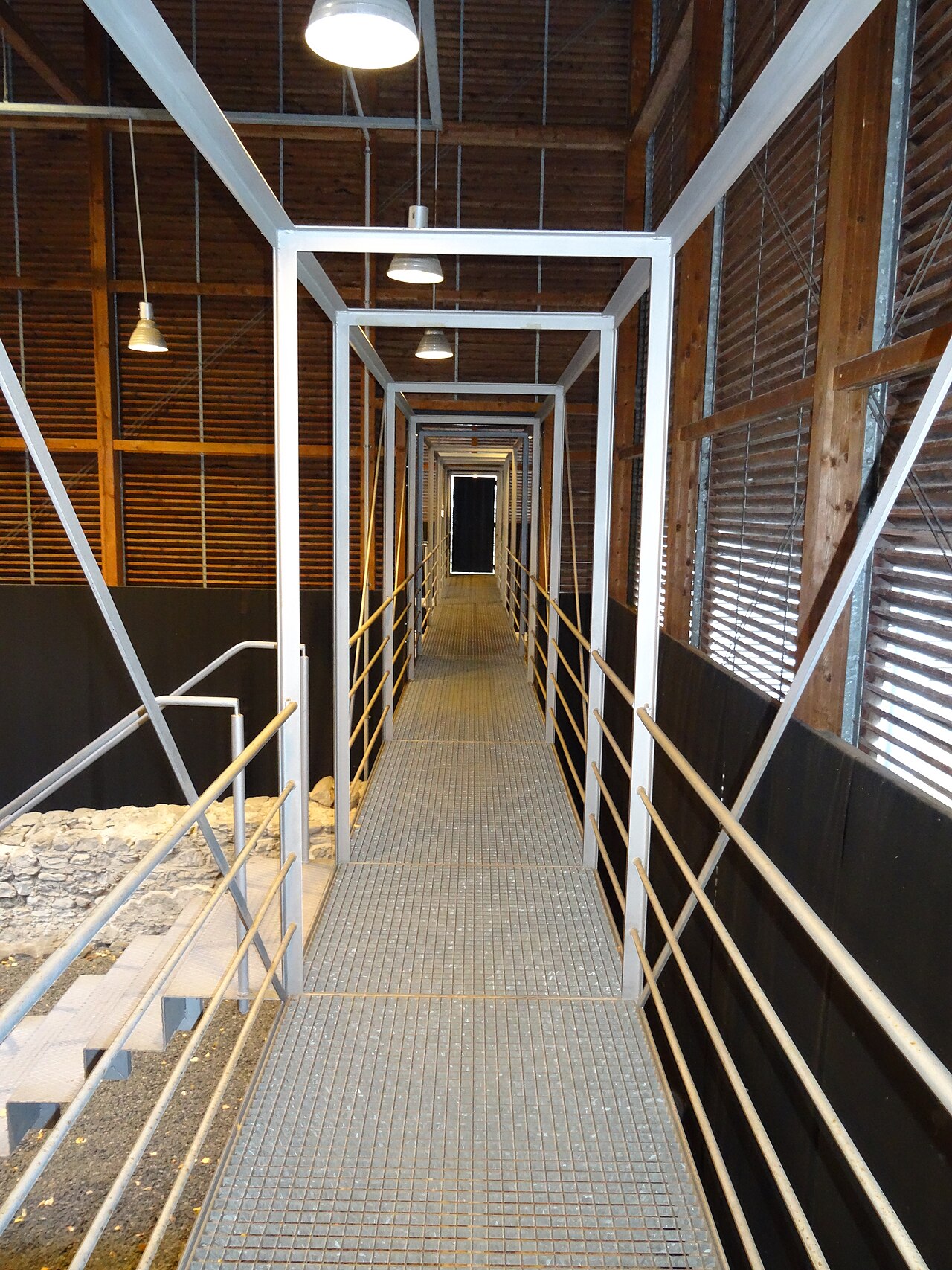
On the street side, to the north, where the entrances of the Roman houses once were, two projecting concrete showcases give a view inside. The entrance, to the east, is a closed cantilevered volume built of flat steel, reached by a stair that seems to float. Inside, a raised steel footbridge running parallel to the street passes over the excavated walls: it is the only link between the three volumes. Two stairs lead down between the ancient walls. Three square skylights, turned 45° to the plan, and the street-side showcases light the space evenly, and the sounds of the town come in through the timber structure.
Use today
The shelters protect the fragile remains and also serve as a small museum. Visitors see Roman buildings and wall paintings, along with finds ranging from the Neolithic to the Roman period.
Visiting
The shelters stand on Seilerbahnweg, in the Welschdörfli. They are visited with a loan key, collected against a deposit from the Chur tourist office (Chur Tourismus) or from the Rhaetian Museum. Chur Tourismus also offers a guided tour of the excavations.
Photos
46.85° N, 9.53° E
Greenhouses nearby
Architecture nearby
By the same architect
Sources (10)
- gr.ch/DE/institutionen/verwaltung/ekud/afk/adg/dienstleistungen/vermitteln/Seiten/schutzba
- chur.graubuenden.ch/de/uebersicht-museen-galerien/roemische-ausgrabungen
- chur.graubuenden.ch/en/attractions/roman-excavations
- chur.graubuenden.ch/de/kunst-kultur/architektur-chur
- chur.graubuenden.ch/en/art-and-culture/architecture-chur
- graubuenden.ch/de/ausflugsziele/roemische-ausgrabungen
- graubuenden.ch/en/attractions/roman-excavations
- graubuenden.ch/de/sehenswuerdigkeiten/bauwerke/architekturperlen
- architekturbibliothek.ch/bauwerk/schutzbauten-fuer-ausgrabung-roemischer-funde/
- kolumba.de/index.php?language=de&cat=14&art=59
Affiliate links — booking through Verrière helps fund our research, at no extra cost to you.