Masoala-Halle
Zurich

Sources checked September 2026
- Year
- 2001–2003
- Architect
- Gautschi Storrer Architekten
- Style
- Contemporary tropical hall, arched steel frame
- Dimensions
- 120 m long, 90 m wide, 30 m high, 11,000 m² of floor space
- Status
- Open to the public
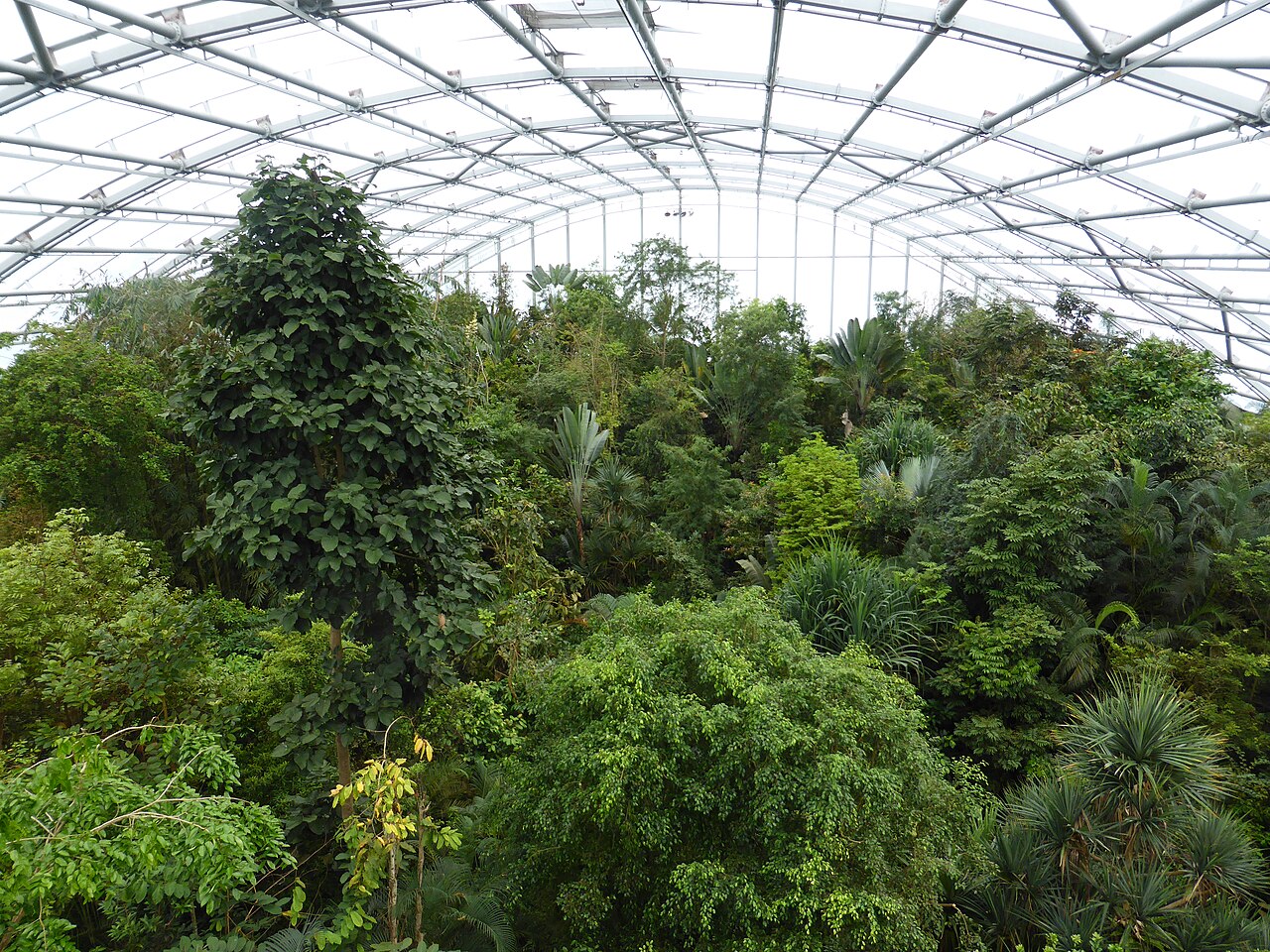
Opened on June 29, 2003, after construction began in March 2001, the Masoala Hall at Zurich Zoo was designed by the firm Gautschi Storrer Architekten together with landscape architects Vogt Landschaftsarchitekten. Its arched frame rises 30 meters high over a length of 120 meters and a width of 90, covering 11,000 m², partly heated by 50 geothermal probes reaching 250 meters deep. Funded by donations totaling 52 million Swiss francs, the hall recreates the ecosystem of the Masoala Peninsula in Madagascar, with more than 500 plant species and about fifty animal species living in semi-freedom.
Affiliate links — booking through Verrière helps fund our research, at no extra cost to you.
History
The idea of a large tropical hall at Zurich Zoo dates to 1991, when the zoo decided to devote an entire building to a rainforest ecosystem rather than to a sequence of separate enclosures. In 1994 the choice fell on Madagascar, and specifically on the Masoala Peninsula in the island's north-east. The project, which ran from 1995 to 2003, went to Gautschi Storrer Architekten, winners of the competition, working with landscape architects Kienast Vogt Partner (now Vogt Landschaftsarchitekten), with Bosshard + Partner managing construction.
Work began in March 2001. On 24 June 2002, while construction was still under way, a hailstorm damaged the roof. The hall was inaugurated on 29 June 2003 by Federal Councillor Moritz Leuenberger in the presence of a Malagasy delegation; the zoo itself gives 30 June as the opening date. Its cost of 52 million Swiss francs was met largely through donations, and in 2003 the zoo's attendance passed 1.5 million for the first time.
From the start the hall was tied to fieldwork: a share of the zoo restaurant's takings and of donations supports Masoala National Park, working with partners including the Wildlife Conservation Society, for a total of more than four million francs. A Friends of Masoala association was founded in 2004. A canopy walkway was added just before Easter 2013, and the twentieth anniversary in 2023 coincided with the opening of a new conservation centre.
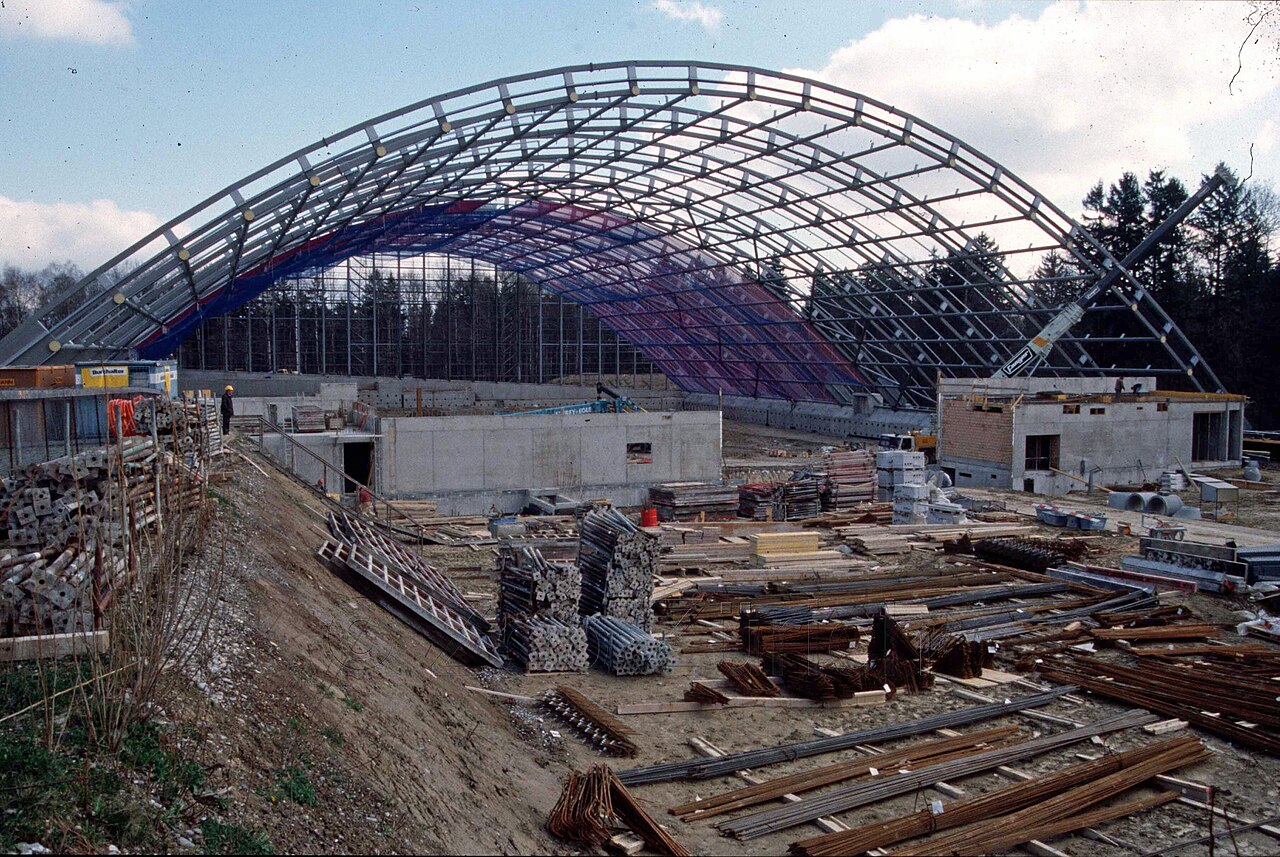
Architecture and engineering
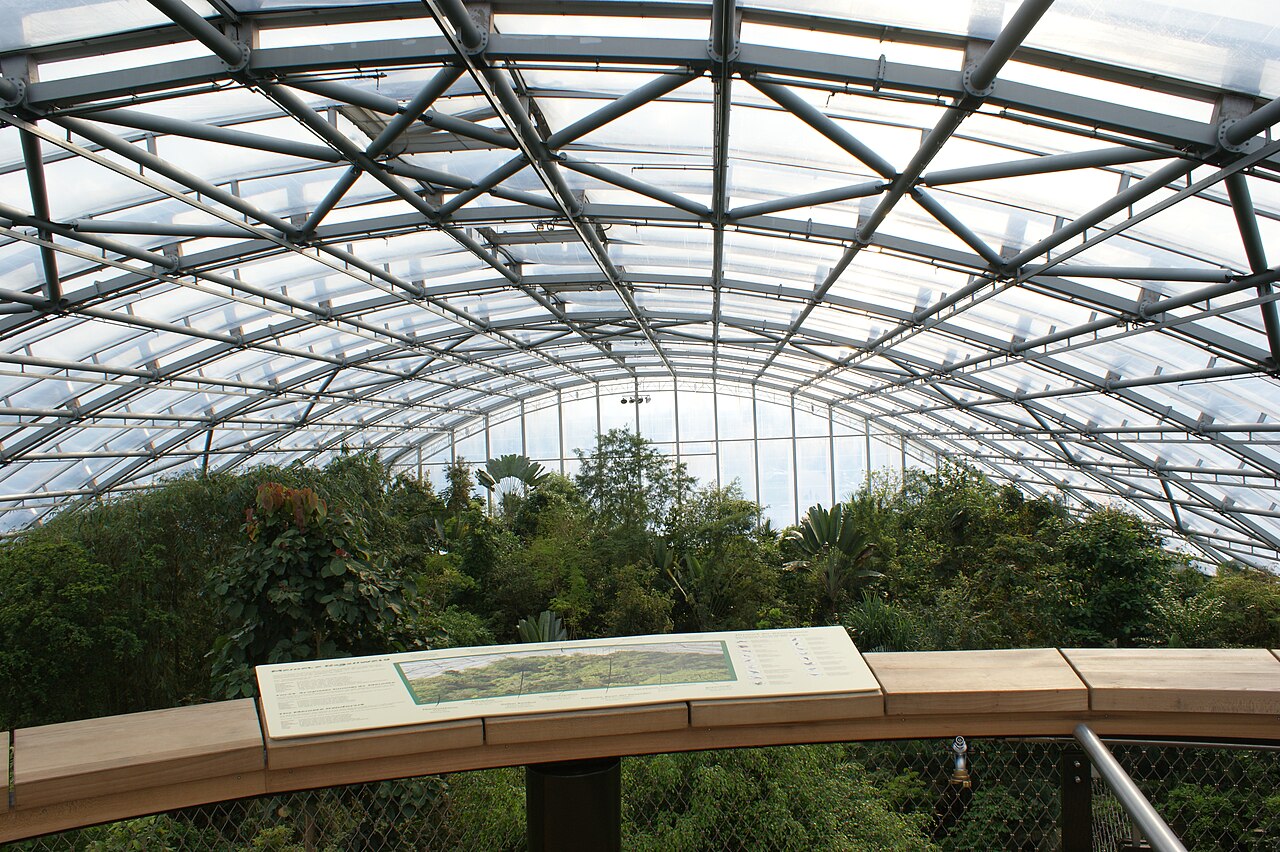
The building covers about 11,000 m² of ground, 120 metres long, 90 metres wide and 30 metres high at its peak, enclosing roughly 200,000 m³. Ten vertical steel trusses, set 12.3 metres apart and spanning 91 metres, carry a roof of some 14,000 m² made not of glass but of air-filled ETFE cushions. Each three-layer cushion is about 55 metres long, 3.9 metres wide and a metre deep; together they transmit around 70 per cent of daylight and about half of the ultraviolet.
The climate targets around 80 per cent humidity and temperatures between 18 and 35 °C. According to the zoo, 40 geothermal probes sunk 250 metres deep feed a heat pump, backed up by the zoo's wood-chip heating plant, which is credited with up to 70 per cent of the heat. Rainwater from the roof is stored in two 500 m³ cisterns and treated with sand and activated-carbon filters, ozone and UV-C before returning as artificial downpours. The soil, 50 to 70 cm deep, layers volcanic rock, zeolite, pumice and expanded clay beneath a top dressing of peat, leaves and branches.
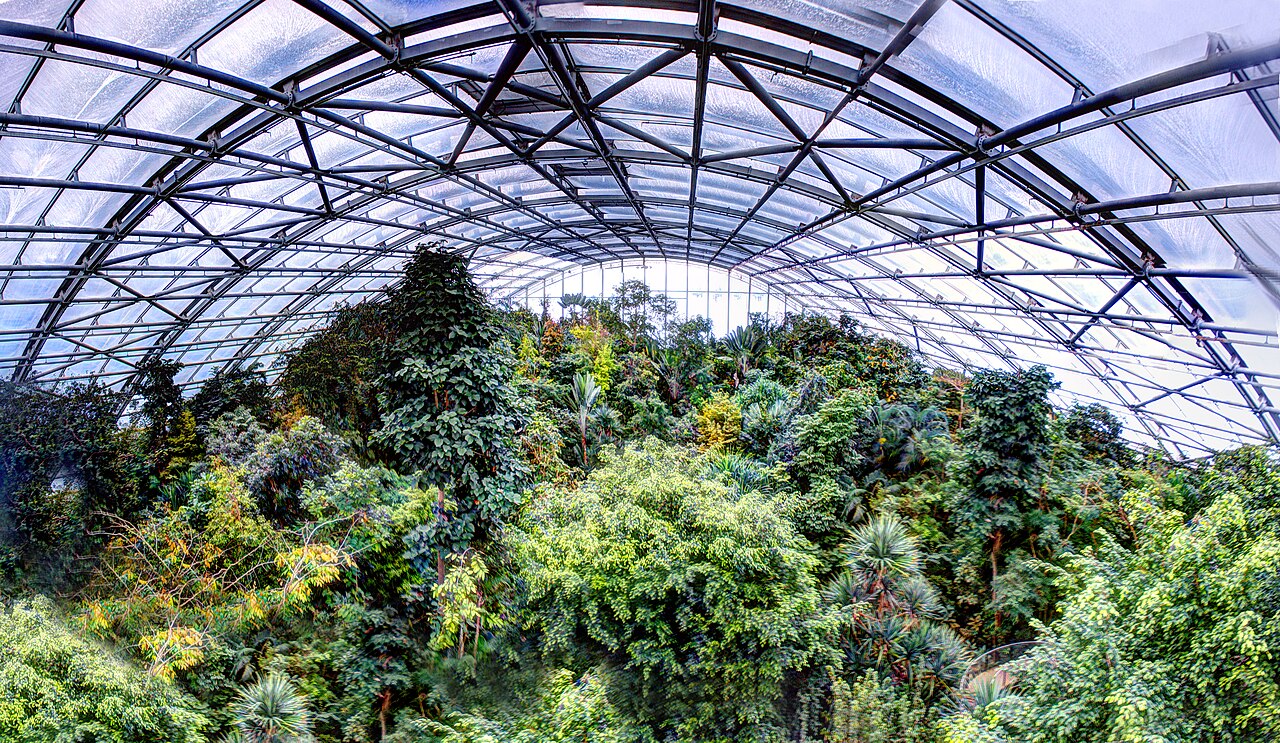
Plant collections
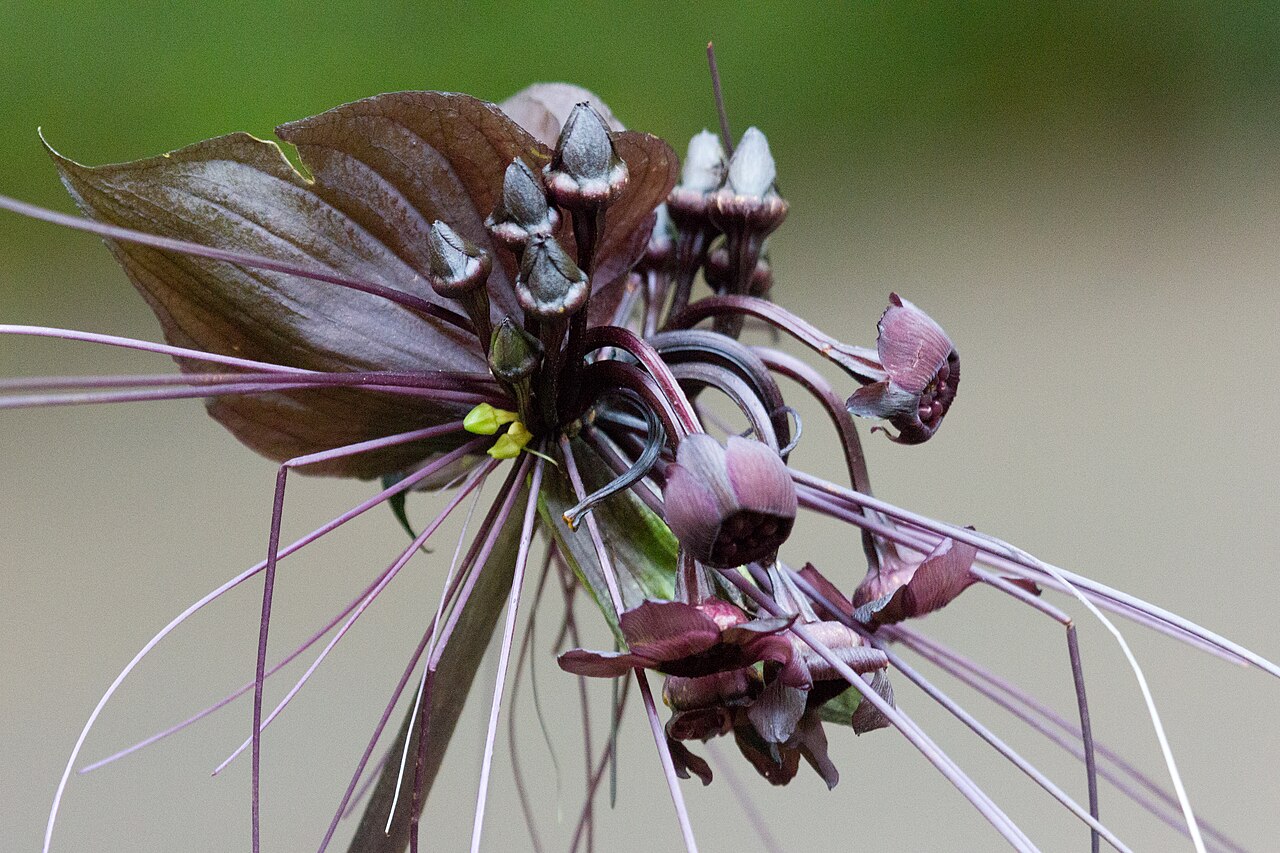
The original 2003 planting comprised about 17,000 plants of more than 450 species, of which only 0.5 per cent reportedly died in the first year. The vegetation is now put at over 35,000 individuals of some 500 species in 92 families: about a hundred trees taller than 20 metres, 1,600 smaller trees and palms, a thousand lianas, 400 bamboos and around 4,000 orchids. Thirty-nine species are on the Red List.
Animals live with no barriers between them and visitors. The hall holds from about forty to about fifty vertebrate species. Residents include red ruffed lemurs, red-fronted lemurs, Goodman's mouse lemur, which weighs only 30 to 50 grams, Rodrigues flying foxes, Aldabra giant tortoises, panther chameleons and day geckos. The hall has recorded several breeding firsts, among them the first rearing of the Madagascar crested ibis outside its home island. Some 200 species of fungi were also documented there between 2009 and 2015.
Visiting
The hall stands within Zurich Zoo on the slopes of the Zürichberg. A path winds beneath the forest canopy with no glass or moats, so animals move freely and spotting a chameleon or a lemur in the foliage often takes patience. Two steel towers, 18 and 10 metres tall and joined by a curving walkway, lift visitors into the canopy, where the heat rises noticeably.
An hour is enough to walk the trail and the walkway at an easy pace. The warm, humid air is a sharp contrast with a Zurich winter, so light layers under a coat are sensible. The mouse lemurs are active at dusk and are hard to see during the day.
More photos
47.38° N, 8.58° E
Greenhouses nearby
Architecture nearby
More greenhouses — Switzerland
Do you have a good photo of this greenhouse? Suggest it for this page →
Sources (7)
- zoo.ch/de/medien/medienmitteilung/medien-apero-november-masoala-regenwald-technik-und-oeko
- zoo.ch/de/zoonews/20-jahre-masoala-regenwald
- zoo.ch/de/zoonews/beregnung-im-masoala-regenwald
- de.wikipedia.org/wiki/Masoala-Halle
- gautschistorrer.ch/work/masoala-halle-zoo-zurich
- vogt-la.com/masoala_rain_forest_zurich_de
- openstreetmap.org/way/23463043
Affiliate links — booking through Verrière helps fund our research, at no extra cost to you.